★ Win four pegs on a Kent simulated game day with JBD Sporting worth £1,000! Click to enter ★

Ballistic brilliance from your bench – reloading ammunition
How reloading your own ammunition can dramatically improve accuracy, reduce shooting costs, and deliver total independence from suppliers
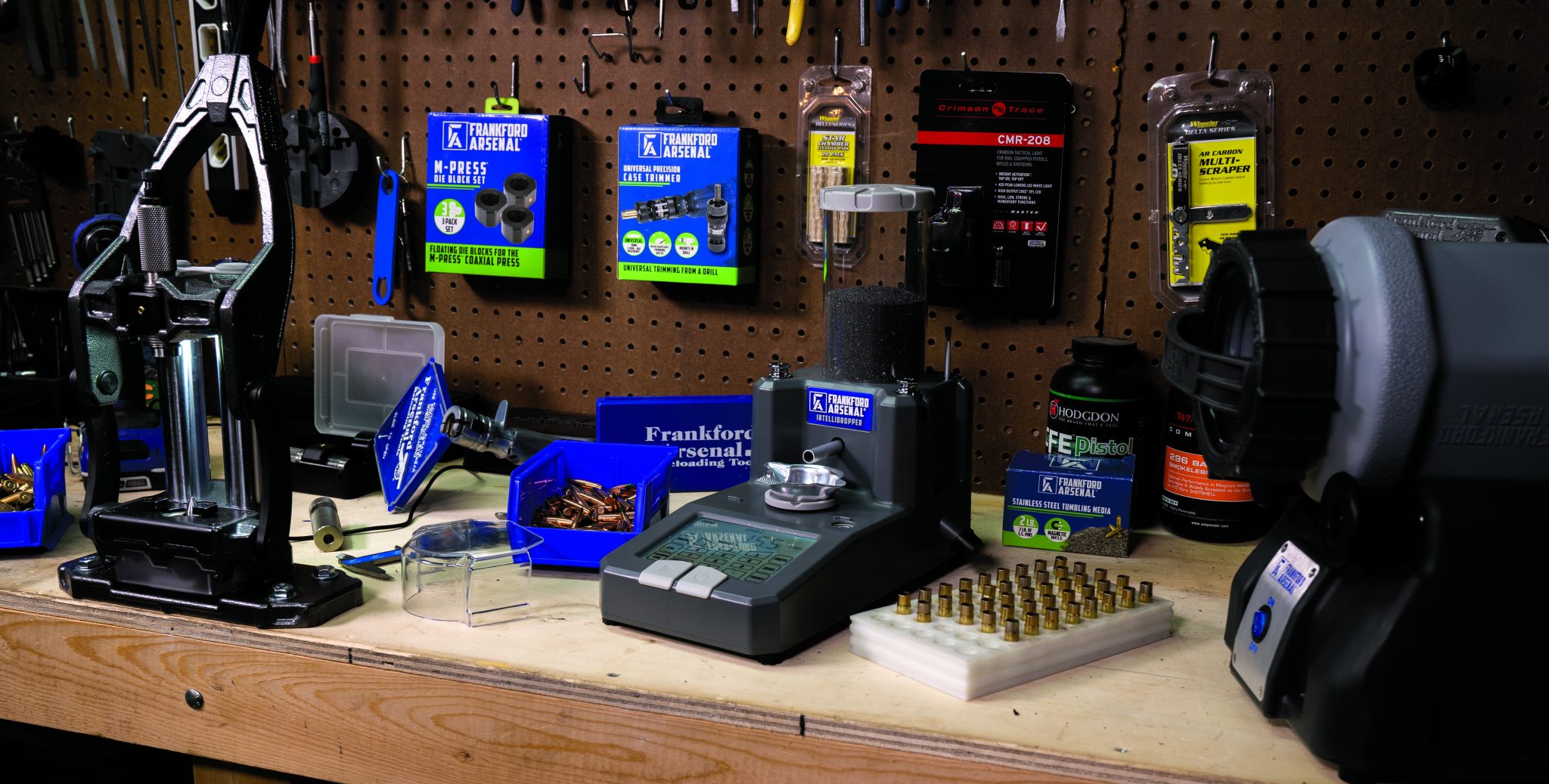

Why more UK shooters are turning to reloading
For many shooters, reloading represents the final frontier in the pursuit of accuracy, economy and self-sufficiency. Whether you are a rifle shooter seeking match-grade precision or a high-volume game shot looking to reduce cartridge costs, loading your own ammunition offers benefits that go far beyond financial savings.
Yet for many British shooters, reloading remains a mystery. It is often seen as complex, expensive, or requiring specialist knowledge beyond the average gun owner.
However, the reality is different. With modest equipment, careful attention to detail and strict safety practices, any competent shooter can produce ammunition tailored precisely to their needs.
Lower costs, higher performance
The most obvious advantage is cost.
Factory ammunition prices have risen sharply in recent years. This is especially true for less-common calibres and premium hunting loads. A box of 20 quality .308 Winchester cartridges can easily cost £30 or more. Component costs for equivalent reloads are often less than half that figure.
For someone firing 500 rounds a year, savings quickly reach hundreds of pounds. Those shooting larger calibres or higher volumes can save even more.
Beyond economics, reloading offers performance that factory ammunition cannot match.
Every rifle prefers a specific bullet weight, powder type and seating depth. Factory ammunition must compromise to function safely in any rifle of that chambering. By developing loads specifically for your rifle, you can achieve accuracy that factory ammunition rarely delivers.
Many target shooters see group sizes halved once they switch to carefully developed handloads.
Self-sufficiency and supply security
There is also the satisfaction of true self-sufficiency.
Loading your own ammunition removes dependence on factory availability and supply-chain disruption. Shooters of obsolete or uncommon calibres value this independence most. If you can obtain brass, bullets, powder and primers, you can continue shooting regardless of manufacturer support.
Finally, reloading provides invaluable insight into internal ballistics. Understanding how powder charge, seating depth and case preparation affect pressure, velocity and accuracy makes you a safer and more knowledgeable shooter.
It builds an understanding of ammunition that cannot be gained any other way.
UK reloading law explained
UK law allows you to reload ammunition for calibres you are already certificated to possess.
Under the Explosives Regulations 2014, you may store up to 15kg NEQ (net explosive quantity) of smokeless powder, percussion caps or small-arms ammunition without an explosives licence. Most recreational reloaders remain well within this limit.
Black powder is different. It requires an explosives certificate regardless of quantity.
Reliable beginner reloading kits
A complete reloading setup does not need to cost the earth.
The Lee 50th Anniversary Breech Lock Challenger Kit offers excellent value for beginners. It includes:
-
Single-stage press
-
Powder measure
-
Scales
-
Priming tool
-
Case lube
-
Accessories
It requires only calibre-specific dies and shellholders.
Add Lee’s Ultimate four-die set for your chosen cartridge and you are ready to produce quality ammunition.
Upgrading your equipment
More experienced reloaders often choose the Hornady Lock-N-Load Classic Kit. It offers strong construction and quick-change bushings for rapid die swaps.
Alternatively, many reloaders swear by the RCBS Rock Chucker. This cast-iron press has been an industry benchmark since 1967. Its compound leverage handles even large magnum cases with ease.
The RCBS Ram Priming Unit also provides excellent feedback for correct primer seating, which is critical for safety and consistency.
The Sportsman Gun Centre stocks a wide RCBS range alongside Lee and Frankford Arsenal products.
Specialist UK suppliers
Norfolk-based 1967 Spud Reloading Supplies is now one of Britain’s most comprehensive reloading retailers.
Founded by competitive shooter and gamekeeper Mark Ellis, the company stocks over 8,500 products. These include bullets, dies, powders and primers. Its retail counter allows customers to handle equipment before purchase. Their staff also provide invaluable advice for new reloaders.
Dies and case preparation
Dies are the heart of any reloading setup. They resize fired brass, seat bullets and crimp case mouths.
Entry-level dies perform well. However, serious accuracy enthusiasts often prefer premium options such as the Redding Full Length Die Set. These offer excellent concentricity and minimal run-out.
For ultimate precision, Redding’s micrometer seating dies allow bullet depth adjustment in thousandths of an inch.
Case preparation separates adequate ammunition from excellent ammunition.
Fired brass must be:
-
Cleaned
-
Inspected
-
Trimmed
-
Chamfered
-
Deburred
Tools such as the Lyman Universal Reloading Tray and RCBS Chamfer and Debur Tool streamline this process.
Precision trimming and measurement
The British-designed Arc Ballistics three-way trimmer represents cutting-edge case-preparation technology.
It trims case length while cutting internal and external chamfers simultaneously. Adjustments are made in 0.001-inch increments. It suits calibres from .223 to .50 BMG and can be powered by hand drill or workstation.
Measurement tools are non-negotiable.
Digital callipers measure:
-
Case length
-
Cartridge overall length
-
Trim length
Hornady’s headspace gauges and B2000 system offer even greater precision.
Arc Ballistics equipment is available here.
Powder dispensing and consistency
The Lyman Gen 6 powder dispenser delivers accurate and consistent powder charges. This consistency is essential for safety and performance.
Powder charges should always be verified using reliable scales.
Shotgun reloading explained
Shotgun reloading follows similar principles but uses different equipment.
Most shotgun reloaders use progressive presses from manufacturers such as MEC and Hornady. These perform multiple operations at once:
-
Resizing
-
Priming
-
Powder drop
-
Wad seating
-
Shot drop
-
Crimping
Once configured, they produce consistent, high-quality ammunition at impressive speed. This makes high-volume loading practical.
The economics are compelling. Plastic hulls can often be reloaded 10 times or more. Clay shooters firing thousands of cartridges each year can recover equipment costs in a single season.
Safety above all else
Reloading demands absolute attention to detail.
A momentary lapse, incorrect measurement or wrong powder charge can cause dangerous overpressure with catastrophic consequences.
Never reload when tired, distracted or rushed.
Use published load data only. Reliable sources include:
-
Powder manufacturers’ manuals
-
Bullet manufacturers’ data
-
Major reloading manuals
Never exceed maximum charges. Always start low and work up carefully. Keep detailed records of your loads and results.
Store powder and primers correctly, away from heat and incompatible materials. Never smoke near components. Keep your workspace tidy, well-lit and free from distractions.
Final thoughts
Whether you are:
-
A target shooter chasing tiny groups
-
A stalker seeking reliable hunting ammunition
-
A game shot reducing costs through volume production
Reloading offers rewards far beyond the bench.
With proper safety, respect for published data, compliance with UK regulations and quality equipment, you can produce ammunition tailored precisely to your needs at a fraction of factory cost.
It is a combination few serious shooters can resist.
Related Articles

New Forest Hawthorn jacket review: a tough, affordable workhorse
Keith Edmunds field tests the New Forest Hawthorn, a heavyweight ripstop jacket built for pushing through thorn and briar. At £114.95 it undercuts most of the shoot-day field, and it stands up to rat...
By Shooting Times | 5 August 2026

Tweed or technical: how to dress for every day in the field
The modern shooter no longer asks whether tweed or technical is better, but simply dresses for the job in hand, on the hill, foreshore or field
By Shooting Times | 21 July 2026
Get the latest news delivered direct to your door
Subscribe to Shooting Times & Country
Discover the ultimate companion for fieldsports enthusiasts with Shooting Times & Country Magazine, the UK’s leading weekly publication that has been at the forefront of shooting culture since 1882. Subscribers gain access to expert tips, comprehensive gear reviews, seasonal advice and a vibrant community of like-minded shooters.
Save on shop price when you subscribe with weekly issues featuring in-depth articles on gundog training, exclusive member offers and access to the digital back issue library. A Shooting Times & Country subscription is more than a magazine, don’t just read about the countryside; immerse yourself in its most authoritative and engaging publication.