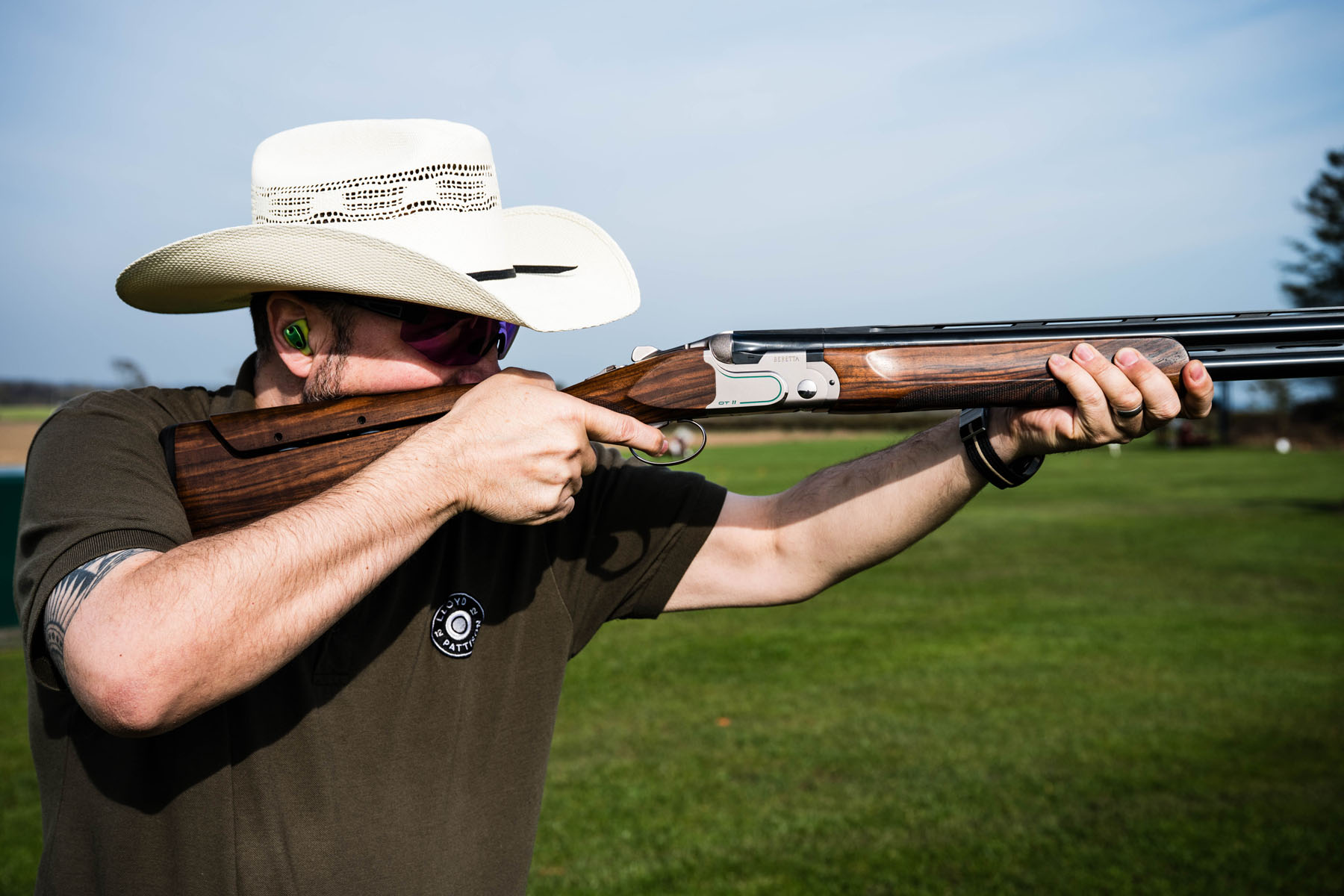
In 2014 Beretta replaced the highly regarded DT10 competition shotgun with the DT11. The DT10 was already a high-water mark for reliability and longevity, derived from the hand-built ASE with a massive receiver bearing surface mating the barrels to the action and a cross bolt acting on lugs protruding from the similarly massive face of the monobloc.
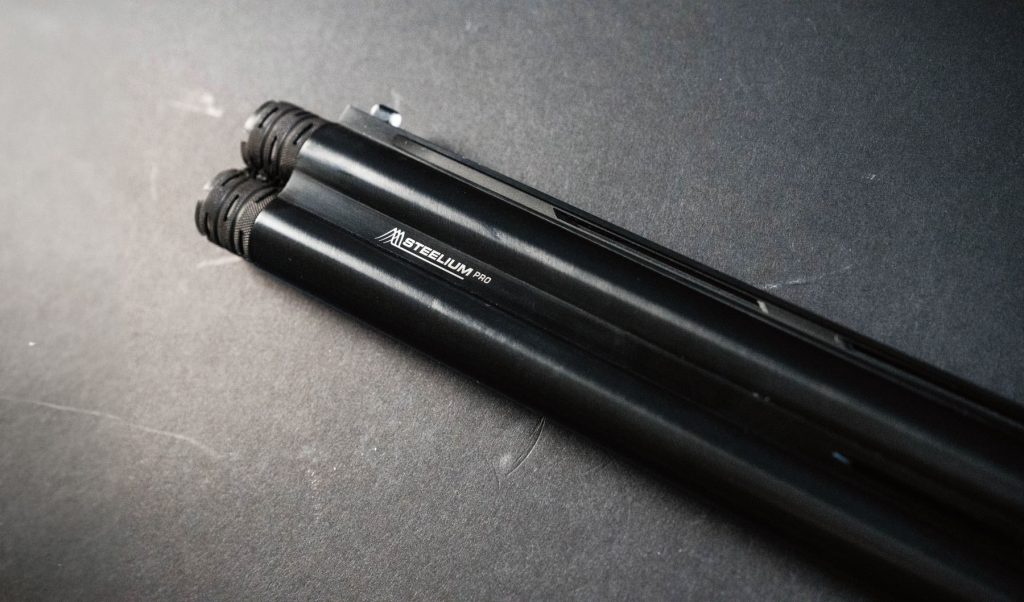
The DT11 improved in this design with a newly widened action to increase weight and shift the gun’s centre of mass more neutrally between the shooter’s hands. The barrels were redesigned with a new back-boring system and forcing cones that Beretta called Steelium Pro. It was optimised for plastic wad competition cartridges to throw the best pattern with the least recoil. This system was offered on a special edition of the DT10 called the Anniversario, but the DT11 was equipped with them as standard.
The barrels also benefited from the newish Optima HP chokes, which were derived from the Optima Plus system designed to withstand higher pressures while not increasing weight by moving the threads further down away from the muzzle, where constriction is tightest, to allow for greater wall thickness in that area.
The trigger-plate action featured a removable inertia trigger unit with leaf springs, which offered superb crisp trigger-pulls and the ability to swap out the unit should it fail. Carried over from the DT10, this was much a case of if it ain’t broke…
The first release of the DT11 in the UK featured woodwork that was, initially, rather lumpen and suited only to users with big paws, but a revision followed that slimmed down the pistol grip somewhat to widen the gun’s appeal.
Since then, Beretta has continued to refine and release new versions of the gun for various disciplines and shooting styles. There are models that run the gamut in terms of engraving, woodwork and barrels to suit more than a few circumstances and shooters. The DT11 remained popular and has been king of the range for competition shooters in its line up until the recent release of the SL2.
This is due to the balance of features and value for money, a loyal fan base and great dealer support. The SL2 was launched at a higher price point and had quite a different character, leaving plenty of room for its older sibling to continue to exist.
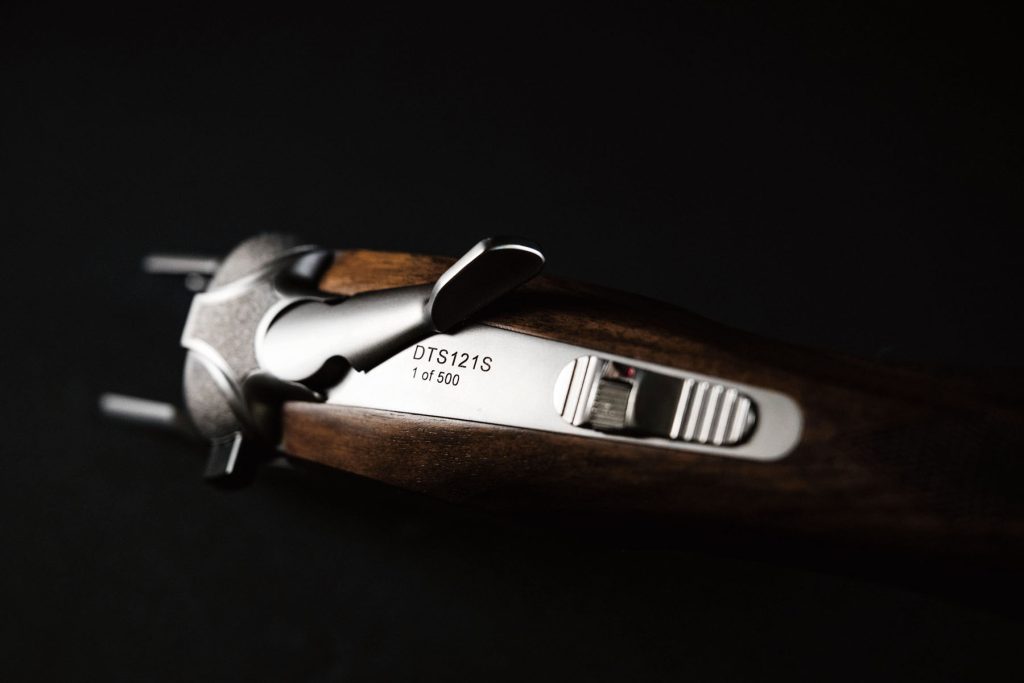
The Supersport is being made in a limited run of 500 to mark Beretta’s quincentenary (500th anniversary) with a special serial number and marking on the top tang.
The gun is accented in what looks to me like a sea green – much less lairy than the acid green used on the DLC – for a muted businesslike appearance that still differentiates it from the blue used on the standard guns. This subtlety carries on in the nature of the changes applied to the Supersport that, while minor, add up in a way that is somehow greater than the sum of its parts.
In-depth features and accessories
Starting at the beginning, the Supersport comes in a handsome compact case finished in the sea green to match the accents on the gun. The case, lined in black velvet, unfolds like a clam shell and holds all the usual accessories like wrenches, oil and B-Fast O-rings and weights, plus a selection of beads and a spare trigger-blade. Also in the box are six ported chokes finished in a rather cool-looking black that is also very practical.
Available in 30in and 32in, the barrels have the usual DT11 ventilated top and mid rib with the Steelium Pro logo on the mid rib at the muzzle end. The 10x8mm top rib, topped with a white bead, is finished with a tramline – a feature that was so popular on the 694 limited edition it was added to later mainstream runs of the gun. The 76mm chambers and 18.6mm boring remain unchanged from the regular editions.
The forend on the Supersport is 5mm longer than the standard beavertail and while it looks similar in profile, the feel is significantly improved by a deepening of the finger choils running down the length. In the hand it feels a little slimmer, a little easier to hold and delivers a pleasing surety over the chubbier standard woodwork.
The action is as already noted accented in green and has a subtle but attractive hand-written style “Supersport” on the base. This for me feels very Italian, evocative of, say, Alfa Romeo or Ferrari.
Moving on to the pistol grip, here again we see subtle changes. The neck has been slimmed ever so slightly as it flows into the stock, making the gun feel more svelte. The stock feels slightly slimmer too, with a modest reading of the drop and a 5mm increase in length of pull. This again appears to take inspiration from the sensationally popular 694 to fit the changing tastes of shooters, who are starting to prefer a longer LOP and more rib visibility.
The woodwork is Grade 3 and will vary with the gun you choose but is always well finished. It is laser chequered with a very fine border and a good balance of lines per inch and depth.
The DT11 is, and has ever been, a tool designed with the competition shooter in mind; every part of the gun has been thought out with this mindset. The action, the barrels, the jointing, the trigger group – all of it is designed to shoot tens of thousands of rounds and keep going while offering the shooter maximum comfort and repeatability.
The sum of these minor changes is immediately apparent when handling the Supersport; in the hands it feels closer to an SL2 or a Krieghoff.
Field test performance
I spent a couple of weeks with the Supersport and shot several hundred cartridges on a variety of disciplines and I can tell you it was no chore; it is so at home on the clay ground it feels born to it. The revised drop and minor woodwork tweaks are what I would have done were I to go to Beretta Due and have one custom fitted. The gun mounts and shoots sweetly, and swings with excellent balance and inertia.
The gun I had on test had 30in barrels, which to me felt well suited to Skeet or ABT (Automatic Ball Trap) where rapid gun movement is required, although I found no issue with Sporting targets. My personal preference would be with 32in barrels but that is very much a subjective thing. I would happily shoot either length for more or less any discipline and be delighted with it.
I have seen plenty of the more embellished DT11s in the field and certainly this one could be used to great effect for any gamebird you might turn it upon, especially in the 30in guise.
Conclusion
I have said the DT11 Black was my recommendation for the best of the bunch because it has such a broad range of adjustability in balance to be suitable for anyone to make it feel like their own. In light of the Supersport, however, I will have to reconsider – this limited edition gun is my new favourite version of this platform. Limited editions being what they are, you may despair of ever being able to handle, much less own, one. But I wonder whether this special edition will, much like the 694 LE, find some of its key features appearing in more mainstream versions of the gun in the future. Beretta has always proved itself to be keen to listen to the market and feedback from shooters, so watch this space.
This article contains affiliate links. If you click on one of these links and make a purchase, we may earn a small commission at no additional cost to you. Affiliate income helps us maintain the quality of our content and keep it freely accessible.
All recommendations are based on our honest opinions and thorough research.Would you like to speak to our readers? We offer sponsored articles and advertising to put you in front of our audience.
Find out more.
Read our in-depth Caesar Guerini Avian review. We test the 20-bore 32-inch field model to see how this premium Italian over-and-under handles on the range
Bruce Potts puts the Mossberg Maverick 88 to the test to see if this affordable 12-bore workhorse can deliver the reliability and performance required for rugged UK vermin control
The new Beretta A400 L combines modern engineering with classic styling. Bruce Potts puts it through its paces on clays and in the field.
By Shooting Times | 22 January 2026
Get the latest news delivered direct to your door
Subscribe to Shooting Times & Country
Discover the ultimate companion for fieldsports enthusiasts with Shooting Times & Country Magazine, the UK’s leading weekly publication that has been at the forefront of shooting culture since 1882. Subscribers gain access to expert tips, comprehensive gear reviews, seasonal advice and a vibrant community of like-minded shooters.
Save on shop price when you subscribe with weekly issues featuring in-depth articles on gundog training, exclusive member offers and access to the digital back issue library. A Shooting Times & Country subscription is more than a magazine, don’t just read about the countryside; immerse yourself in its most authoritative and engaging publication.
To provide the best experiences, we use technologies like cookies to store and/or access device information. Consenting to these technologies will allow us to process data such as browsing behavior or unique IDs on this site. Not consenting or withdrawing consent, may adversely affect certain features and functions.
Functional
Always active
The technical storage or access is strictly necessary for the legitimate purpose of enabling the use of a specific service explicitly requested by the subscriber or user, or for the sole purpose of carrying out the transmission of a communication over an electronic communications network.
Preferences
The technical storage or access is necessary for the legitimate purpose of storing preferences that are not requested by the subscriber or user.
Statistics
The technical storage or access that is used exclusively for statistical purposes.The technical storage or access that is used exclusively for anonymous statistical purposes. Without a subpoena, voluntary compliance on the part of your Internet Service Provider, or additional records from a third party, information stored or retrieved for this purpose alone cannot usually be used to identify you.
Marketing
The technical storage or access is required to create user profiles to send advertising, or to track the user on a website or across several websites for similar marketing purposes.