★ Save on shop price when you subscribe. Pay just £2.80 per issue – 43% cheaper than buying in-store at £4.95! ★

Stalking diary: a slow roe rut and a young guest’s first buck
Chris Rogers finds the roe rut slow to start at Euston, but a tactical stalk gives a young guest an invaluable insight into ethical deer management
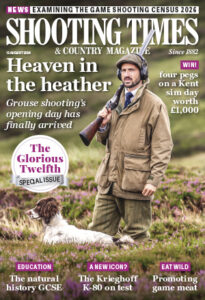
 Regular client Ed and his grandson Flynn gain an invaluable insight into the art of roebuck stalking, calling and ethical deer management during the rut. Credit: Chris Rogers

As I write this at the end of July, the roe rut has made a steady start on the estate, with bucks following does around but hardly chasing frantically. Once you see bucks with does it’s always worth a call to see if you can get something out of their bed, but so far, roebucks running blindly into the call haven’t materialised.
Frustratingly this lack of calling success has continued on my recent video for Shooting & Country TV. We have now filmed over six ruts and, while we have had success in one way or another, in terms of calling results we have never bettered the 2021 rut, where we had so much action we had to split the footage into two episodes.
Why roe rut activity varies so much from one estate to the next
While rutting and calling have been poor at Euston so far, only 15 minutes down the road near Bury St Edmunds, on a recent Saturday afternoon, the rut was in full swing and I called two bucks in to within 20m with ease. This just goes to show the variables around deer behaviour. Dates are never set in stone, and activity can be influenced by weather, cropping, deer densities and individuals within the population, among other factors.
The rut is always popular with clients, but it also falls in the school holidays, which recently gave regular client Ed a good opportunity to get his grandson Flynn out stalking with us. I meet a few people who watch the videos and it’s always great to hear their mostly positive feedback, but it’s fair to say that Flynn has watched all the videos in fine detail and was well briefed on how, why and where we stalk on the estate.
With the heat ramping up again, I was concerned that our run of dry luck would continue, and as we headed along dusty tracks and over stubble fields it wasn’t looking promising. As we arrived in the corner of a field opposite a maize cover crop, a doe ran out of the maize with a young buck in hot pursuit. They were already some 250m away and I gave a few optimistic calls to try to turn them, but they took no notice. We watched them run back into the crop lower down and then continued along a track to the top of the maize, where I had seen an older buck on several occasions.
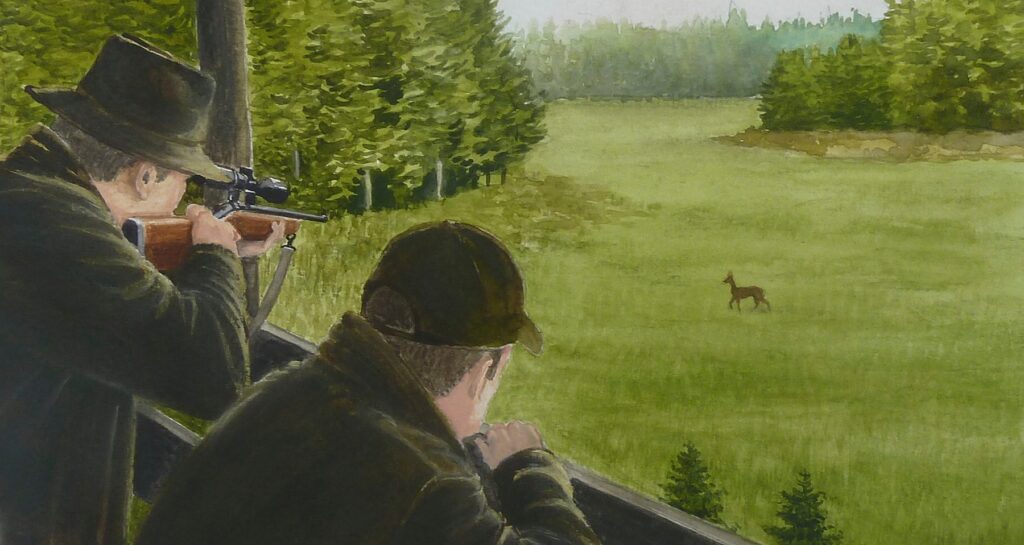
As we rounded the corner we spotted the young buck on his own in another stubble field; the doe had given him the slip, or the older buck had taken over. Because of the backstop we needed to get closer and call him towards a dip in the field that would give us a safe shot. Having crept as close as we could along the edge of the maize, we called quietly and, although his reaction couldn’t be described as enthusiastic, he wandered slowly towards us and stood obligingly at around 80m.
A young guest’s first taste of the roe rut
With the shot taken and the buck dropping on the spot, Ed and Flynn walked up to him with great excitement. Although we hadn’t seen many deer, we had taken a buck and given Flynn a taste of what roe stalking in the rut can be like. Experiences like this, particularly with family members, can last a lifetime, and hopefully this has started the lad on a path to taking up stalking, something we all need to encourage youngsters to do for the long-term future of ethical deer management.
Chris Rogers is a deer manager in East Anglia, CIC head measurer and NGO committee member. For stalking opportunities, email eustondeerhunting@yahoo.co.uk.
Frequently asked questions
Why is the roe rut in full swing on one estate and quiet on the next?
Because rut dates are never set in stone. Activity can be influenced by weather, cropping, deer densities and the individual animals within the population, which is why the rut can be flat on one estate and running hard only 15 minutes down the road.
Does calling always bring a roebuck in during the rut?
No. Once bucks are seen with does a call is always worth trying, but bucks running blindly into it are the exception rather than the rule. Across more than six filmed ruts the best calling by a distance was 2021, and in a poor year a buck may come slowly and without much conviction, or not at all.
How do you take a safe shot at a roebuck on open stubble?
By working the ground rather than the rifle. With no natural backstop behind the buck, the answer here was to close the distance along the edge of a maize crop and then call the animal towards a dip in the field, so that the shot was taken into rising ground at around 80m.

About the author
Chris Rogers
A Norfolk deer manager, Chris is responsible for the deer across the 6,000 hectares of the Euston Estate. He writes for Rifle Shooter and Shooting Times and produces a monthly video for Shooting & Country TV, and his subjects run from the rut - among them working an old roebuck with the doe call and the buck’s own bark - through to the year-round practicalities of managing deer at that scale.
Related Articles
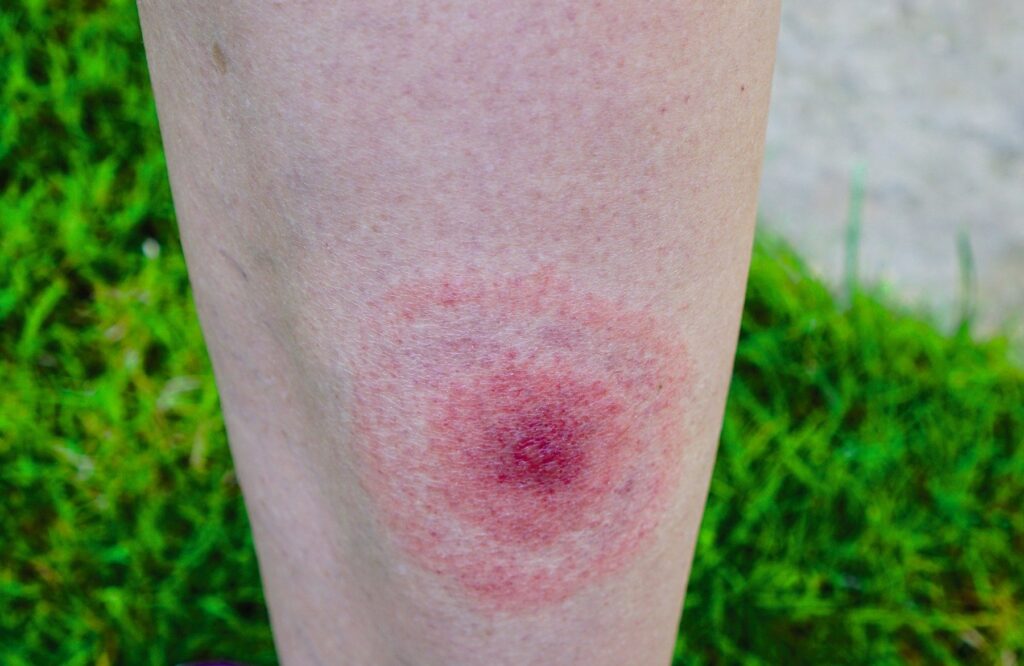
A Lyme disease vaccine is finally close: what it means for stalkers
After two decades without a vaccine, a genuine Lyme jab is now nearing approval – welcome news for anyone who works outdoors
By Shooting Times | 6 August 2026
Uncalled for behaviour: what happens when roe deer calling goes wrong
Calling in roebucks during the rut requires skill and practice. As Jim Old discovers, get it wrong and the results can be unexpected
By Shooting Times | 6 August 2026
Get the latest news delivered direct to your door
Subscribe to Shooting Times & Country
Discover the ultimate companion for fieldsports enthusiasts with Shooting Times & Country Magazine, the UK’s leading weekly publication that has been at the forefront of shooting culture since 1882. Subscribers gain access to expert tips, comprehensive gear reviews, seasonal advice and a vibrant community of like-minded shooters.
Save on shop price when you subscribe with weekly issues featuring in-depth articles on gundog training, exclusive member offers and access to the digital back issue library. A Shooting Times & Country subscription is more than a magazine, don’t just read about the countryside; immerse yourself in its most authoritative and engaging publication.