★ Your magazine. Your say. Complete our reader survey with a chance to win Jack Pyke kit worth £500! ★



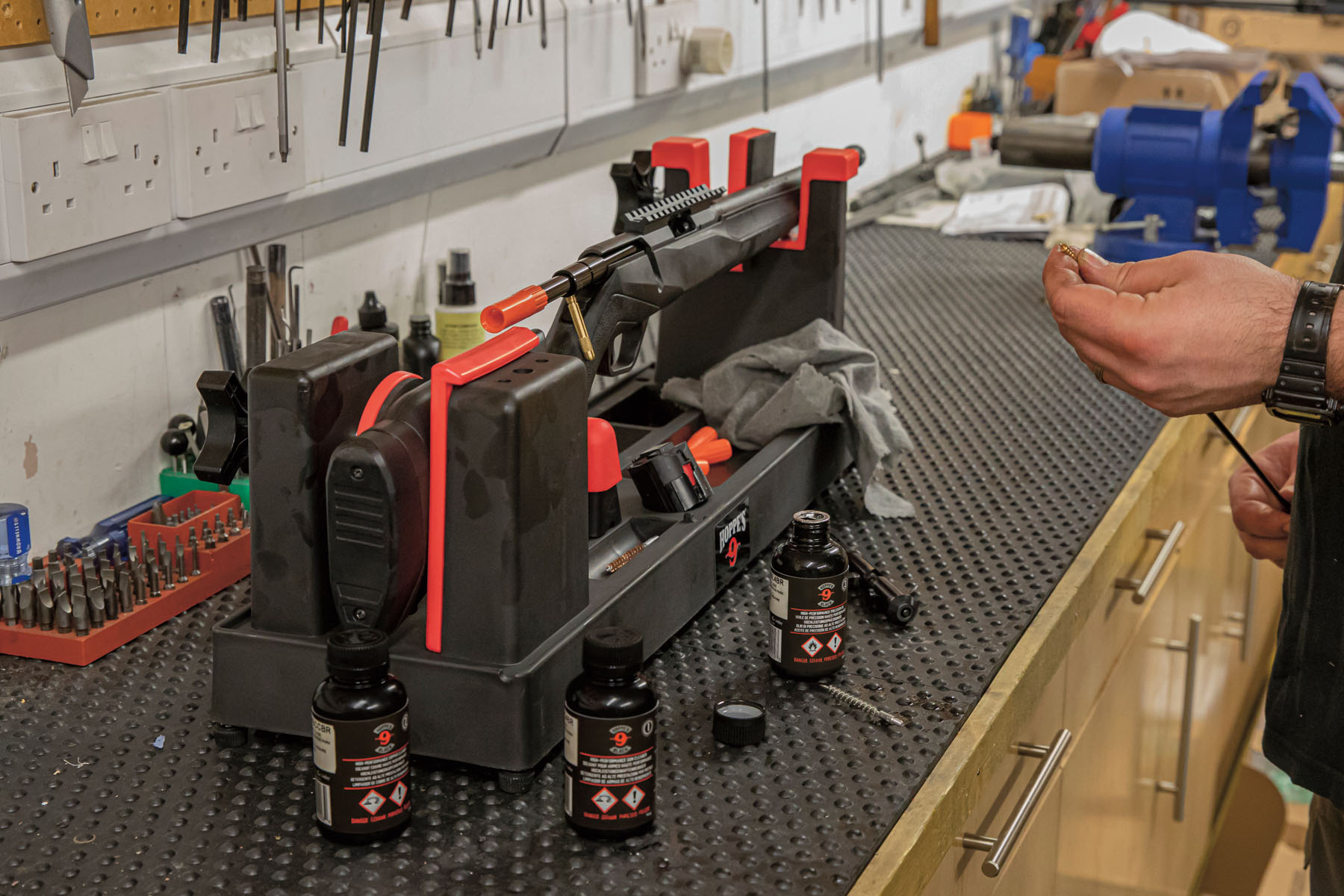
The importance of gun maintenance
There is a saying in the shooting world that you can tell a lot about a person’s gun by the state of their vehicle. A mud-caked, poorly maintained car often signals a similar approach to the firearm in the cabinet at home. It’s an unfair generalisation but it contains a kernel of truth.

Establishing a consistent cleaning routine
Gun care is something most owners realise is important but fewer execute with real discipline. The routine tends to collapse to a quick wipe after a wet shoot and a pull-through before the next. “If they are anything like me it’s about cleaning the barrels and drying the gun if is wet,” admits Ashley Shaw of Fine Shooting Accessories, which supplies the Napier range of products. “Then once in a blue moon removing chokes. I think that for the majority this is an area we could all do better in.”
Julian Cann of British gun care brand Pro-Ferrum puts a more charitable spin on it. “The majority of owners look after their guns beautifully but there is always the exception,” he says. “I think it’s fair to say that owners are always looking for the easiest solution that offers the best protection. Time has become short for everyone, so they rely on spray, brush and go – or just a pull-through with a bore snake a lot of the time.”
Why thorough gun cleaning matters
The case for a more thorough approach is straightforward. Graham Turner of Edgar Brothers, UK importer of American gun care brand Hoppe’s, frames it clearly: “Keeping your firearms in a clean and well-maintained state is essential. It’s paramount to safe shooting, but also reliability. There’s nothing worse than a gun jamming or a trigger failing in the field – and the future value of the gun when the time comes to upgrade.”

Adapting your routine to the seasons
A gun used on a December rough shoot faces entirely different challenges from one broken out for a July sporting clays lesson, and your cleaning approach should reflect that difference. Winter shooting means moisture – rain, mud, condensation. Ventilated ribs, the hinge pin, the action face, the forend iron – these are the spots that gather water and are most easily forgotten. “Attention to detail is needed to dry guns after a wet day, particularly in areas that are hard to get to,” says Ashley. “Ventilated ribs can easily be neglected.”
Summer use brings dust and fine grit into mechanisms, and frequent use on warm clay grounds generates heat that stresses lubricants and accelerates wear on moving parts. Julian notes that Pro-Ferrum handles both scenarios effectively: “Moisture is a winter issue and dust a summer problem. Pro-Ferrum lifts moisture off the surface and emulsifies it, ensuring none is left anywhere. When it dries it leaves a dry lubricant, so dust doesn’t stick in summer.”
Protecting wood and metal
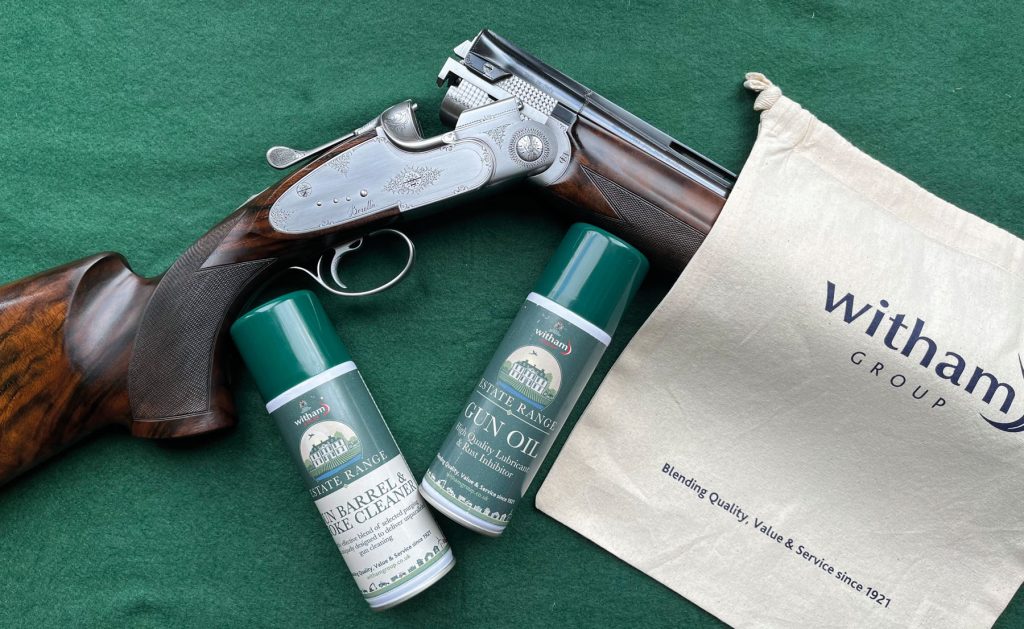
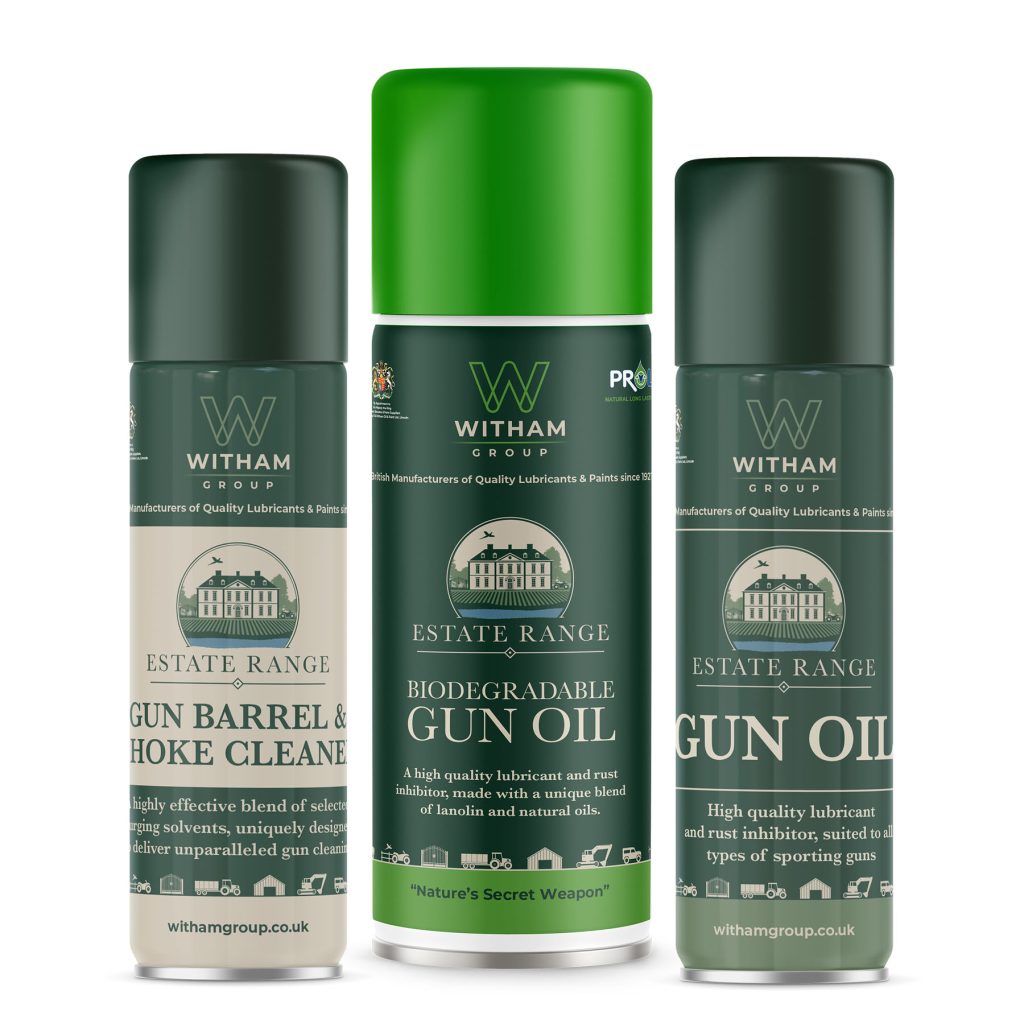
The Royal Warrant-holding, family-run British gun care brand Witham Group takes a similar approach. Its gun oil displaces water and condensation in winter while keeping wooden stocks hydrated and looking their best through the warmer months with more frequent use.

Preventing salt damage and corrosion
Wildfowlers and coastal game shooters should realise that salt accelerates oxidation dramatically and will begin to pit steel within hours if not addressed. “If your firearm encounters saltwater, immediate action is non-negotiable,” says Graham. “Rinse with fresh water and apply a high-grade moisture displacement oil instantly to prevent pitting.”
Julian describes Pro-Ferrum’s preventive approach for regular coastal users: “If used regularly, a protective layer forms all over the surface of the gun, stopping saltwater contact. Six individual applications will ensure all the micropores are completely filled with Pro-Ferrum formula, which then dries to leave a rust-proof barrier. It’s prevention instead of cure.”
Ashley keeps it practical. Dry your gun thoroughly after use, wipe it down with a clean damp cloth, dry it again and then apply a light coating of good gun oil. A preference for synthetic stocks when wildfowling also helps, as they are impervious to damage resulting from mud and moisture.

Essential cleaning techniques
Keep going until your patches come out clean. “Clean until patches come out white, but don’t over-scrub – less is often more,” advises Graham. Polymer wads have added complexity in recent years, leaving plastic fouling that patches alone will not shift.
Removing plastic wad fouling
Julian’s approach uses Pro-Ferrum: “A spray of Polymer Wad Cleaner run through with a Pro-Clean bronze brush removes everything efficiently. Then Pro-Ferrum Fluid pushed through with a felt wad completes the process – the bores will then shine like fresh chrome.”

Choke care and maintenance
Seized chokes are among the most common problems gunsmiths encounter – and almost entirely preventable. “Chokes should be removed as best practice every time the gun is shot,” says Julian. “Sadly, some people don’t remove them at all.” Heat generated during a simulated day or a busy clay circuit causes the barrel metal to expand and contract repeatedly. Any moisture and no grease on the thread, and the choke will corrode in place. Removing a seized choke requires a gunsmith and in some cases specialist equipment. Julian specifies Pro-Ferrum Gun Grease: “It’s one of the only lithium-based greases with zero moisture content – it’s the water content separating from the grease that slowly allows the choke to seize.”

Safe gun storage and dehumidifiers
The end of the season brings its own risks if the gun is put away damp or inadequately protected. “Most gun cabinets are installed against an external wall, increasing the risk of damp,” notes Graham. “A dehumidifier will certainly help here.”
Julian raises a less commonly understood issue: “Traditional wet oils are often wicked off the surface by a gun case lining or case baize. Without a protective layer, condensation forms on bare steel, creating perfect conditions for rust. Mineral oil also rots wood over time. You often see old English gun stocks darken around the headstock, caused by non-drying oil migrating slowly down the barrel into the action and being absorbed by the porous stock.”
Ashley’s approach is to clean thoroughly, oil every part, remove and clean choke threads, replace with a drop of oil, and store in a lightweight sleeve well away from any damp linings.
What to avoid in your cleaning kit
Several common products do more harm than good. WD-40 can dry into a sticky residue that gums up internal mechanisms. Vinegar’s acetic acid will strip bluing. Motor oil oversoaks into wooden stocks, causing dry rot. Paper towels leave lint and fibres in fine mechanical parts. Furthermore, water displacement products leave a sticky residue once the solvent evaporates and have no place inside a firearm. PTFE-based lubricants should also be avoided inside the bore.
At the high temperatures generated in a gun barrel, PTFE can break down into toxic decomposition products including hydrogen fluoride, which attracts moisture and contributes to rust and pitting. The same logic applies to tools. Fine Shooting Accessories produces brushes, rods, jags, turnscrews and disc keys sized to the correct calibre and specification – particularly important on best guns where incorrectly sized tools can easily damage delicate pins and engraving.
Recommended cleaning kit
There is broad agreement on what a cleaning kit should contain: a quality rod of the correct length, bronze or brass brushes sized to calibre, felt wads or lint-free patches, a recognised solvent such as Ballistol or Hoppe’s, a good gun oil – Pro-Ferrum Fluid or Witham Gun Oil are among the standouts – and a lithium-based gun grease for chokes and moving parts.
Sustainable and professional gun care
For a cleaner alternative, Witham’s Biodegradable Gun Oil is worth serious consideration. Harnessing lanolin derived from sheep’s wool, it forms a long-lasting barrier with outstanding rust resistance and wood-preserving qualities, yet is completely biodegradable and free from carcinogens and toxins. Already gaining traction on country game estates and clay grounds across the UK, it is nature’s answer to conventional gun oils – and a genuine game-changer for the environmentally conscious shooter.
Know your limits too. “DIY care ends where internal timing and safety mechanisms begin,” says Graham. “If you see signs of mechanical wear or deep corrosion, put the tools down.” Julian recommends a biannual professional service regardless of how diligent your home routine is.
Ashley puts it simply: “Good gunsmiths take years perfecting their craft. It’s worth paying for their expertise rather than guessing or ignoring a fault.” The cost of a comprehensive cleaning kit is modest set against the value of what it protects. A few minutes at the cleaning bench after every outing will extend the life of your gun, preserve its value and ensure it performs reliably when it matters most.
Get the latest news delivered direct to your door
Subscribe to Shooting Times & Country
Discover the ultimate companion for fieldsports enthusiasts with Shooting Times & Country Magazine, the UK’s leading weekly publication that has been at the forefront of shooting culture since 1882. Subscribers gain access to expert tips, comprehensive gear reviews, seasonal advice and a vibrant community of like-minded shooters.
Save on shop price when you subscribe with weekly issues featuring in-depth articles on gundog training, exclusive member offers and access to the digital back issue library. A Shooting Times & Country subscription is more than a magazine, don’t just read about the countryside; immerse yourself in its most authoritative and engaging publication.