Home/Pigeon decoying over spring drilling: a perfect day in the hide
Shooting
Pigeon decoying over spring drilling: a perfect day in the hide
Apart from a chiller full of maggot-infested pigeons, the last chance on a spring drilling proves to be a decoyer’s dream
Geoff Garrod29 April 2026
I had a horrible feeling that while I was on holiday the farm would get all the spring drilling done – and I was almost right. Before my holiday the weather had been wet and horrible and the farm had not managed to get the drill out. As soon as I went away the sun came out, the land dried and there were perfect conditions for working the fields. They worked all the hours they could and all the spring corn was sown, except for one 15-acre field. I’m not sure why this particular field was left until last, but I was very grateful.
Promising signs for decoying
They drilled it on the Monday after I returned and, because all the other drilled fields had been scratched over by the local pigeon population, it was a fair bet that this small field would see some activity over the next couple of days. I went to have a look on the Tuesday and it was promising. It wasn’t covered with pigeons, but there were plenty in the area and lots of crows.
Probably the most noticeable thing, which was great news, was that the large winter flocks of pigeons seemed to have broken up into small groups. I got the feeling that I might be able to make a day out of the situation and finally get some proper decoying done. I knew that it wouldn’t take long for the birds’ attention to turn elsewhere once all the surface grain was picked away, so I planned to have a go the next day.
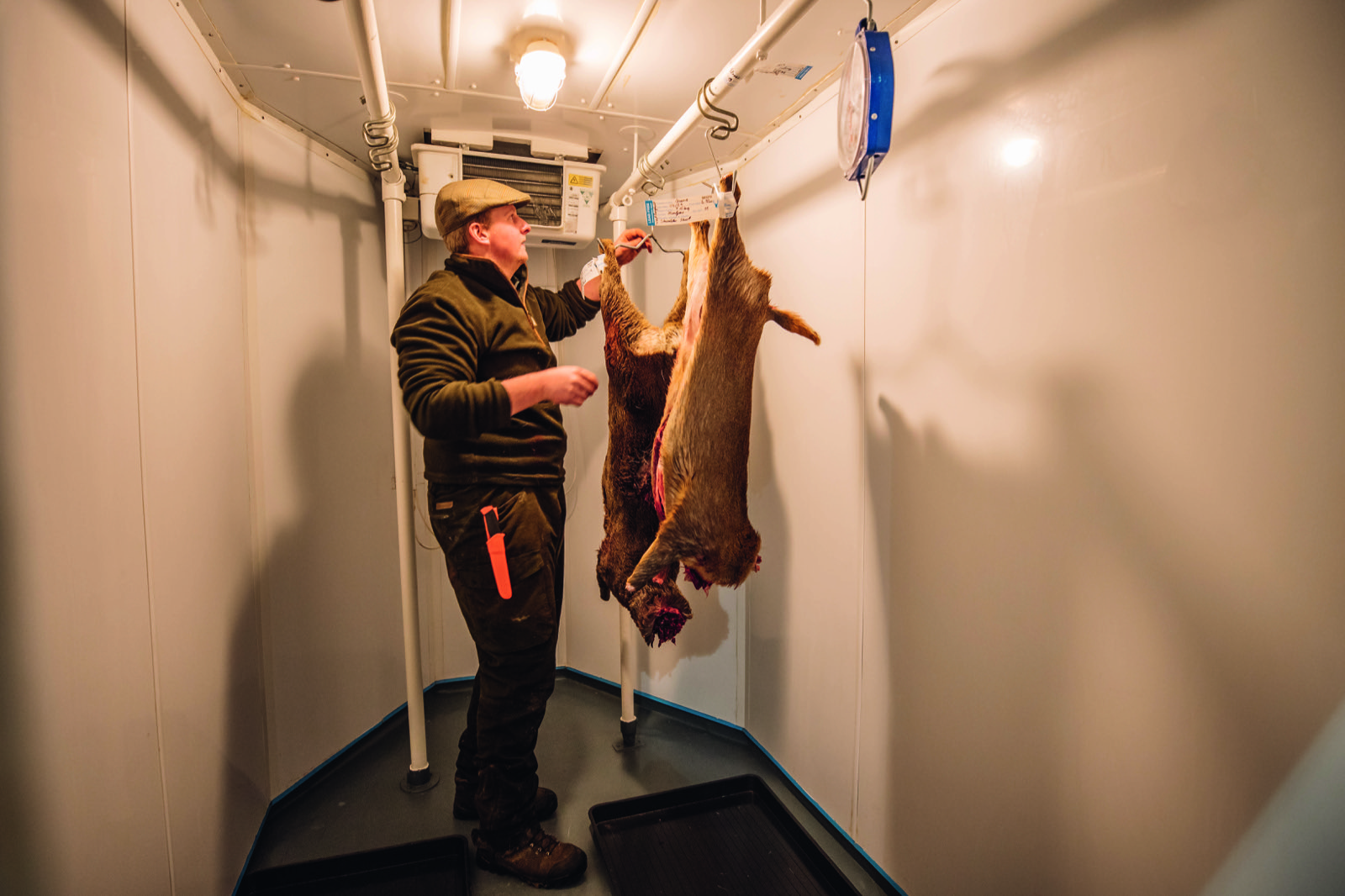
I was excited by the prospect of getting back into the hide the next day and I set off to the farm to pick up some pigeons for decoys that I’d left in the chiller two weeks before. The smell wasn’t at all good as I walked towards the chiller. It was clear that something wasn’t right. I opened the door tentatively and was greeted by a blast of warm, foetid air and the sight of pigeons full of maggots. It wasn’t a pleasant job sorting everything out.
When plans go awry
I later found out that there had been a power cut on the farm. The chiller had tripped out and when it came back on it was blowing warm air. One of the pigeons must have been flyblown, which wouldn’t have been a problem if they had been kept in a cold place, but 20°C was the perfect breeding temperature for flies.
This was going to make decoying the next day a bit more difficult and I would simply have to improvise in the morning. I knew where I was going to set up the hide and I knew the flightlines well. I just hoped I could shoot a few early birds to get the pattern going.
Hide placement and flightlines
The hide location I’d chosen was on a hedgerow on the southern boundary of the field and the wind was blowing from the east across the front of the hide. Many of the pigeons were using a line into the field that brought them over that hedgerow. Others were coming in from a piece of woodland a little way back from the field straight in front of me.
Annoyingly, there is also a fairly well-used footpath that runs through the middle of this field. It was about 150m from the hide, so I would need to keep a keen eye open for people and dogs, but it was all manageable and the dog walkers would be on open land and easy to spot. But it was something I’d have to take into account.
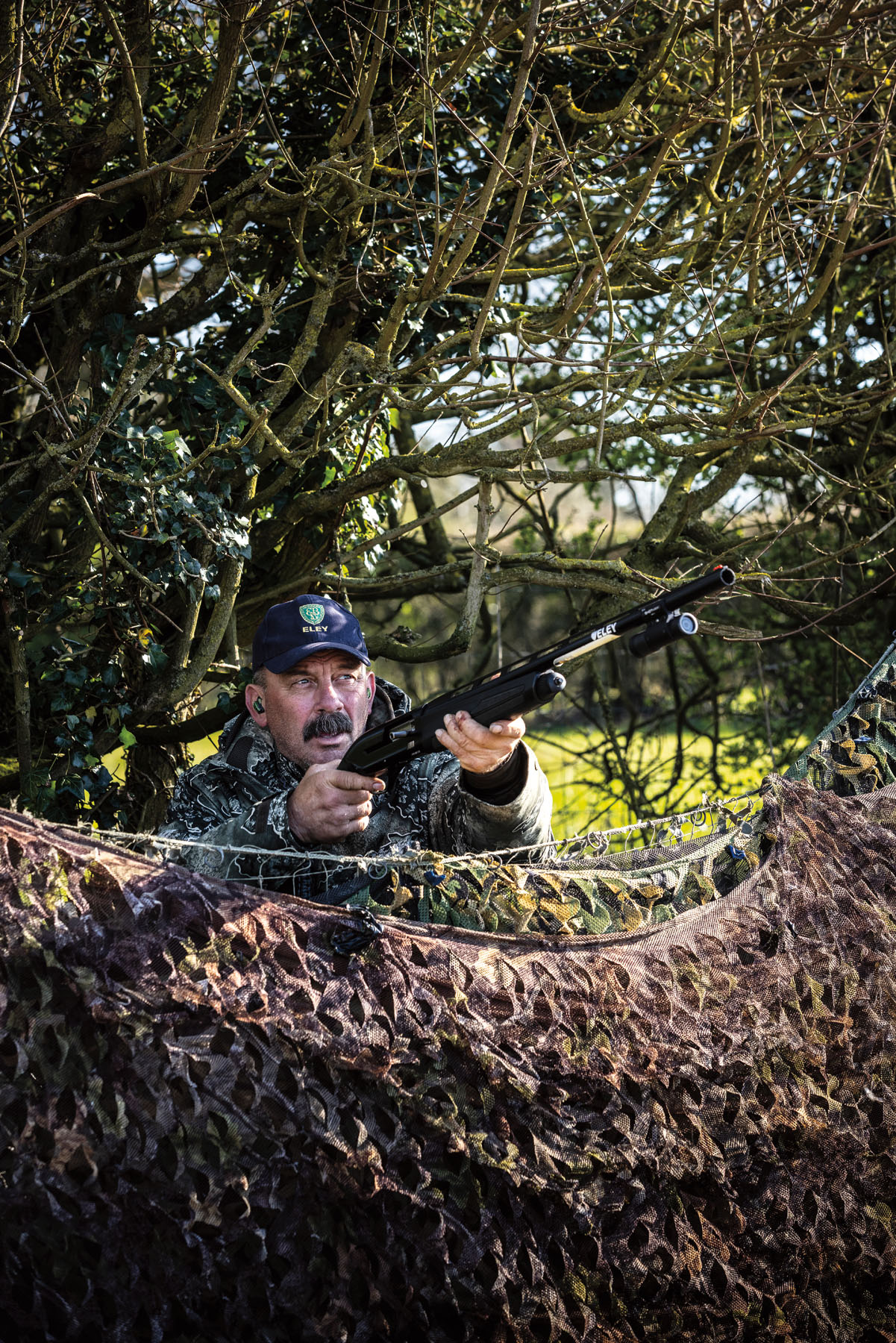
I arrived at the field at about 11am, set up the hide, made myself comfortable and waited for a pigeon to come into range so that I could start the decoy pattern. It didn’t take too long before a jackdaw came my way upwind from my right. It was a decent way up, but I crumpled it with one shot, the Eley HV 32g No 6 shot doing its job nicely.
I placed the lone bird about 20 paces from the hide and sat back down.
First decoys out
The field had been fairly busy with crows when I pulled up and they were already feeding. The pigeons were moving around but hadn’t yet started to search for grain. They were clearly still interested in the field, so getting one of them shot and out in a cradle was a priority. Again, luck was on my side and a lone woodie flew almost directly over the hide at low altitude, arriving from the rear.
I didn’t have much time to react, but again I scored and set it out in a cradle upwind of the hide, with the hope of enticing any decoying birds to fly past the hide as they landed into the wind.
Building the pattern
With two birds now in the pattern things started to develop nicely. I can’t say that it was ever a manic amount of shooting, but I never had to wait too long for my next opportunity. The sun was shining, it was all shaping up nicely and I was enjoying being back in the hide.
As the pattern built up over the next two hours the pigeons and crows couldn’t have been more accommodating and were doing everything I’d hoped they would. It was great to see the pigeons leave the wood in the distance, fly across the field and commit so eagerly to land in the decoys. It is something every decoyer dreams of.
Minor annoyances, major rewards
The only minor annoyance was the small flock of feral pigeons that were constantly visiting my decoys. There are a couple of pigeon lofts in the village that was close by, and I’m guessing they were residents from there as they didn’t seem to be scared of anything. They just kept looping around and revisiting me and, with the sun directly behind, it was sometimes difficult to pick the woodpigeons from the ferals.
The sunlight seemed to be highlighting the elbows on the feral pigeons’ wings and looked like the white wing bars that are usually easy to spot on woodpigeons. I kept getting up to shoot, only to be disappointed when the birds turned and it became obvious it was a feral pigeon yet again. On the plus side, though, the constant movement around the decoys was helping to allay any fears the woodies had about coming in to feed.
By lunchtime I’d shot roughly half corvids and half pigeons, but as the crow activity started to dwindle, the pigeon movement began to pick up. I’d been expecting them to feed more eagerly after lunch, because they feed at first light at this time of year, then retreat to the woods to digest what they have in their crops. Once again it was never full on, but there was a constant trickle of pigeons until about 4pm.
Protecting the crop
It had been a successful outing and everything had worked as I’d hoped it would – except for the chiller incident the day before. The wind was a constant 10mph to 15mph and the sun was on my back for most of the day, which kept me in the shadow of the hedge. The flightlines were as predicted and the pigeons didn’t seem to be put off by the shooting, as the wind direction was carrying the sound away from where they were arriving from. It was a relaxed and entertaining day’s shooting and I did a good job of protecting the crop from damage.
It was a shame I’d been away while most of the drilling had been done, but it’s impossible to plan a holiday around when the farm can do its work. But I was glad that I’d managed to get one day before returning to the rape or clover, which will be the main options for a month or two.
Better decoying ahead
The end of the most challenging seasonal shooting is coming and the rape is growing rapidly now, which will make the shooting a bit easier. The bare patches will become increasingly prominent and that is where the pigeons will be feeding, if they’re not on the clover we have planted for one of the farm’s schemes. Better decoying is on its way and I can’t wait.
This article contains affiliate links. If you click on one of these links and make a purchase, we may earn a small commission at no additional cost to you. Affiliate income helps us maintain the quality of our content and keep it freely accessible.
All recommendations are based on our honest opinions and thorough research.Would you like to speak to our readers? We offer sponsored articles and advertising to put you in front of our audience.
Find out more.
Choosing the right cartridge for Sporting clays and competition shooting is every bit as important as choosing the correct gun and choke combination. This guide covers five of the best competition cla...
Winter doe culling remains a vital tool for protecting biodiversity and balancing fragile woodland ecosystems
By Geoff Garrod
Get the latest news delivered direct to your door
Subscribe to Shooting Times & Country
Discover the ultimate companion for fieldsports enthusiasts with Shooting Times & Country Magazine, the UK’s leading weekly publication that has been at the forefront of shooting culture since 1882. Subscribers gain access to expert tips, comprehensive gear reviews, seasonal advice and a vibrant community of like-minded shooters.
Save on shop price when you subscribe with weekly issues featuring in-depth articles on gundog training, exclusive member offers and access to the digital back issue library. A Shooting Times & Country subscription is more than a magazine, don’t just read about the countryside; immerse yourself in its most authoritative and engaging publication.
To provide the best experiences, we use technologies like cookies to store and/or access device information. Consenting to these technologies will allow us to process data such as browsing behavior or unique IDs on this site. Not consenting or withdrawing consent, may adversely affect certain features and functions.
Functional
Always active
The technical storage or access is strictly necessary for the legitimate purpose of enabling the use of a specific service explicitly requested by the subscriber or user, or for the sole purpose of carrying out the transmission of a communication over an electronic communications network.
Preferences
The technical storage or access is necessary for the legitimate purpose of storing preferences that are not requested by the subscriber or user.
Statistics
The technical storage or access that is used exclusively for statistical purposes.The technical storage or access that is used exclusively for anonymous statistical purposes. Without a subpoena, voluntary compliance on the part of your Internet Service Provider, or additional records from a third party, information stored or retrieved for this purpose alone cannot usually be used to identify you.
Marketing
The technical storage or access is required to create user profiles to send advertising, or to track the user on a website or across several websites for similar marketing purposes.