★ Win a pair of Brandecosse Capriolo boots worth £219! Click here to enter ★


Dealing with tapeworms in working dogs
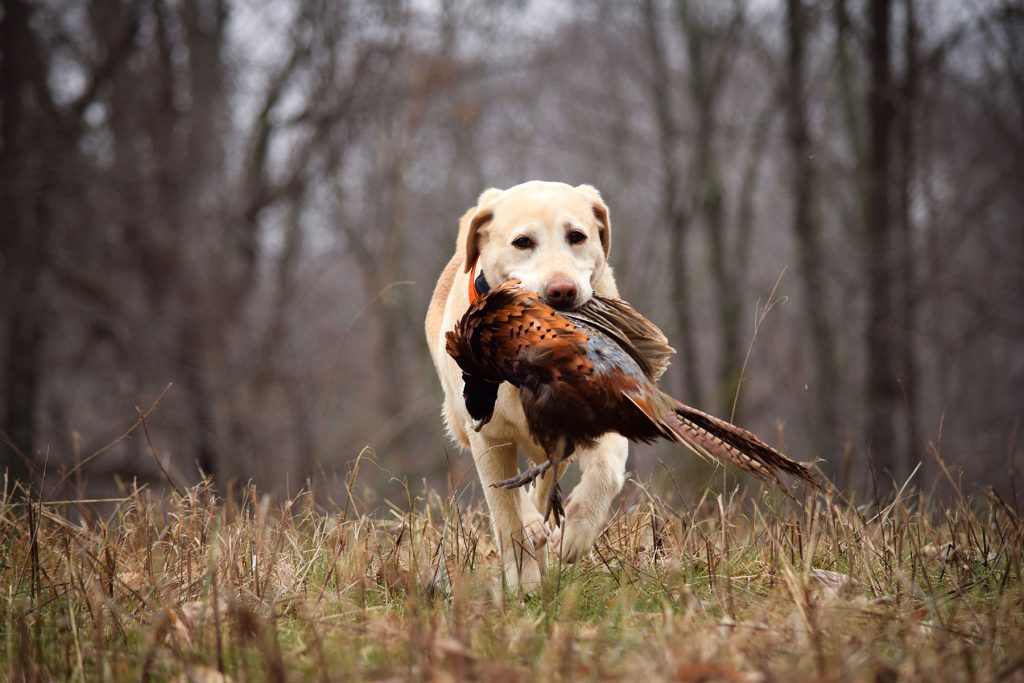
 Scoop after her successful retrieve

Q: What’s the best of dealing with tapeworms in working dogs? I have recently had to treat my dog for tapeworms. How do dogs get tapeworms and how can I prevent them in future?
A: Tapeworms are flat, segmented intestinal parasites. There are several types of tapeworms, but the most common tapeworm species observed in dogs is Dipylidium caninum. This tapeworm uses its hook-like mouthparts to attach to the wall of the small intestine. The adult worms may reach up to 11in (30cm) in length. As the adult matures, individual segments are passed in the faeces of an infected dog. Each segment is about ½in (12mm) long and about ⅛in (3mm) wide and looks like a grain of rice. Occasionally, they can be seen moving on the hairs around the anus or, more commonly, on the surface of freshly passed faeces. These segments contain the eggs of the tapeworm, which are released into the environment when the segment dries and splits open.
Unlike other intestinal parasites, dogs don’t become infected directly by eating these tapeworm eggs. Tapeworms must first pass through an intermediate host before they can infect a dog. The intermediate host for the most common species of tapeworm is the flea. When the tapeworm eggs are released into the environment, they must be ingested by flea larvae, an immature stage of the flea. Once inside the larval flea, the tapeworm egg continues to develop as the flea matures into an adult flea.
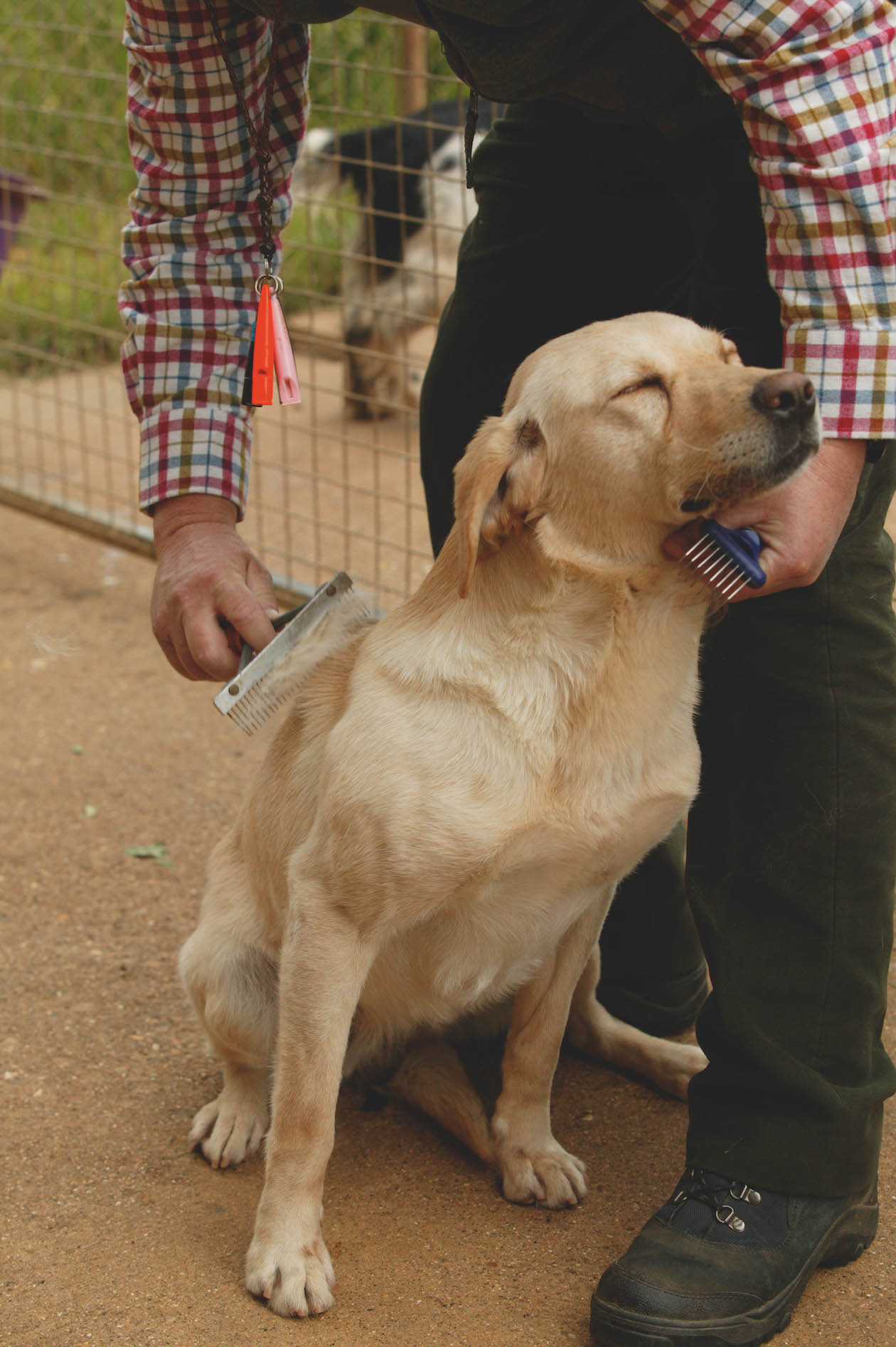
A dog could ingest a tapeworm-infected flea during grooming
During grooming, or in response to a flea bite, a dog inadvertently ingests the tapeworm-infected flea. As the flea is digested in the dog’s intestine, the tapeworm egg is released. It hatches and then anchors itself to the intestinal lining, therefore completing the life cycle. (You might also like to read advice on worming working dogs.)
Preventing tapeworms in working dogs
In most cases, you can prevent tapeworms by controlling fleas on your dog and on other animals in the household, especially cats, as well as in the home environment. Talk to your vet about the most suitable products to use, which might include flea sprays, powder, impregnated collars, oral medication or topical liquid. Also work with your vet to set up and maintain a suitable worming regime. Don’t let your dog roam unsupervised, especially in places where other dogs or animals have been, and always clean up after your dog, especially in your garden and in parks.
Related Articles
Gundogs
The vital role of gundogs in driven game shooting
For many, what makes the shoot day all the better is the company of our dogs, whether on the peg or beating line, says Julia Newman.
By Shooting Times
Gundogs
Safe gundog travel: why you must restrain your dog in the car
Discover why properly restraining your gundog in the car is essential for safety, legality, and insurance. Learn about crash-tested crates, harnesses and Highway Code rules for travelling with dogs.
By Shooting Times
Get the latest news delivered direct to your door
Subscribe to Shooting Times & Country
Discover the ultimate companion for fieldsports enthusiasts with Shooting Times & Country Magazine, the UK’s leading weekly publication that has been at the forefront of shooting culture since 1882. Subscribers gain access to expert tips, comprehensive gear reviews, seasonal advice and a vibrant community of like-minded shooters.
Save on shop price when you subscribe with weekly issues featuring in-depth articles on gundog training, exclusive member offers and access to the digital back issue library. A Shooting Times & Country subscription is more than a magazine, don’t just read about the countryside; immerse yourself in its most authoritative and engaging publication.