★ Win a Schöffel Country shooting coat for everyone in your syndicate worth up to £6,000! Enter here ★



Safe gundog travel: why you must restrain your dog in the car
Discover why properly restraining your gundog in the car is essential for safety, legality, and insurance. Learn about crash-tested crates, harnesses and Highway Code rules for travelling with dogs.


Travelling with an unrestrained dog is not only a breach of the Highway Code but also a serious risk. Both your dog and passengers could suffer injury or worse in an accident. Legal restraints such as crash-tested harnesses, crates, or dog guards could save lives – and prevent fines of up to £5,000.
Whether you’re heading to the moors with your working spaniel or taking your retired pointer to the vet, the journey can be more dangerous than the shoot itself. Many owners remain unaware that allowing their gundog to travel loose in the car violates Rule 57 of the Highway Code and puts everyone at risk.
What the Highway Code says
The Highway Code states: “When in a vehicle make sure dogs or other animals are suitably restrained so they cannot distract you while you are driving or injure you, or themselves, if you stop quickly.”
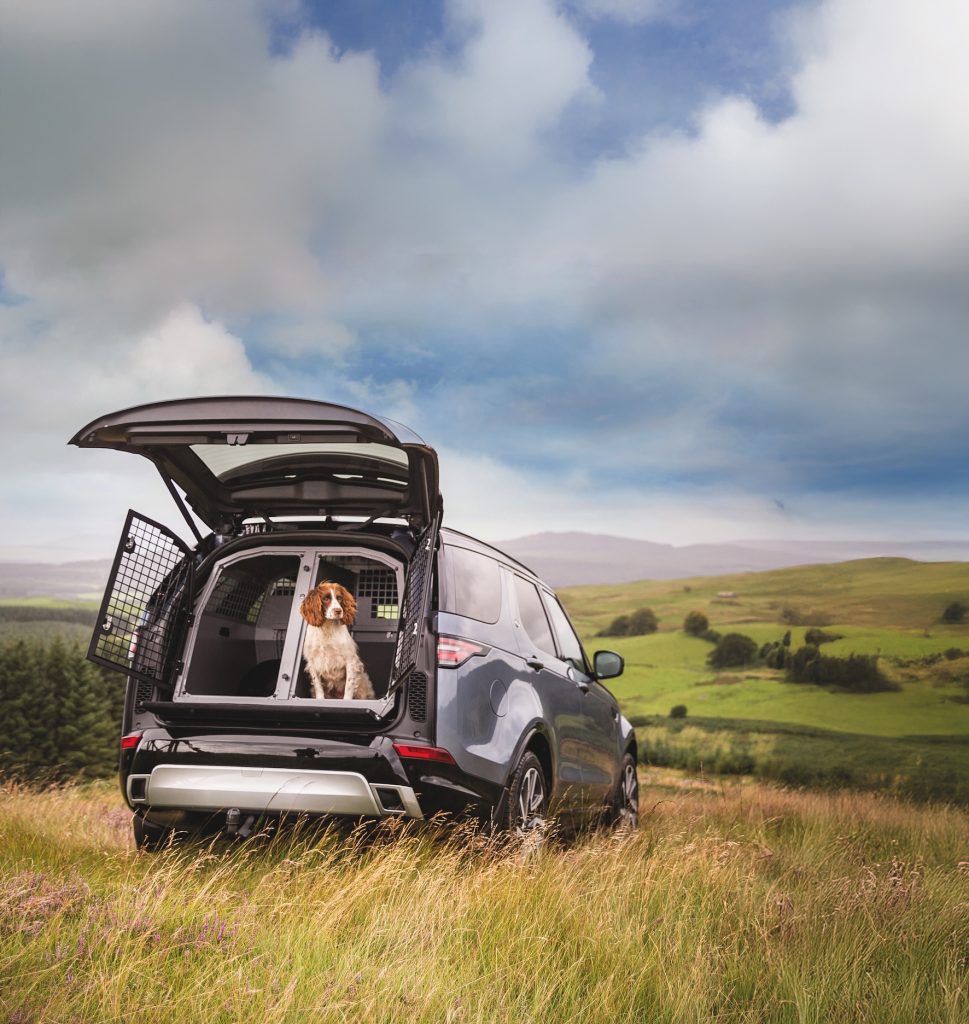
Acceptable restraints include a seat belt harness, pet carrier, dog cage or dog guard.
While the Code is not legislation, breaching it can lead to charges of driving without due care and attention. Penalties range from £1,000 on the spot to £5,000 and nine penalty points if taken to court. In serious cases, drivers may face a ban.
The scale of the problem
Research shows that 15% of dog-owning motorists admit to driving with their pet unrestrained – meaning over 1.7 million UK drivers could be breaking the law. A third of owners are unsure about the rules on travelling with pets.
The forces involved in even minor crashes are extreme. An unrestrained 10lb dog in a 50mph impact can exert 500lb of force. A 35kg gundog in a 30mph crash can hit with over a ton of impact force.
Being thrown from a vehicle dramatically increases the risk of death or serious injury for both dog and driver. Studies show a 75% fatality rate for people ejected from vehicles during accidents.
Veterinary evidence
A Direct Line Pet Insurance survey of 100 veterinarians found that 22 had seen dogs die in car accidents and 18 had treated injured dogs due to poor restraint. These aren’t statistics – they’re working dogs and family companions that could have been saved.
Unrestrained dogs are a major cause of driver distraction. Distracted driving accounts for about a quarter of all road fatalities in the US, and nearly a third of UK drivers admit their dog has distracted them behind the wheel.
Insurance is another concern. If you’re involved in an accident caused by an unrestrained pet, your insurer may refuse to pay out. Some policies state that unrestrained animals can invalidate cover, leaving you liable for repairs, third-party damages and vet bills.
Choosing the right restraint
The Highway Code allows several restraint options, suited to different dogs and vehicles.
Crash-tested crates
-
TransK9: Independently crash-tested dog cages designed and built in the UK with rear escape doors and 10-year warranties.
-
The Dog Den: The UK’s first double-wall rotomoulded crash-tested crate. Lightweight, insulated, and easy to move between vehicles.
-
4pets PRO: TÜV SÜD certified, designed to absorb kinetic energy and reduce impact injuries.
-
Thule Allax: Crash-tested for rear, front and rollover impacts, with built-in crumple zones and emergency doors.
-
MIMsafe Variocage: Swedish-made, tested at RISE Research Institutes of Sweden, with over 30 years of automotive safety experience.
Harnesses
For dogs that ride on seats rather than in the boot, a crash-tested harness offers a compromise between freedom and protection. Only Sleepypod Terrain and Sport harnesses are certified by the Center for Pet Safety.
When using a seat belt harness, never clip it to a collar. Always attach to a properly fitted harness to prevent choking or neck injuries in a sudden stop.
Dog guards
Estate cars and 4x4s popular with gundog owners can be fitted with mesh or tubular dog guards to keep pets in the rear compartment. These reduce distraction but provide less crash protection than crates or harnesses.
Working gundogs: practical safety
Working gundogs pose unique challenges – muddy, excitable, and often multiple dogs at once. The law, however, makes no distinction between pets and working dogs.
For multiple dogs, use individual crates or partitioned systems. Attempting to restrain several dogs with harnesses alone is unsafe. Crates should fit snugly to reduce g-forces and harnesses must be the right size for effectiveness.
Legal enforcement
While prosecutions for unrestrained dogs are rare, police can stop vehicles if animals pose a distraction. Drivers may then be charged with careless driving. The issue most often emerges after an accident, when investigations show that an unrestrained dog contributed to the crash.
Protect your gundog – and yourself
For gundog owners, proper restraint is about safety, not red tape. Whether heading to a training day with your young springer or returning from a shoot with your veteran lab, travel safety is part of responsible ownership.
Choose restraints that suit your circumstances. Crates offer maximum safety for trained dogs, while family gundogs may be happier in a certified harness. Whatever your choice, ensure it’s fitted correctly and suitable for your dog’s size and temperament.
Beyond compliance: best practice for travelling with dogs
Legal compliance is only the start. Follow these extra precautions:
-
Never travel with dogs in open pickup beds – it’s dangerous and potentially illegal.
-
Avoid the front seat unless using a seat belt harness and the airbag is switched off.
-
Ensure proper ventilation, but avoid fully open windows.
-
Use positive reinforcement to acclimatise young dogs to restraints gradually.
Related Articles
Gundogs
The vital role of gundogs in driven game shooting
For many, what makes the shoot day all the better is the company of our dogs, whether on the peg or beating line, says Julia Newman.
By Shooting Times
Competitions
Gundogs
Shooting Times Dog of the Week Competition
Your chance to have your dog featured in Shooting Times and Country magazine
By Shooting Times
Get the latest news delivered direct to your door
Subscribe to Shooting Times & Country
Discover the ultimate companion for field sports enthusiasts with Shooting Times & Country Magazine, the UK’s leading weekly publication that has been at the forefront of shooting culture since 1882. Subscribers gain access to expert tips, comprehensive gear reviews, seasonal advice and a vibrant community of like-minded shooters.
Save on shop price when you subscribe with weekly issues featuring in-depth articles on gundog training, exclusive member offers and access to the digital back issue library. A Shooting Times & Country subscription is more than a magazine, don’t just read about the countryside; immerse yourself in its most authoritative and engaging publication.