★ Beat print – get early access to the news by signing up to the Shooting Times newsletter here ★

Birdcrime allegations don’t add up, say shooting bodies
Shooting organisations have hit back against an RSPB report claiming that licensing shoots is the only hope for raptors
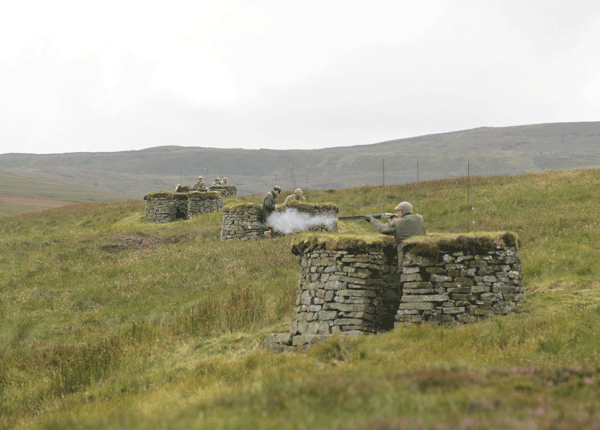

Fresh calls from the RSPB to licence grouse moors and introduce vicarious liability for moor owners in England and Wales are unnecessary and inappropriate, according to shooting and gamekeeping bodies.
The charity, which wrote to the major political parties seeking a licensing system for driven grouse shooting earlier this year, made a renewed appeal for further regulation in its Birdcrime report for 2013, published on 30 October. BASC, the Countryside Alliance and the National Gamekeepers’ Organisation have issued statements disagreeing with the proposals.
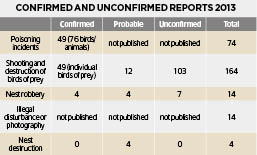
Birdcrime is based on reports of suspected crimes against birds made to the RSPB, which are split into three categories. Some were confirmed by evidence, for instance a post-mortem or an eyewitness account. Others were not confirmed, but circumstantial evidence made it very likely, in the opinion of the report’s authors, that an illegal act had taken place. The final category is unconfirmed reports, where it was merely “possible” that a criminal act had taken place.
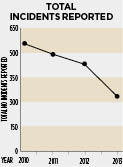 The overall number of reported incidents fell from 446 in 2012 to 341 in 2013. The report does not show the proportions of confirmed, probable and unconfirmed incidents within this total, so it is not possible to tell whether numbers of confirmed crimes have also fallen. But the charity’s figures suggest a steady decline in reported incidents over the past four years. However, in a press release accompanying the report, the RSPB chose not to highlight the fall in reports but instead to focus on recent high- profile incidents as evidence that current policies are not working. These included the recent conviction of former gamekeeper Allen Lambert for poisoning 11 birds of prey in Norfolk, and the deaths of 16 red kites and 6 buzzards in Ross-shire earlier this year (which police now think were due to accidental poisoning).
Some data from the RSPCA had not been submitted at the time of publication, and the RSPB says that the numbers published are “lower than the true total, in particular for categories involving the taking, sale and possession of non-bird of prey species”. The charity also stated its belief that reported incidents only represent the “tip of the iceberg” and that it suspects there to be numerous unreported incidents. It added that it feels the efforts of the shooting community are not having an effect on the problem.
BASC chairman Alan Jarrett said: “The RSPB’s figures are for ‘reported incidents’. This gives a misleading picture and inflates the figures. ‘Reported incidents’ are not the same as confirmed incidents of crime. For example, the police were called to investigate a ‘reported incident’ of six dead buzzards in Aberdeenshire on 1 October. They were subsequently found to be dead chickens.
“Even using the RSPB’s own figures, the trend is down. This shows a partnership approach to tackling this crime is working.
“Persecution of birds of prey is a criminal act which we oppose. The problem of tackling this crime will not be solved by the politics of division and short-term PR goals.”
Mr Jarrett also stressed that BASC is already working with the police and other organisations to tackle crime against birds and said that any member found to be engaging in illegal persecution would be expelled.
Adrian Blackmore, director of the Countryside Alliance’s shooting campaign, said: “The evidence and statistics simply do not support the RSPB’s report and accompanying press release which focusses almost exclusively on attacking shooting and grouse moors.”
A spokesman for the National Gamekeepers’ Organisation said that continued calls for licensing and vicarious liability were “grossly disproportionate”, and dismissed them as “PR stunts”. He said: “The National Gamekeepers’ Organisation will continue to work tirelessly to see that raptor persecution is consigned to history.”
Related Articles
News
Alliance calls for rural solidarity in trail hunting consultation
The Countryside Alliance warns the ban's reach extends beyond the hunting field – and the rural community must respond as one.
By Hollis Butler
News
Gamekeepers warn MPs: our families could lose everything
A ministerial briefing sent to rural MPs this week warns that gamekeepers face losing not just their jobs but their homes, as new licensing proposals in England and Wales compound an already fragile p...
By Hollis Butler
Get the latest news delivered direct to your door
Subscribe to Shooting Times & Country
Discover the ultimate companion for fieldsports enthusiasts with Shooting Times & Country Magazine, the UK’s leading weekly publication that has been at the forefront of shooting culture since 1882. Subscribers gain access to expert tips, comprehensive gear reviews, seasonal advice and a vibrant community of like-minded shooters.
Save on shop price when you subscribe with weekly issues featuring in-depth articles on gundog training, exclusive member offers and access to the digital back issue library. A Shooting Times & Country subscription is more than a magazine, don’t just read about the countryside; immerse yourself in its most authoritative and engaging publication.