★ Your magazine. Your say. Complete our reader survey with a chance to win Jack Pyke kit worth £500! ★

Polaris Ranger XP 1000: a former motor racing engineer takes one out foxing

I’ve often been intrigued by just how well a vehicle such as the Polaris Ranger XP 1000 would work as a night-time foxing tool. It should be understood, therefore, that this article is being written from the perspective of a hunter – not that of a farmer or a gamekeeper. The Polaris Ranger already has an excellent reputation in those roles, so I don’t need to comment on that model.
Professional eye
When the Polaris Ranger XP 1000 first arrived, I spent some time examining it with a critical eye – having been a motor racing engineer for most of my career, I don’t take prisoners when it comes to matters automotive. Things like the grippy Maxxis balloon tyres were very much what I expected. However, I was impressed by a lot of the finer engineering detail, such as it being fitted with braided stainless brake hoses. That means you’re unlikely to lose your means of stopping due to a rubber pipe getting caught or damaged on something like an exposed tree root.
So, not needing any further excuse, I loaded the rifle and my faithful hound, then jumped in and drove over to my mate Paul’s farm, which is just over a mile up the road. My first impressions were that the chassis was superb, steering with precision and riding the potholes effortlessly. Alongside that, however, was my surprise at just how loud it was. By the end of that short trip it was obvious that we were not going to be creeping up on anything we were intending to shoot. One thing that doesn’t help is that the passively variable transmission (PVT) always seems to be holding it in the equivalent of one gear too low, and as a consequence it seems to be permanently revving its little heart out.
Although it sounds like a hard-working diesel, this model actually has a twin-cylinder petrol engine, which makes a useful 82bhp. While it’s certainly lively and would pull a heavy trailer with ease, it uses a shocking amount of fuel. I noticed that the manufacturer doesn’t give any consumption figures, but it seems that it’s fair to expect around 15mpg.
At first I was surprised to see that it has an enormous 11.5-gallon capacity, but after watching the gauge nose-dive, I realised why. After driving the XP 1000 Ranger around, I came to the conclusion that I should have asked for an electric version instead of the petrol one, although there is a diesel variant, too, which may well be a bit quieter.
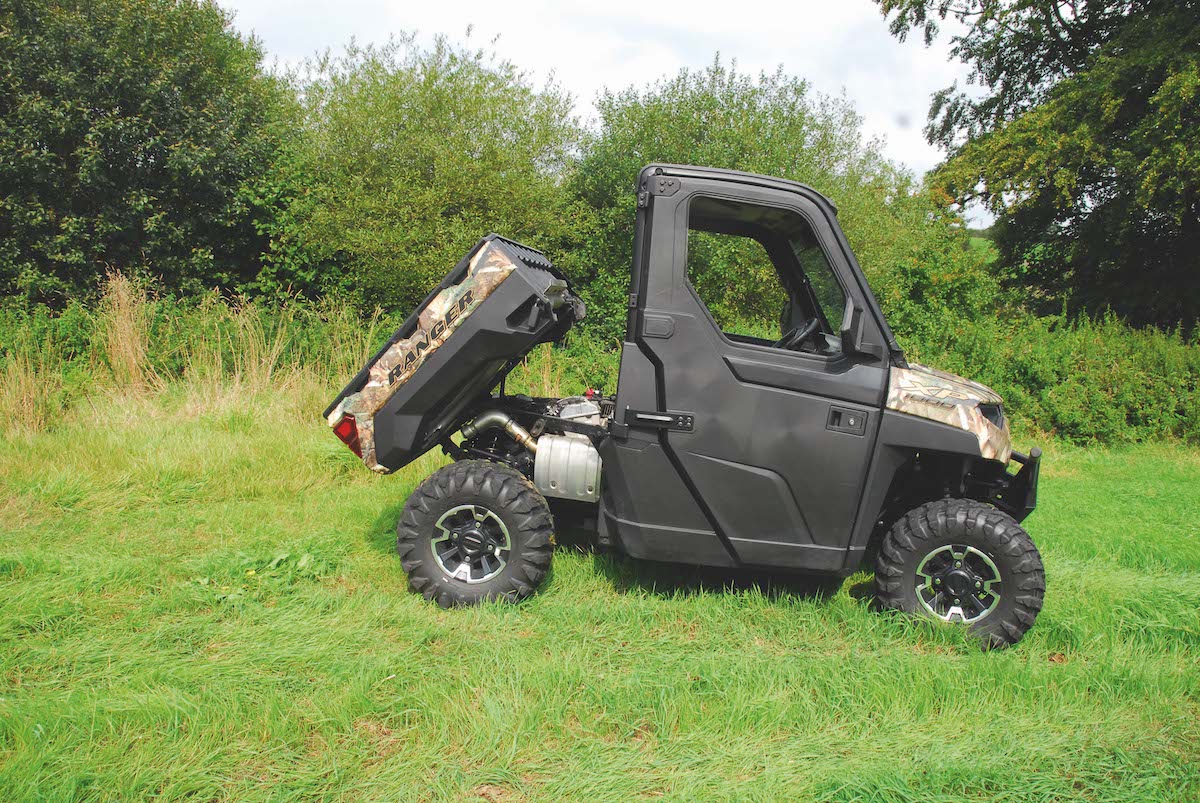
The pick-up rear tips when a handle is released, giving access to the powertrain
Transportation
So what is it like as shooting transport? Well, the first thing I loved was the fact that you can tilt the windscreen up out of the way. Since thermal imagers can’t see through glass, you normally have to either stop and get out or lean through one of the side windows to see if there’s anything about. With the Ranger you can have the benefit of wind protection until you’re on site, and then with a quarter turn of one hand the screen lifts up on hydraulic struts. That means you can park up at the top of a hill and just sit in comfort while you scan the landscape at your leisure – something that is especially convenient if it starts raining. My only criticism is that there’s no provision to add a crossbar to act as a shooting rest.
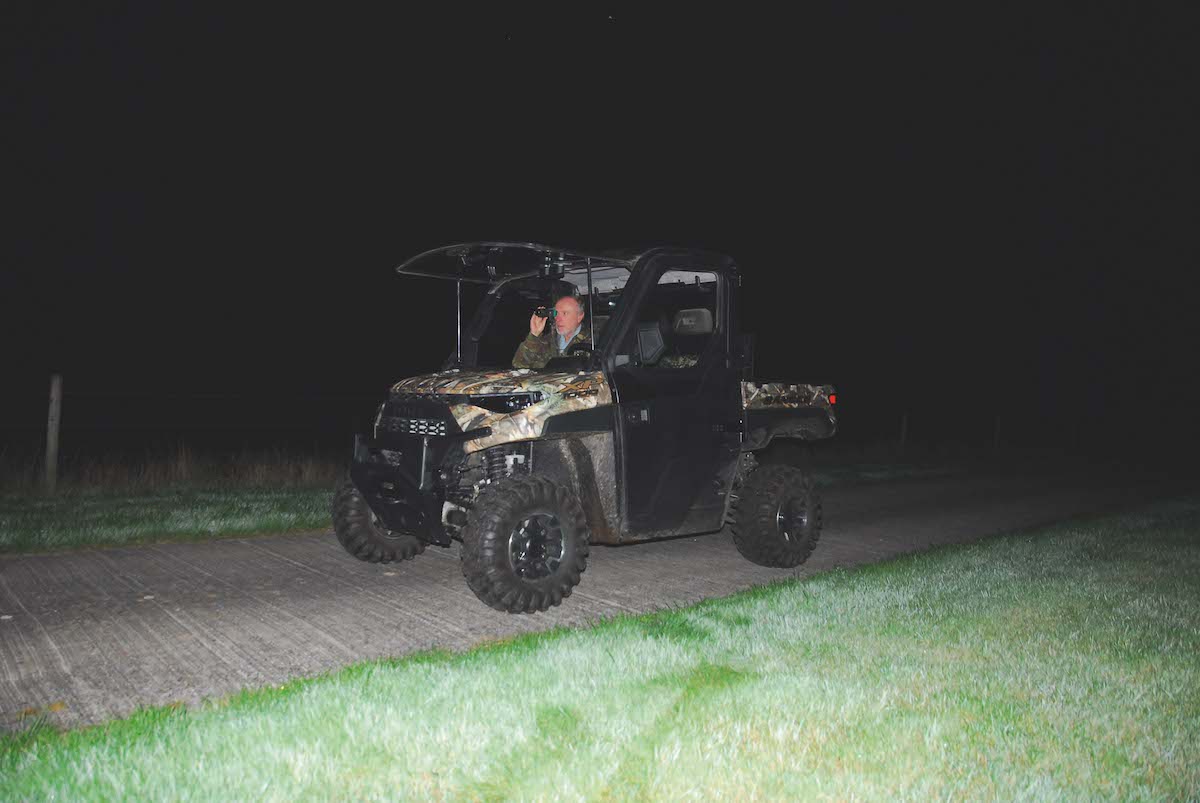
Being able to tilt the windscreen up makes using thermal imagers to scan for quarry much easier
The cab is well laid out, with the controls all logically placed, but unfortunately it’s not suited to carrying dogs since the seats don’t provide enough room, although there’s loads of space for a cage in the back. The engine starts well and the digital dash tells you what gear you’re in, which I found to be surprisingly useful.
The rear load area was excellent for carrying general items, but anything much bigger than a roe deer would need a trailer as the back is simply too high. I don’t know if a hoist frame is available, but if not and I had one, I’d certainly make one.
The first time Patrick tried to drive the Ranger at night, he found the headlights needed adjusting – not an easy task
Overall I loved the Polaris XP 1000 Ranger, but as I do a lot of miles when I’m out shooting at night, I simply couldn’t live with the noise or the petrol version’s fuel consumption. An overdrive facility would make a world of difference.
I suspect that if I tried the electric variant, issues of noise and range would probably not apply. As a way of getting across difficult ground to your chosen shooting site, though, the XP 1000 is simply superb.
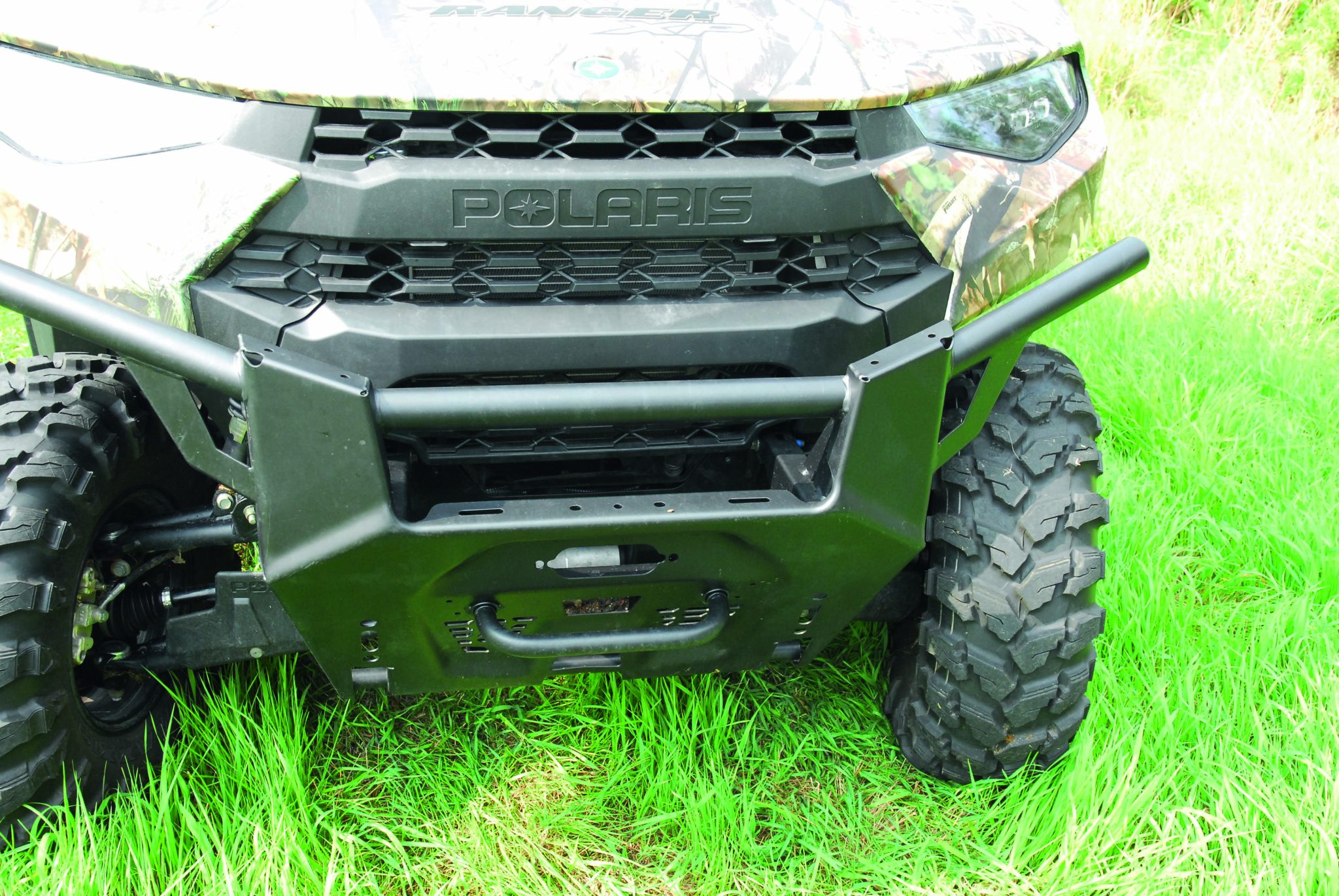
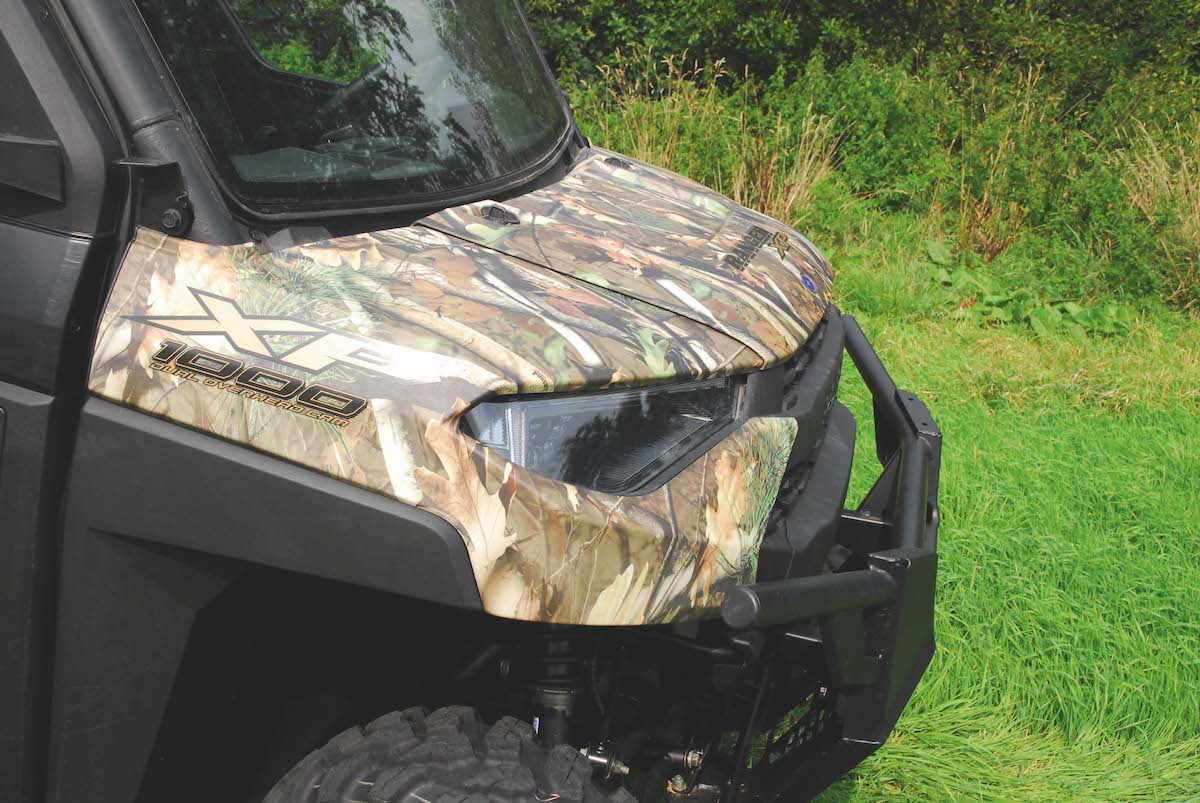
The front end is well protected with mounting points for a winch
Polaris Ranger XP 1000 pros & cons
Pros
• Security appears good – farm thefts are a serious issue these days
• Excellent turning circle
• Cargo bed carries everything from gun bags to recovered quarry
• In low ratio it climbs steep, wet, grass-covered hills with ease
• Low ground pressure through the tyres means you can drive across soft ground without damaging the underside
Cons
• Headlights required adjustment, which is not an easy job
• Clutch is snatchy when trying to edge forward or back
• When the driver’s door is fully open, you can’t reach it to close it without getting out
• Hard to reverse at night as the forward view is reflected so strongly in the rear window – and there’s no rear-view mirror as standard (there is a mount for one)
• There’s no way of unlocking the passenger door from the inside
• The maximum comfortable road speed was around 32mph – much more and it was too hectic
• You can’t open or close the doors quietly – the passenger side has to be slammed shut
• It is not possible to turn the ignition off without going through the main ‘lights on’ position, so you have no choice but to briefly illuminate the whole landscape every time you want to leave the vehicle
For more information contact Polaris Britain

 WinCloses 15 JanuaryWorth £129.90Win a pair of tickets to the British Shooting Show 2027Enter nowFree to enter
Related Articles
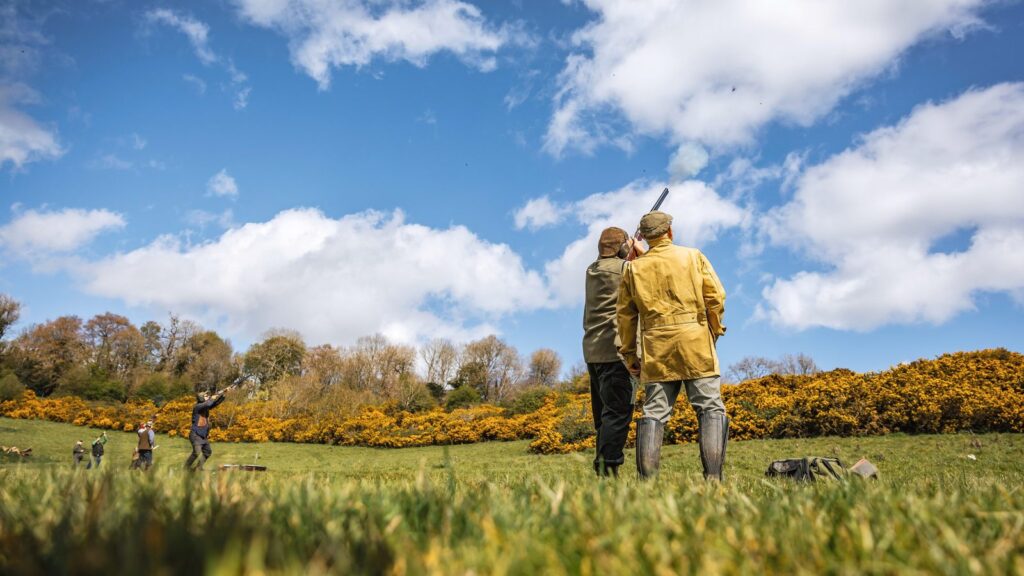
3,000 clays and 30 years of practice: the simulated game day at Great Tew
Writing in Fieldsports Journal, Ben Palfreyman takes a peg on a syndicate day at the Cotswold estate that has run simulated game since the 1990s. For shoot owners and keepers it is a working example o...
By News Desk | 6 October 2026
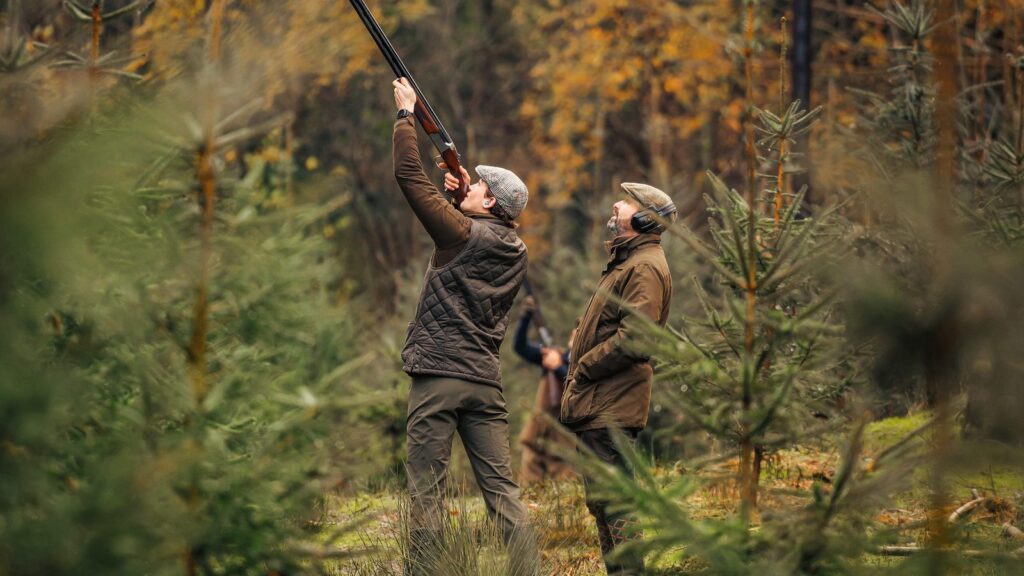
Old Long Mountain: how a big commercial Welsh shoot keeps its family feel
Writing in Fieldsports Journal, Ben Palfreyman follows guest editor John Henderson to his last day of the 2025/26 season on the Powis Castle Estate, where host Will Horner runs a Cambrian Sporting sho...
By News Desk | 6 October 2026
Get the latest news delivered direct to your door
Subscribe to Shooting Times & Country
Discover the ultimate companion for fieldsports enthusiasts with Shooting Times & Country Magazine, the UK’s leading weekly publication that has been at the forefront of shooting culture since 1882. Subscribers gain access to expert tips, comprehensive gear reviews, seasonal advice and a vibrant community of like-minded shooters.
Save on shop price when you subscribe with weekly issues featuring in-depth articles on gundog training, exclusive member offers and access to the digital back issue library. A Shooting Times & Country subscription is more than a magazine, don’t just read about the countryside; immerse yourself in its most authoritative and engaging publication.
 New competitionWin a pair of tickets to the British Shooting Show 2027Worth £129.90Closes 15 JanuaryEnter now ›