

Stalking diary: a novice’s first stag at the height of the roar, and why the woodland rut seems so quiet
Chris Dalton takes a first-time stalker into a Galloway hill forest at the peak of the roar, and reflects on why red stags in woodland seem to say so much less than those on the open hill

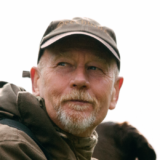
Out with Jordan, who is with me for three days on an introduction-to-stalking package, we chatted as I drove to one of the hill forests I manage on the edge of the Galloway Forest Park. This was his first stalking outing and, although he had some shooting experience, it was limited to air rifles and the occasional shot with a rimfire. He had proved to be a good shot on my range yesterday afternoon, very quickly achieving tight groups with a .243. Afterwards, I had briefed him on the theory of stalking, and this morning we were heading out to put that theory into practice.
It was still dark, well before dawn, and with the ‘roar’ reaching its peak, we chatted about the red deer rut. I explained that, with luck, he might well get to experience the sound of roaring stags for himself.
There are few sounds that stir me more than the roar of a red stag in October. It is the voice of autumn itself, rolling across the landscape as another rut reaches its peak. Yet, over the years, I’ve often found myself reflecting on how different that sound can be depending on where the deer live. Spend a morning on the open hill and the air can seem alive with roaring from first light until well after sunrise. Wander through a woodland holding good numbers of red deer and, by comparison, the rut can appear surprisingly quiet.
Why woodland stags roar less than stags on the open hill
At first, I wondered whether woodland stags were simply less vocal, but the more time I spent watching them, the more I came to feel that the landscape itself shapes their behaviour. On the hill, a stag may have rivals spread over a vast area. His roar carries across glens and ridges, announcing his presence to hinds and warning challengers to keep their distance.
In woodland, everything changes. Trees and banks interrupt sound and conceal movement, and deer often meet one another at much closer quarters. A roaring match that makes perfect sense on the open hill perhaps becomes less important when a rival can suddenly appear around the next stand of spruce or oak. Here, I find that stags seem to rely far more on posture, scent and quiet confidence than on endless vocal displays. Often, a brief roar is enough before both animals size each other up face to face.
It is only my own observation, but I have often felt that woodland stags choose their moments more carefully, roaring when it matters rather than advertising themselves throughout the morning.
Of course, there are exceptions. I’ve stood in woodland rides where a mature stag has roared with every bit as much passion as one on a Highland hillside. Yet the rut beneath the trees feels quieter, more intimate and somehow more secretive. You must earn those moments by standing still, listening carefully and allowing the woods to settle around you.
Perhaps that is what I enjoy most. On the open hill, the rut announces itself for everyone to hear. In the woodland, it whispers instead, rewarding patience with brief glimpses and muted roars that somehow leave an even deeper impression.
A first stalk across a restock site
But what of this morning? Well, Jordan did not get to experience a roaring stag first-hand. He did, however, get to shoot one. It was an excellent stalk. To close the distance to a group of young stags browsing along the forest edge, we had to cross the open ground of a restock site that resembled an artillery-shelled battlefield rather than a hill forest. It was hardly the easiest ground for a novice stalker, but Jordan took it all in his stride. A perfectly executed shot brought the stalk to a successful conclusion and led neatly to the next lesson for my stalking novice.
“Right, now we have to get this stag back to the truck.” A steep learning curve indeed.
Chris Dalton is the founder of South Ayrshire Stalking. Visit ayrstalk.co.uk
Frequently asked questions
When is the red deer rut?
The red deer rut reaches its peak in October, when stags roar to announce themselves to hinds and warn off rivals.
Why do stags seem quieter in woodland during the rut?
Chris Dalton believes the landscape shapes their behaviour. In woodland, trees and banks interrupt sound and deer meet at closer quarters, so stags tend to rely more on posture, scent and a brief roar than on the long vocal displays heard on the open hill.

About the author
Chris Dalton
A South Ayrshire-based full-time deer manager and founder of South Ayrshire Stalking, Chris is a regular contributor to Shooting Times. He comes from a farming background in rural South Yorkshire and continued shooting around the world as a serving RAF officer before moving to Scotland, where he and his wife Anne set up South Ayrshire Stalking at Garryloop, their converted barn and cobbler's cottage near Girvan. The business offers accompanied stalking, deer management training and assessment for DSC 1 and DSC 2 qualifications, and was the first in the UK accredited under the 2% for Conservation scheme. Chris is an assessor for the British Deer Society and a member of the UK trophy measuring team for BASC and BDS. He was named UK Professional Stalker of the Year from 2019 to 2023.
 Closes 15 JanuaryWorth £129.90Win a pair of tickets to the British Shooting Show 2027Enter nowFree to enter
Related Articles

Hunters’ money brings the kob home: how Karamoja got its antelope back after 60 years
For the first time in some 60 years, Uganda kob are grazing the plains of Pian Upe, the wild country that made ‘Karamojo’ Bell’s name. A London gunmaker, a Texan hunting club, a tenacious outfitter an...
By News Desk | 12 November 2026

Pronghorn hunting in Wyoming: stalking America’s speed goat on the open prairie
Simon K. Barr goes after the fastest land animal in North America across 80,000 acres of sagebrush near Casper, Wyoming, with an 18mph crosswind and an animal that sees almost all the way round. A 388...
By News Desk | 12 November 2026
Get the latest news delivered direct to your door
Subscribe to Shooting Times & Country
Discover the ultimate companion for fieldsports enthusiasts with Shooting Times & Country Magazine, the UK’s leading weekly publication that has been at the forefront of shooting culture since 1882. Subscribers gain access to expert tips, comprehensive gear reviews, seasonal advice and a vibrant community of like-minded shooters.
Save on shop price when you subscribe with weekly issues featuring in-depth articles on gundog training, exclusive member offers and access to the digital back issue library. A Shooting Times & Country subscription is more than a magazine, don’t just read about the countryside; immerse yourself in its most authoritative and engaging publication.

