
Constable Burton shoot: open release and steel shot for seven years
D’Arcy Wyvill’s North Yorkshire shoot gave up release pens 15 to 20 years ago, went to steel seven seasons back and sends every bird to dealers supplying M&S and Waitrose. For keepers and shoot operators, it is a working model of where the sector is heading


Words and photographs: Matt Kidd
At the front door of Constable Burton Hall an Austin Champ stood waiting, as if it had been parked there for effect. On the bonnet sat a mug of tea, the steam rising off it into the cold November air, and on the side of the mug a single letter: “D”. It was a telling detail for a man whose working life runs on continuity and stewardship, and who holds that the past is not something to admire from a distance but something to work with and hand on in better order.


When D’Arcy Wyvill talks about Constable Burton he is not describing a shoot, or an estate, or even a family home on its own. He is talking about an inheritance in the widest sense: land, history, jobs, wildlife, community and responsibility, all bound together. Over back-to-back days with a team of visiting Guns, producing an album of photographs, that came through time and again. Heritage matters a great deal to him, but so does leaving the estate with a future sound enough to justify its past.
“The family came over with William the Conqueror in 1066,” he says, well aware that nine centuries do not condense easily into a few sentences. “The first house was built at Constable Burton in 1580 in the Elizabethan style. The family story goes that it was knocked down by mistake when the family wanted some renovations done to it, and it was later rebuilt in the Palladian style, finished in 1768 by John Carr of York.”
The Wyvills have been here for almost all of the time since. There have been gaps, tenants and changes in what the estate was for, but the thread is unbroken. In earlier generations the land was laid out largely for foxhunting. The sporting business as it stands today owes most to D’Arcy’s father, Charles Wyvill, who inherited in the 1970s and set about reshaping the shoot.
“My dad sort of commercialised it in the late ’70s, early ’80s,” D’Arcy says. “We were one of the first houses in the country to start tying up accommodation with shooting, specifically tailored towards the overseas clients.”
Today the shoot is a long way from a sporting sideline; it sits at the centre of how the estate is run and what it earns. D’Arcy, the eldest son, took over 15 years ago and has run it with an unusually forward-looking eye. Constable Burton has 2,500 acres in hand, rents a further 500 and holds the sporting rights over land sold in the past, which takes the shootable ground to more than 4,000 acres. Across it, pheasants, partridges and duck are put down, with days tailored to what a client wants and built to show off the character of the ground. What strikes a keeper or shoot operator most, though, is not the scale but the amount of thought behind how every part of it is done.
Why did Constable Burton give up its release pens?
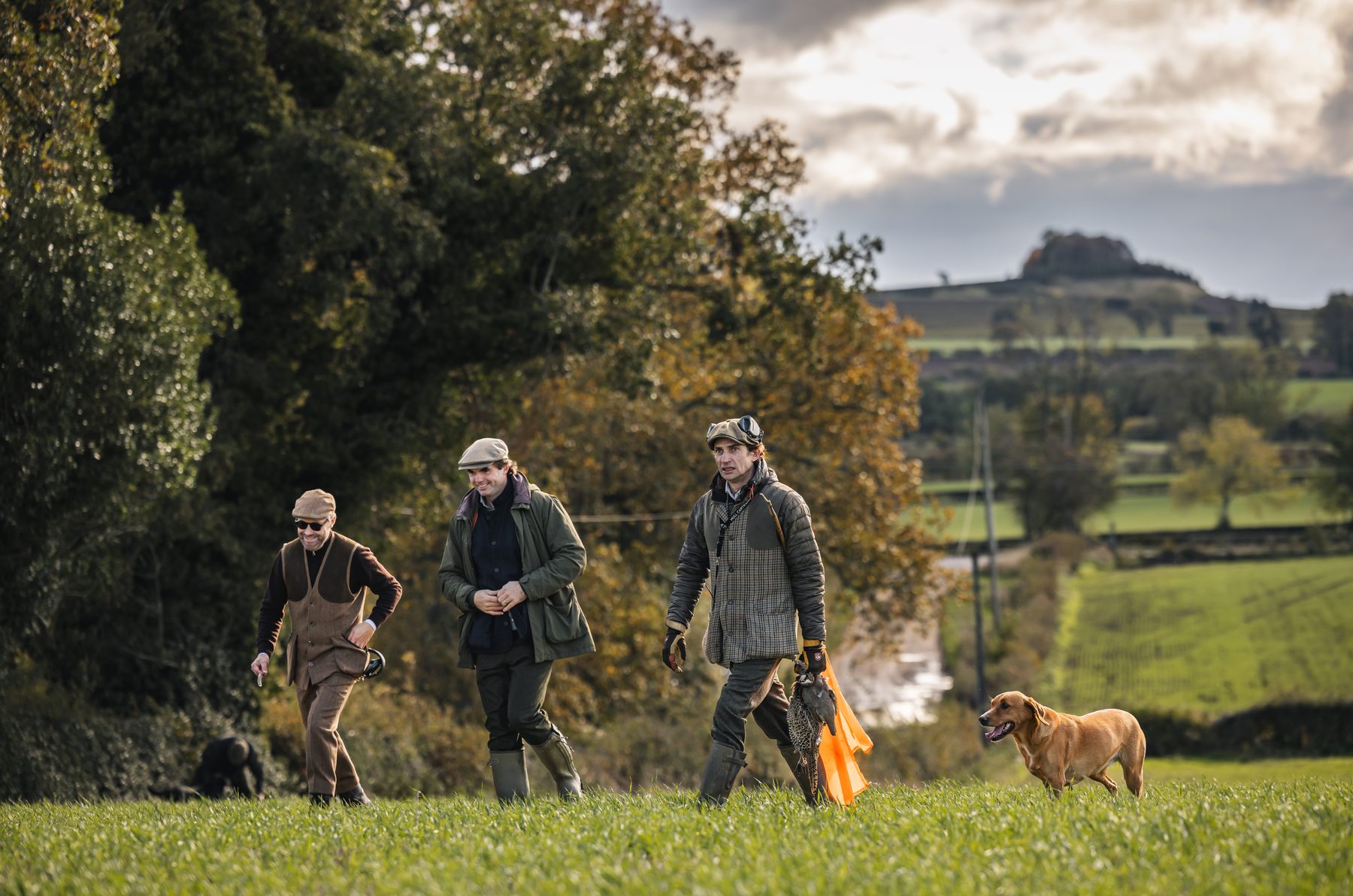
D’Arcy holds firmly that if shooting is to last it has to be seen to practise what it preaches, and that conviction runs through almost everything at Constable Burton. The estate was among the first to do away with release pens, going over to open release long before anyone else was talking about it. “We stopped doing that about 15 years ago, maybe even more than that, maybe 20 years ago,” he says. “The principle is straightforward: less concentrated pressure on the ground, less damage to flora and fauna, and birds that wild up more quickly. It does come at a cost of more feed, seasonal predator control and a more hands-on approach to holding game, but I think it is worth it and certainly benefits ground-nesting birds and other wildlife.
“Around them, game crops have also evolved. Maize-heavy cover has largely been replaced by more sustainable perma-crops; grasses, artichokes and wild bird seed taking precedence. That shift has practical and ecological benefits. It reduces input costs, cuts disturbance and supports a wider range of species. It is also part of a broader habitat strategy.”
Over the past decade the estate has planted 45,000 trees and works to a rolling woodland management plan that weighs income, cover and biodiversity against one another. “Everything is being done sympathetically with the estate in mind,” D’Arcy says.

That word “sympathetically” matters. Constable Burton does not come across as a place chasing fashions or leaning on slogans; it is a working family estate adapting intelligently without losing what it is. The same applies to its wildlife management. There is a healthy head of roe, a fair population of fallow – managed by a professional stalker – and a wide spread of wild species that benefit from the scale of the ground and its mosaic of habitats.
D’Arcy runs through the list not to boast but with quiet satisfaction: curlew, lapwing, woodcock, teal, wigeon, snipe, jack snipe, English partridge and the usual farmland birds of North Yorkshire. Raptors are very much part of the picture too. “We’ve got lots of them,” he says. “We’re absolutely on board with that, we see everything as part of our ecosystem.”
Constable Burton takes part in the Game & Wildlife Conservation Trust (GWCT) Big Farmland Bird Count, and it has voluntary restraints of its own. “We haven’t shot a woodcock on a commercial day for seven years,” D’Arcy says. English partridge are likewise left alone. On the rare occasion one is shot, on a species day say, it is prepared properly in the kitchen. Walked-up days are a regular fixture, and on one inter-estate species day the ground produced 24 species. The record stands at 28.
Seven years on steel: what the shoot has learned
The same attitude shaped the move away from lead. Constable Burton was one of the first estates to commit to steel, and is now seven years into it. The shoot uses steel cartridges with biodegradable wads – that part is non-negotiable – opening the season on 32g No.5s and going up to No.4s as the birds get harder later on. There were worries at the start, naturally: bringing the Guns round, coping with older guns and making sure no wads were left lying about for years. In practice, D’Arcy is clear, those fears have not come to pass. “In the North Yorkshire environment, which is fairly wet, eco wads are normally gone, completely disappeared from any evidence in the field within about three weeks to a month.”
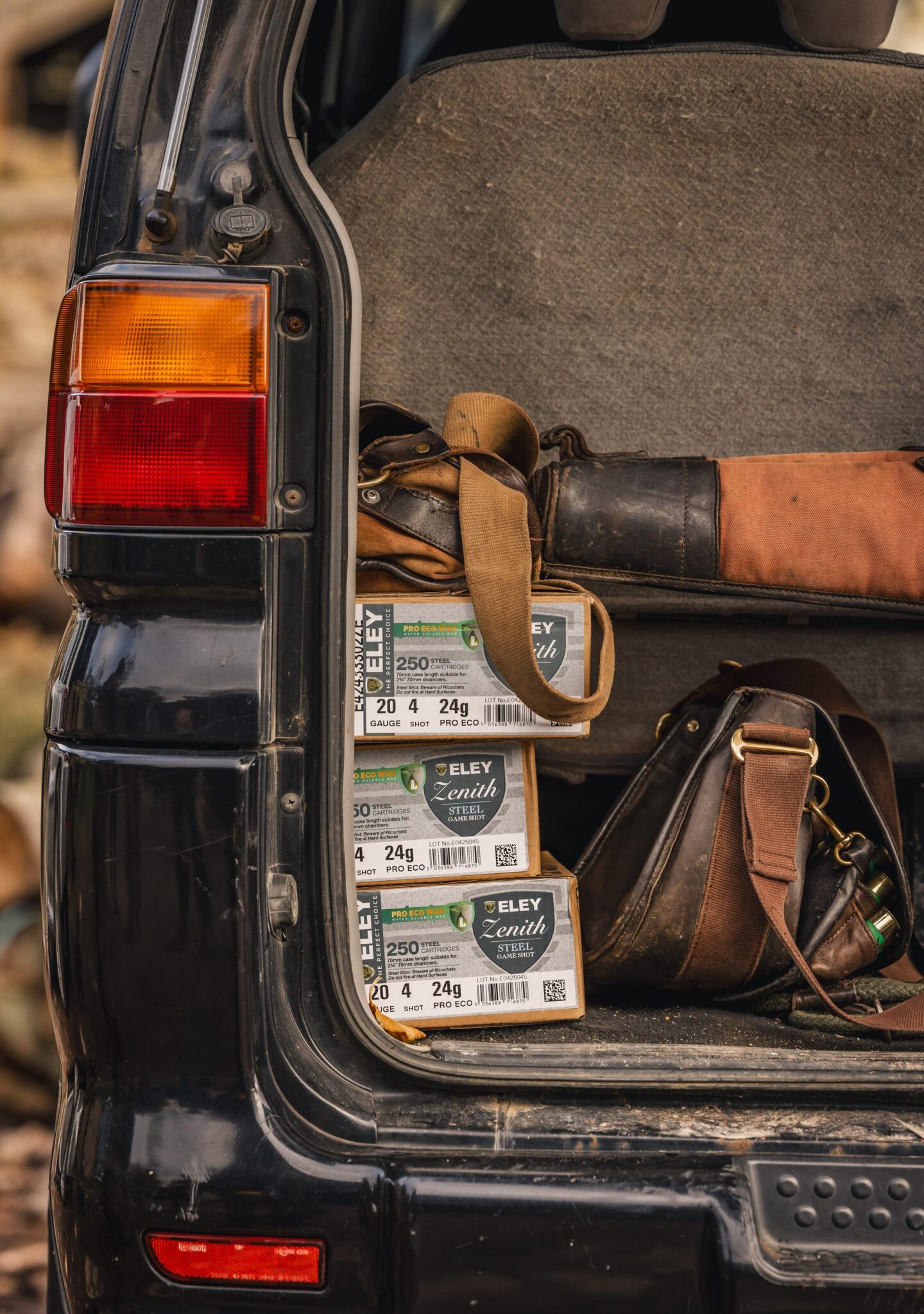
The reasoning is plain and hard to argue with. “We’re not just standing in the field, shooting for fun,” he says. “We are harvesting wild produce, and we’re trying to do our very best to make sure that our birds go straight into the market.”
Getting game to the dealer and onto the plate
D’Arcy is frank that shoots need to think not only about showing testing birds but about the quality of the carcass going into the food chain. Small-framed birds, shot hard and handled roughly, are no good to a dealer or a retailer. Constable Burton has deliberately gone the other way, putting down medium to large pheasant strains that give the market what it wants.
“High bird shoots often require a smaller bird, but that isn’t our main objective. All of our game on the estate goes off to the UK market via our dealers,” he says. “They have contracts directly with M&S and Waitrose.” The estate’s game, he adds, has a good name for its quality and for how little of it is wasted.
If that all sounds dutiful and managerial, the food on a shoot day is the answer to it. Constable Burton does not merely talk about eating game; it serves it, proudly, inventively and at every turn. “All of our elevenses and shoot lunches are off the estate,” D’Arcy says. “They’re all game.” The previous head chef won an Eat Game Award, and the current chef, Matt Hunter, has carried the tradition on with real flair.
Game turns up in every savoury course, elevenses included, and it is one of the estate’s quiet successes. Guests who arrive a little sceptical are, D’Arcy says, often won round. “Good food changes minds.” Pheasant goujons, pheasant sliders, a richly spiced curry – all of it comes out with a confidence that makes eating the quarry feel entirely normal and thoroughly enjoyable.

Top of the list is the McWyvill burger, served with a take on the famous “golden arches”. It deserves the reputation it is building. A second helping was needed to be sure the first was not a fluke, and a third settled the matter: it is an outstanding recipe. It is precisely the sort of food that reminds you how good game is when it is handled properly. The name may carry a touch of humour, but there is nothing throwaway about the principle behind it.
The shoot as an employer and a neighbour
There is an old-fashioned seriousness, too, about the estate’s role as an employer. Out of season Constable Burton keeps 12 people in full-time work, and in the shooting months that number climbs steeply. “In the season, we are up to 50, I think, something like that,” D’Arcy says. “Last year there were 52 people in the end-of-season photograph, from beaters to pickers-up.
“The shoot is very, very much part of the local community,” he says. “We take a lot of pleasure in that, and enjoy reminiscing about our days in the local pubs.” Beneath the matter-of-fact delivery it is not hard to hear how much that continuity of work and local involvement means to him. It is, in many ways, one of the clearest links between the old estate model and the modern one: land not as a private backdrop but as a place of work, opportunity and connection for the people around it.
That continuity runs into D’Arcy’s own enthusiasms as well. He is plainly a sporting man beyond the peg, and fishing still has a hold on him: a recent family trip to Africa took in some saltwater sport, and Iceland stays on the list. He lights up, too, when the talk turns to old vehicles. The 1953 Austin Champ outside the house is no static ornament but a working part of estate life. “We will roll around the shoot in it if the weather’s right,” he says, “and the weather really does have to be right.” The old Bedford army truck that serves as the beaters’ wagon does a similar job, ferrying the team from drive to drive, and is fully decked out when December comes round. It may be a bit of theatre, but it is all part of the fun.

It all adds up to a picture of a man leading from the front – practically, visibly and with conviction. D’Arcy does not pretend the modern world leaves a country estate alone. Audits, assurance schemes, supermarket contracts, sustainability measures and long-term planning now sit alongside the older rhythms of keepering, beaters, hedgerows and family tradition.
It also explains the next stage. D’Arcy is planning further ahead, with a private membership club built around walked-up shooting, equestrian and country pursuits, alongside a new lodge park for which planning permission has been granted. The detail is still being worked out, but the principle will be familiar to anyone running a rural business: diversify, build carefully and add something that strengthens the estate rather than thinning it out.

It is easy to see Constable Burton simply as a handsome North Yorkshire sporting estate, which it is. It is also a working example of what happens when heritage is treated not as a tag line but as a responsibility.
Frequently asked questions
What does open release mean on a pheasant shoot?
Open release means putting birds out onto the ground without holding them in a release pen first. At Constable Burton, D’Arcy Wyvill says it spreads the pressure on the ground, does less damage to flora and fauna and produces birds that wild up more quickly. The trade-off for the keeper is more feed, seasonal predator control and more hands-on work to hold the game.
What steel cartridges does Constable Burton use?
The shoot uses steel with biodegradable wads, opening the season on 32g No.5s and moving to No.4s as the birds get more testing. In the wet North Yorkshire conditions, D’Arcy Wyvill says the eco wads have normally gone from the field within about three weeks to a month.

About the author
Matt Kidd
Managing editor of Sporting Gun since 2025, Matt succeeded Paul Austin and runs the magazine alongside a monthly guest editor, a chair filled recently by Andy Crow, George Digweed, Nathan Hales, Vinnie Jones, Jonny Carter and Ben Randall.
 Closes 15 JanuaryWorth £129.90Win a pair of tickets to the British Shooting Show 2027Enter nowFree to enter
Related Articles

Sporting Life: from gunpowder to keepers’ lore, the history of answering the call of nature in the field
Jeremy Hobson on why ‘spending a penny’ on the end peg has a richer history than most Guns realise, from saltpetre beds and keepers’ tricks to the Law of Urination
By Jeremy Hobson | 4 November 2026
Country Diary: a car-boot haul of 1970s sporting books, a Saturday stick and the white pheasant
Giles Catchpole finds late shoot-day starts and fuel rationing in a car-boot haul of old sporting books, then buys a handsome staghorn-topped stick from a friend’s shed
By Giles Catchpole | 4 November 2026
Get the latest news delivered direct to your door
Subscribe to Shooting Times & Country
Discover the ultimate companion for fieldsports enthusiasts with Shooting Times & Country Magazine, the UK’s leading weekly publication that has been at the forefront of shooting culture since 1882. Subscribers gain access to expert tips, comprehensive gear reviews, seasonal advice and a vibrant community of like-minded shooters.
Save on shop price when you subscribe with weekly issues featuring in-depth articles on gundog training, exclusive member offers and access to the digital back issue library. A Shooting Times & Country subscription is more than a magazine, don’t just read about the countryside; immerse yourself in its most authoritative and engaging publication.