★ Win a pair of Brandecosse Capriolo boots worth £219! Click here to enter ★


How to call a fox
HOW TO SQUEAK A FOX: Here the Nataional Gamekeepers Organisation tell you how to call in a fox.
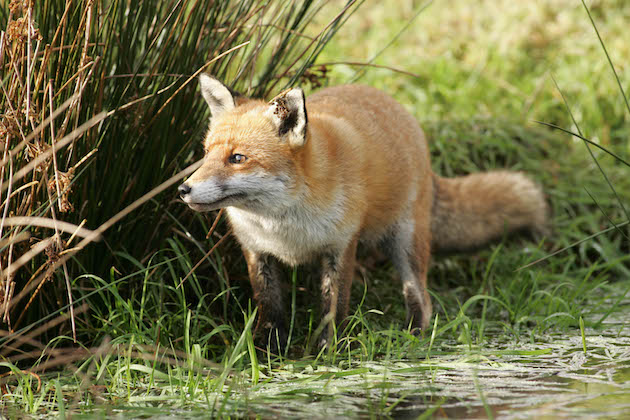 Fox
Usd 27 may 15 on your shoot
Fox
Usd 27 may 15 on your shoot

There are basically three types of fox callers: those made by blowing on the hand; mouth-blown mechanical devices; and electronic callers.
It is very rare for me to employ either of the first two as my local terrain is so hilly that it’s only too easy for wily foxes (and how many of them aren’t?) will simply sneak around on the wind, sniff human and vanish. Such use is fine when you can see your quarry and track it all the way in, however. As for the high-tech versions, there are many different makes and models to choose from these days, with new ones appearing on the market all the time.
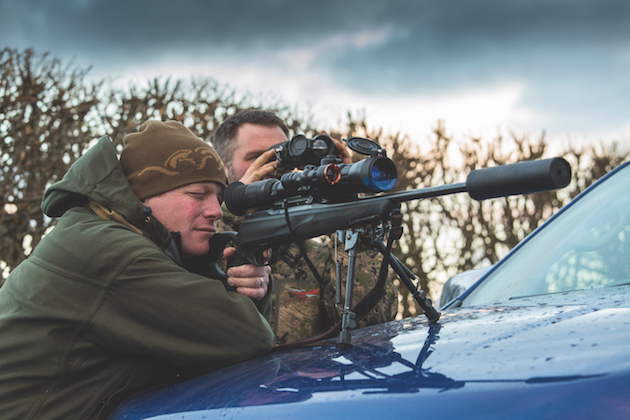
A thermal imager check of the landscape is always a good idea before taking a shot
Location, location
My favoured method of using a fox caller is to start by finding an appropriate location. This will be where I know or suspect there are foxes nearby, where I’ve got excellent visibility, a safe backstop, something behind me to hide my silhouette, and the wind is blowing either from my right to my left, or vice versa. I then count out 50 paces and position the caller facing away from me. The idea being that a fox that has been attracted by the caller will usually come in, but not always, from downwind. Its hearing, nose and attention will be focused on where the caller is, not where you are. This is the electronic caller’s biggest advantage.
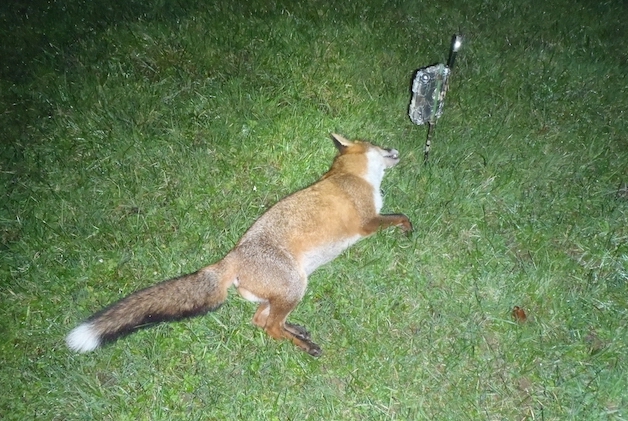
If you get it right, the fox should fall somewhere near the caller. Some, however, get too close for comfort. You don’t want to accidentally shoot your own equipment.
When my quarry gets into the preferred killing zone – i.e. where there’s a safe shot at a sensible distance, I’ll mute the caller. Most of the time this will cause the fox to pause to work out where the sound went. That is my cue for taking the shot. The moment the trigger has been pulled, I’ll do three things:
• Check with the thermal that the shot was a good one and that my quarry went down
• Check that there aren’t any other foxes coming in
• Reload
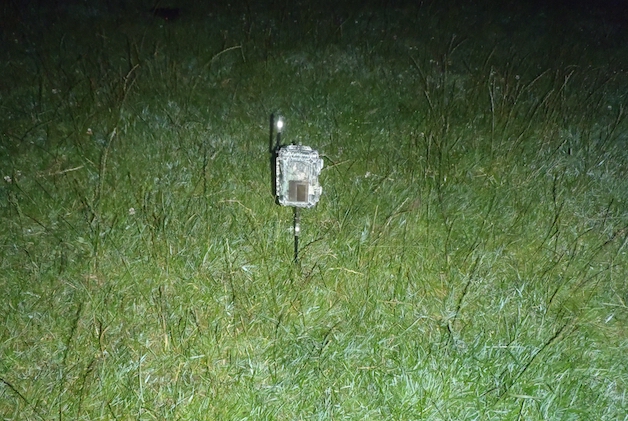
This is my well-used FoxPro Scorpion caller, which I’ve modified to suit
Feedback
If I’ve got a shooting partner with me, I won’t have to do either of the first two as he will immediately feed back the necessary information, so that if another shot is required, I’m ready and know which direction to look. Sometimes, however, things don’t go quite to plan. A couple of nights before I wrote this, for example, I was out on my own. I’d spotted a fox some 600 yards off, so I quickly set the caller out and got the rifle ready. The sounds had only been going for about 10 seconds when a different fox ran in from upwind over the brow to my left. This is where it pays to be ready – I saw it when it was only about 50 yards away and it realised I was there the moment the infra-red went on. Luckily for the local lamb population, a .204 round hit it in the chest before it could run.
Most of the time I will leave the fallen animal where it is until I’m ready to move on. This is because a good caller, used properly in the right place, can sometimes bring lots of foxes in. It’s not unknown to have six or eight dead ones dotted around the field in front of us. What I do with the carcasses varies depending on what the landowner asks me to do. Sometimes we collect them and take them back to the farmyard, or it might be that we leave them at an agreed spot for later collection. Different people have different requirements.
Top tips to call a fox
- Wrap a small piece of reflective tape around the aerial so that the infra-red illuminator creates shine-back in order that you can see your caller
- I only use callers that have a remote control so that foxes don’t have a chance to run before I’m ready
- My caller is raised off the ground with a short length of old fishing rod to help improve reception from the remote control. A fencepost or a convenient bale will do just as well though.
- Try to minimise the time you spend near the caller to reduce the scent you leave. Proper country foxes are extremely sensitive and will run the moment they suspect your presence.
- It pays to walk to and from the caller on a curved route to reduce the risk of a fox crossing your path and scenting you.
- There is no golden rule about what kind of call track you broadcast. I try not to use the same one in the same locality too often. M preferred sounds range from pheasant distress to screaming rat, to fox mating calls. If one doesn’t work, try another.
Related Articles
Five rifles to tackle deer big and small
Your choice of rifle will not only come down to personal preference but will also depend on which species you plan to stalk, writes Bruce Potts.
By ShootingUK
Get the latest news delivered direct to your door
Subscribe to Shooting Times & Country
Discover the ultimate companion for fieldsports enthusiasts with Shooting Times & Country Magazine, the UK’s leading weekly publication that has been at the forefront of shooting culture since 1882. Subscribers gain access to expert tips, comprehensive gear reviews, seasonal advice and a vibrant community of like-minded shooters.
Save on shop price when you subscribe with weekly issues featuring in-depth articles on gundog training, exclusive member offers and access to the digital back issue library. A Shooting Times & Country subscription is more than a magazine, don’t just read about the countryside; immerse yourself in its most authoritative and engaging publication.