

Beretta A400 L review: a modern classic?
The new Beretta A400 L combines modern engineering with classic styling. Bruce Potts puts it through its paces on clays and in the field.
The new Pixfra Volans V850 LRF digital riflescope combines day and night versatility, advanced controls and accessible pricing.
A good digital riflescope is fast becoming essential for any serious hunter. Digital optics provide a clearer image than expensive glass during crucial twilight hours. They deliver crisp views when paired with a quality IR illuminator.
They outperform old school tubed NV units. They also offer more conclusive identification than thermal units. The latest generation also shines in daylight. They provide sharp imaging and ample magnification.
Versatility extends into the digital realm too. You get a wide range of reticle designs. Multiple monochrome modes are available for night work.
Models with integrated rangefinders are even better. They can be programmed with ballistic profiles. This allows precise drop compensation at the touch of a button.
This makes consistent shots possible with loopy calibres. You can now shoot at previously unrealistic distances.
Programmability lets you set scopes up under controlled conditions. A convenient smartphone interface ensures everything is dialled in. This simplifies field use compared to complex analogue scopes.
You can also record images and video. This captures successful shots. It is extremely useful when recovering game. You can preserve details missed in the moment.
Cost is another major advantage. 4K digital scopes do not require complex machined components. They are typically priced in the high hundreds. Analogue optics with similar features often cost thousands.
Digital scopes seamlessly integrate low light sensing. They also include laser rangefinding and ballistic compensation. These would be expensive add ons for traditional optics.
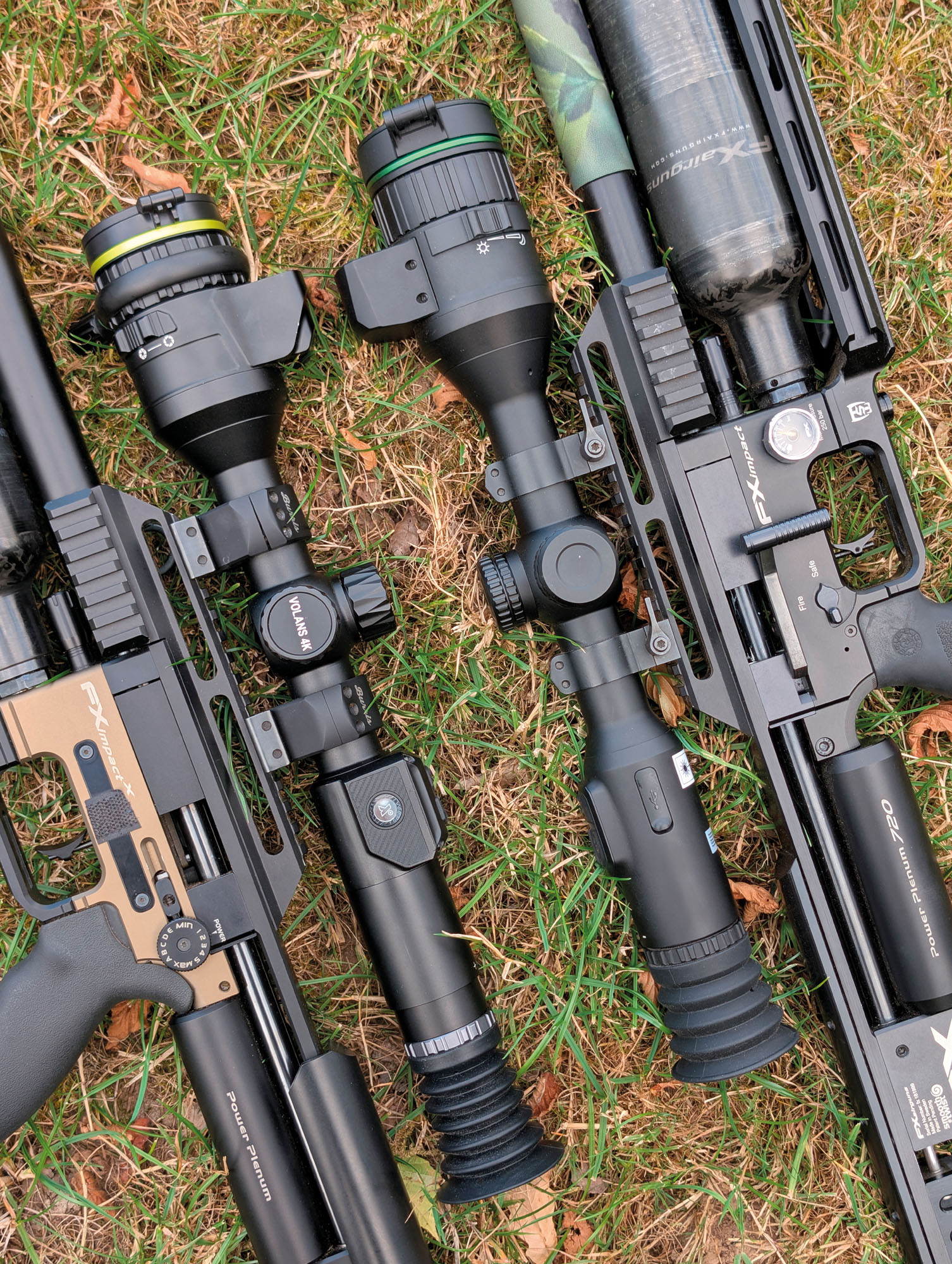
The market continues to grow as hunters recognise this value. Pard was arguably the pioneer in the UK. HikMicro set the benchmark. Pixfra is now vying for its share with the new Volans.
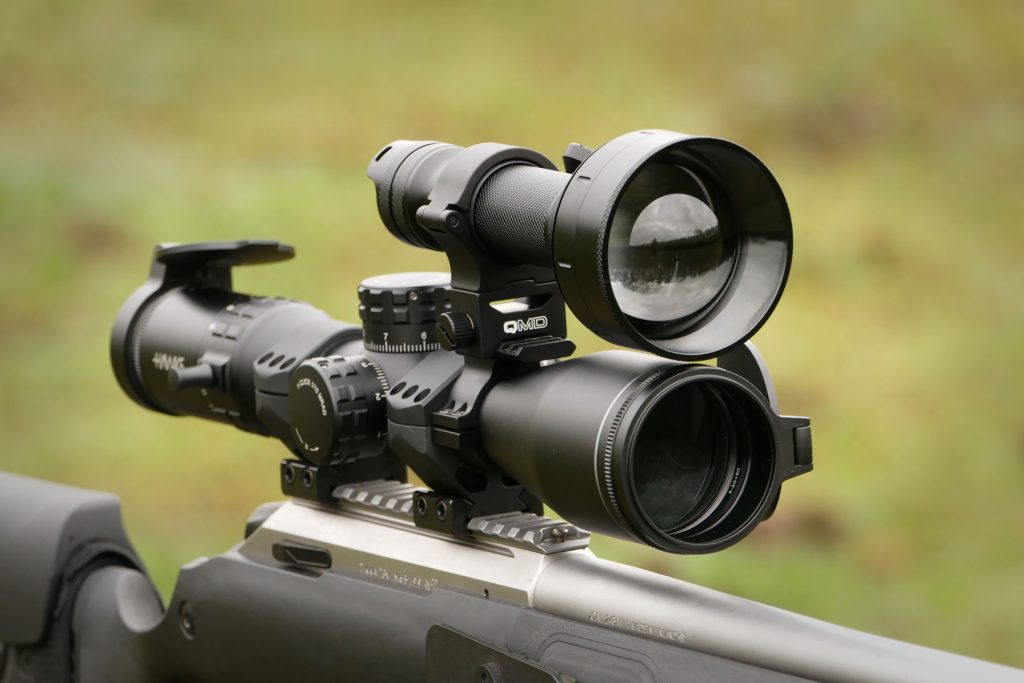
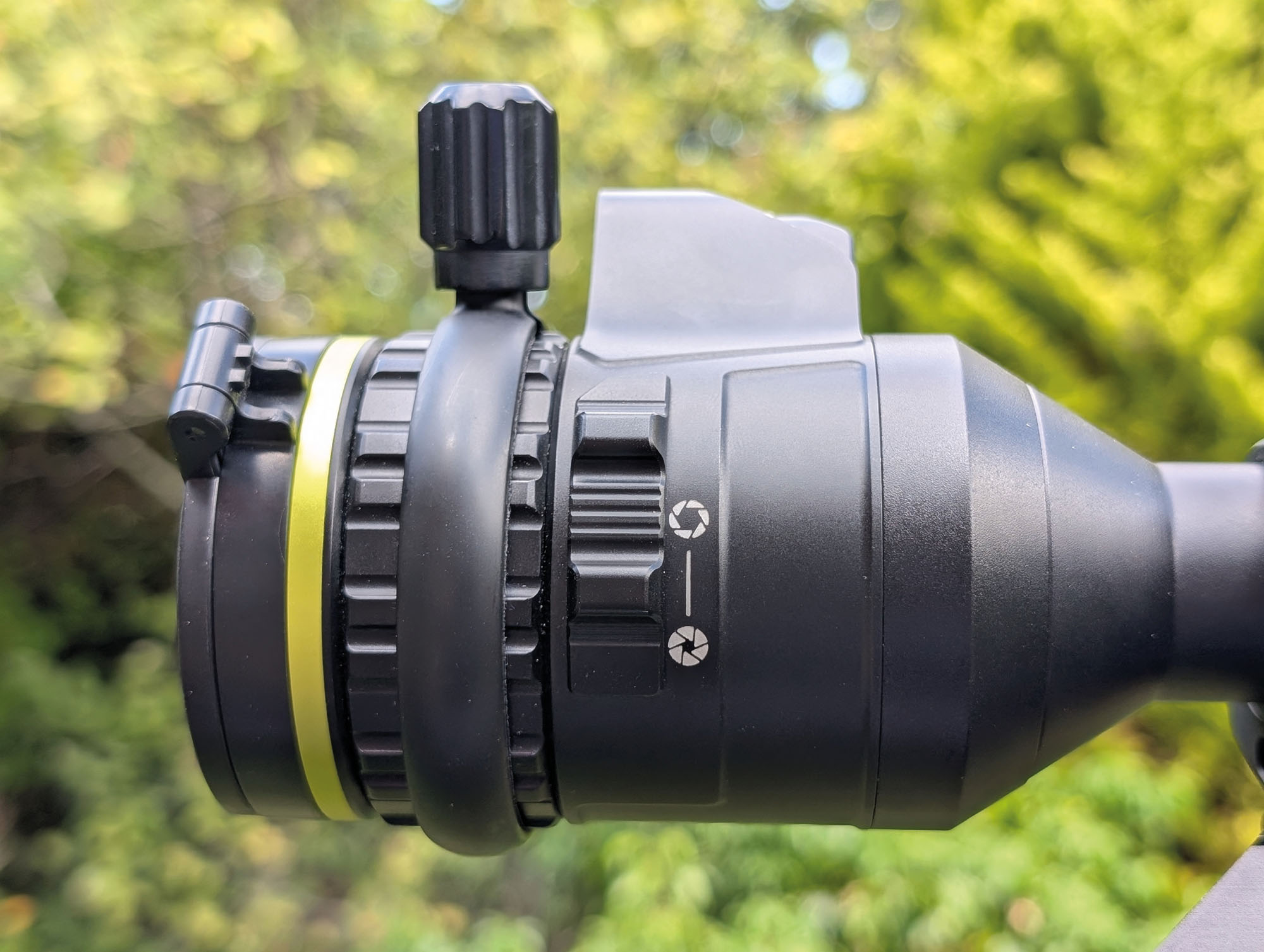
A sliding aperture switch sits on the objective bell. It alternates between f1.2 and f3.0. This offers significant benefits by day and night.
The smaller aperture limits incoming light in daylight. It effectively provides a second exposure setting. The larger aperture reduces depth of field. This enables precise focus on the target.
The wider aperture boosts light intake at night. This maximises low light sensor performance. It extends the ability to deliver a colour image in twilight.
The switch complements the Smart IR feature. This counters white out effects on foreground objects. It automatically adjusts exposure. Its operation is incredibly smooth.
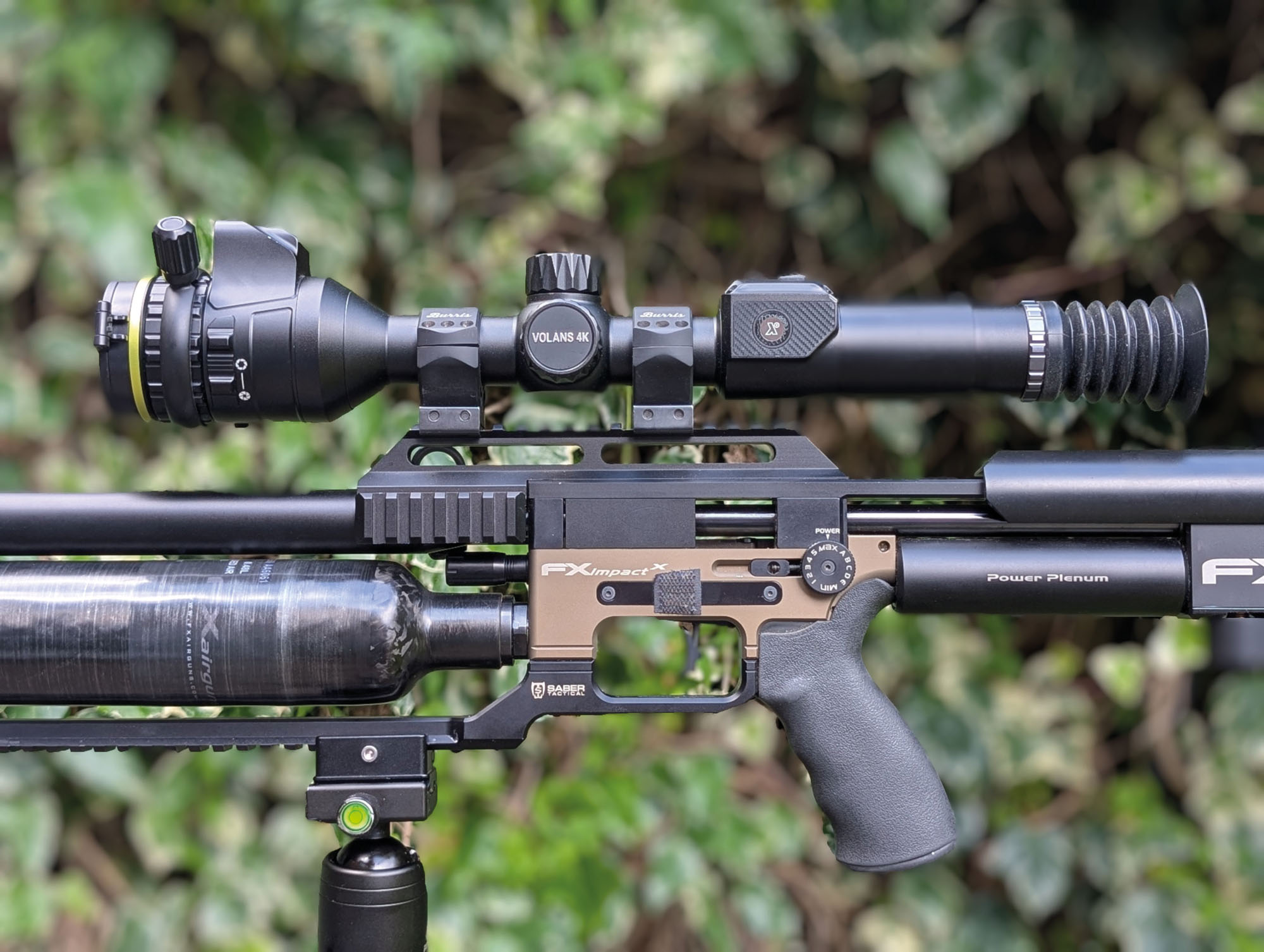
Controls on the ocular bell cover key functions. Three rubberised buttons handle rangefinding and capture. They also control scene modes like colour or sepia.
They are easy to find and distinguish. A smart power button sits on the left side. It features optional illumination and a standby mode.
A USB C port is located on the right. It is protected by a rubber cover. This allows data transfer and external power.
The Volans features a 30mm main tube. It is compatible with standard mounting systems. I found ample room for tactical rings.
The saddle houses a removable 3200mAh battery. The cap is well designed and secure. Pixfra has sensibly omitted an internal battery.
This avoids extra weight and cost. It also improves long term serviceability. Each 18650 cell delivers around five hours of runtime. Two are supplied with the unit.
A familiar turn and click dial sits on top. Turning it adjusts the zoom. Base magnification is 4.3x.
It feels higher due to a tight field of view. This measures 8.6m at 100m. The Volans goes digitally up to 39x. AI smoothing helps reduce pixelation.
Clicking the dial accesses the menus. Extensive customisation is available here. Key features include zeroing and ballistic programming.
Zeroing uses a straightforward method. It is easy to perform on the scope. It is even quicker via the Pixfra smartphone app.
The app makes entering ballistic data simple. The Volans stores five profiles. Unfortunately these are only labelled alphanumerically.
Ranging the target triggers a trajectory calculation. This produces a secondary aiming point. It ensures accuracy at longer distances.
The system worked very well. However I would like more aiming point designs. A horizontal bar would simplify windage adjustments.
The recoil activated auto record mode was not reliable. It struggled with air rifles and rimfires. Adjustable sensitivity would be a welcome update.
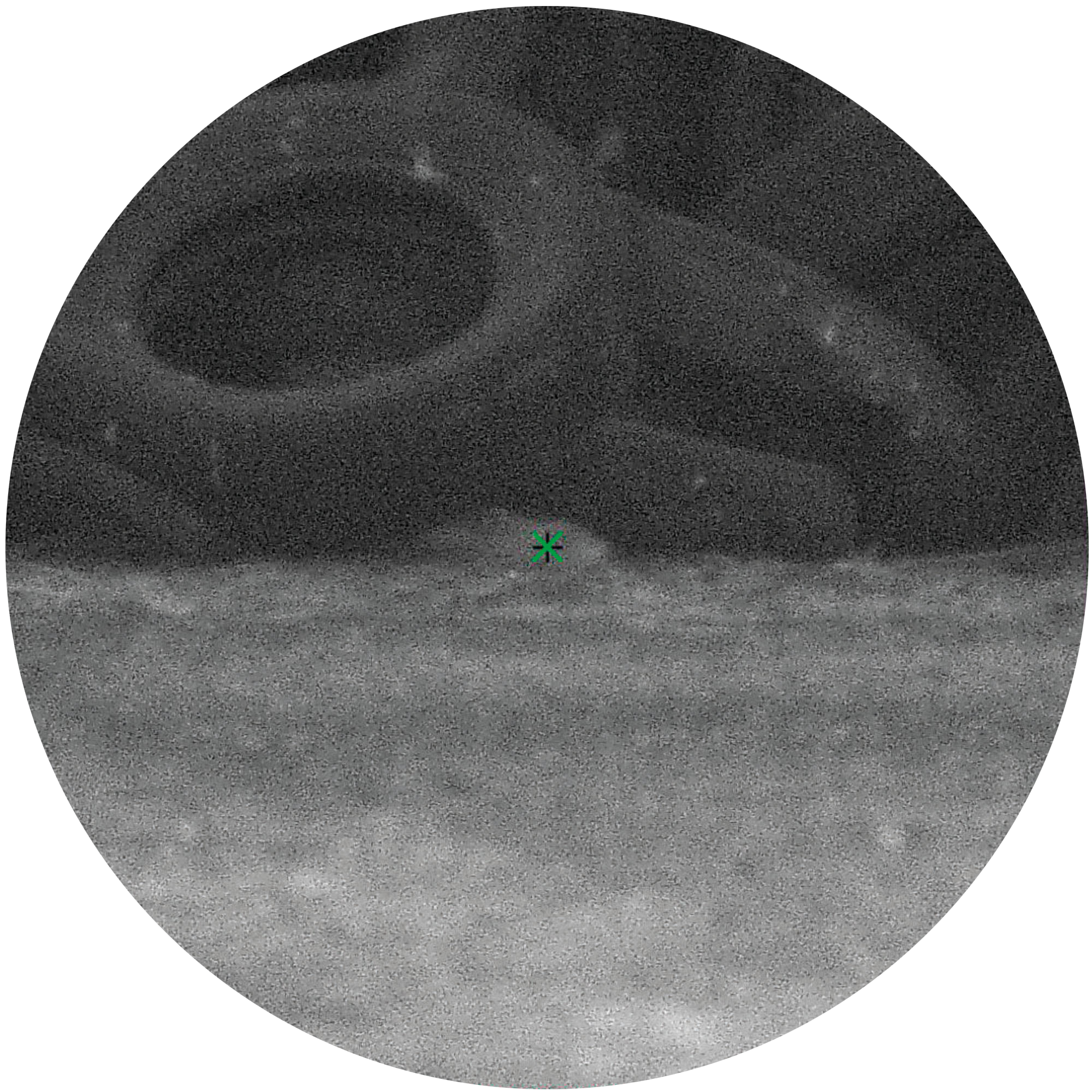
The Volans performed strongly in visual terms. However its specification raises some questions. The sensor is a full 4K unit.
Yet the display is an 800×800 LCD. This slows the loss of detail as you zoom. However you never see a true 4K image.
Video files are compressed to 1080×1080. The circular display is attractive. However its shape trims valuable horizontal field of view.
The Volans is well worth serious consideration. It is solidly built and straightforward to use. It delivers versatile imaging at an attractive price.
A few shortcomings remain. Most are addressable via firmware. The rest are largely subjective. This is an impressive debut.
Manufacturer: Pixfra
Model: Volans V850 LRF
Price: £789.95
Contact: Thomas Jacks
Get the latest news delivered direct to your door
Discover the ultimate companion for field sports enthusiasts with Shooting Times & Country Magazine, the UK’s leading weekly publication that has been at the forefront of shooting culture since 1882. Subscribers gain access to expert tips, comprehensive gear reviews, seasonal advice and a vibrant community of like-minded shooters.
Save on shop price when you subscribe with weekly issues featuring in-depth articles on gundog training, exclusive member offers and access to the digital back issue library. A Shooting Times & Country subscription is more than a magazine, don’t just read about the countryside; immerse yourself in its most authoritative and engaging publication.