★ Win a pair of Brandecosse Capriolo boots worth £219! Click here to enter ★

The hidden cost of Scotland’s deer problem
Public spending on deer control has soared to £134m over a decade. Private stalkers say they are carrying far more of the burden and being penalised for it.
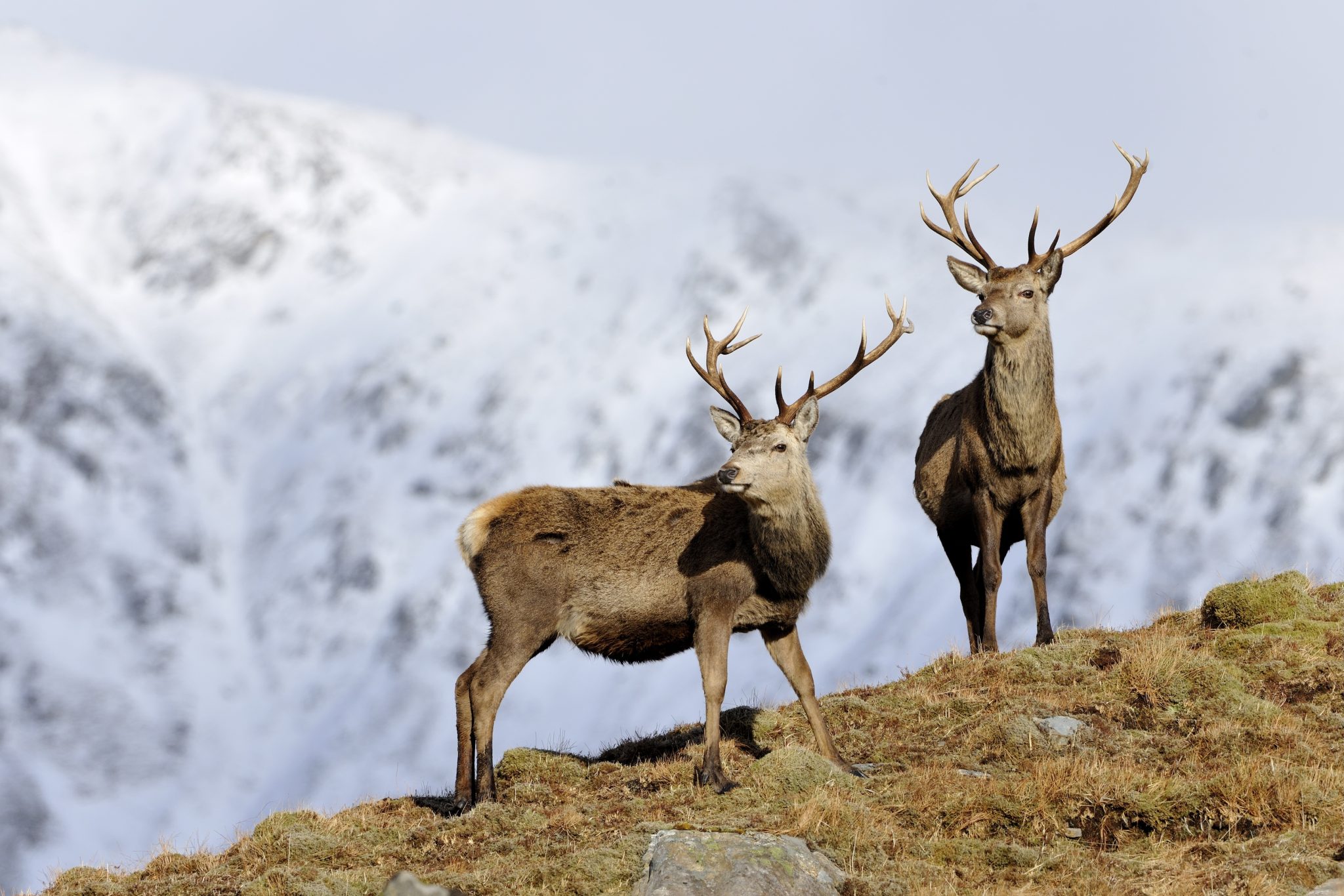 Credit: Laurie Campbell.

£134m in public spending revealed
Taxpayers have spent more than £134m on deer control across Scotland’s public forestry estate over the past decade, but the people responsible for the majority of the annual cull say the figure tells only half the story and that policies now being pursued by Holyrood risk making the problem worse.
Freedom of information data obtained by The Ferret shows Forestry and Land Scotland (FLS) spent £77.6m on deer management between April 2014 and April 2025, with the annual bill nearly doubling from £5.3m to £10.4m. Scottish Forestry awarded a further £56.4m in grants for woodland protection over the same period, mostly on fencing – enough to cover roughly triple the road distance from John o’ Groats to Land’s End.
The spending reflects the scale of a problem that shows little sign of easing. Scotland’s deer population is estimated at more than one million, a figure FLS says has doubled since the 1990s, and NatureScot believes the annual cull falls well short of what is needed. Around 100,000 deer are recorded as killed each year, though the true figure may be as high as 200,000, it says. Even so, the agency argues a further 50,000 would need to be culled annually to meet Scotland’s nature and biodiversity targets.
.
Private sector bears the burden
A spokesman for the Scottish Gamekeepers Association told Shooting Times the spending figures, striking as they are, should prompt reflection on where the real burden falls. “Rather than demonstrating a shocking level of public investment in deer management, this story actually provides an eye-opening indication of the vast private resource ploughed into deer management every year,” he said.
“Private interests are responsible for the vast majority of Scotland’s annual cull, considerably dwarfing that of FLS. If £135m seems a lot, imagine the private investment sunk in during the same period. Without the work of trained deer managers on private holdings, the public purse simply couldn’t cope. That is why the Scottish Government and its agencies must avoid tipping the scales so far that private interests walk away.”
The concern is not without foundation. The Natural Environment (Scotland) Act, passed in January, introduced compulsory training for deer stalkers despite the shooting sector arguing no evidence had been produced to justify it. Meanwhile, changes to sporting rates relief for shoots and deer forests left the sector facing uncertainty that has only partially been resolved by subsequent guidance. It is against that backdrop that those working with deer daily are challenging not just the policy response, but the evidence base behind it.
.
Questions over population data
Regular Shooting Times contributor Chris Dalton of South Ayrshire Stalking accepts there are too many deer in some areas but argues the population figures underpinning current policy do not stand up to scrutiny.
“I am yet to be convinced that claims that deer numbers have doubled over the past 30 years are evidence-led,” he said. “While technology has moved at pace and the use of thermal drones and imaging allows for more accurate population estimates now, they were not around 30 years ago. Clearly deer are benefitting from modern land use, the effects of climate change, along with huge replanting and forest creation schemes, but one cannot generalise that overpopulation is the case across the whole of Scotland.”
.
Call for practical solutions
It is this kind of assumption-making, rather than consultation with those managing deer on the ground, that Mr Dalton believes produces unworkable policy. “If you want to reduce deer numbers generally, you are not going to achieve that by introducing compulsory training for stalkers, taxing landowners with deer forests along with the associated bureaucracy and failing to fund grant support schemes – for example funding chillers, which is available across the rest of the UK,” he said.
“Promoting a market for all these extra deer we are being asked to cull might also help. Perhaps one day, politicians and policymakers will ask the folk who are dealing with deer day in and day out and, on the odd occasion they do consult, try listening.”
Do you have a news story to share?
Contact our group news editor Hollis Butler at hollis.butler@twsgroup.com. We aim to respond to all genuine news tips and respect source confidentiality.
Stay in the loop with the latest fieldsports news
Don’t miss a story – get shooting news straight to your inbox or phone. Join our newsletter and WhatsApp channel.
Related Articles
News
Shooting app puts a score on the day
The new TopGun app allows game shots to digitally track performance, record shoot days and compete on national leaderboards.
By Hollis Butler

News
Nick Beavis wins sixth BASC .410 world title
Staffordshire shooter Nick Beavis has won his sixth BASC .410 World Championship title at Oakedge Shooting Ground.
By Hollis Butler
Get the latest news delivered direct to your door
Subscribe to Shooting Times & Country
Discover the ultimate companion for fieldsports enthusiasts with Shooting Times & Country Magazine, the UK’s leading weekly publication that has been at the forefront of shooting culture since 1882. Subscribers gain access to expert tips, comprehensive gear reviews, seasonal advice and a vibrant community of like-minded shooters.
Save on shop price when you subscribe with weekly issues featuring in-depth articles on gundog training, exclusive member offers and access to the digital back issue library. A Shooting Times & Country subscription is more than a magazine, don’t just read about the countryside; immerse yourself in its most authoritative and engaging publication.