Home/Roe doe culling: why female deer management matters
Deer Stalking
Roe doe culling: why female deer management matters
Winter doe culling remains a vital tool for protecting biodiversity and balancing fragile woodland ecosystems
Miles Malone29 April 2026
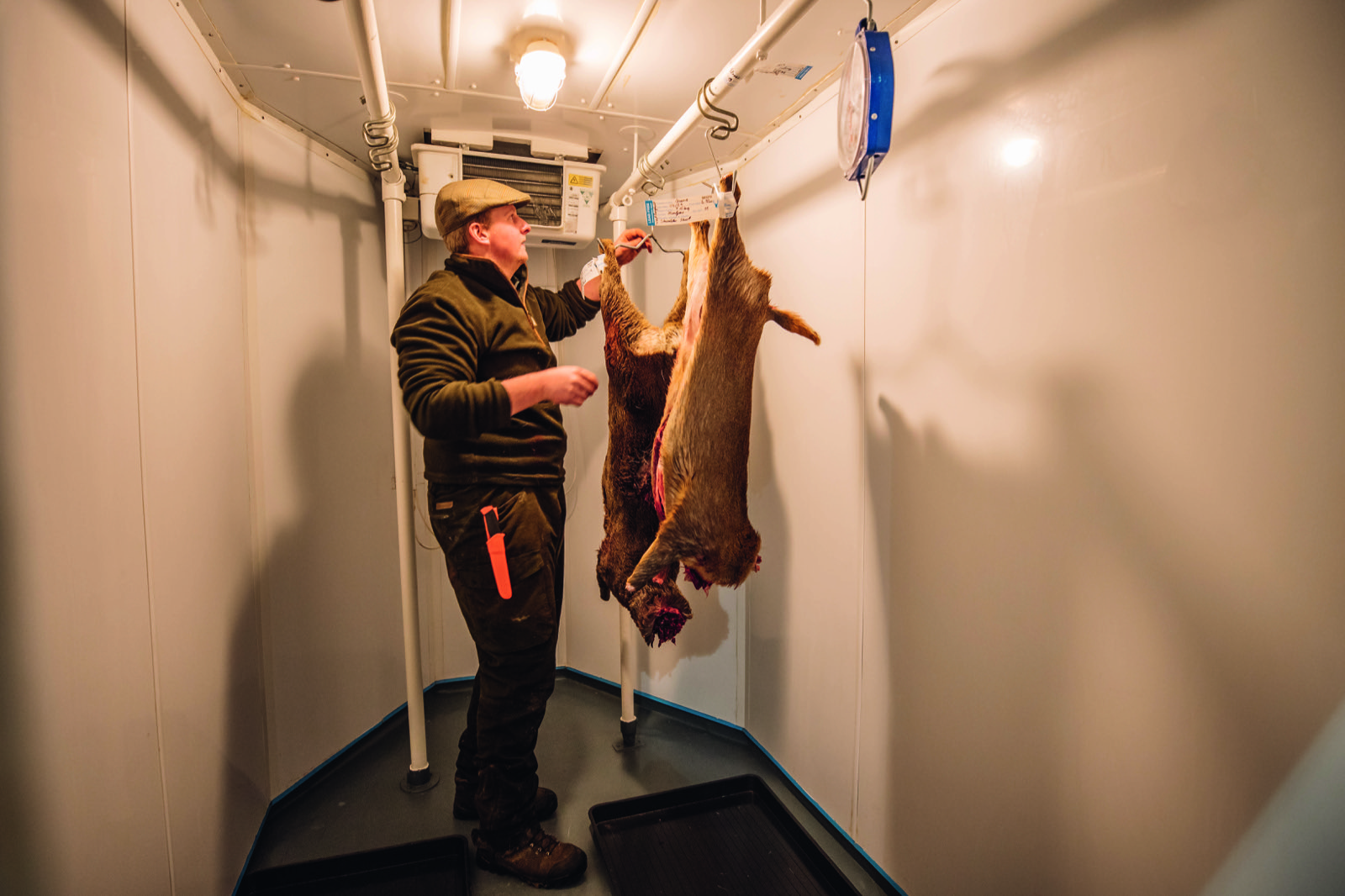
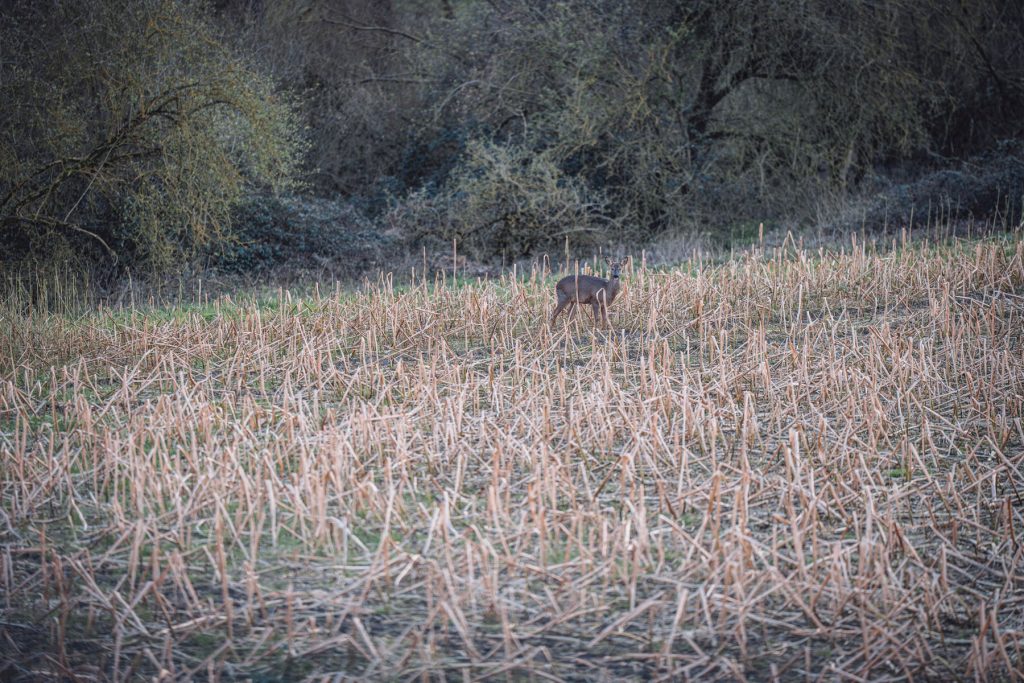
The young roe doe crossed the undulating field of wild bird cover towards the wood. We were chasing the last doe of the cull season and coming to terms with her would mean drawing a close on the cull to fulfil our annual requirements. As is often the case, the final doe of the season had been hard to come by, with blank trips and cold early morning waits in damp high seats resulting in only bucks crossing our path and the chiller remaining empty.
We stalked carefully through the broken cover of a copse, hoping to reach a point where we could intersect her as she made her steady journey onwards. Coming to the end of the tree line, we pushed slowly through a web of alder branches and reached the edge of a topped game cover, with a clear view of the side of the facing wood block.
We had only been there a few minutes when a muntjac buck appeared from the hedge to our right and made its halting journey diagonally across the cover ahead of us. At only 50m it presented a tempting and straightforward opportunity, but with the imperative to get the last doe culled to reach our target, we reluctantly held off as a shot would surely have sent the roe bolting for safety.
Plans unravel
The buck would wait for another day, but the close season for doe was fast approaching. We had predicted that the doe would cross the field and present an opportunity for a shot at around 100m but in stalking, as in all things dictated by nature, great plans can soon be humbled.
The doe had other ideas, and for reasons known only to herself turned obliquely on her course and made for the distant end of the wood, walking directly upwind. When she came into view she was further up the gently sloping hill than we had bargained for. At 170m the shot was still manageable, but her position meant we no longer had an adequate backstop for a safe shot. There was little option but to watch her slow, unhurried progress away from us, before she finally stepped into the trees and disappeared from view.
The unpredictability of deer management
Deer management can be wonderfully unpredictable. We make plans, only to see them quickly dismantled; a change in wind direction, inclement weather, human activity, or the deer themselves can quickly scupper things. Yet with each trip we learn a little more. We decided to make our way to a high seat that overlooked the end of the wood, with the hope that the doe we had seen may re-emerge, or another one step out into the last sun of this glorious afternoon.
Why roe doe culling matters
Managing roe, as with all species of UK deer, is entirely reliant on culling adequate numbers of females. Culling males is important for population balance but does not address the future productivity of the population. Adequately culling roe does manages not only the current population, but future recruitment as well. With an estimated 500,000 roe deer in the UK, of which 150,000 are in East Anglia, where my deer management mostly takes place, numbers are now directly damaging the careful balance of habitat – even the landscape itself. In addition, organisations such as British Deer Society and Forestry England provide valuable guidance on sustainable deer management and habitat impacts.
Roe does produce twins annually as a matter of course in this region and survivability is good, with minimal loss and, with a lack of natural predators, there is no organic brake on the growing numbers. The warm, dry climate and abundant regional availability of year-round nutrition, means that populations are continuing to grow unsustainably. The alarming reality is that populations can rise tenfold in a decade if left unchecked, to the detriment of many other species, with woodland degradation and inevitable biodiversity loss. As a result, well-structured cull plans are increasingly central to modern countryside stewardship.
Waiting on the woodland edge
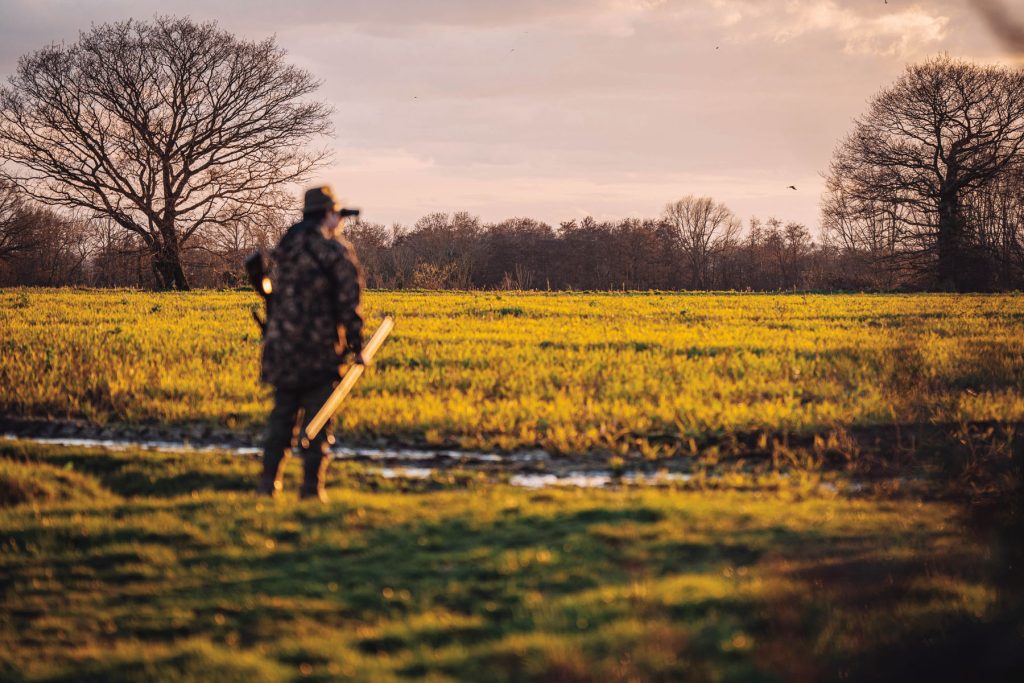
We sat for an hour, constantly scanning the woodland edge with our thermal binoculars for an early sign that a deer may emerge. The songbirds were busy around us but the deer remained stalwartly inactive, perhaps couched down in a sun trap in a clearing, sheltered from the breeze. We were on the eastern border of the wood and, as the sun began to set in the west, a dark shadow cloaked the woodland edge, bringing with it an instant chill. It was a reminder that winter had yet to be fully shaken from the land. The scene instantly changed; it felt suddenly inhospitable for any sensible roe doe. It was time to move once more.
Learning to think like a deer
When I was starting to learn about deer management in my teens, my mentor gave me sage advice: “A good high seat in the wrong place will never beat a poor high seat in the right place.” I quickly learned to hunt deer where they liked to be. Deer may at times be frustratingly variable but they are generally creatures of habit. Thinking like a deer helps you navigate the array of imponderables. They are animals built for survival, evolved to minimise energy expenditure, maximise calorific intake and avoid predation.
Roe seek out the late spring sunshine and tend, on this patch at least, to make for the western woodland edge, preferably a sheltered spot where they can bask in the evening rays. We headed off in a circuitous loop to make for a high tower that we hoped would provide just such an opportunity.
We took our time entering the tower quietly and downwind. At the end of the cull season, does are well educated to the risk that human presence brings. At the slightest sound of approaching danger, or wafted scent on a circling wind, they take to the safety of cover. Sharp, deliberate foot-stamps will follow, signalling to other roe of approaching danger. Worse, from the deer manager’s point of view, is the warning bark that carries to deer nearby, typically only a moment before the roe streaks off, rump patch raised, often leading others off in a full-blown exodus. Fortunately, on this occasion we managed to climb the tower undetected and began our vigil.
A buck worth leaving
A buck appeared, a full-bodied mature animal with antlers already cleaned of velvet. He was a mature six-pointer, with an even and symmetrical head. We studied him carefully for imperfections but could find none. He would be one to leave once the buck season was underway, when we would instead concentrate on the yearlings and old bucks that were reaching their time. He circled, scanning for danger. On finding none, he visibly relaxed, browsed at the field edge for some time then lay down in the sheltered lee of the wood to enjoy the sun.
We did not have long to wait for more action; a doe soon followed on the same line. She emerged cautiously, inching from cover and the safety of the wood. In time she began to cross the field towards us. A study with the binoculars identified her as a young doe, a yearling, very much what we were after for the cull plan. She gradually closed the distance between us and I cautiously positioned myself for a shot, making sure I avoided any sharp movements that would certainly have alerted her.
Challenges of the shot
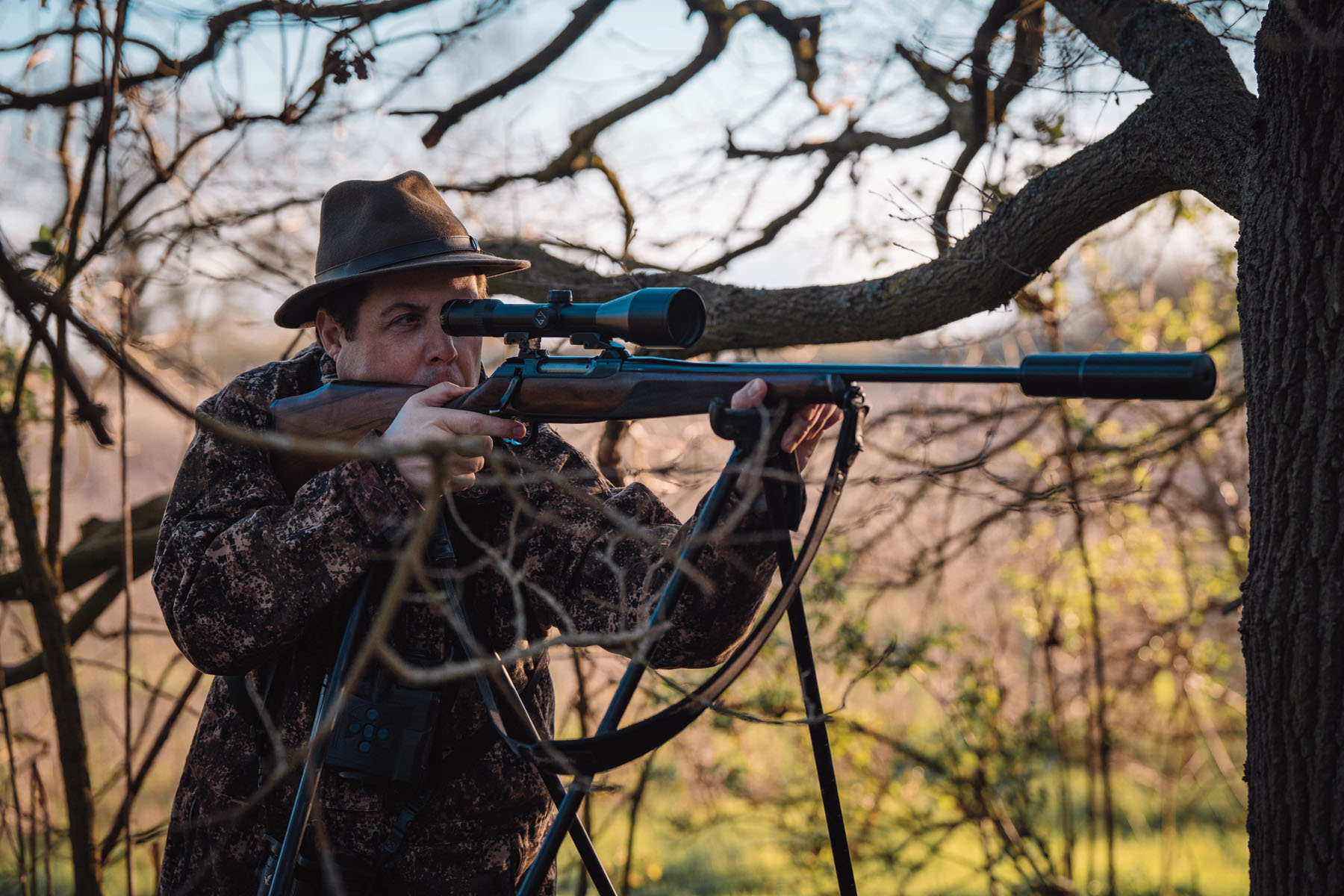
The shot is only a tiny component of deer management, but it is a critical one. Shooting tight groups on the range is only part of the equation; field shooting brings new challenges. I have learned that reading the behaviour of the deer and having an awareness of when the window of opportunity for a shot is going to present is crucial. In this case the doe continued to move towards us head on and did not present a clear opportunity.
Eventually she veered away, stopping intermittently to browse at selected foliage before resuming her progress. Each time the crosshairs rested on the chest behind the front leg, she began to move once more. Timing her movements, I controlled my breathing and tracked her progress. As she halted to pull at a leaf, I steadied for the shot, and as her head lifted once more I gently squeezed the trigger. The round was on its path. Fractionally before I heard the report of the rifle and felt the gentle nudge of recoil, I saw through the scope picture that the strike was good. There was a puff of hair on the exit as the doe lurched forward, kicked twice and lay lifeless.
Stewardship beyond the shot
Roe doe culling undoubtedly lacks the glamour of pursuing bucks – certainly the action and spectacle of the rut. However, it has its own charm and necessity. The rewards are less immediate and more slow burning. It means wet winter stalks and enduring the cold British winter in windswept high seats, but it is vital – not only to limit the growing population but also to halt the biodiversity loss it causes. For example, guidance from The Deer Initiative reinforces the importance of coordinated female culling in wider landscape management.
In this already nature-depleted isle, completing a well-designed cull plan requires effort and work, but enables you to know you are responsibly playing your part in stewarding both the deer and the land they inhabit. It is a reward perhaps worthier than any set of antlers on the wall.
This article contains affiliate links. If you click on one of these links and make a purchase, we may earn a small commission at no additional cost to you. Affiliate income helps us maintain the quality of our content and keep it freely accessible.
All recommendations are based on our honest opinions and thorough research.Would you like to speak to our readers? We offer sponsored articles and advertising to put you in front of our audience.
Find out more.
Choosing the right cartridge for Sporting clays and competition shooting is every bit as important as choosing the correct gun and choke combination. This guide covers five of the best competition cla...
Apart from a chiller full of maggot-infested pigeons, the last chance on a spring drilling proves to be a decoyer’s dream
By Miles Malone
Get the latest news delivered direct to your door
Subscribe to Shooting Times & Country
Discover the ultimate companion for fieldsports enthusiasts with Shooting Times & Country Magazine, the UK’s leading weekly publication that has been at the forefront of shooting culture since 1882. Subscribers gain access to expert tips, comprehensive gear reviews, seasonal advice and a vibrant community of like-minded shooters.
Save on shop price when you subscribe with weekly issues featuring in-depth articles on gundog training, exclusive member offers and access to the digital back issue library. A Shooting Times & Country subscription is more than a magazine, don’t just read about the countryside; immerse yourself in its most authoritative and engaging publication.
To provide the best experiences, we use technologies like cookies to store and/or access device information. Consenting to these technologies will allow us to process data such as browsing behavior or unique IDs on this site. Not consenting or withdrawing consent, may adversely affect certain features and functions.
Functional
Always active
The technical storage or access is strictly necessary for the legitimate purpose of enabling the use of a specific service explicitly requested by the subscriber or user, or for the sole purpose of carrying out the transmission of a communication over an electronic communications network.
Preferences
The technical storage or access is necessary for the legitimate purpose of storing preferences that are not requested by the subscriber or user.
Statistics
The technical storage or access that is used exclusively for statistical purposes.The technical storage or access that is used exclusively for anonymous statistical purposes. Without a subpoena, voluntary compliance on the part of your Internet Service Provider, or additional records from a third party, information stored or retrieved for this purpose alone cannot usually be used to identify you.
Marketing
The technical storage or access is required to create user profiles to send advertising, or to track the user on a website or across several websites for similar marketing purposes.