★ Win a pair of Brandecosse Capriolo boots worth £219! Click here to enter ★

Simulated game shooting: like game shooting minus the feathers
Once dismissed as mere off-season practice in tweed, the simulated game day has become a sport in its own right; Selena Barr asks four leading operators what separates a standout day from a chaotic one

There is a particular melancholy to the first of February. The guns are cleaned and cased, the Labradors wear an air of reproach, and the long grey months until the partridges return in September stretch ahead like a sentence to be served. For generations the close season was simply endured. Now, increasingly, it is shot through.
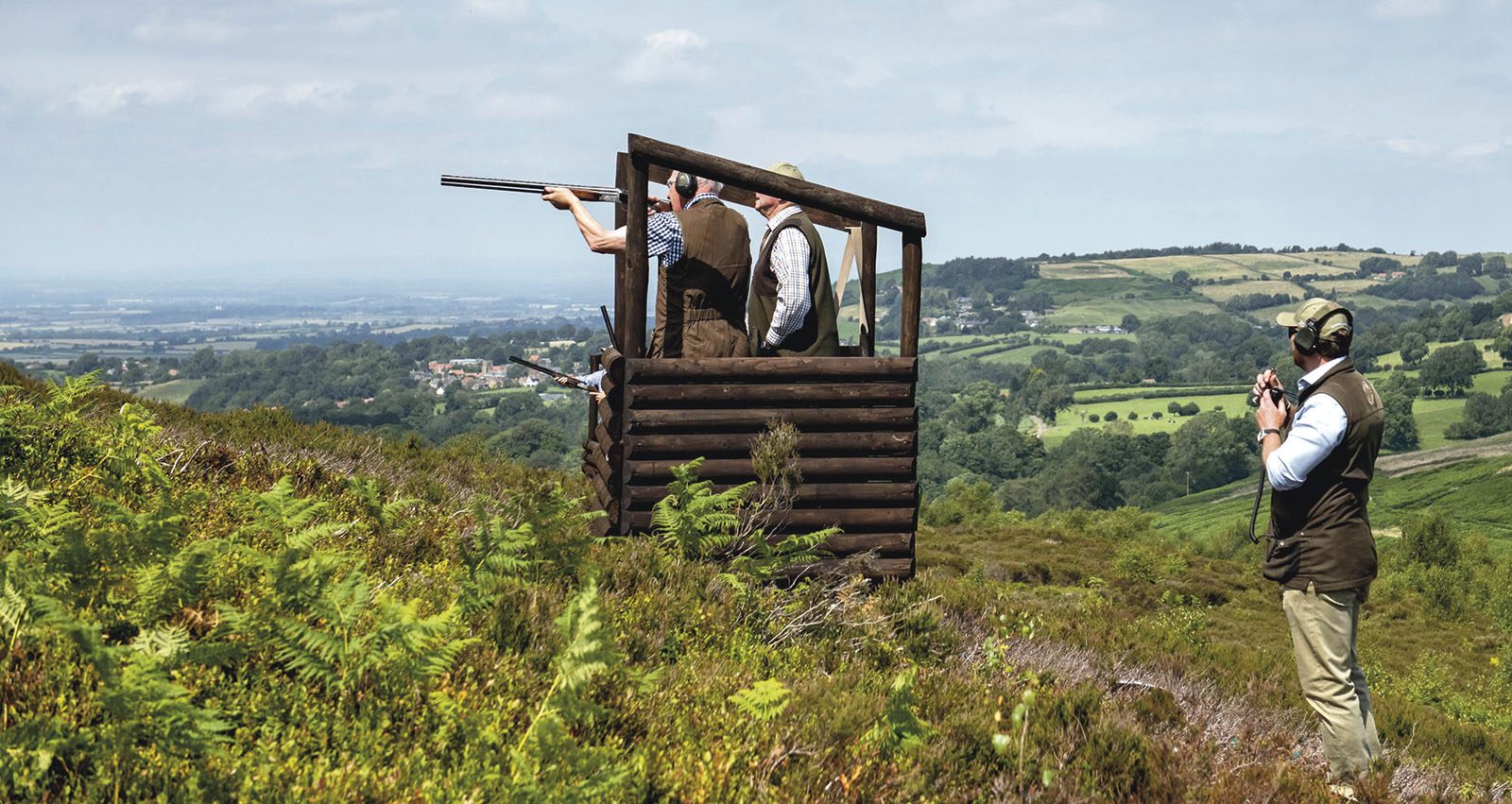
Over the past decade the simulated game day has travelled from curiosity to fixture, and the faint snobbery that once attended it – the suspicion that flinging clays about a field was not quite the thing – has quietly evaporated. The serious question is no longer whether you ought to book a sim day, but which one. It also invites a more searching inquiry. Is a good sim day a genuine substitute for driven game, a like-for-like experience in all but feather? Or is it, when you strip away the marketing, simply off-season practice in tweed?
Put the question to the people who run simulated days and a striking consensus emerges. None of them will pretend a sim day is the real thing. And neither will they accept that it is merely a warm-up. “We see it as much more than practice,” says Bronwyn Matthysen of Grove Park in Warwickshire, who regards a well-run day as a sporting occasion in its own right, capturing the excitement, unpredictability and, above all, the camaraderie of a driven-game day.
At Thimbleby, on the edge of the North York Moors, the team draw the same distinction in different words, calling a sim day “its own unique experience” rather than a stand-in for anything, and a more accessible, more informal one at that, to be enjoyed across the spring and summer when the real thing is months away.
George Whittaker, who runs the shooting at Boughton in Northamptonshire, puts it memorably: “Think of it not as simulated game but as game shooting without the feathers,” he says. You cannot compare it directly to the real thing, he concedes, but with the drives perfected and the food properly sourced, a host can come remarkably close.
More than off-season practice
That is not to dismiss the practical uses. A sim day remains the surest way to keep your eye in through the close season and to sharpen up before September. It is also, as George points out, an ideal way of keeping a winter game team together through the fallow months. The mistake is to assume that is all it is. Pressed on the comparison, none of them claimed perfect parity – the absence of dogs, of a picked-up bird, of the season’s own edge, are real enough – but all insisted the gap is far narrower than the doubters suppose. The operators who stand out are those who treat the off-season utility as a happy by-product rather than the entire proposition.
Terrain, targets and hidden traps
Coming close is a matter of craft rather than luck, and it begins with the ground. Thimbleby boasts 3,000 acres of deep valleys, steep woodland and open moorland – terrain varied enough that no two drives feel remotely alike, since birds shown off a moor edge behave nothing like those curling out of a wood. “The best setups use the landscape to replicate the excitement and unpredictability of driven game,” says the Thimbleby team.
At Boughton, George conjures the same variety from gentler ground, his drives taking in towering pheasants to ducks over the ornamental lakes to low, rocketing grouse.
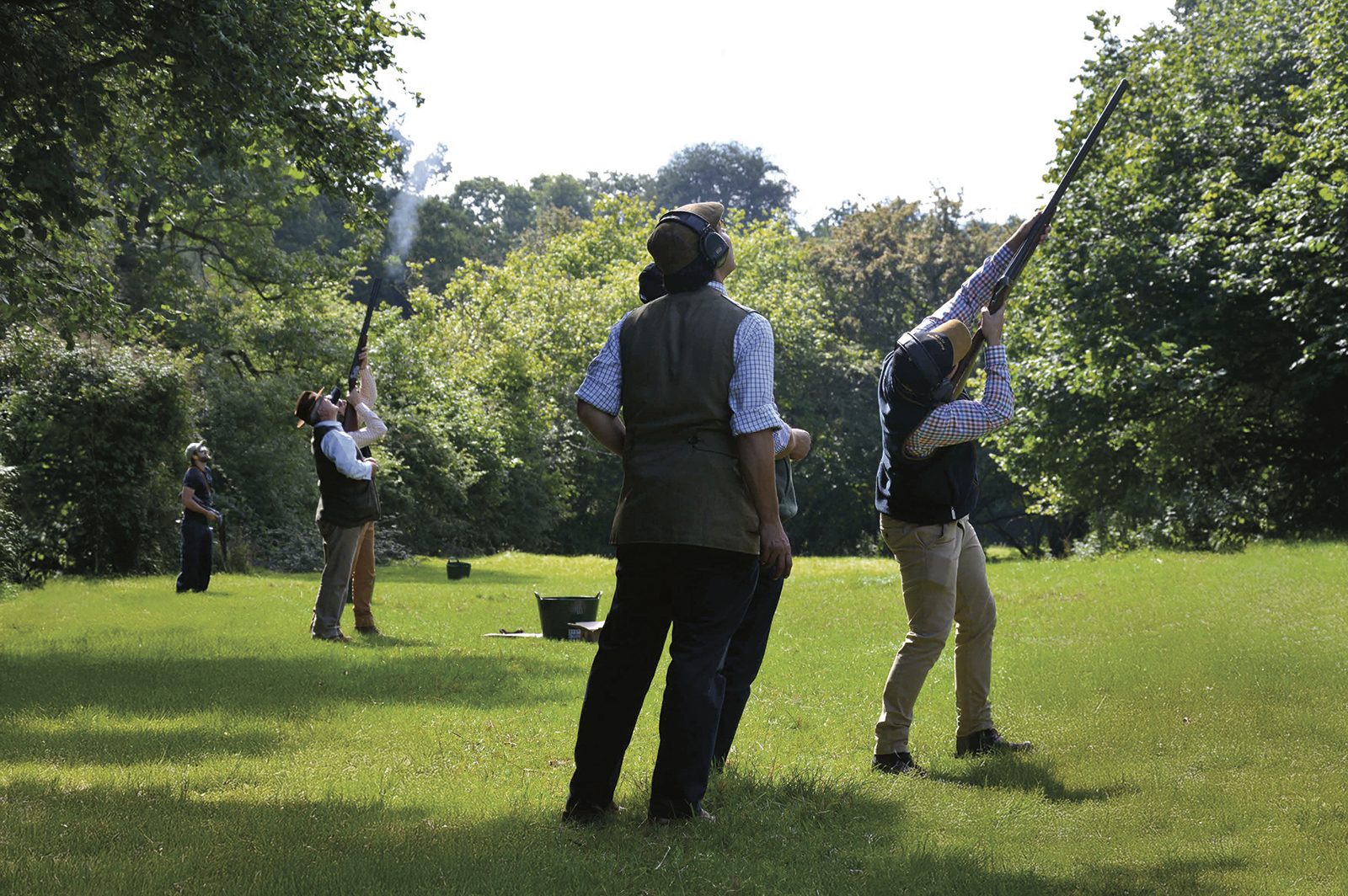
The same instinct animates Edward Notley Kent at Shooting School UK, who is exacting on the quality of the targets themselves. Drives, he insists, should replicate the height, line and challenge of driven pheasants and partridges, and he is unusually firm on the unfashionable subject of peg spacing. He sets pegs sensibly apart so each Gun can pick up a proper line and enjoy individual opportunities rather than the whole team scrambling at the same clay. It is exactly the sort of detail that separates a thoughtful day from a chaotic one.
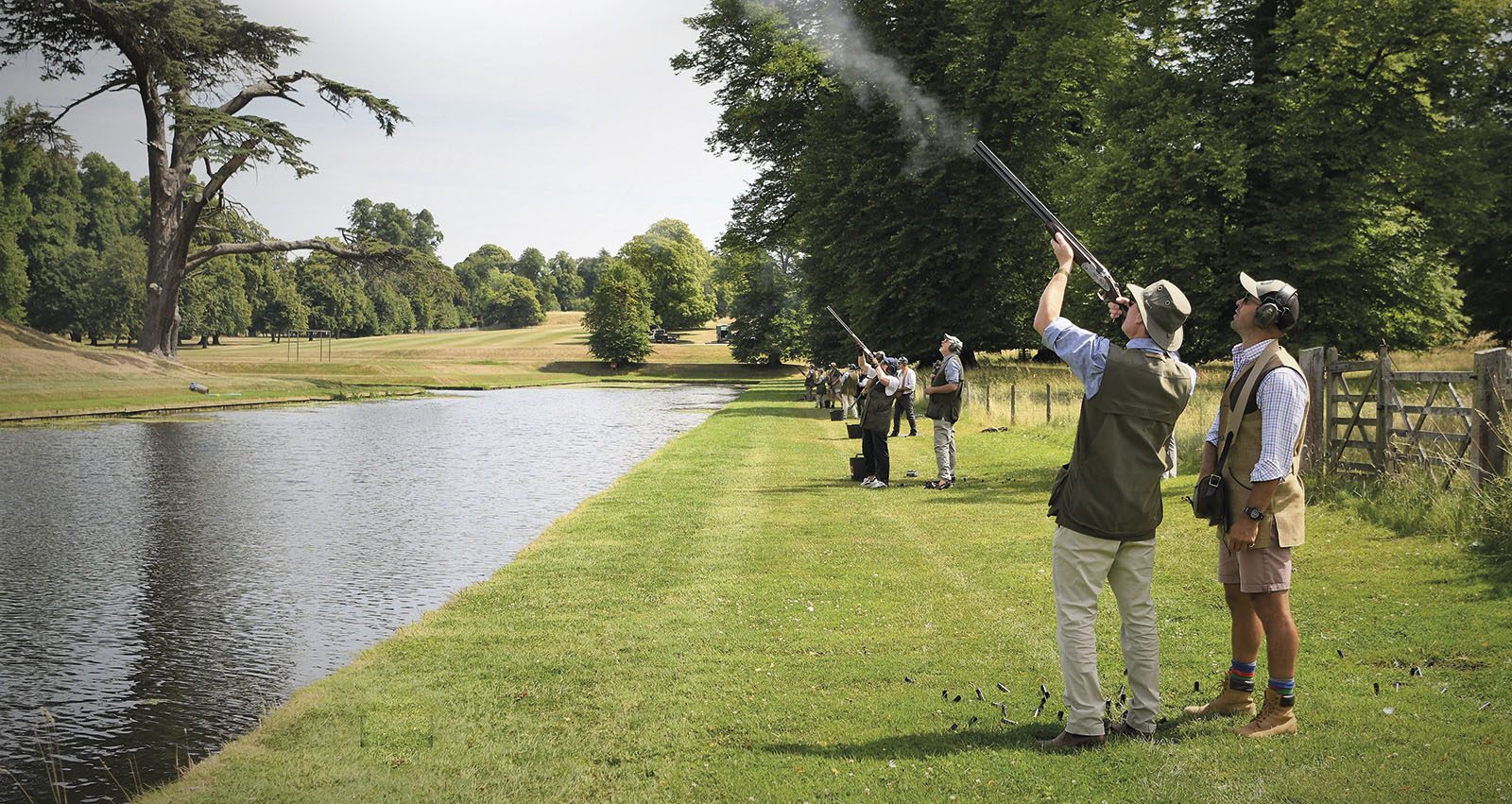
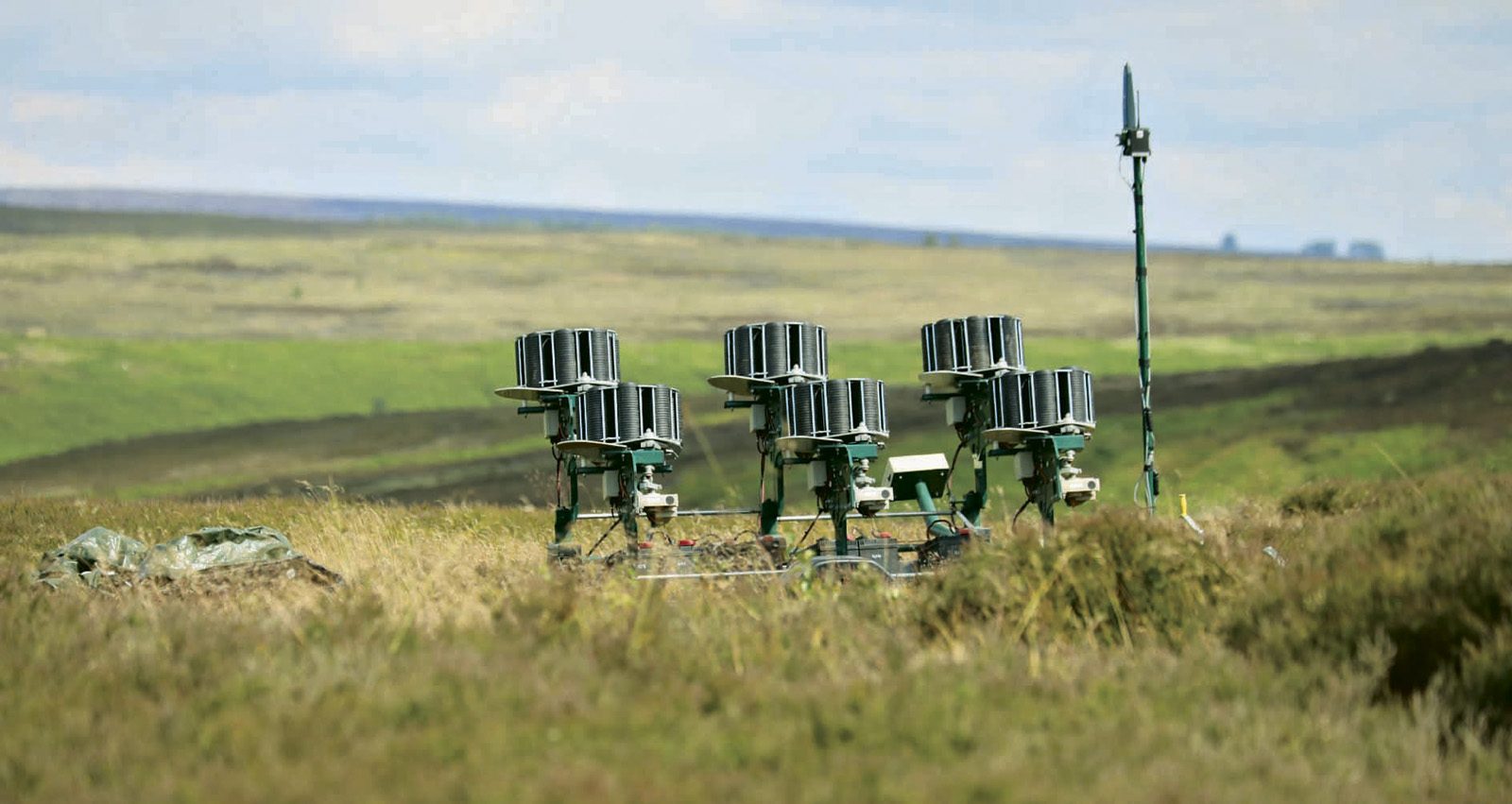
If terrain supplies the drama, concealment supplies the illusion, and here George is at his most quotable. “You can’t see the beaters on a game day,” he says, “so why should you see the traps on a sim day?” A visible trap, to him, betrays lazy drive planning and breaks the very spell the enterprise depends upon. He is equally severe on plastic wads, which he finds untidy and indefensible; Boughton shoots eco birds and recycles its spent cartridges and cardboard.
It is a timely preoccupation. With the Government having confirmed that lead ammunition will be banned for live-quarry shooting from 1 April 2029, after a three-year transition, the sport’s environmental housekeeping is no longer a matter of taste and the better operators are visibly well ahead of the curve.
Hospitality is part of the sport
Yet ask any of these four what truly makes or breaks a day, and almost at once the conversation turns away from the shooting. Bronwyn is unequivocal: what sets Grove Park apart is the weight it places on everything that happens between the drives, with attentive hosting, excellent food and the atmosphere mattering every bit as much as the clays. The aim is not a tally broken but a day enjoyed together.
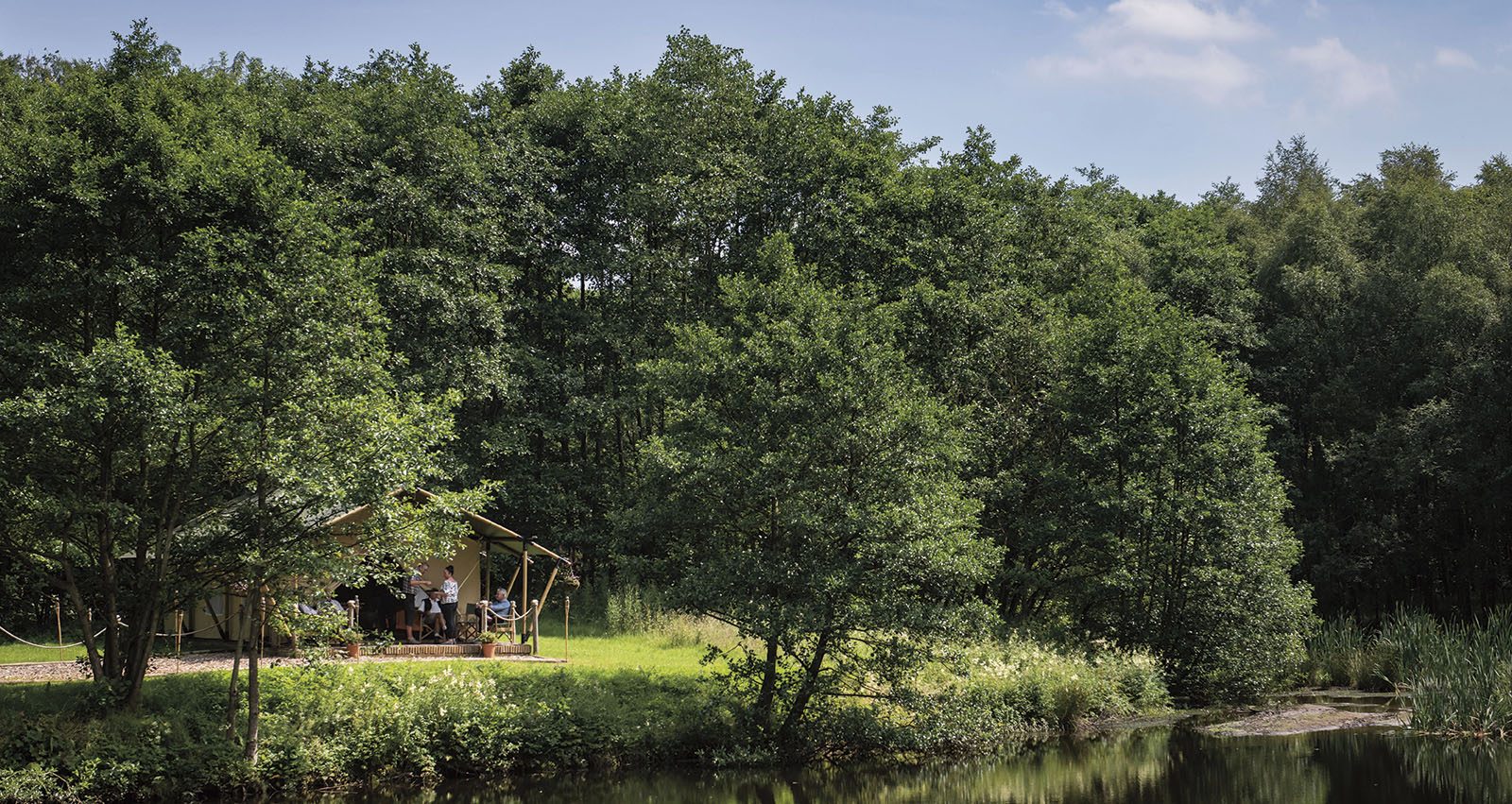
At Boughton the same priority shows in the kitchen, with local ingredients sourced for breakfast, lunch and dinner and a picnic taken in the gardens below the house. Edward takes F&B to luxurious extremes. His offering runs from no-frills shooting for those who want nothing else, to a gastronomic theatre that would not disgrace a top London restaurant: chef’s table tasting menus served between drives, themed days built around wagyu beef, caviar, lobster and Chateaubriand, truffle days and, a particular favourite, Good Friday fish and chips with Chablis. Whichever a guest chooses, he maintains, the food should never be compromised by cut corners, and everyone should leave feeling they have had exceptional value. Hospitality, on this reading, is not the garnish but part of the sport.
Why organisation makes or breaks a sim day
The corollary, voiced independently by both Thimbleby and Grove Park, is that nothing kills a promising day faster than poor organisation. Long waits between drives, repetitive targets, a want of variety: these, far more than any missed clay, are what guests remember and resent. A well-run day should flow, keeping Guns engaged and entertained from breakfast to the final horn and, ideally, booking the next outing before they have reached the car park. The discipline lies in the planning – something genuinely different at every stand and not a moment of dead air.
What, then, makes each stand out? Thimbleby has its moorland and its year-round instructors, who read a Gun’s ability at a glance and dial the difficulty up or down to suit. Boughton has theatre that no other clay ground can match: a landscaped 18th century park, ducks driven over an ornamental lake before the great mansion house, and George signalling each drive on his hunting horn. Grove Park has its rolling Warwickshire setting and its insistence that a day is an occasion to be hosted rather than merely a shoot to be run. Shooting School UK has its sheer variety, from the spartan to the sybaritic. Different ingredients; the same ambition. When the Country Girls UK shot at Boughton, their verdict opened: “If Carlsberg did sim days, this would probably be the best in the world” – the kind of notice every operator is quietly chasing.
Strip away the particulars and the four converge on something more interesting than cartridge counts. The standout day is neither a pale imitation of driven game nor a summer net session for the trigger finger. It is its own thing entirely: terrain used with cunning, targets that test rather than flatter, traps kept out of sight, a rhythm that never sags into waiting, and hospitality generous enough to make the day an event.
The feathers, in the end, are not the point. Do the work, George insists, perfect the drives and feed people properly, and you can get very close indeed. Close enough, at least, to make the first of February a little less mournful, and to send every Gun home already plotting the next one.
Frequently Asked Questions
What is simulated game shooting?
Simulated game shooting replaces live quarry with clay targets thrown to mimic the height, line and challenge of driven game birds, so a line of Guns shoots the same kind of presentations they would meet in the season. The best days use varied terrain and hidden traps to capture the excitement and unpredictability of driven game without a feather in sight.
When is the game shooting close season in the UK?
The driven game season runs through the autumn and winter and closes on 1 February, with partridge and pheasant shooting resuming from September. Simulated days fill that gap across the spring and summer, keeping Guns sharp and teams together until the real thing returns.
When does the lead ammunition ban come into force?
The Government has confirmed that lead ammunition will be banned for live-quarry shooting from 1 April 2029, following a three-year transition. Many sim day operators already shoot non-lead eco cartridges and recycle spent cases and cardboard, putting them ahead of the change.
Related Articles

Stalking diary: the boundary-crossing buck that made the morning hard work
Waking at 3am is only half the battle when a boundary-crossing young buck decides to make Charlie Blance's morning roe stalk as difficult as possible
By Charlie Blance
Clay Shooting Classic and Sporting Gun Clubman return
Two long-dormant clay shooting competitions, the Clay Shooting Classic and the Sporting Gun Clubman Championship, return to Eaton Hall Shooting Ground in Derbyshire this October, with shooters able to...
By Shooting Times
Get the latest news delivered direct to your door
Subscribe to Shooting Times & Country
Discover the ultimate companion for fieldsports enthusiasts with Shooting Times & Country Magazine, the UK’s leading weekly publication that has been at the forefront of shooting culture since 1882. Subscribers gain access to expert tips, comprehensive gear reviews, seasonal advice and a vibrant community of like-minded shooters.
Save on shop price when you subscribe with weekly issues featuring in-depth articles on gundog training, exclusive member offers and access to the digital back issue library. A Shooting Times & Country subscription is more than a magazine, don’t just read about the countryside; immerse yourself in its most authoritative and engaging publication.