★ Your magazine. Your say. Complete our reader survey with a chance to win Jack Pyke kit worth £500! ★


Father, son and the wash: readying an Ouse Washes fowling marsh for the winter floods
Graham Downing returns to the Ouse Washes marsh his father bought in 1969, now shot by his own son, to trim the willow hides, let the water on and wait for the wigeon
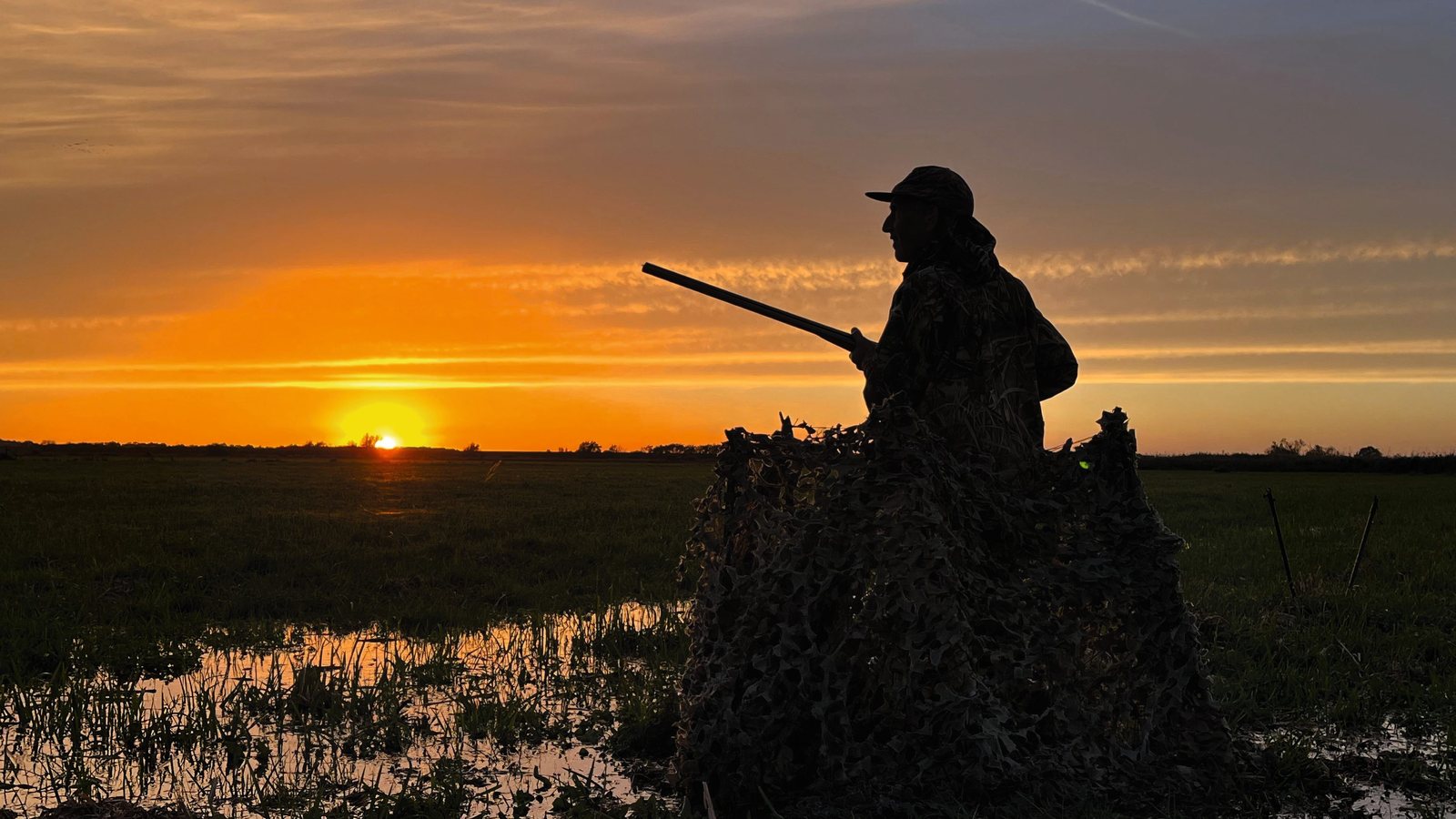
My earliest memories of the Ouse Washes go back to the autumn of 1969 when my father first took me out to shoot the wash which he, along with Colin Willock – Shooting Times’s Town Gun – and a small group of their mutual mates had just purchased. It was a relatively small plot of land, just 17 acres, but well situated in the duckiest part of the duck-rich Fens and I can remember my teenage eyes popping out on stalks at the sight of tens of thousands of wigeon moving up and down the washes against the early morning light, their magical whistling carrying on the wind.
That first winter, at the end of December, my father and I even camped out on our wash for a particularly memorable fowling expedition. My diary records that there was just a hint of ice on the flooded marsh as we set out our decoys, the teal arriving as darkness fell. I wrote with pride about how I knocked down six of them with my single-barrelled AYA hammergun, adding another the following morning. By then, flurries of snow were swirling around us and it was freezing hard as we boiled the kettle over a small gas stove which I still have.
More importantly I still have part-ownership of that wash too, but nowadays it is my own son, George, who does most of the shooting there, occasionally inviting his old dad along for a trip down memory lane.
In mid-September he suggested that we might meet up for morning flight followed by a work party. We pitched up there at around 5am and tramped out to the far corner of the wash, the familiar scent of fen mud, crushed herbage and water mint assailing our nostrils as the dogs raced around us in the darkness, giddy with excitement.
Flight was pretty much non-existent, with just a few home-bred mallard showing as the sun came up over the horizon, but that mattered little because the main reason for our visit was to trim the willows around our hides in readiness for when the winter floods will bring with them the mighty squadrons of migratory wildfowl for which this portion of the Fens is celebrated.
Trimming the willows around raised hides
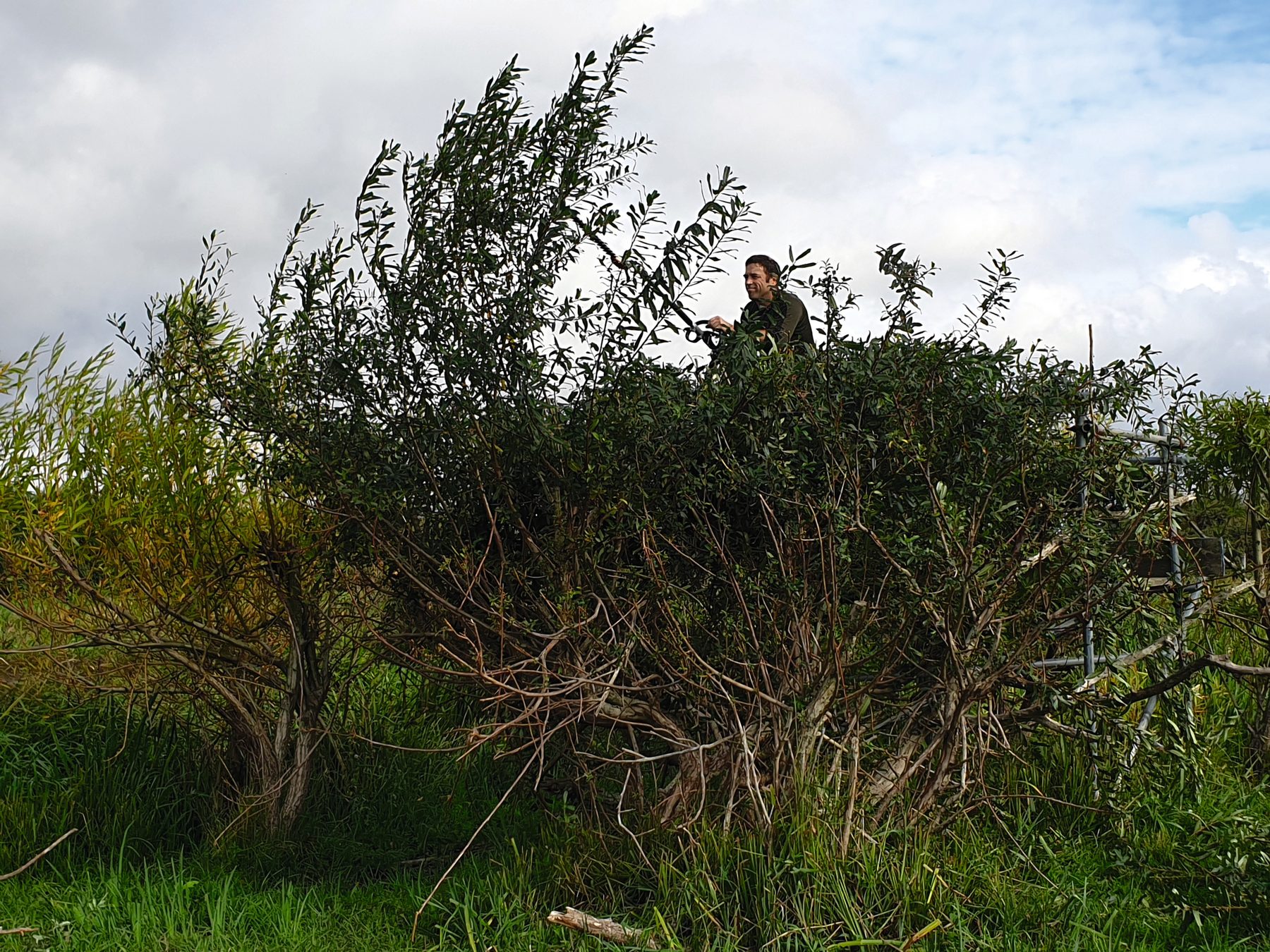
Some years back we constructed a series of raised hides to provide dry platforms above the water level so that we could shoot in a degree of comfort throughout the winter when the floods are up. Willows were planted to screen the hides and, with fences to protect the young willow whips from hungry cattle, these flourished and grew rapidly in the damp, peaty soil. Now the hides require an annual haircut to enable the fowler within to have an unobstructed view of any incoming fowl.
I had brought with me a variety of power tools including a chainsaw and a Stihl long-reach powered hedge trimmer, just the thing for sculpting the willows around wildfowling hides. I also had a willing machine operator, so while I did important things like refuelling, directing work and offering words of encouragement, George clambered into the hides and got those willow screens neatly trimmed.
The responsibility of a fowling marsh
It is of course a huge privilege to have a fowling marsh of one’s own, and especially one that has been passed down through the family from father to son. But with ownership comes responsibility and with land of any sort there is always something to be done, whether it be managing vegetation, cleaning out boundary dykes or liaising with the graziers who look after the cattle on the washes over the summer months.
Our sole aim is to maintain a traditional scheme of management which will ensure a habitat that is suitable for wildfowl in the autumn and winter and for breeding waders in the spring and early summer, and the key to this is management of the sward height through grazing with cattle, something we have been doing on our wash for nigh on 60 years.
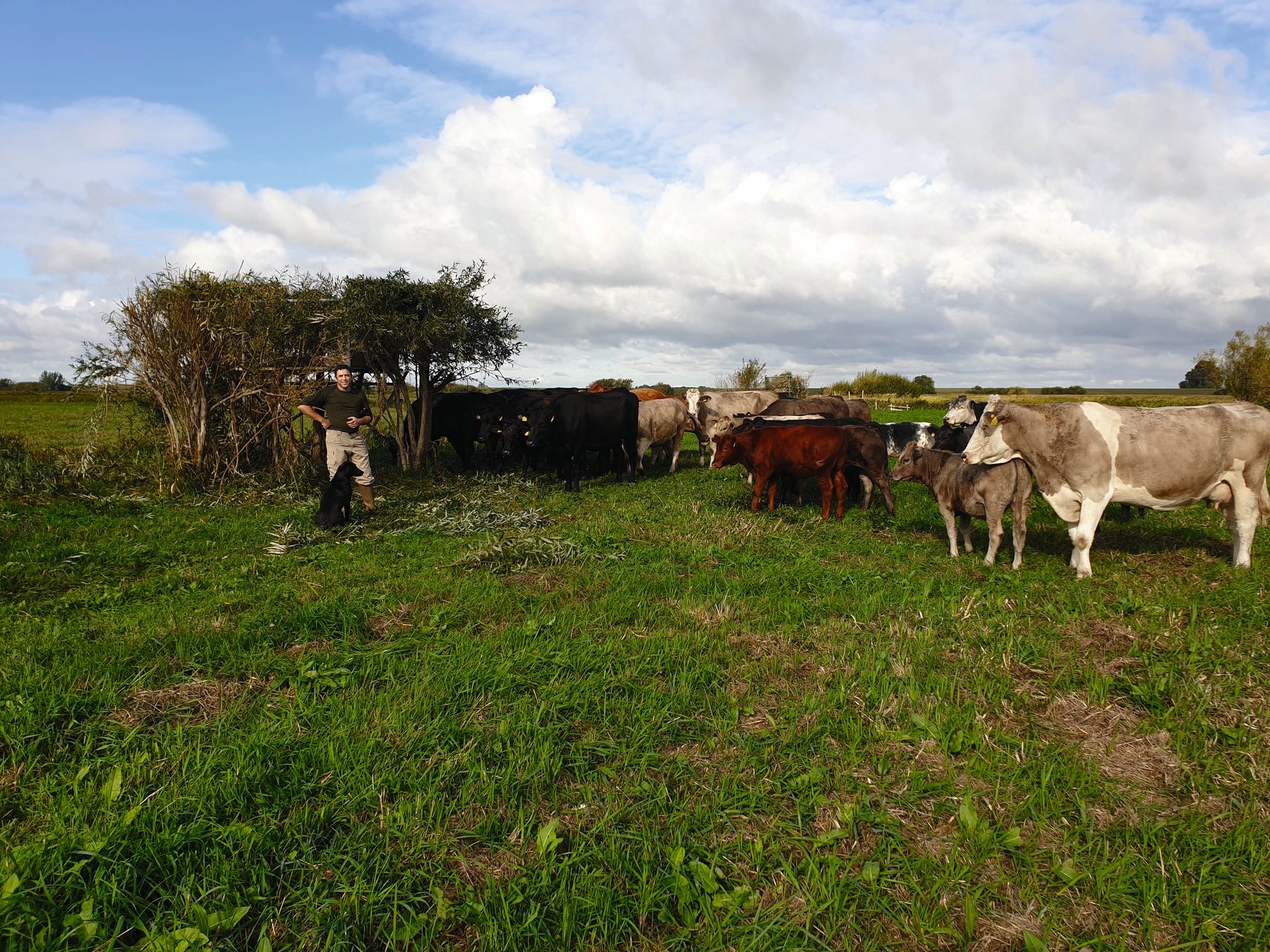
George and I worked around the perimeter of the wash, trimming all the hides until finally we came to a large willow which had fallen, regrown and now required cutting back. I powered up the chainsaw and directed operations while George did the donkey-work, cutting back the regrown stems one by one.
All went well until the last stem. Then, as the chainsaw whined, the cutter bar went in and the chips flew, I could immediately see the air filling with very large, very angry-looking insects. George had cut directly into a hornets’ nest. We beat a hasty retreat, headed back to our fowling hut on the edge of the wash and brewed up a cup of coffee. Work was over for the morning.
Letting the water on for passing wigeon
There was, however, just one more thing to be done. In the early part of the season when the grazing marshes are parched and dry, the surest way to attract wildfowl is to let water on. This can be done when conditions are right by closing certain culverts and opening others.
Having confirmed with the graziers that they were about to take the cattle off our wash, we engineered the appropriate adjustments, and the water started to flow onto our top meadow. Inside a fortnight there would hopefully be a splash of fresh water covering four or five acres, with sufficient tasty grass and seed heads poking through to attract any passing wigeon or teal.
Evening flight on the Ouse Washes
So it was that I headed back through the Fens one afternoon at the end of September to meet up with George and his mate Charlie for evening flight. Charlie had driven straight down from Scotland after a successful visit to the Tay and a rather more modest flight on the Eden. Would the Ouse Washes now live up to expectations?
The three of us carried our gear out onto the marsh. In truth, there was rather less water showing than had been anticipated. Even so, there were plenty of plashy places, ankle-deep, from which snipe sprang and scaaped into the blue yonder as we decided on where to set up our hides, while water brimmed from the centre dyke, a perfect place to position a couple of dozen tempting decoys.
As senior fowler, I was offered the forward position, with George to my right and Charlie to my left and, with my hide poles and camo net arranged around me, decoys in front and young Holly beside me, I settled down onto an upturned bucket and awaited dusk.
Fifty-odd years slipped away and I was watching the sun slowly sinking into a wide orange gash along the western horizon, bringing back to mind some of the amazing evening flights I have had on this marsh, when the air was electric and wigeon spiralled in out of the darkness, and when teal rushed past with a sound like the tearing of a paper bag. I thought of the friends I have had with me on this marsh, and of course I thought of my father, who first brought me here and lit the spark of enthusiasm for wildfowling which I have been lucky enough to pass on to my own son.
Above me, the clouds turned from pink to magenta, then to indigo and purple, while the semicircle of light on the horizon shrank progressively. There came the clamour of goose talk, and I crouched low as the air was filled with hundreds of greylags, a species we rarely saw on the washes in the 1970s, but common enough now.
Snipe and teal against the dark sky
As the geese headed out along the Old Bedford River there came a new sound, that of snipe returning to feast on the newly flooded marsh. Snipe can be nearly impossible to see against the dark sky and it’s just a matter of luck if one passes sufficiently close for you to be able to catch its silhouette. One did. I swung on it and missed. George had a couple of shots to my right and Charlie opened up on my left. Then came that paper-bag sound as a teal passed somewhere in the darkness, close to my head but unseen against the evening sky.
But it was not the bonanza we were hoping for. There were wigeon and teal about for sure, and George also spotted a couple of mallard, but they were not heading for our wash. Too little water? Perhaps. Too early in the autumn, before the main late-October arrival of new migrants? Probably.
But this is a very special place, and it’s a pleasure just being there on an autumn evening. What’s more, there will always be more opportunities as the season progresses and the winter floods spill out across the washes, taking me back to those heady teenage years and the Fens of old.
Frequently asked questions
How do you attract wigeon and teal to a dry marsh early in the season?
Let water on. When conditions are right, closing certain culverts and opening others floods part of the grazing marsh, and a splash of fresh water with grass and seed heads poking through draws in passing wigeon and teal.
Why are raised hides used on the Ouse Washes?
Raised hides give dry platforms above the water level so fowlers can shoot in comfort through the winter when the floods are up. Willows planted around them screen the fowler and need trimming every year.
About the author
Graham Downing
A Suffolk-based independent shooting consultant with 50 years' practical experience of shotguns and rifles across all areas of shooting sport, Graham has been a regular contributor to Shooting Times for more than 30 years. Appointed secretary of the British Shooting Sports Council in 2019, he co-ordinates political lobbying across Britain's major shooting associations on firearms control, and is a vice-president of BASC. He gave oral evidence to the Home Affairs Committee's 2009 inquiry into firearms controls. A keen deer stalker, wildfowler, game and rough shooter who has shot since the age of 13, Graham is the author of nine books, including The Deer Stalking Handbook, Practical Woodland Stalking, Stalking Muntjac, The Sporting Shooter's Handbook and A Sporting Century, the history of BASC.
 Closes 15 JanuaryWorth £129.90Win a pair of tickets to the British Shooting Show 2027Enter nowFree to enter
Related Articles

Mud, waders and a story worth telling: a week filming Call of the Marsh on the Ribble Estuary
Early starts, late finishes and an endless supply of mud: BASC’s wildfowling adviser Chris Wright on the week he spent helping to film the documentary Call of the Marsh
By Chris Wright | 4 November 2026

Jottings for wildfowlers: the arrival of the wigeon, and a first solo duck at 17
For James Green, late September has always meant the arrival of wigeon – a lesson first learned alone on the marsh at the age of 17
By James Green | 15 October 2026
Get the latest news delivered direct to your door
Subscribe to Shooting Times & Country
Discover the ultimate companion for fieldsports enthusiasts with Shooting Times & Country Magazine, the UK’s leading weekly publication that has been at the forefront of shooting culture since 1882. Subscribers gain access to expert tips, comprehensive gear reviews, seasonal advice and a vibrant community of like-minded shooters.
Save on shop price when you subscribe with weekly issues featuring in-depth articles on gundog training, exclusive member offers and access to the digital back issue library. A Shooting Times & Country subscription is more than a magazine, don’t just read about the countryside; immerse yourself in its most authoritative and engaging publication.

