★ Your magazine. Your say. Complete our reader survey with a chance to win Jack Pyke kit worth £500! ★


Inside the Le Chameau factory: how a wellington boot is made
Selena Barr flew to Casablanca to see where her wellies come from, and found a factory of 350 people, a secret rubber recipe, 150 steps to a single pair and a water bath test for every boot before it leaves


Photographs: Le Chameau
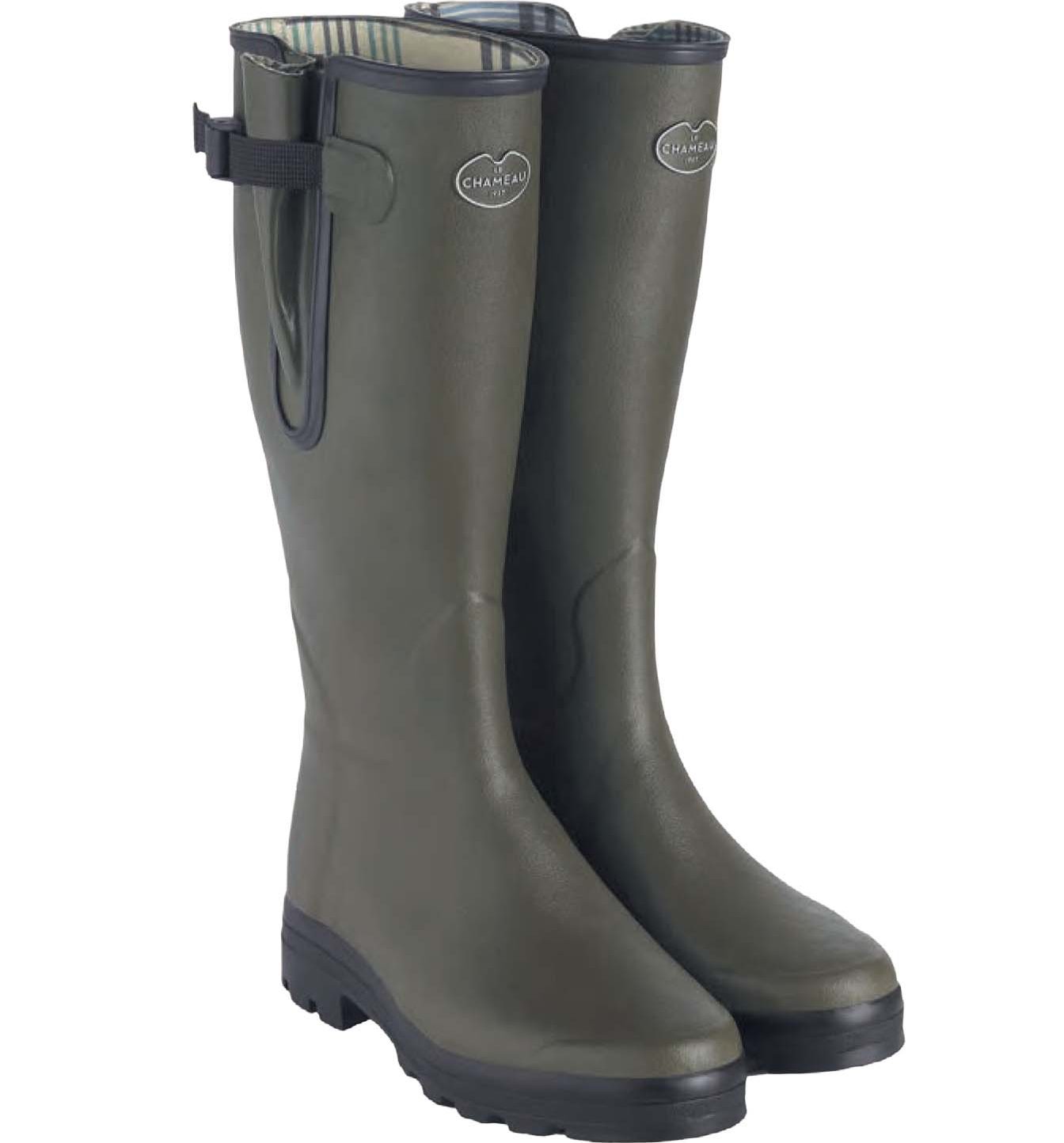
I have come home from the Le Chameau factory looking differently at the boots in my porch. Like most people who work outdoors, I have worn the French brand’s rubber boots for as long as I can remember and never once thought about how they were made. So long as they kept my feet dry through a season of pens, feed rides and ploughed headlands, and still looked the part on a shoot day, the question never came up. They are not cheap, either, which is reason enough to ask what you are paying for. With the company closing in on its centenary, Le Chameau flew me to Casablanca to find out, from the raw rubber to the finished pair.
Why Le Chameau makes its boots in Casablanca
Morocco gets very little rain, which makes it an odd place to build a wellington boot factory. Nobody on the shop floor needs a watertight boot to cross a claggy ploughed field or wade a swollen burn. The answer lies with the founder. In 1927 Claude Chamot, a French agronomist, set out to improve on the traditional clog boot after years of hearing his customers complain of wet, sore feet. He left the land and taught himself bootmaking, aiming for a boot that could stand up to a working countryside. Using natural rubber and the vulcanisation process, his first rough boots sold so well that in 1939 he opened a workshop in Normandy. He soon outgrew it and put his money into a factory in French-speaking Casablanca, where he kept a holiday home; Morocco was still a French colony at the time. Claude ran the company until his death in 1963.
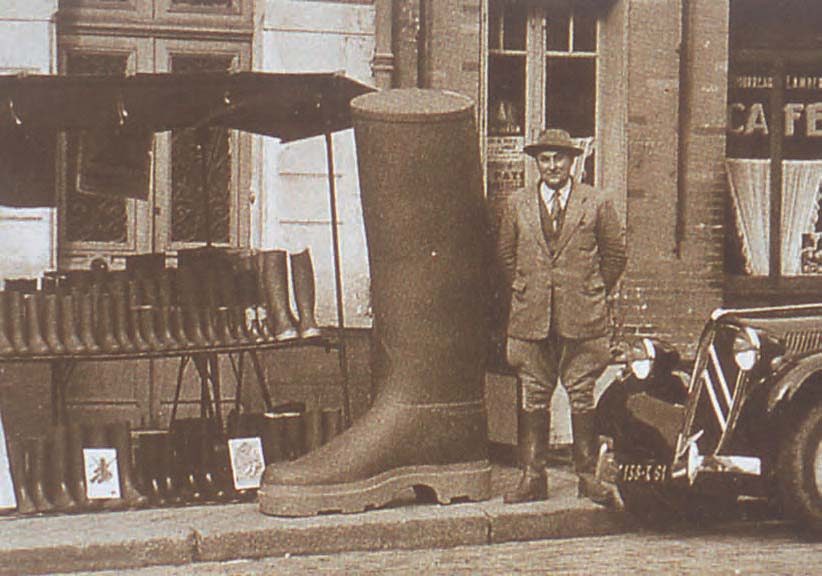
Today the 120,000sq ft factory employs 350 local people, a good many of them women, which is unusual in this Muslim country. The manager, Aziz Chiguer, is a bundle of energy and the modern premises are spotless. I was met by a senior management team of men and women and shown round a factory that runs like clockwork, with a plain professionalism about it and an obvious care for the people on the floor. It has the feel of one big family.
Chamolux, the secret rubber recipe
Over mint tea, Aziz explains that Claude Chamot came up with the secret recipe for “Chamolux”, a soft, hard-wearing rubber that only Le Chameau uses. “We have never filed a patent for the recipe – if we did that, anyone could use it after the patent expired,” he says.
Grade A natural rubber from Vietnam
As with any crop, the quality of raw rubber comes down to how it is grown and harvested. Le Chameau’s comes from Vietnam, the world’s third-largest producer, and from the same well-regarded plantation since 2005. The plantation is accredited by the Programme for the Endorsement of Forest Certification, an international body that certifies sustainable forest management, taking in the ethics and the supply chain of timber production. Anyone who manages land will understand the point: no rainforest is being cleared to plant rubber trees for these boots.
Each tree is “tapped”, much as a maple is tapped for syrup. In the Pará rubber tree (Hevea brasiliensis) that yields raw latex, a milky white liquid, and done properly the tapping does the tree no harm. The latex is left to coagulate, collected and processed into its dry form for shipping to the factory. It arrives as loaves of raw rubber weighing 35kg, the base material of every boot, graded from A to D on colour, purity and stickiness. Le Chameau uses Grade A only: light in colour, with little ash or dirt in it.
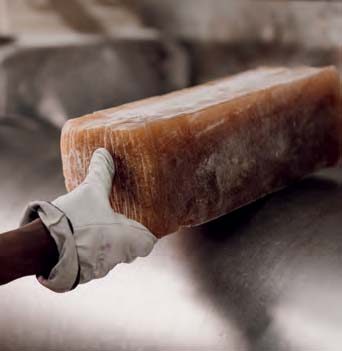
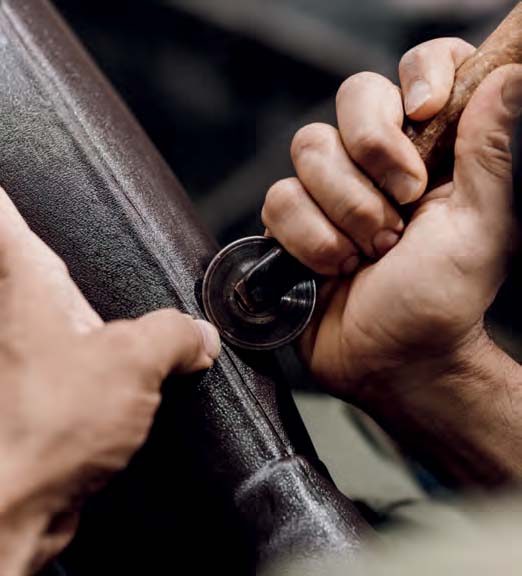
The first job when the loaves arrive is to turn them into a more workable sheet. With the secret ingredients added, the raw rubber is masticated, which leaves it strong, stable and supple. “It’s not unlike baking – there is an exact recipe, but you still need to be a good baker to make the ingredients into something special,” says Aziz. Next the rubber is rolled to the right thickness. The rollers work like giant pasta machines, turning out a thick slab that is cut and fed into the next roller, and the next, until the final set produces a sheet thick enough to hold its strength but thin enough for each maître bottier (master bootmaker) to work by hand.
Building and vulcanising the boot on an aluminium last
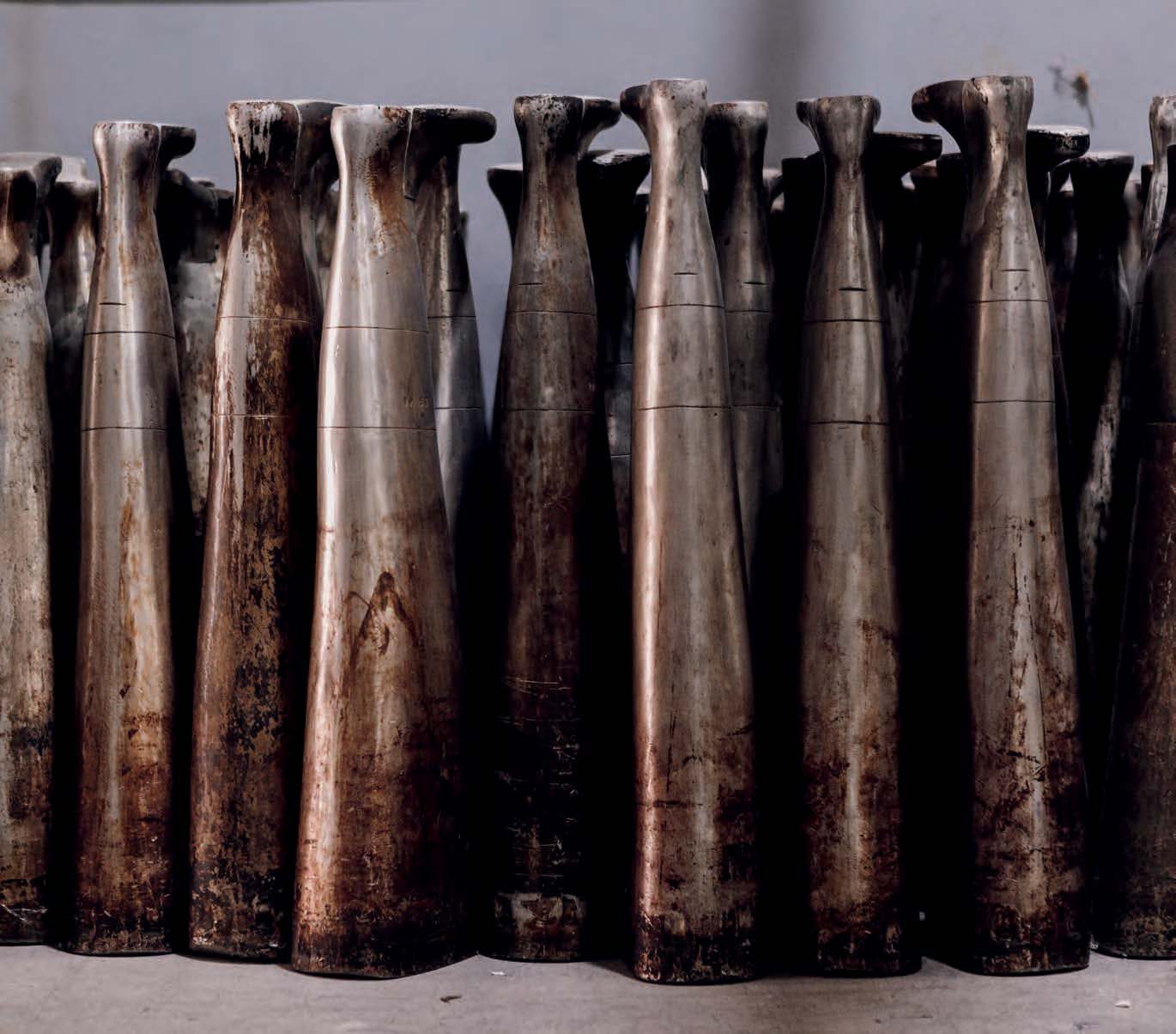
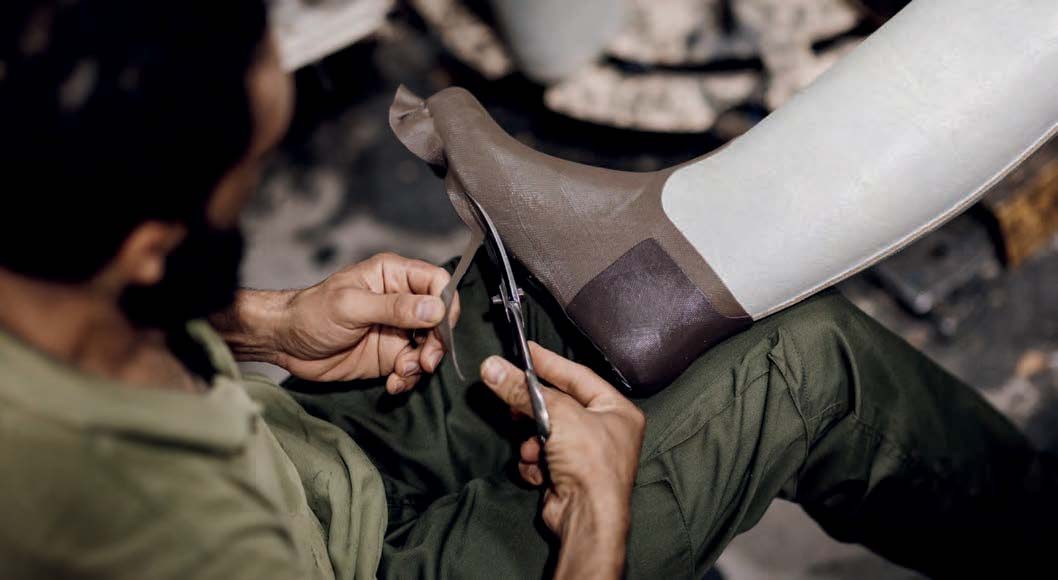
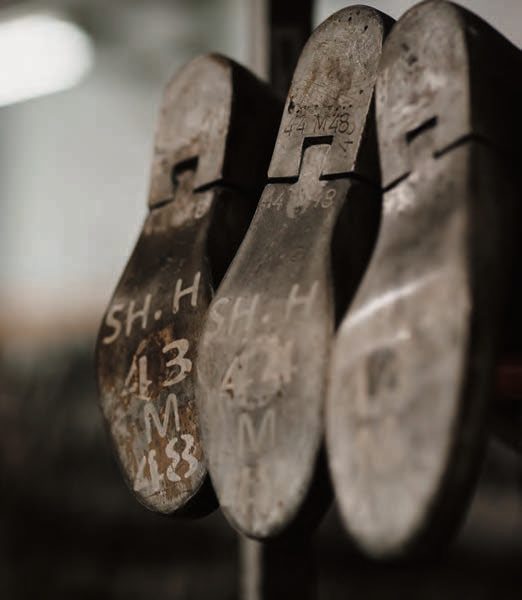
Soft and pliable now, the rubber is laid over a last, an aluminium mould in the shape of a boot. Layer goes over layer, bonded with liquid latex, and each one adds strength and stability. The sole gets the same attention, and it is the part of the boot that matters most to anyone who spends the winter on wet ground. Aziz explains: “We use a very durable rubber for the outsoles to work in combination with our special tread pattern. Together these different elements achieve grip whilst also providing a natural release of mud when the foot flexes. This combination ensures you get the best possible traction and stability in muddy conditions.”
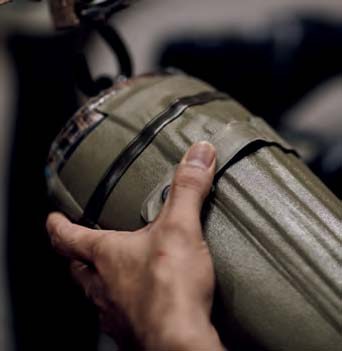
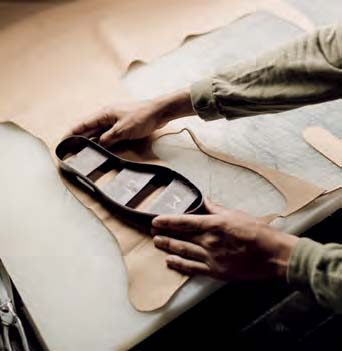
Once the boot is built it is vulcanised. “Essentially, we cook the boots. This not only stabilises the rubber, it also fuses all those layers together, making it one incredibly strong substance.” Then every boot is tested before it leaves, and tested one at a time: it goes into a water bath and air is pumped in, so that no boot leaves the factory with a leak. For a keeper who will spend a wet February in them, that is the test that counts.
150 steps and almost 100 pairs of hands
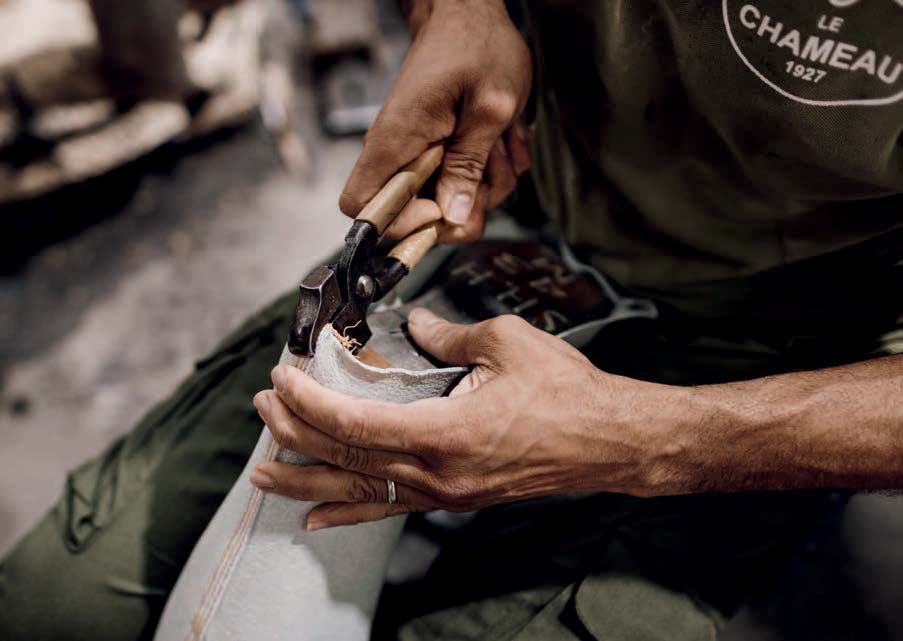
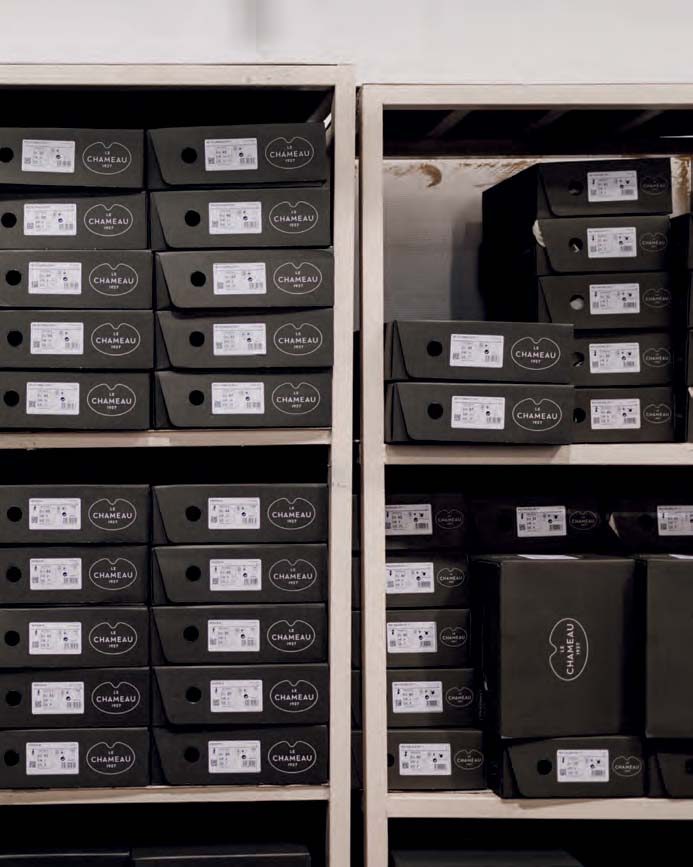
It takes 150 steps to make a single pair of boots, and by the time a pair is boxed almost 100 pairs of hands have touched it. I walked the line station by station and met every worker. Some jobs are simple, such as gluing a sole; others, such as the maître bottier wrapping rubber around a last, are highly skilled, and none can be skipped. The factory turns out tens of thousands of pairs a year, yet every boot can be traced back to the one maître bottier who made it through its unique code. This is not a faceless plant churning out boots on a conveyor belt; it is a workshop of skilled craftsmen making boots by hand on a large scale.
Back home in Scotland, I walk through the front door and the first thing I see is my well-worn pair of Chasseurs in the hallway, still muddy from a day shooting with James Percy the weekend before. They say you never really know someone until you see where they come from. Now I know where my boots come from, and I will not look at them the same way again.
Frequently asked questions
Where are Le Chameau boots made?
At Le Chameau’s factory in Casablanca, Morocco, a 120,000sq ft site employing 350 local staff. The founder, Claude Chamot, opened his first workshop in Normandy in 1939 and moved production to Casablanca when he outgrew it.
What is Chamolux rubber?
Chamolux is the soft, hard-wearing rubber used only by Le Chameau, made to a secret recipe devised by Claude Chamot. The company has never patented it, because a patent would let anyone use the recipe once it expired.
How many steps does it take to make a pair of Le Chameau boots?
About 150, with almost 100 pairs of hands touching every pair. Each boot is tested for leaks in a water bath before it leaves the factory, and each can be traced to the maître bottier (master bootmaker) who made it through its unique code.
 Closes 15 JanuaryWorth £129.90Win a pair of tickets to the British Shooting Show 2027Enter nowFree to enter
Related Articles

Chatham Invergeldie boot review: a light, tall hunting boot that’s comfortable from the off
Chatham is best known for deck shoes, so Keith Edmunds took its £250 Invergeldie 12in hunting boot stalking and dog walking to see how it copes in the field – and found it light, flexible and comforta...
By Keith Edmunds | 29 October 2026

Lead shot ban: the lead-free pheasant cartridges six makers now offer
From 1 April 2029 lead shot can no longer be sold or used for pheasant shooting in Great Britain. For the keeper, the shoot owner and the Gun planning the three seasons that remain, six makers’ pheasa...
By News Desk | 17 October 2026
Get the latest news delivered direct to your door
Subscribe to Shooting Times & Country
Discover the ultimate companion for fieldsports enthusiasts with Shooting Times & Country Magazine, the UK’s leading weekly publication that has been at the forefront of shooting culture since 1882. Subscribers gain access to expert tips, comprehensive gear reviews, seasonal advice and a vibrant community of like-minded shooters.
Save on shop price when you subscribe with weekly issues featuring in-depth articles on gundog training, exclusive member offers and access to the digital back issue library. A Shooting Times & Country subscription is more than a magazine, don’t just read about the countryside; immerse yourself in its most authoritative and engaging publication.

