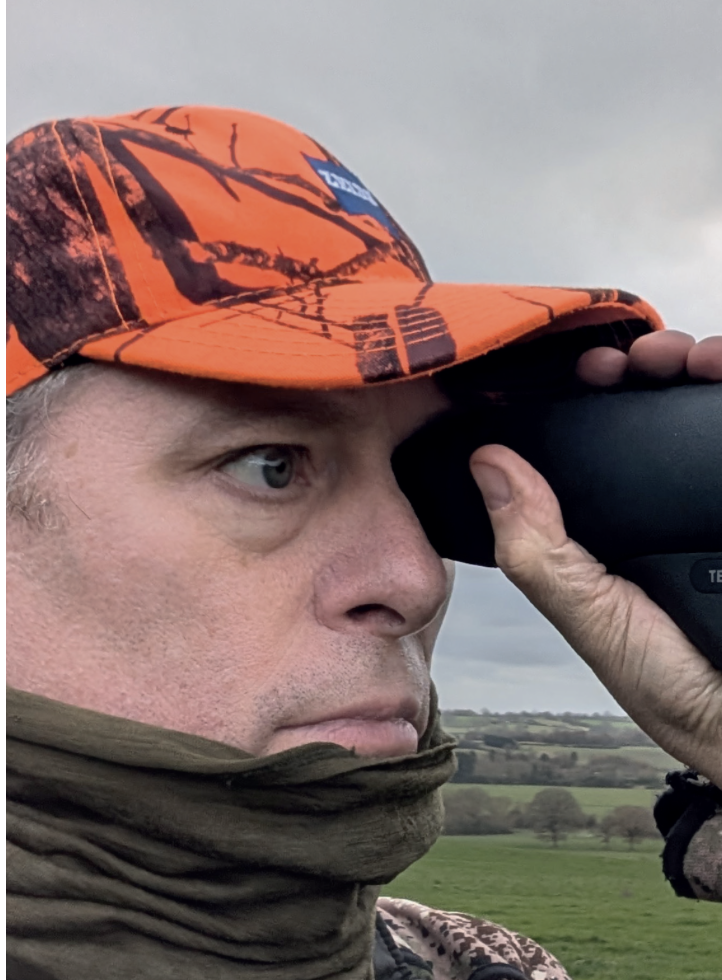
The LRF XQ35 tested here is £250 more than its non-LRF equivalent. This is a very fair price to pay for that extra capability, as a novice stalker I’m mentoring commented when the rangefinding Telos enabled him both to keep his quarry in sight on a difficult approach and to know when it was within shootable distance.
Specification-wise, the XQ35 combines a precision-ground f1.0/35mm germanium glass lens; a 384×288 17µm Lynred sensor; a pin-sharp, high-contrast 1024×768 AMOLED display; 64GB of online storage – enough for more than 60 minutes of video – an additional high-speed 5GHz WiFi channel; and a new slimline LPS 7i battery with an eight-hour run-time.
Impeccably built, with top-quality materials, everything fits and moves perfectly. The battery latches in place with a crisp snick, the dioptre ring is stiff enough to stay where you left it, and the full-diameter focusing ring gives great control for sharp imaging at any distance.
The low-profile rubber eyepiece may hark back to the Helion, but the rounded, hand-filling body shape, the layout and design of the control buttons, and especially the introduction of a camera-style zoom ring, all set the Telos apart from its predecessors.
As well as it being easy to control, I love the ambidextrous design of the Telos. The eyepiece can be positioned to suit either eye; the hand-strap eyelets are mounted on rings that can be rotated, with the rear ring registering into positive detents; and the hinged cover for the objective lens mounts via a reversible bayonet fitting. Therefore whichever hand you use, it takes just a moment to optimise the ergonomics.