★ Win a pair of Brandecosse Capriolo boots worth £219! Click here to enter ★

Eaton Hall finds its TopGun
The biggest prize fund in UK clay shooting history drew thousands of shots to Derbyshire for nine days of competition, and crowned an unlikely first champion in Hungarian Tamás Jéri
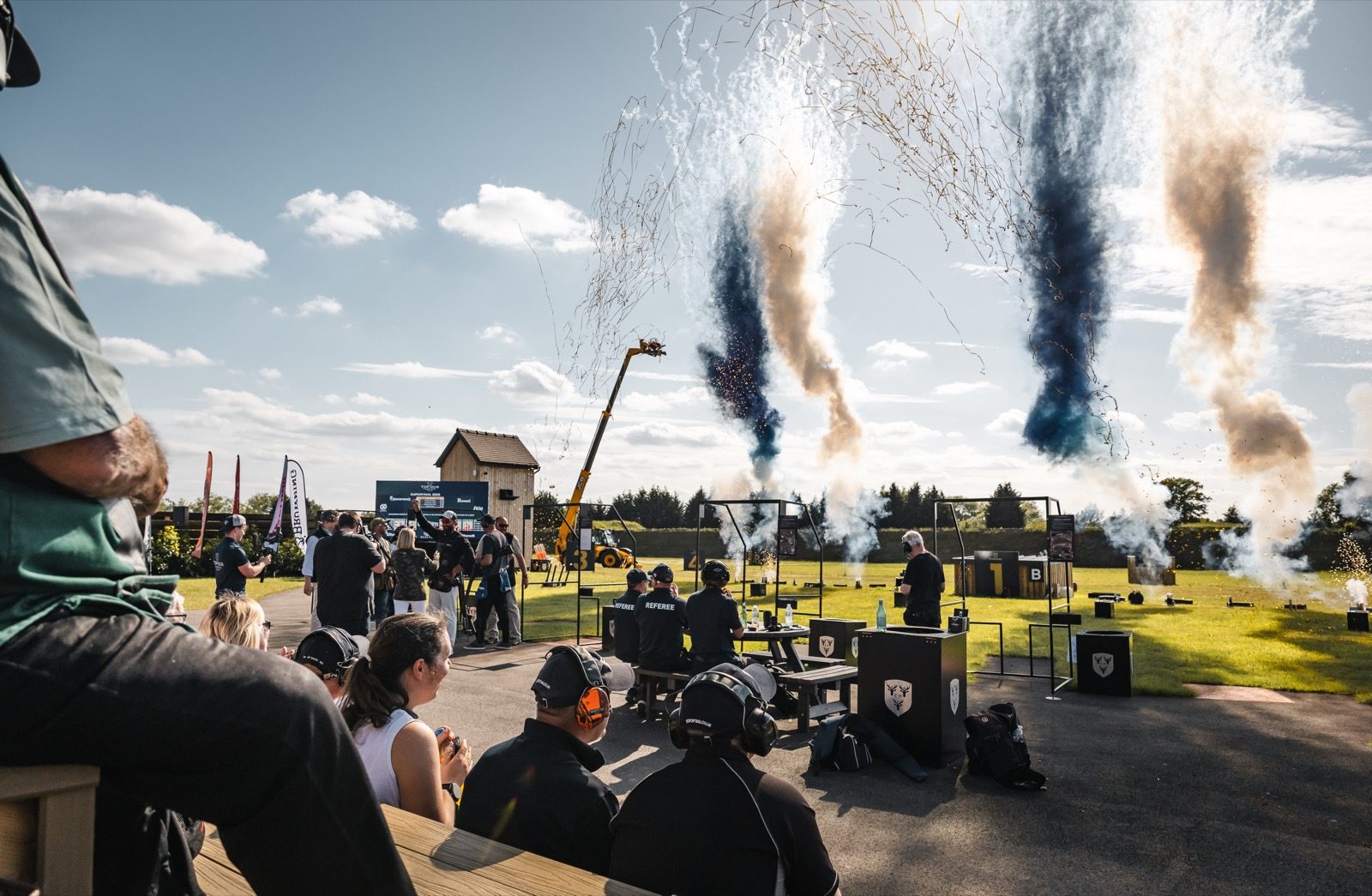 Credit: Matt Kidd

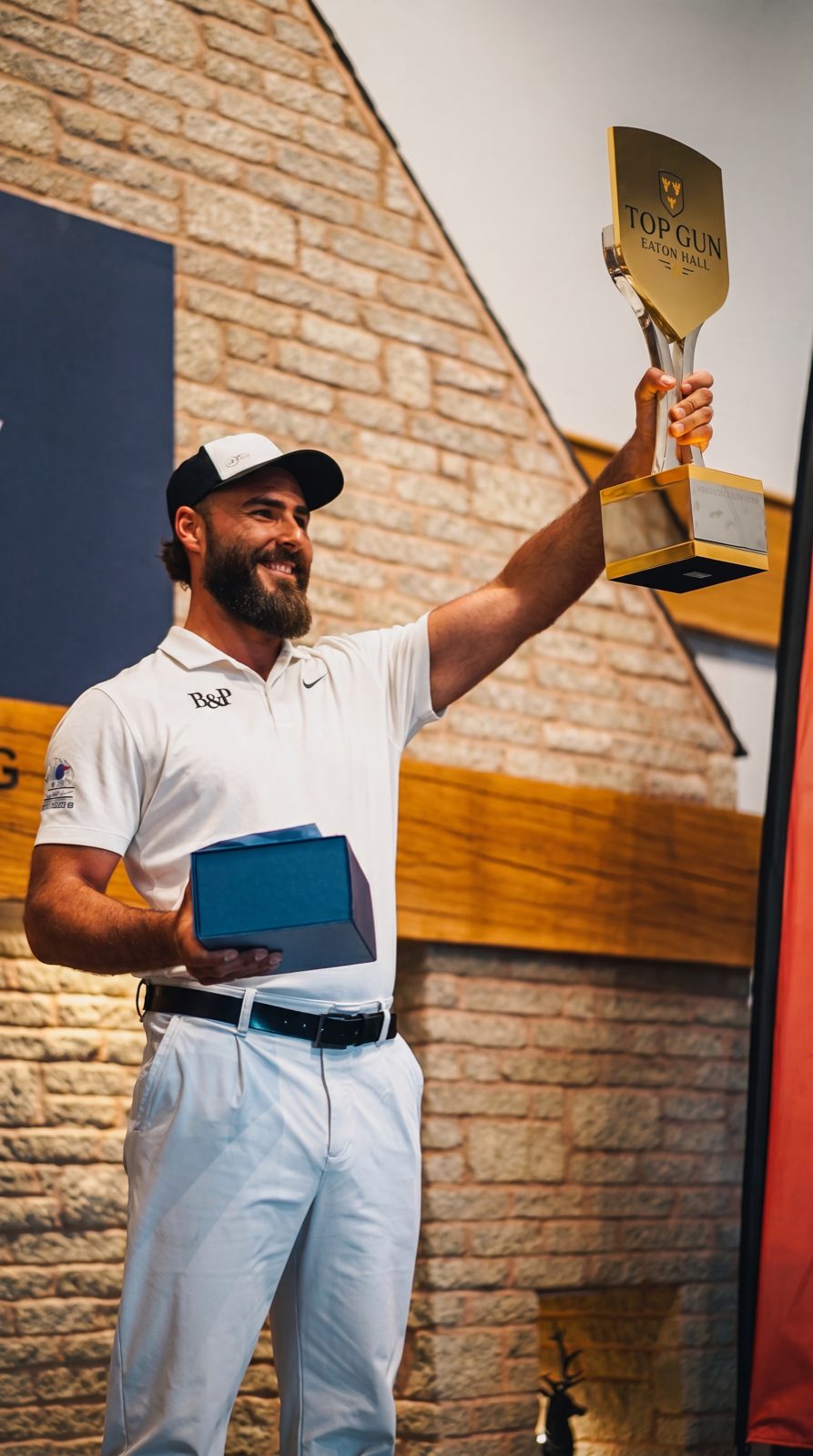
Eaton Hall set out to answer a deliberately provocative question: stripped of class advantages and home comfort, who is the best all-round shot? It was an audacious thing for a first-year competition to ask. “It will find out who the real top gun is,” said Amy Phillimore, who owns the Derbyshire ground with her husband Syd. The event delivered its verdict on 14 June, when Hungarian Tamás Jéri was crowned the first Overall TopGun Champion – and walked away with £40,000 of a record £400,000 prize fund, £45,000 in all once his class win was added.
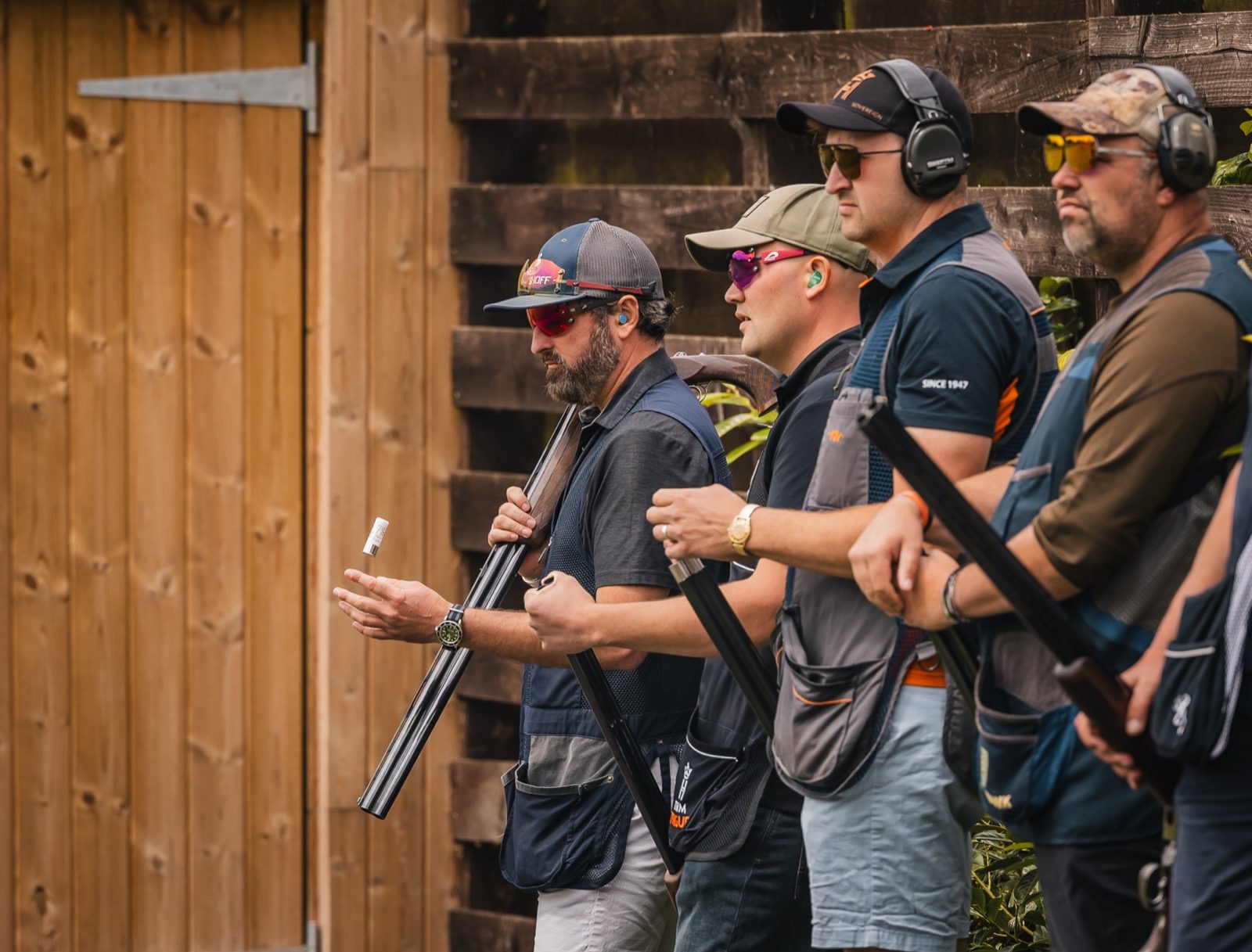
That made TopGun the biggest-money clay shoot ever staged in Britain, and it drew a field to match. Running from 6 to 14 June, it attracted over 1,000 entries for the main event and a further 700 for the companion Sportrap, in only the ground’s second season of operation – among them established names such as Brett Winstanley and Phil Gray, alongside hundreds of club shots chasing a share of the pot.
Cash, not kit
The defining decision was to pay in cash. “No one’s ever done a cash shoot like this in England,” says Sam Hargreaves of Eaton Hall. “They do them all over the world – the UAE, America, France – but not here. Other competitions tell you there’s a massive prize pool, and when you whittle it down it’s shotguns and cartridges. People who win guns in competitions tend to sell them straight back to us in the shop. So it was important for us that every winner here walked away with cash.”
The money ran deep. Every class winner took £5,000, second £4,000 and third £3,000, with payouts down to 20th place and every finalist guaranteed at least £250 – a structure built for a community that knows the true cost of competing. A further £180,000 had been set aside for a perfect score in the Super Final, a bonus that ultimately went unclaimed. The prize fund, though, was only half the ambition. “Our biggest concern was making it an event, not just a clay competition,” Sam says. The answer was a trade village, food and music laid on daily, Top Gun film lines on every stand, and pool shoots with serious payouts – among them a 100-metre target christened “mission impossible”, to be taken on with a Benelli, with four guns going to anyone who could break it.
A different kind of test
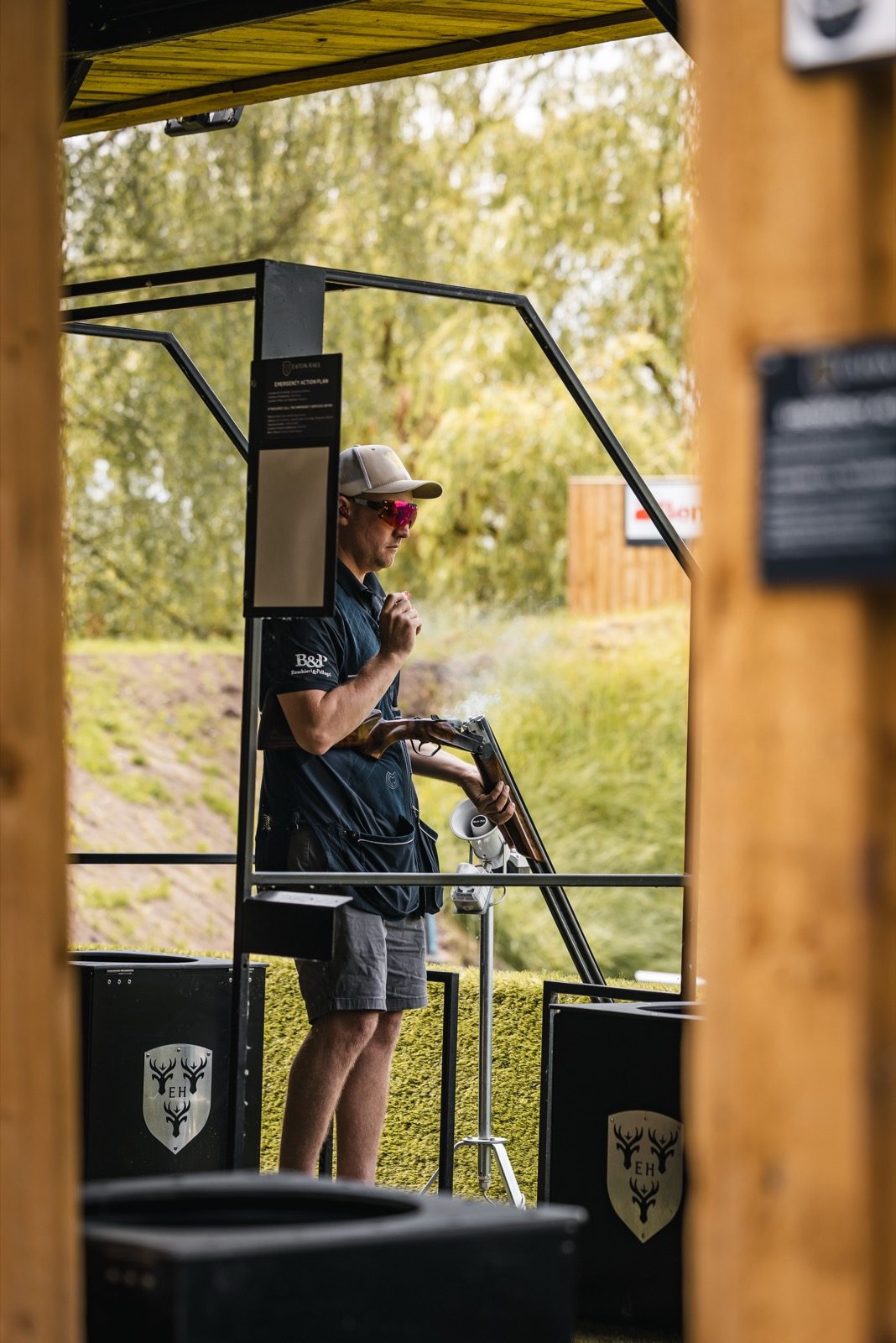
The main event was an English sporting competition over 250 targets, 125 a day across two days, shot in four rotations – a format that proved its worth when the weather turned. “One day was torrential rain, the next was wind,” Sam says. “But everyone shot in rotations, so it hit the group, not the result.” From those rotations, the top five of each lettered class and the top two of the ladies, colts, junior, veteran and super-veteran categories went through to finals day. Crucially, CPSA registration was not required; anyone could enter, and the field came from Ireland, Scotland and France as well as the length of England. “The number of people from all over blew us out of the water,” says Amy.
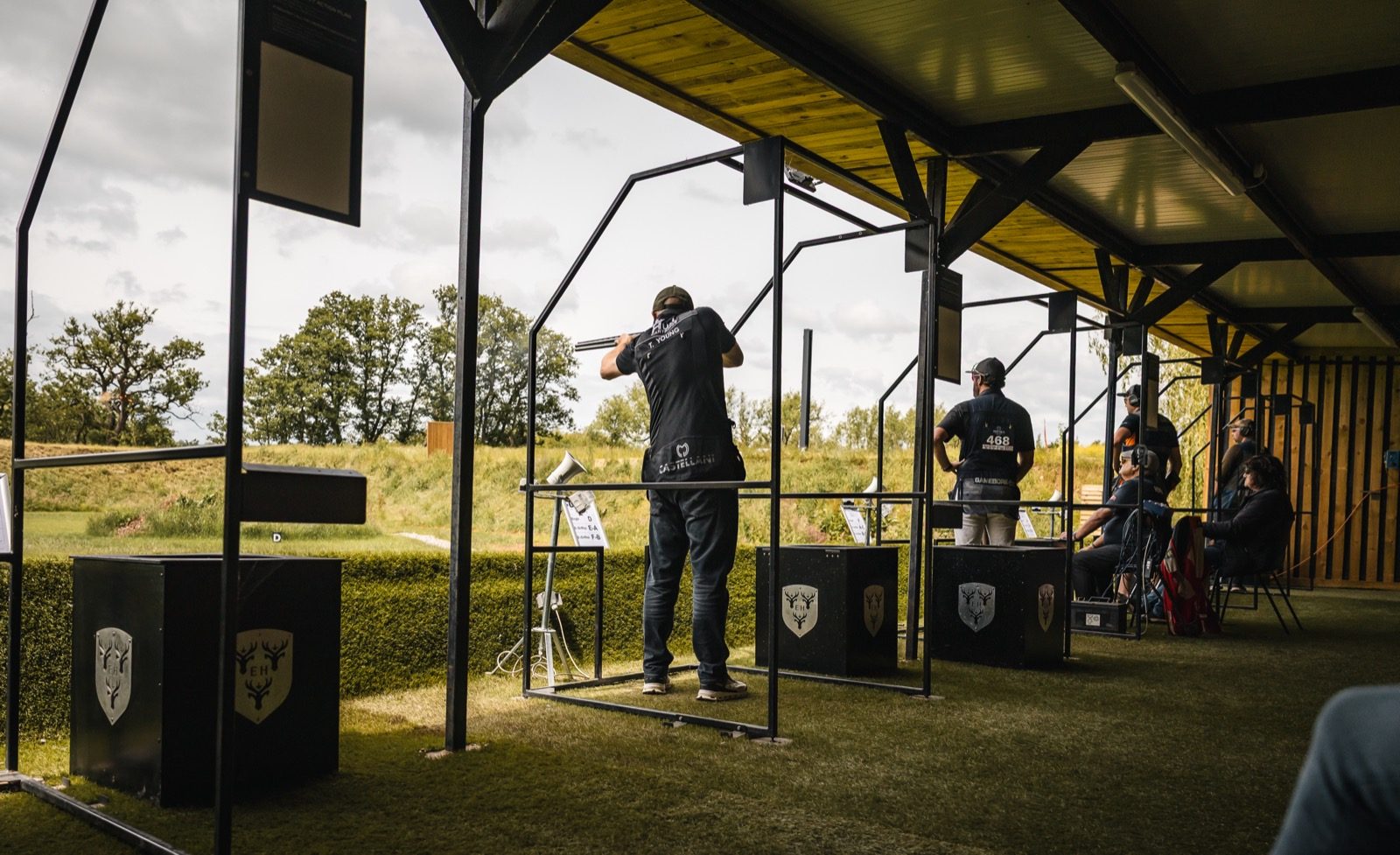
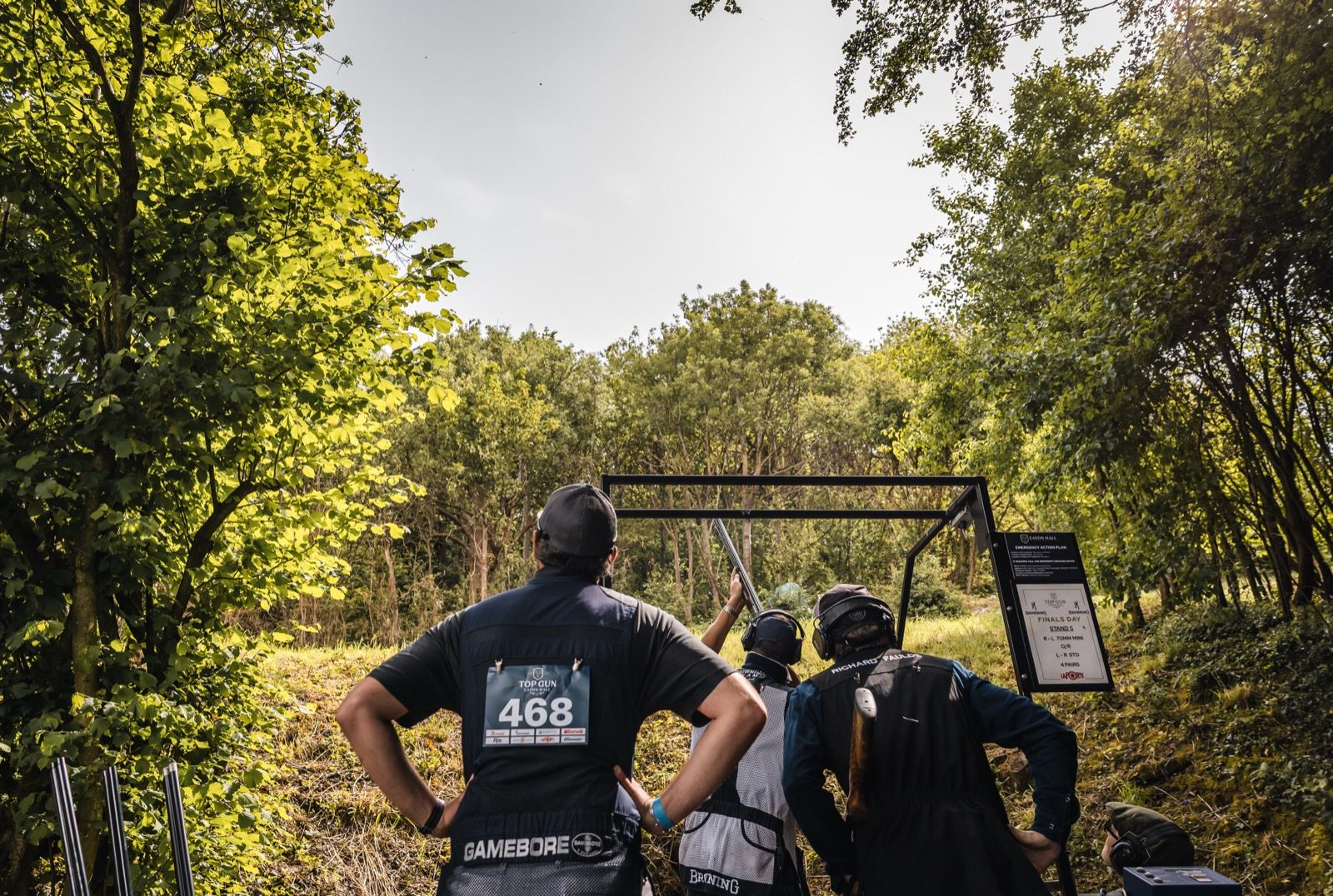
Running alongside it was the Sportrap Challenge, 125 targets across five layouts with a prize fund and trophy of its own, decided the day before the main final. The ground even built a stage for the occasion: a brand-new Sporting course, a year in the making, carved from neglected woodland at the foot of the property and left deliberately unshot, so the first shooters to walk it did so with no sighting advantage. Its setters, Clive Bramley and Jamie Peckham, produced targets unlike anything regulars had seen. “The attention to detail on the new course is second to none,” Amy says. The real departure, though, was the final: qualifiers would not simply shoot more sporting but face disciplines most had rarely touched.
Down to the last pair
Finals day stripped the field to a single, merciless examination. The qualifiers shot 125 targets spanning 25 skeet, 25 Olympic trap, 25 compact and 50 sporting; the top five of AAA class – Nick Hendrick, Mark Winser, Richard Faulds, Dave Ferriman and Tamás – then shot off on the main stage for a place in the Super Final.
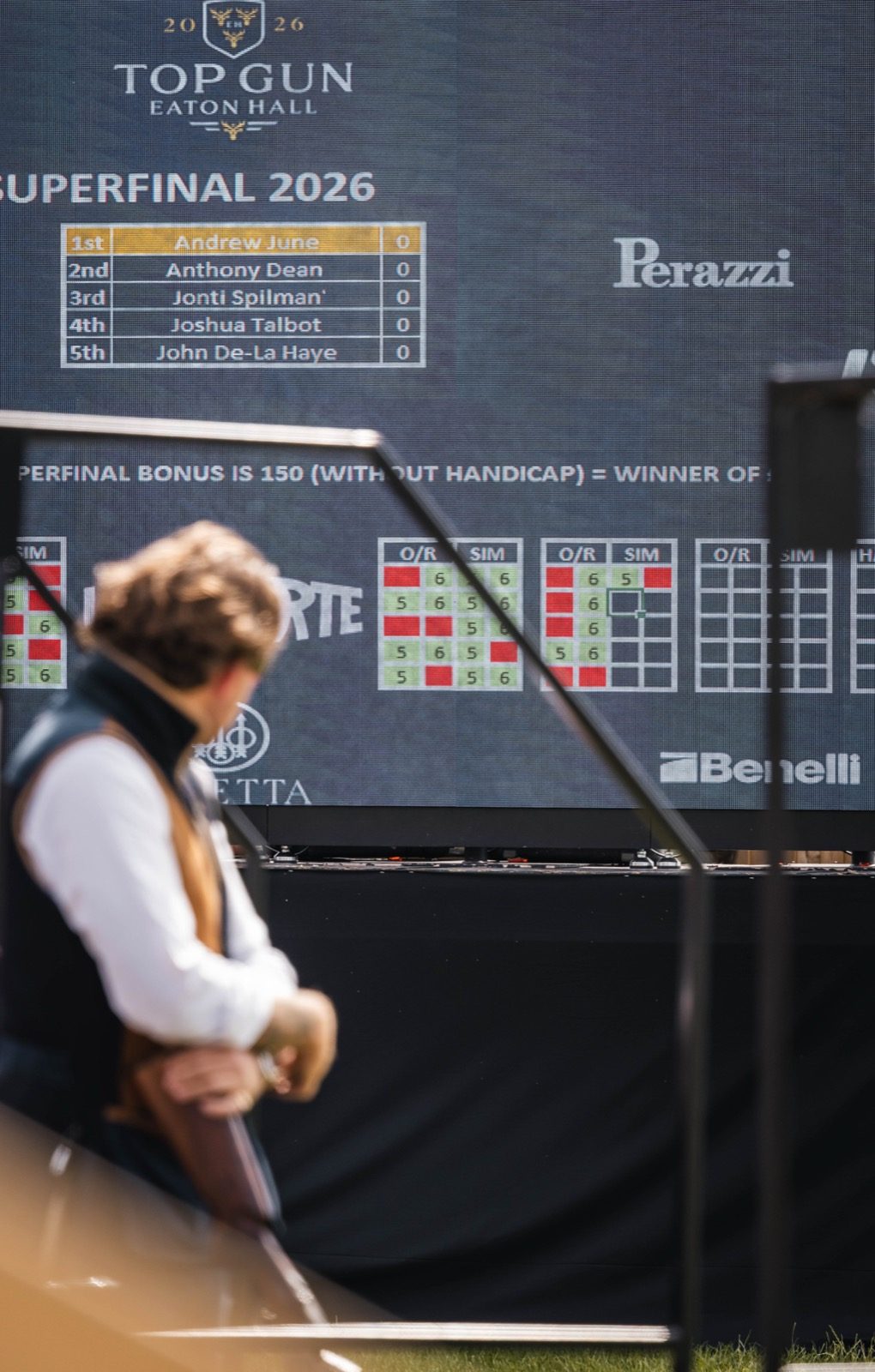
That Super Final was the format Eaton Hall had gambled the week on, and the part commentator Sam was most nervous about putting on a live broadcast. Class winners from C up to AAA went head to head, the lower classes handed a points start while Tamás, at the summit, began with nothing in hand. “The handicap system worked really well,” Sam says. “It proved an A-class shooter can take on a AAA shooter.”
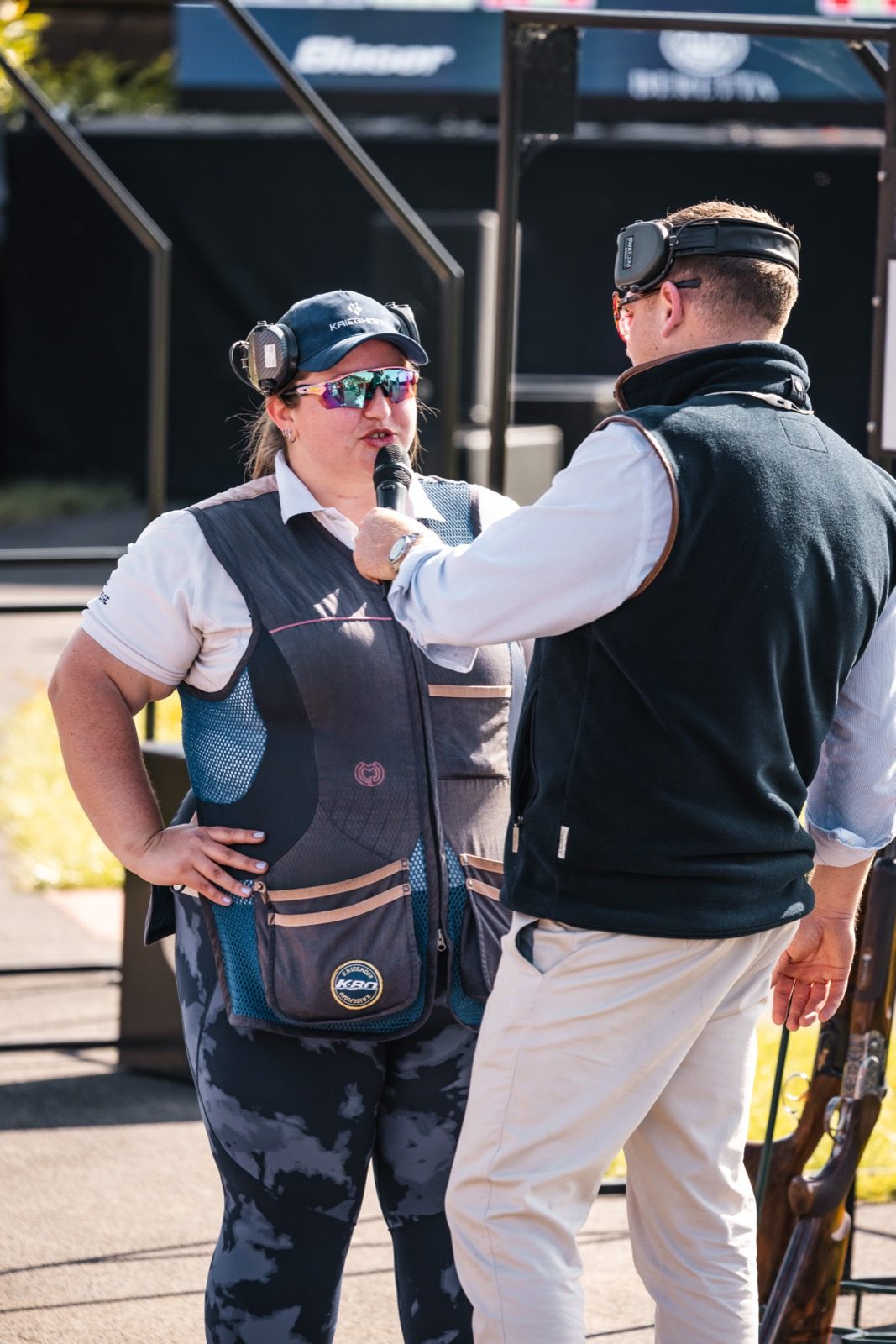

One very nearly did. Emma Stacy, two classes below Tamás, matched him target for target in front of 700 spectators on the grandstand and 25,000 watching the live stream. On the closing pairs, shooters called targets worth up to eight points apiece. Tamás played the percentages, taking the five and six every time; Emma went hunting, picking off the harder sevens and eights, and stayed level to the final pair. “She could have shot the five and six, finished equal and forced a shoot-off,” Sam says. “Instead she went for the six and eight, hit the six and missed the eight. Everyone was gutted – but she went for the win.” It was the performance of the day, and it left the title to the Hungarian, as the Red Arrows tore overhead to close the show.
The champion
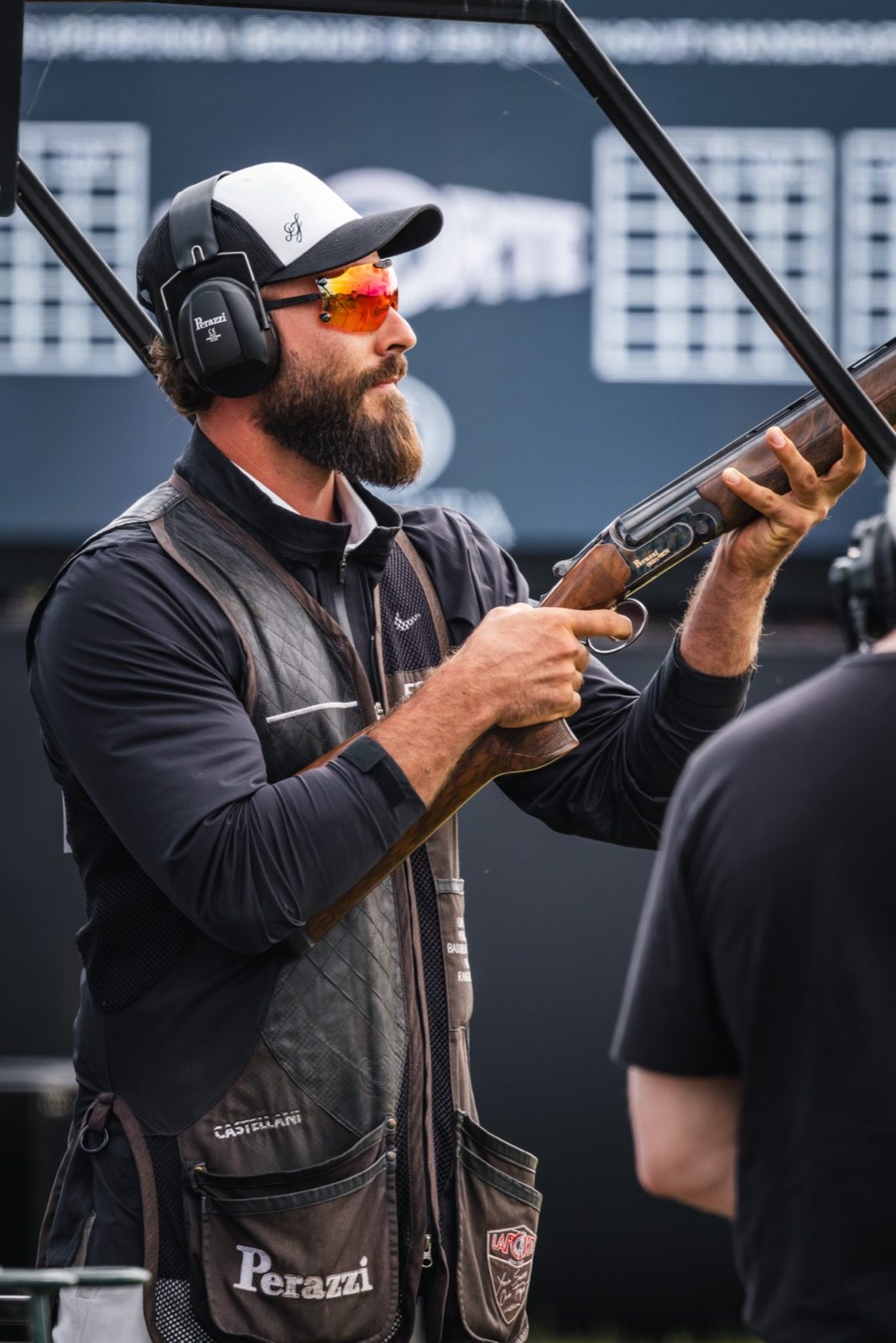
Tamás makes an improbable champion. The 32-year-old danced competitively from the age of eight and, by his own account, was the best ballroom dancer in Hungary by 18 – before quitting the sport as he felt scores were settled by politics rather than performance. Two months later he picked up a shotgun for the first time; six months after that he took silver at a world championship in Russia. What followed was 12 years and a cabinet of world and European FITASC titles, won largely on the Continent.
Shooting a Perazzi High Tech with Baschieri & Pellagri cartridges, he had not expected to feature on the leaderboard, having already booked his flight home before the final. He was generous in victory and unequivocal about the venue: “That was the best organised competition I have ever been to. Every detail was on point. I found no mistake” – praise that carries weight from a man who has run two world championships of his own at his shooting ground back home. The cash winnings, he confirmed, will go towards the house he is building.
The statement
For Eaton Hall, only in its second season, TopGun was a statement of intent. The ground has already hosted the British, England selection shoots and the BUCS universities final, and its team – more than 40 referees across nine days, planning begun the previous November – delivered a debut that exceeded its own expectations. Every member played a part, from the course setters to John the gardener. “The buzz,” Amy had promised, “is going to be really good.” On the evidence of its first year, the question she set out to answer has a habit of producing the right result – and a champion nobody saw coming.
Frequently Asked Questions
Who won the first Eaton Hall TopGun?
Hungarian shooter Tamás Jéri was crowned the first Overall TopGun Champion on 14 June, taking £40,000 of the prize fund and £45,000 in all once his class win was added.
How big was the TopGun prize fund?
The total prize fund was a record £400,000, making TopGun the biggest-money clay shoot ever staged in Britain. Every class winner took £5,000, with payouts down to 20th place and every finalist guaranteed at least £250.
Where and when was TopGun held?
It ran at Eaton Hall in Derbyshire from 6 to 14 June, in only the ground’s second season of operation.
Did you need CPSA registration to enter?
No. CPSA registration was not required, so anyone could enter, and the field came from Ireland, Scotland and France as well as the length of England.
Related Articles
News
Daniel Marwood wins NGO Golden Grouse clay shoot 2026
Grouse keeper Daniel Marwood has won the headline title at the National Gamekeepers’ Organisation’s annual Golden Grouse clay shoot. The competition drew 115 guns to Thimbleby Shooting Ground in N...
By News Desk
News
Catapult law could be tightened after Home Office roundtable
Ministers face fresh pressure to tighten catapult law after a Home Office roundtable, but the Government says current legislation is sufficient.
By News Desk
Get the latest news delivered direct to your door
Subscribe to Shooting Times & Country
Discover the ultimate companion for fieldsports enthusiasts with Shooting Times & Country Magazine, the UK’s leading weekly publication that has been at the forefront of shooting culture since 1882. Subscribers gain access to expert tips, comprehensive gear reviews, seasonal advice and a vibrant community of like-minded shooters.
Save on shop price when you subscribe with weekly issues featuring in-depth articles on gundog training, exclusive member offers and access to the digital back issue library. A Shooting Times & Country subscription is more than a magazine, don’t just read about the countryside; immerse yourself in its most authoritative and engaging publication.