★ Win a pair of Brandecosse Capriolo boots worth £219! Click here to enter ★



The art of hand-crafted firearms
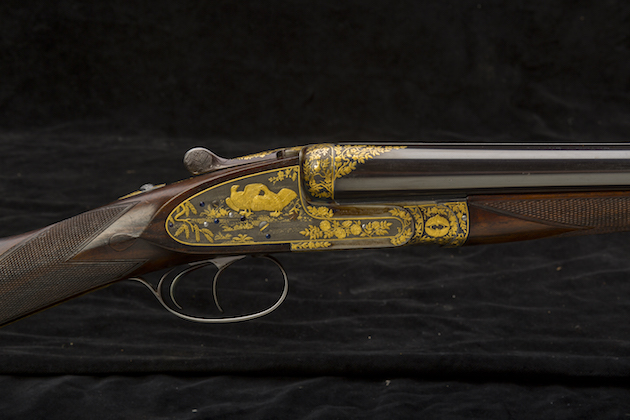

One of the most common statements heard when referring to famous engravers of the past is that they were “ahead of their time”. Engravers such as William Caslon, William Palmer and Henry ‘Harry’ Albert Kell, among others, made a huge impact in developing their craft.
But if you were to compare them with today’s engravers — the 21st century’s elite — would their work fall short of our top standards and what will the future of gun engraving look like?
Since the dawn of time man has been creating patterns and drawings on surfaces, from animals on cave walls to battle scenes engraved on shields and swords. The classic gun engraving that we recognise today was first developed within printing trades and jewellery workshops.
Traditional London styles tended to be subtle and refined, descended from the techniques used in printing, such as the engraving of copper plates. European styles were largely more elaborate and flamboyant, with their engraving heritage carved deeply in jewellery backgrounds.
By the start of the 20th century the quality of English guns had grown and a handful of names stood out from the crowd. Makers such as James Purdey & Sons, Thomas Boss, Holland & Holland and James Woodward were producing exquisite guns, any one of which the aristocratic sportsman of the time would be proud to own.
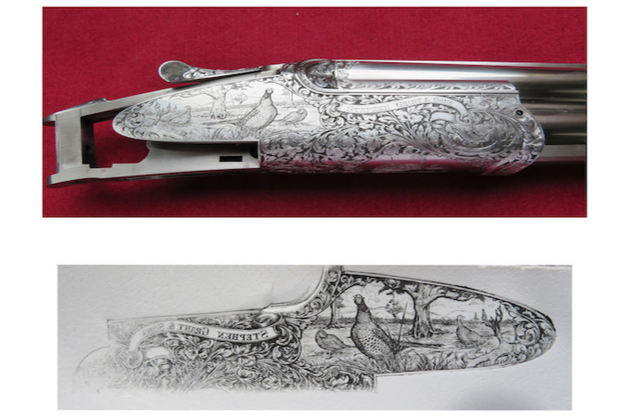
Keith Thomas is a talented engraver (above and top) who learned his craft at Holland & Holland
In order to distinguish themselves, gunmakers brought in ‘house style’ engraving — a distinctive pattern or design that would make their guns immediately recognisable. Many of these styles can still be recognised today, such as Stephen Grant’s fluted fences and forward-facing chevron within the tight scroll. Holland & Holland is known for its foliage scroll and acanthus leaves, whereas Purdey and Boss tend to include fine scrollwork with bouquets of roses.
Another classic style of engraving is that of game scenes — birds and beasts in their natural surroundings. Some of the earliest animals were engraved by William Palmer, often dogs and birds, and though they certainly had character they could be described as somewhat childish compared with today’s creations.
It was Harry Kell developed of these scenes. He took flat, basic sketches and breathed life into them, adding realism and movement. His work may still not have been as realistic as modern engraving, but he was one of the best at what he did and far ahead of his time.
Another renowned game scene artist is Ken Hunt, who was apprenticed to Harry Kell. Keith Thomas, an extremely talented engraver who began his career at Holland & Holland in 1964, recalls how “nearly all the guns were engraved with one of the ‘house’ patterns. Then Ken Hunt started to do some very good game-scene engraving, and that stimulated the market.” As time progressed, “demand got under way for new work, gold, carving and bespoke patterns”.
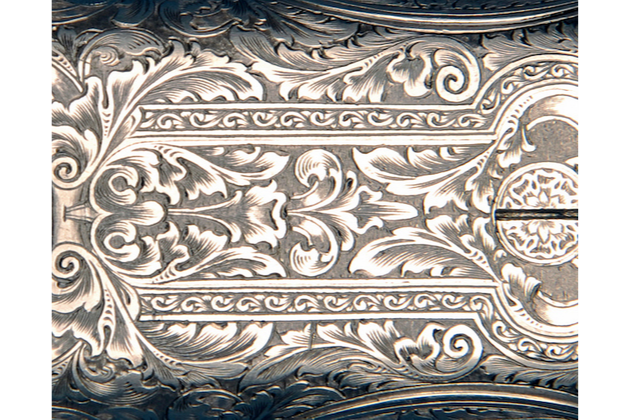
Fine engraving of acanthus leaves shows the skill of the craftsman
Modern engravers have become used to fulfilling a broad range of customers’ orders. Keith explains how the British market continues to be quite “restrained, wanting traditional scrollwork and sometimes game scenes of pheasant, grouse and partridge, occasionally with the customer’s land in the background”.
In contrast, American customers often request unique designs, involving a lot of complex engraving. For the most highly embellished, ornamental examples we have to look to Asia. Where once the tiger hunters of India ordered luxurious and ostentatious big-game rifles, it now seems to be customers from the UAE who take the crown as most ambitious with their imaginative designs.
Engraving starts with a rough sketch, which is traced over with a metal point (a scriber). A hand-held tool called a graver is then used to cut lines into the steel. Some craftsmen may prefer a hammer and chisel and use small cutting movements to create their pattern.
Slipping
As time and techniques have progressed, so have the tools of the trade. Pneumatic gravers are powerful enough to oscillate up to 8,000 strokes per minute, to remove more metal in less time with less physical effort. They reduce the risk of slipping as less pressure is applied.
Recent advancements have allowed laser engraving to become more efficient, higher quality and at a lower price point than ever before. But is there still a stigma attached to lasers; a feeling that the work created by them is somehow lesser quality than hand-crafted pieces? I spoke to Fox & Co Bespoke, a contemporary company at the forefront of modern engraving, the leader in its field.
Co-founder Peter Boxall says there are different types of laser, one of which is used for cutting metals (ferrous and non-ferrous) and can be targeted on the surface like a miniature sun, vaporising the steel. The computer-controlled laser removes steel to a predetermined design and the results are incredible, creating deeper, more intricate patterns at a lower cost than by hand.
Fox offers a range of services with its laser engraver, from creating new designs to taking an established layout and altering it to build unique scenes. Black-action guns such as Blasers and Perazzis can be fully engraved on the hardened action
to the client’s unique specifications.
One-off designs have become increasingly popular, perhaps as an alternative to well-known makes that have unimaginative patterns, identically machined on to off-the-shelf guns. Fox’s idea has transformed these guns with intricate engraving, allowing the shooter to jump from base model to top of the range.
Laser engraving is particularly effective for gold inlays, as the laser can create thinner and straighter lines, with deeper troughs for the gold to sit in securely. However, the gold still has to be physically inlaid into the artwork, and the pattern still needs to be designed and programmed into the laser.
Laser technology can also be applied to engraving other items, not only guns. Peter says Fox is “pushing the boundaries into 3D engraving, cutting and creating true three-dimensional sculptures” such as knives and watches.
But is this a bad thing? Keith Thomas, who is now self-employed and works for prestigious names such as Holland & Holland, Purdey and Boss, was trained by Ken Preater to use hand-push tools and still favours them over pneumatically aided equipment. “There is a more intimate connection with the work and the feedback from the way the tool cuts,” he says.
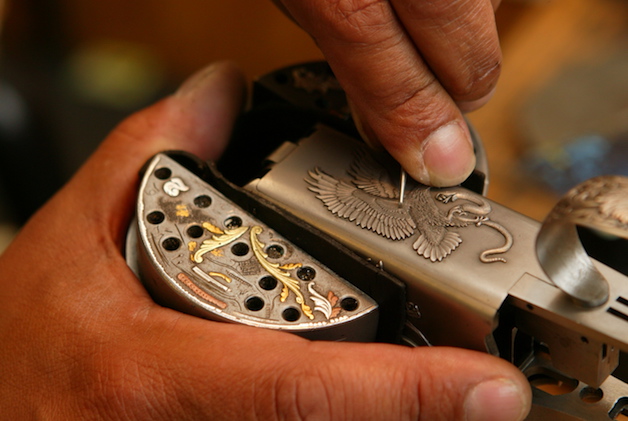
Intricate engraving by hand takes time and the price will, of course, reflect that effort
Workmanship
Some of the most renowned engravers steer towards traditional methods and hands-on workmanship. Their work is prominent and a gun will hold a higher value because they have engraved it, because their name is associated with it. A ‘Kell engraved’ shotgun will be worth a vast amount more than one that has been laser engraved, even though the laser has the ability to be more precise, detailed and elaborate.
Are these craftsmen great because they stick to traditional techniques? Keith believes it is the humanity in a piece of hand-crafted work that sets
it apart and gives it a higher value.
“If you put something in the way, whether it be a machine, a microscope or a pneumatic engraver, then you remove some of the humanity,” he believes. “Even the sharpest razor blade will look like a mountain range under a microscope, and all the little inconsistencies are a part of the greater whole that gives good engraving character and helps
it all flow together.”
Favourable
It’s hard to say what the future holds for engraving. Lasers certainly seem to have their place, making high-quality, repeatable patterns at a favourable cost.
There will always be a need for human creativity and hands-on skills. The effectiveness of laser engraving is its ability to repeat a pattern, to be precise and accurate, and to relieve the craftsman of physical effort.
This takes away from all the qualities and processes involved in creating a Best gun and why they are worth so much more. Guns are still being made by hand several hundreds of years on from the origins of gunmaking, even though machinery has been developed to do it for us, and engraving is the same. Even as lasers become more accepted in the trade, hand engraving will always have its place, leaving a lasting impression.
Related Articles
Gear
Optics
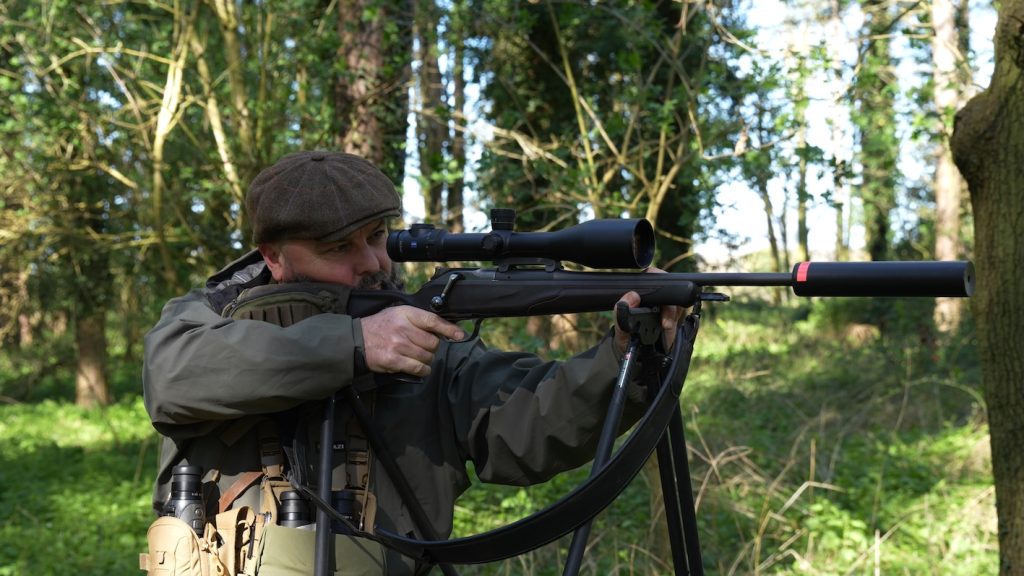
ZEISS Secacam Trail Cameras: the essential tool for modern deer management
Professional deer stalker Jim Riley explains how ZEISS Secacam trail cameras have transformed deer management, wildlife monitoring and estate security at Chippenham Park Estate, helping deliver more e...
By Shooting Times
Gear
Optics
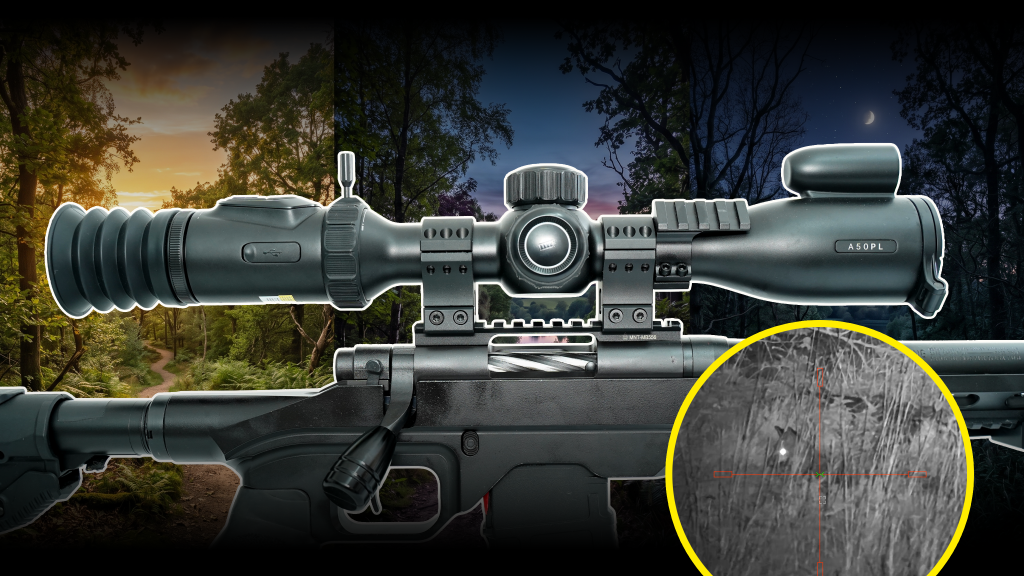
HIKMICRO Alpex Pro A50PL review
Designed for the hunter who demands both performance and agility, the Alpex Pro A50PL sheds nearly 300g compared to the original 4K. But can a fixed f/1.8 aperture and a new 12MP sensor truly match th...
By Ed Jackson
Get the latest news delivered direct to your door
Subscribe to Shooting Times & Country
Discover the ultimate companion for fieldsports enthusiasts with Shooting Times & Country Magazine, the UK’s leading weekly publication that has been at the forefront of shooting culture since 1882. Subscribers gain access to expert tips, comprehensive gear reviews, seasonal advice and a vibrant community of like-minded shooters.
Save on shop price when you subscribe with weekly issues featuring in-depth articles on gundog training, exclusive member offers and access to the digital back issue library. A Shooting Times & Country subscription is more than a magazine, don’t just read about the countryside; immerse yourself in its most authoritative and engaging publication.