★ Your magazine. Your say. Complete our reader survey with a chance to win Jack Pyke kit worth £500! ★


Nocpix Nite D70R review: a day and night scope for fading light
Ed Jackson mounts the £799 Nocpix Nite D70R on his Bergara and tests how this day and night digital scope, from a brand better known for thermal, holds up against fierce competition as the legal light runs out

Nocpix has earned a loyal following on the back of its thermal optics, so the arrival of a brand-new digital day and night scope, the Nite D70R, had me keen to get it on a rifle. At £799 it lands in one of the most competitive corners of the market, up against the likes of the HIKMICRO Alpex and Pard, and it turns up with a couple of genuinely clever ideas alongside a few decisions that had me scratching my head.
I ran the Nite over several sessions on my local ground, using it mainly for deer as the light drained away at the end of the day, which is exactly the job these devices are bought to do. The headline features are a laser rangefinder built cleanly into the body and a tall AMOLED display that suits a stalking scope far better than the usual widescreen panel. Whether that is enough to see off the competition is what this review sets out to answer.
Nocpix Nite D70R specifications
| Specification | Detail |
|---|---|
| Price (RRP) | £799 |
| Magnification | 5x to 40x |
| Objective | 70mm focal length, fixed f/2.0 aperture |
| Sensor | 12MP (3536×3536) 4K Ultra, 2µm pixels |
| Display | 0.72in AMOLED, 1920×1200, 60Hz |
| Laser rangefinder | 1,200m, integrated into the objective |
| Body tube | 30mm |
| Battery | Replaceable 18650 plus internal cell, seven-hour runtime |
| Minimum focus distance | 10m |
| Field of view | 10m at 100m |
| Weight | 1,055g |
| Recoil rating | 20,000 cycles at 6,000J |
| Weatherproofing | IP67 |
| Recording | Video only |
| Contact | nocpix.uk |
First impressions and build quality
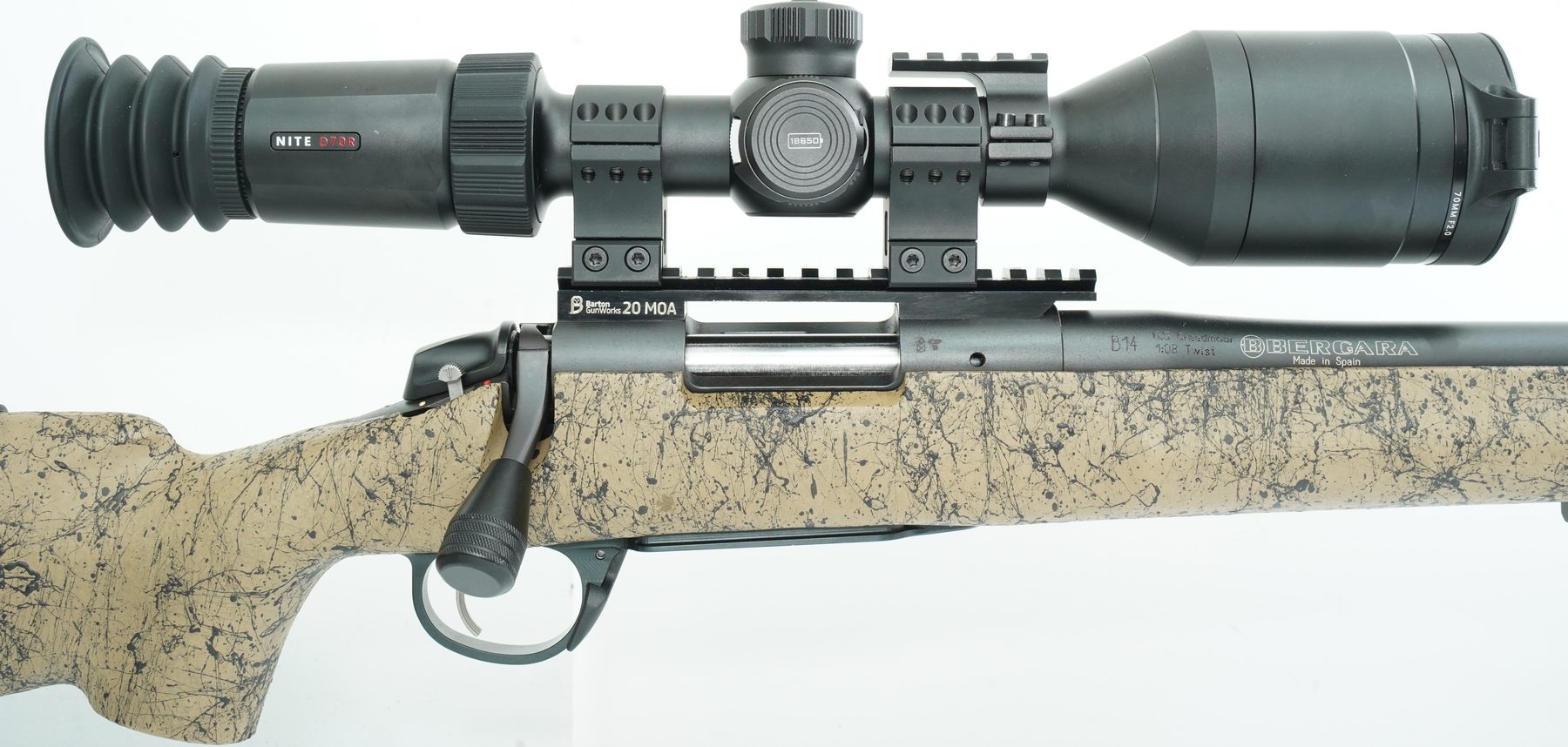
Picking the Nite up for the first time, the 1,055g weight is the thing you notice. That is lighter than the original Alpex 4K I have been running at 1,176g, but noticeably heavier than the 889g Alpex Pro, and a good chunk of that mass lives in the large objective bell that houses the 70mm lens. It is worth remembering that in a digital optic the 70mm figure is the focal length rather than the diameter of the glass.
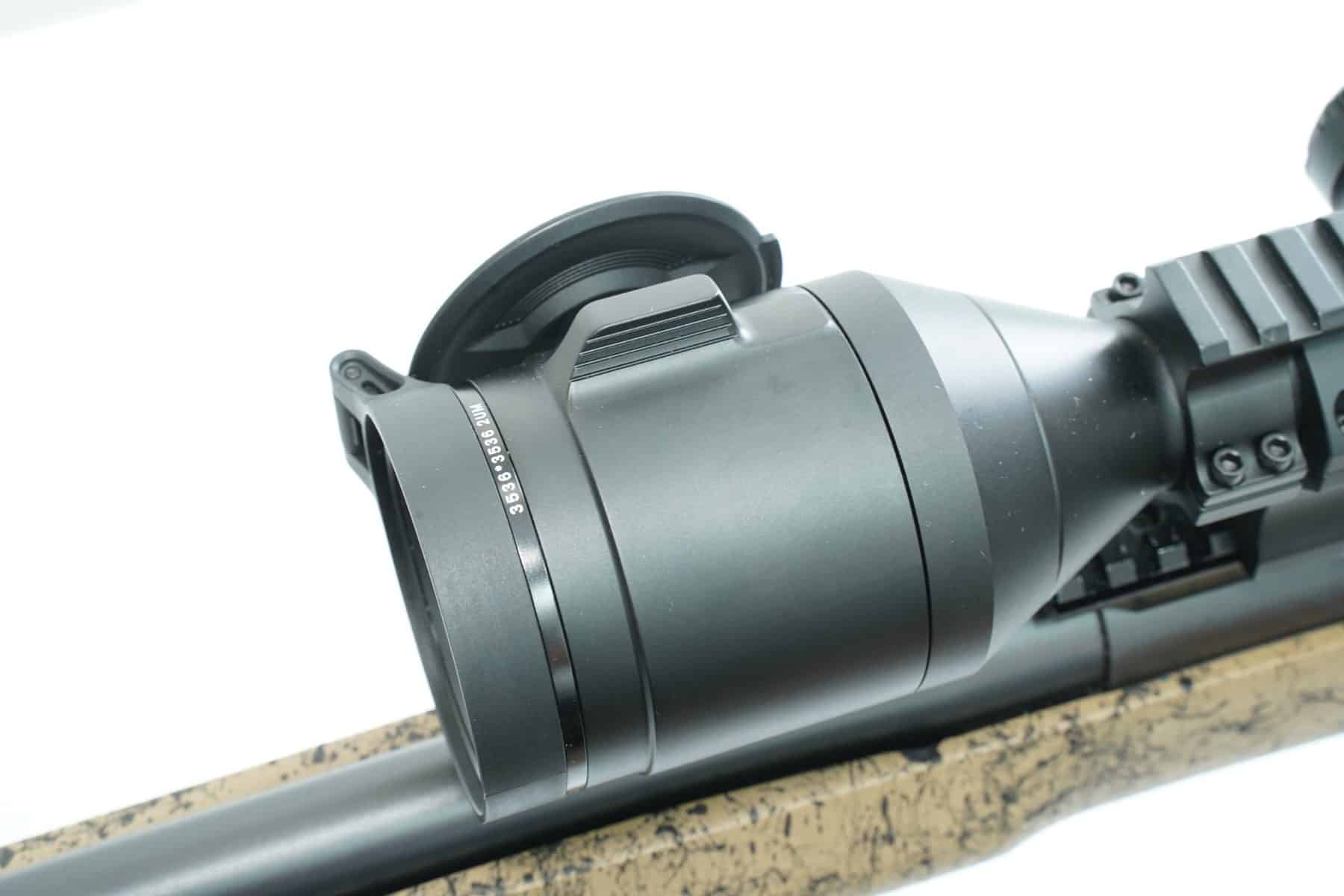
The front focusing collar is smooth rather than grippy, with only a low-profile fin or throw lever to grab. Next to the side focus wheels on the Alpex Pro and the Pard it feels like a small step backwards. The big win sits just in front of it: the 1,200m laser rangefinder is built entirely into the objective bell rather than bolted on top as a blocky pod, which gives the Nite a reassuringly traditional day-scope outline. A plastic, spring-loaded lens cap finishes off the front.

Turrets, buttons and menus
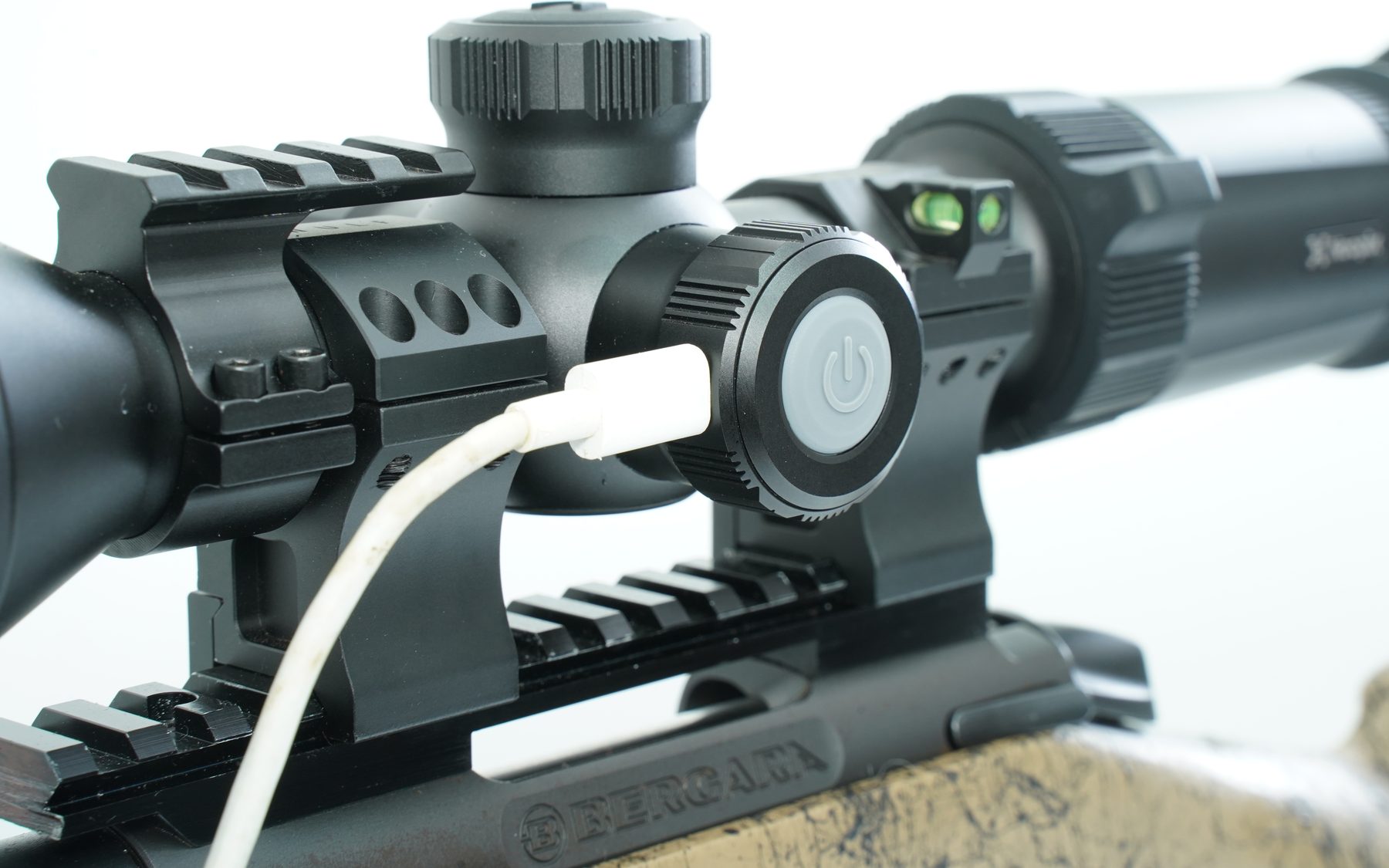
You get a standard 30mm body tube, so mounting is straightforward and there is plenty of room for chunky rings and a dive board for an IR illuminator. The left-hand turret carries a rubber power button that needs a deliberate four-second press to fire the unit up and a quick tap to drop it into standby. Facing you on the same turret, a dedicated rangefinder button sits on its own, which makes it quick to find by feel before a shot rather than hunting through a cluster as you do on the Alpex. On the opposite face is a USB-C port for charging and data. Oddly there is no rubber flap over it, though Nocpix says the port is waterproofed internally.
The top turret is home to a large rubberised menu button you could not miss in the dark. A quick press lets you tweak contrast, brightness and sharpness, or jump between day, moon, yellow and green modes, and there is a manual distance selector to fall back on for holdovers if the rangefinder cannot get a reading. Hold it down and you drop into the main menu, where Wi-Fi, zeroing profiles, the ballistic computer, picture-in-picture, the microphone and recoil-activated video all live, along with the usual choice of reticle patterns and colours. I was disappointed to find no on-screen cant or incline readout, which I lean on when mounting up or shooting off sticks.

My other niggle is the navigation collar. With no clicks or detents to work against, it is all too easy to spin past the setting you wanted, which makes fine adjustments in the field fiddlier than they should be. You do adapt and it gets the job done, but a little positive feedback would go a long way.


Battery life and zoom
The right-hand turret holds a single, replaceable 18650 cell that works alongside an internal battery for a claimed seven-hour runtime. Nocpix has gone for a push-button sprung lid rather than a screw cap. I like that for quick changes, but I would not trust it to stay shut as readily as a screw cap, and it does not give quite the same peace of mind against the weather despite the IP67 rating. On the plus side, the scope is rated for 20,000 cycles at 6,000J of recoil, so it should shrug off years of hard use.
The 5x to 40x magnification runs through a grippy, rubberised zoom collar that is a world away from the smooth focus ring. Not much happens in the first centimetre of travel, but from there it adjusts precisely, provided you do not rush it. Wind it too quickly and you get some digital lag, which is par for the course with these day and night units.

Sensor and display
At the heart of the Nite is a 12MP (3536×3536) 4K Ultra sensor, and it behaves quite differently from the widescreen HIKMICRO. Nocpix uses a 1:1 square layout that fills the round display beautifully and gives a much taller field of view through the 1920×1200, 0.72in AMOLED screen with its 60Hz refresh. The large 2µm pixels buy a low-light advantage that usually costs you a little daytime sharpness, and that trade-off does show once you are out in the field. Feeding the square sensor is a fixed f/2.0 aperture, and the 70mm focal length brings a traditional 10m minimum focus distance against the Alpex Pro’s 3m, with a tight 10m field of view at 100m, narrower again than the already snug 12.6m of the Pro.
Nocpix Nite D70R in the field
Because I lean on digital optics to squeeze the most out of the fading light when stalking, my Bergara B14 was the natural choice for the test. Once mounted, the one-shot zero had it shooting where I wanted in moments, and anyone used to smart scopes will find loading the ballistic calculator just as painless. Before I set off I did notice that the Nite only records video and has no photo-capture function at all, which feels an odd omission when both would have been easy to offer.
Across a run of evenings in various high seats I put it to work in daylight, low light and full dark. From one seat overlooking open ground the rangefinder earned its keep, returning solid readings out to 789m on a bright morning. As I watched everything from rabbits to deer, though, the optical limits started to show. The picture is perfectly usable, but it lacks that last bit of bite at the final stage of focus, and you find yourself fettling the front collar to coax out the best view. Combined with the pixelation that comes with the territory, that softer delivery meant I rarely pushed past 15x. These devices lean so heavily on software that firmware updates will almost certainly sharpen things up and stretch the low-light threshold over time.
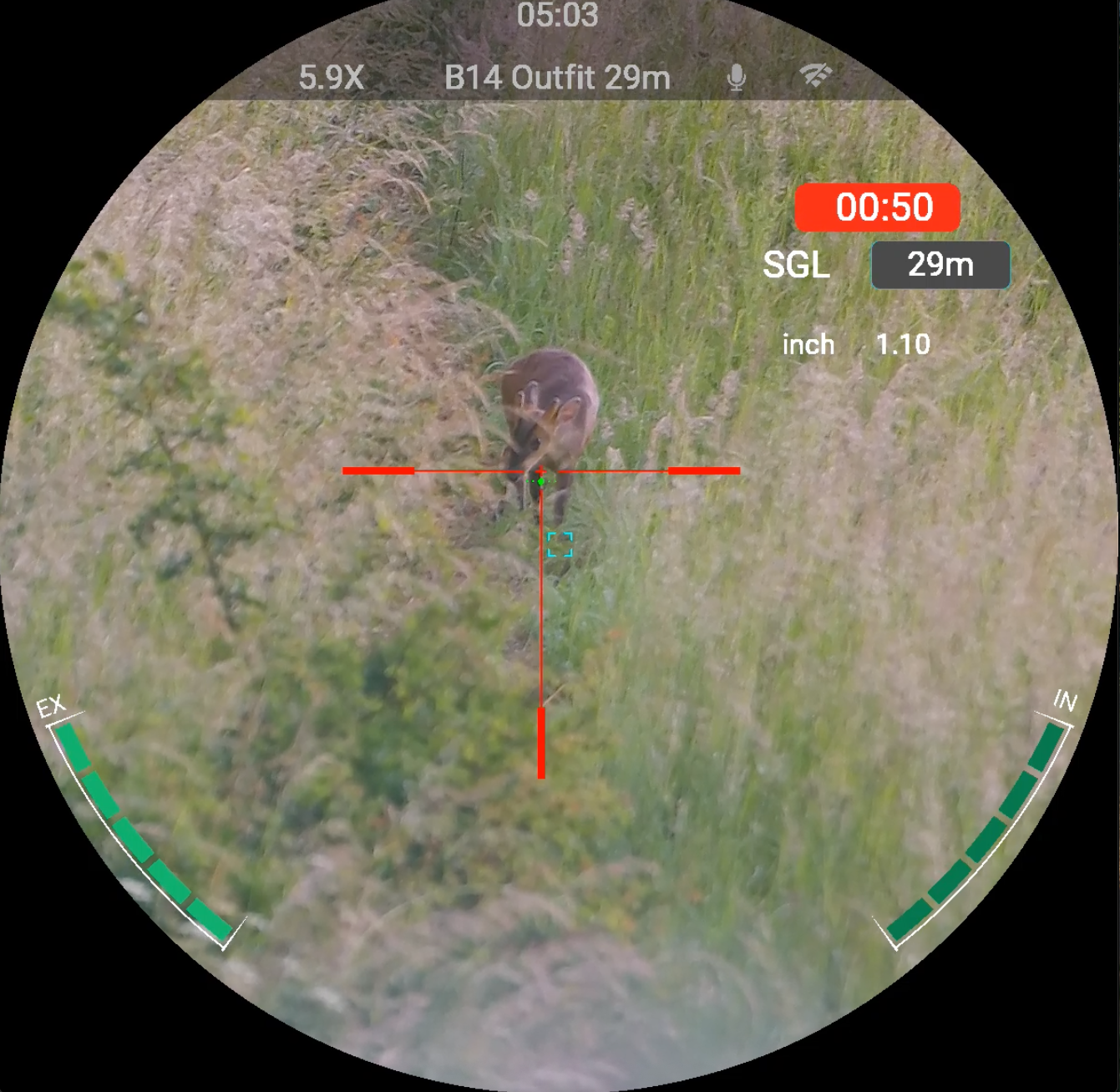
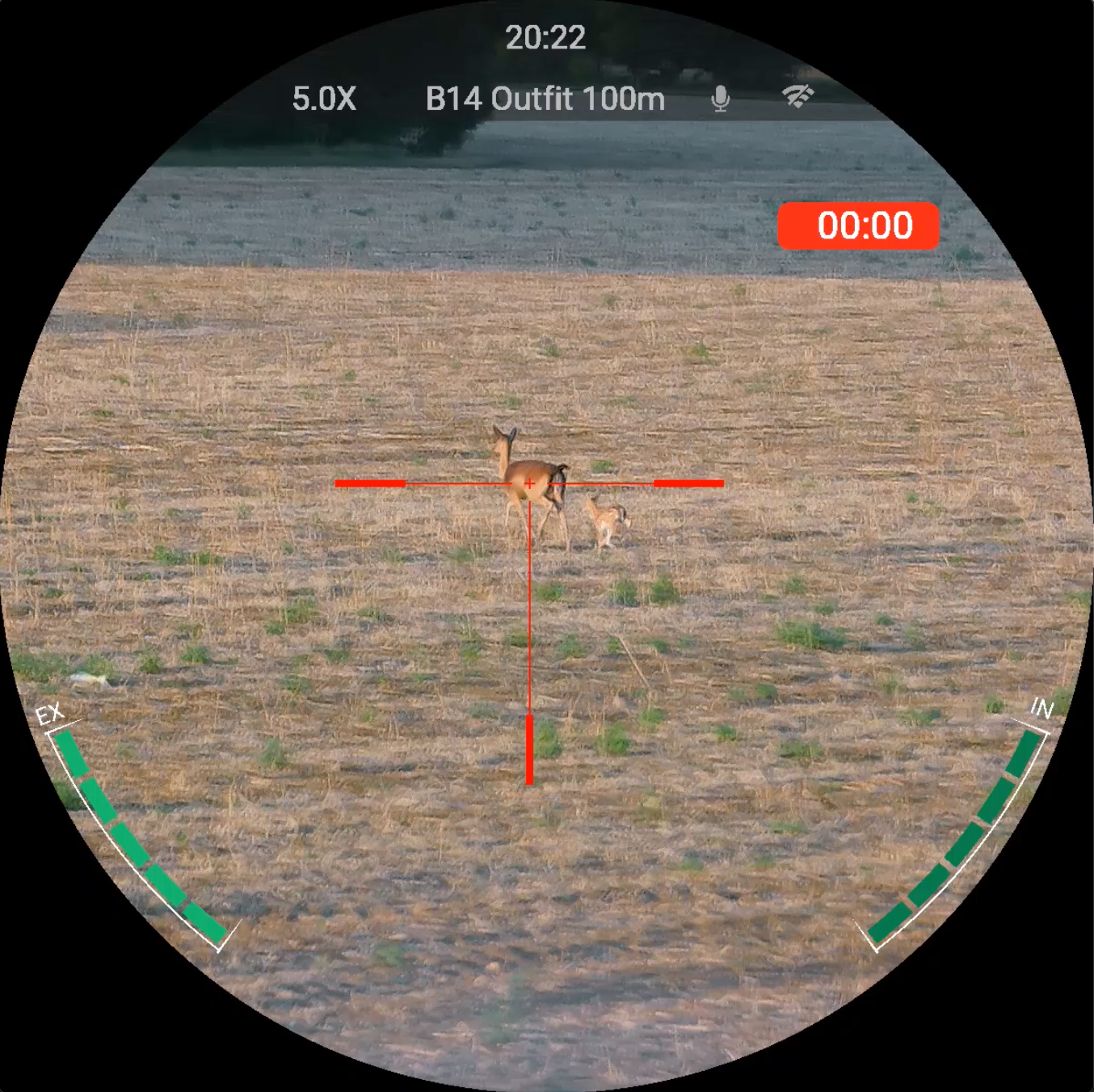
My favourite thing about the Nite was the reticle, which is crisp and clear and shown off perfectly by that taller screen. Rather than feeling boxed in, the view fills your eye naturally and behaves much more like a proper day scope, which is a real help for keeping tabs on your quarry and everything around it. As dusk closed in, the day mode began to struggle and I switched across to night mode by hand. Once it was properly dark I stayed put and played with night mode and my own IR illuminator, watching rabbits and hares comfortably out to about 150m. The monochrome image gave me plenty to read the ground and judge whether a shot was on, though your choice of aftermarket IR torch will make a big difference to how far and how clearly you can see.
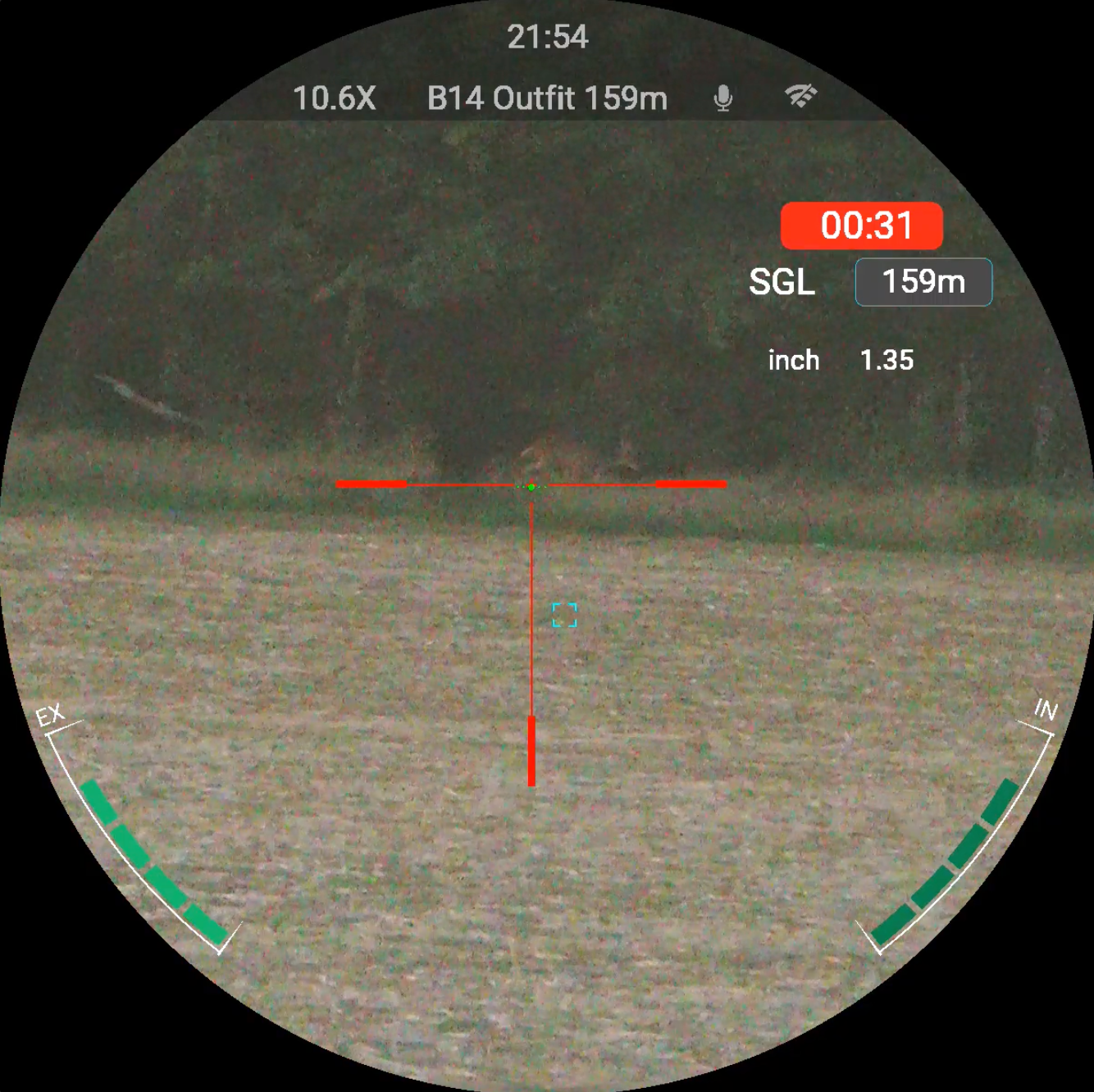

For a change I also paired the Nite with an airgun on the range and had a thoroughly good time with the ballistic calculator. Is it as crisp as good glass? No, not quite, but I could still wind it to 40x if the mood took me, and I could even pick out pellets in flight at distance, which makes reading the wind easier. There is a reticle to suit everyone and I got the best out of the rifle, but if you are buying mainly for close-range pest control, keep that tight field of view and 10m minimum focus firmly in mind.
Strengths and weaknesses
Strengths
- Laser rangefinder neatly integrated into the objective for a clean, day-scope profile
- Tall 0.72in AMOLED display paired with a superb, sharp reticle
- Robust build rated to 20,000 cycles at 6,000J, with IP67 weatherproofing
- Isolated rangefinder button and a painless one-shot zero
Weaknesses
- Clickless navigation collar makes menu changes fiddly
- Focus struggles to reach true crisp clarity at the final stage
- Smooth focus collar feels dated next to side-wheel rivals
- No on-screen cant or incline, and it records video only
Verdict
We are spoilt for choice with digital day and night optics, which is good news for anyone looking to match a device to a particular job. The Nocpix Nite D70R has real strengths, chiefly that cleverly integrated rangefinder and the tall, immersive AMOLED display, and it is a robust, well-made unit that will get the work done. It is held back by a handful of frustrating choices, though, from the clickless menu wheel to a focusing system that never quite nails that final stage of clarity. It is a solid, dependable option, but it sits at a price where the competition is exceptionally fierce. Prices are RRP at the time of publication and may since have changed.
Frequently Asked Questions
How much does the Nocpix Nite D70R cost?
The Nocpix Nite D70R has an RRP of £799 at the time of publication. More detail is available from nocpix.uk.
Does the Nocpix Nite D70R have a laser rangefinder?
Yes. A 1,200m laser rangefinder is built into the objective bell rather than sitting on top as a separate pod. On test it returned reliable readings out to 789m on a bright morning.
Can the Nocpix Nite D70R take photographs?
No. The Nite records video only and has no still-photo capture, which is an unusual omission on an otherwise well-specified unit.
Is the Nocpix Nite D70R any good for close-range pest control?
It can be used for it, but the 10m minimum focus distance and the tight 10m field of view at 100m are worth bearing in mind. It is better suited to stalking and observation at range than to very close work.
Who is the Nocpix Nite D70R best suited to?
Deer stalkers and night-shooters who want an integrated rangefinder and a tall, day-scope-style display in one robust package, and who are happy to let firmware updates refine the image over time.

About the author
Ed Jackson
Group reviews editor for Time Well Spent Group and a former editor of Gun Mart, Ed reviews guns and optics for ShootingUK and is responsible for sourcing the newest products to test, often before anyone else has had hands on them. He works across rifles, shotguns, airguns and thermal and night optics, from the Bergara Premier CIMA Pro to the AirMaks Arms Krait MKII bullpup, and fronts much of the group's video output, including the First Shots series of first impressions and the stand-by-stand coverage from the British Shooting Show at the NEC. He also visits ranges, gun shops and training providers for the titles, and rounds up the best of the new kit each year from the show floor.
 Closes 15 JanuaryWorth £129.90Win a pair of tickets to the British Shooting Show 2027Enter nowFree to enter
Related Articles

Lead shot ban: the lead-free pheasant cartridges six makers now offer
From 1 April 2029 lead shot can no longer be sold or used for pheasant shooting in Great Britain. For the keeper, the shoot owner and the Gun planning the three seasons that remain, six makers’ pheasa...
By News Desk | 17 October 2026

Nocpix Omni H35R multi-spectrum binocular review: right first time
Ed Jackson tests the Omni H35R, Nocpix's first multi-spectrum binocular, with a look at the cheaper L19R, to see what thermal and 8K digital in one housing can do
By Ed Jackson | 17 October 2026
Get the latest news delivered direct to your door
Subscribe to Shooting Times & Country
Discover the ultimate companion for fieldsports enthusiasts with Shooting Times & Country Magazine, the UK’s leading weekly publication that has been at the forefront of shooting culture since 1882. Subscribers gain access to expert tips, comprehensive gear reviews, seasonal advice and a vibrant community of like-minded shooters.
Save on shop price when you subscribe with weekly issues featuring in-depth articles on gundog training, exclusive member offers and access to the digital back issue library. A Shooting Times & Country subscription is more than a magazine, don’t just read about the countryside; immerse yourself in its most authoritative and engaging publication.