★ Your magazine. Your say. Complete our reader survey with a chance to win Jack Pyke kit worth £500! ★


When the heat is on: the rise of the affordable thermal riflescope
Once a luxury for the professional pest controller, thermal riflescopes have tumbled in price and soared in capability. Selena Barr talks to the trade about sensors, rangefinders, the law and where the technology goes next


There was a time, not so long ago, when owning a thermal riflescope marked you out as either a serious professional or a man with more money than Croesus. The early units were eye-wateringly expensive, gave you a vague white blob at almost any distance, and required the sort of careful justification to your other half usually reserved for a third Labrador. How things change.
First, the basics. Thermal reads heat, not light, so unlike image-intensifying night vision it works in pitch dark and sees through light cover. It has come on in leaps and bounds, but nowhere more so than in the riflescope.

How thermal riflescopes have changed
“When they first launched, thermal riflescopes were really designed for foxing and rabbit control,” says Paul Stewart at Scott Country, one of the UK’s longest-established optics specialists. As the technology matured, two things happened at once: it got dramatically cheaper and it trickled down. Lower-resolution sensors found their way on to air rifles and rimfires, and even the cheaper units handle centrefire at closer ranges, narrowing the gulf between professional and weekend pest controller.
The makers agree the real leap has been in quality rather than reach. “Thermal riflescopes have improved dramatically over the past five years, with the biggest gains coming in image quality rather than simply detection range,” reckons Edward King of ASI, which imports ThermTec. He notes the brand has pushed sensor sensitivity down to “15-18mK NETD, which enables shooters to distinguish much smaller temperature differences and identify animals more accurately in rain, fog and humid conditions”. The lower that NETD figure, the better it cuts through filthy weather.
What sensor resolution do you need?
Sensor resolution is the figure every buyer trips over: the more affordable scopes run a 256 or 384 sensor, which is plenty for closer work. That lower resolution matters less than you would think. A cheaper sensor will not give you pin-sharp detail but, as Paul points out, when you are ratting or rabbiting at close ranges there is “nothing else out there that’s rat-shaped” to confuse your quarry with.
Step up to deer, though, and 640 has become the accepted minimum – the industry’s de facto standard – because only then can you determine species and sex cleanly and make the humane, well-placed shot every one of us is duty-bound to take. ThermTec’s Oryx and Ibex condense that sensitivity, rangefinding and ballistics into compact formats, and Evan Boulton of Thomas Jacks, the UK importer for Pixfra, tells a similar story of the Pegasus 2 LRF series, crediting “higher resolution sensors, lower NETD ratings and advanced image processing” for sharper pictures.

It is at the affordable end that the change is most visible. Mark Swift at Pard points to the Pantera Mini, built specifically for vermin control out to 100m, which arrived with an RRP of a mere £739. This is a pairing of performance and price he calls “a game-changer” that has widened access to thermal and lifted the brand’s scope sales sharply.

The rangefinder is now almost redundant
The hardware has slimmed down too. The bulky laser rangefinder once bolted above the scope is largely a thing of the past, Mark notes; it is now tucked into the objective housing or beneath the turret for the sleeker, more traditional profile many shooters prefer. The upshot is that the modern thermal scope has quietly made the separate rangefinder redundant. Where a stalker once carried a day scope for daylight and a thermal for the night shift, today’s units run, as Paul says, “pretty much 24/7”. Multiple zero profiles let a single scope move between rifles – foxing on the .223, then on to the deer with the .308 – without re-zeroing each time. Just check the scope is rated for your rifle’s recoil first, as not all are.

At the top end
At the top end there has been a quiet revolution. NocPix’s flagship ACE H50R is a standout everyday scope alongside HikMicro’s Stellar SQ50, and the NocPix now offers a genuine optical zoom. Pinch to zoom on your phone and the picture falls apart; an optical channel holds the detail as you magnify, which is exactly what you want when confirming a beast at distance rather than guessing at it. None of it comes cheap, though: entry-level scopes start nearer £1,500, the flagships from £4,000 and beyond.
Innovation is arriving at an astonishing rate. “There seems to be no end to innovation in the thermal imaging market at the moment,” says Evan, reeling off integrated rangefinders, onboard ballistic calculators and AI-powered image processing as the all-in-one systems buyers now expect. “While advances in sensor resolution and detection range remain important, the biggest developments in recent years have come from intelligent image processing and user experience,” says Summer Wei at HikMicro. Driven by AI, she adds, thermal optics are “evolving from observation devices into intelligent decision-support assistants”. HikMicro’s Stellar 3.0 and NEOS scopes lean on a shutterless system that banishes those maddening calibration freezes, plus AI to cut image lag and sharpen at magnification. Worth knowing, too, is that thermal is power-hungry, so expect seven to 10 hours a charge, and a 50Hz refresh rate follows moving quarry far better than 25Hz.
Technology is no substitute for good practice
Mark sounds a note of caution amid the cleverness: distance, reticle options and ballistic solutions may now sit on the screen in front of you, but the technology, he warns, “should never replace good shooting practice”. The shooter must still confirm a safe backstop and positively identify the target before taking the shot. Not everyone wants to abandon their cherished glass either, and the trade has the answer in the form of a front-mounted add-on that clips on to your Zeiss or Leica day scope and turns it into a thermal rig. You keep the daytime quality no digital scope can match; the catch is that you are instantly magnified on the screen, so it never quite matches a dedicated unit. For the stalker at 200m to 300m, though, it is a sensible compromise.
Thermal, deer stalking and the law
For the pest controller, the verdict is in. “There’s nothing that will perform like thermal at night,” says Paul, and Edward puts hard logic behind the sentiment: “For pest controllers, thermal has arguably moved from luxury to necessity,” and “the productivity gains totally justify the investment”.
Deerstalking is where it gets interesting and the rules have shifted. In Scotland, a change to the Firearms Order in November 2023 made thermal, night-vision and digital sights legal on deer for the first time – usable in daylight without special permission, though you still need a NatureScot authorisation to shoot at night. In England and Wales daytime use was never restricted; there the recent move is that Natural England’s night-shooting licence (CL55) now permits thermal riflescopes too, where once only image-intensifying night vision would do. Either way, a fresh wave of recreational stalkers has arrived at technology the professionals adopted years ago.
The ethics of thermal on deer
It would be remiss to dodge the ethics of deerstalking. The debate, as Edward puts it, “remains more nuanced”, and most stalkers now accept thermal spotters for locating deer, but using a thermal scope for the shot itself is still controversial. “Critics argue it can reduce the traditional fieldcraft element of stalking, while supporters contend that improved target identification and shot placement can enhance animal welfare.” Crucially, he adds, the rules “vary between jurisdictions and stalking organisations”.
Summer at HikMicro makes perhaps the wisest point. The aim of progress “is not to help hunters find more quarry, but to provide better information”, and ethical hunting “will always depend on the judgement, experience and responsibility of individual hunters”. Technology can give you a better picture but it cannot hand you a conscience.
What comes next
What comes next is multispectral imagers – full daytime colour and thermal in one unit. HikMicro’s Habrok handheld already combines thermal, day optics and a rangefinder, DNT’s ThermNight pairs thermal and digital night vision in a single sight, and Pulsar’s Thermion Duo has twin cameras. “That’s what everyone’s asking us for,” says Paul. “When can I buy a multispectral thermal riflescope?”
A last word of caution: the thing Paul most wishes buyers understood is that headline detection ranges of 3,000m and beyond describe where a scope registers a pixel of heat in ideal conditions, not where you can identify your quarry. Read the number by all means, but divide it by four for a realistic viewing range. Are thermal riflescopes merely a gadget or are they essential? For the pest controller, thermal is now as fundamental as a good lamp once was, and the stalker is catching up fast. Which leaves one last hurdle: explaining to your other half why your rifle now needs a scope that may cost more than the gun. Not even a 640 sensor can help you there. All prices quoted are RRP at the time of publication and may have changed since.
Frequently Asked Questions
What sensor resolution do you need in a thermal riflescope for deer?
For deer, 640 has become the accepted minimum, because only then can you cleanly determine species and sex and place a humane shot. More affordable 256 or 384 sensors are perfectly adequate for closer vermin work such as ratting and rabbiting, where there is little to confuse your quarry with.
Is it legal to use a thermal riflescope for deer?
In Scotland, a change to the Firearms Order in November 2023 made thermal, night-vision and digital sights legal on deer, usable in daylight without special permission, though a NatureScot authorisation is still needed to shoot at night. In England and Wales daytime use was never restricted, and Natural England’s CL55 night-shooting licence now permits thermal riflescopes too. Rules vary between jurisdictions and stalking organisations, so check before you use one.
How much do thermal riflescopes cost?
Prices have fallen sharply. At the affordable end, Pard’s Pantera Mini arrived at £739, entry-level scopes now start nearer £1,500, and flagship models run from £4,000 and beyond. Prices are RRP at the time of publication and may have changed.

About the author
Selena Barr
Originally cutting her teeth as Shooting Times news editor two decades ago, her career in sporting journalism has taken her all over the world turning field adventures into reports that focus on conservation and sustainability.
 Closes 15 JanuaryWorth £129.90Win a pair of tickets to the British Shooting Show 2027Enter nowFree to enter
Related Articles

Essential kit for picking up and beating: six of the best for the season
A guide to the toughest waterproofs, thornproof legs, boots and dummy vests designed to withstand dense cover and winter duties, from six leading brands
By Shooting Times | 15 October 2026
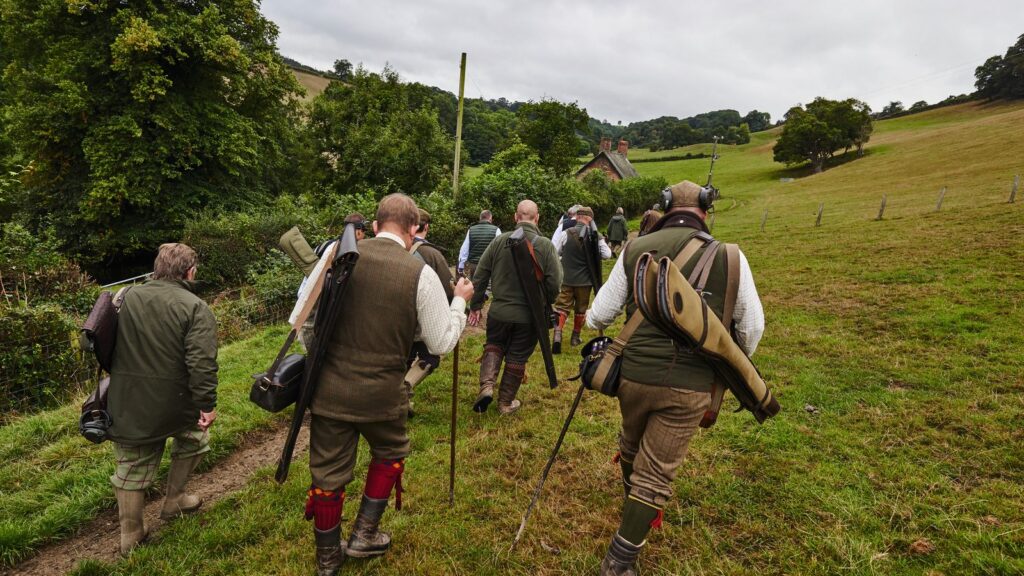
Sporting Life: why the well-dressed Gun never looks too new
As pheasant days loom, Jeremy Hobson considers why shooting clothes should never look too new – and why a dog once took exception to a sharp suit
By Jeremy Hobson | 10 October 2026
Get the latest news delivered direct to your door
Subscribe to Shooting Times & Country
Discover the ultimate companion for fieldsports enthusiasts with Shooting Times & Country Magazine, the UK’s leading weekly publication that has been at the forefront of shooting culture since 1882. Subscribers gain access to expert tips, comprehensive gear reviews, seasonal advice and a vibrant community of like-minded shooters.
Save on shop price when you subscribe with weekly issues featuring in-depth articles on gundog training, exclusive member offers and access to the digital back issue library. A Shooting Times & Country subscription is more than a magazine, don’t just read about the countryside; immerse yourself in its most authoritative and engaging publication.