★ Win a pair of Brandecosse Capriolo boots worth £219! Click here to enter ★

Voices in the forest: meet the Transylvanian hound
From the wild Carpathian mountains, Gergely Bödők follows a Transylvanian hound at work after wild boar, a breed shaped by centuries of rugged forest and dangerous game. It is a rare scent hound that still vanishes into the timber and goes to work, long after softer breeds have drifted to the show ring
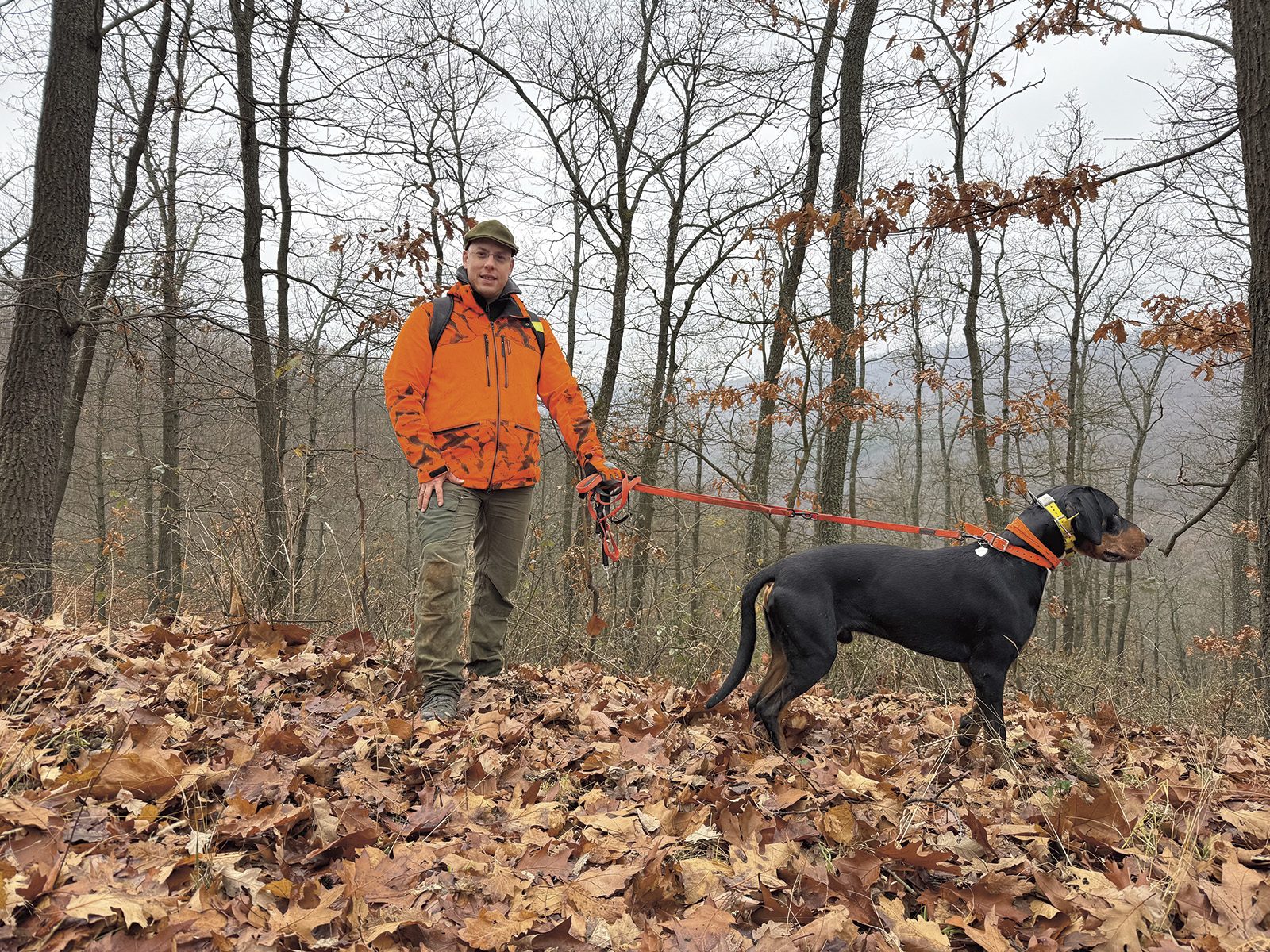 Credit: Gergely Bödők

Long before we saw the boar, we heard the hound. The sound came from somewhere deep below us in the beechwoods, carried uphill through the damp November air. It was not the frantic barking often heard from inexperienced dogs, nor the short, nervous bursts of kennel-bred hounds trying to keep contact with the handler. This was slower, deeper, deliberate – the voice of a dog working on its own terms.
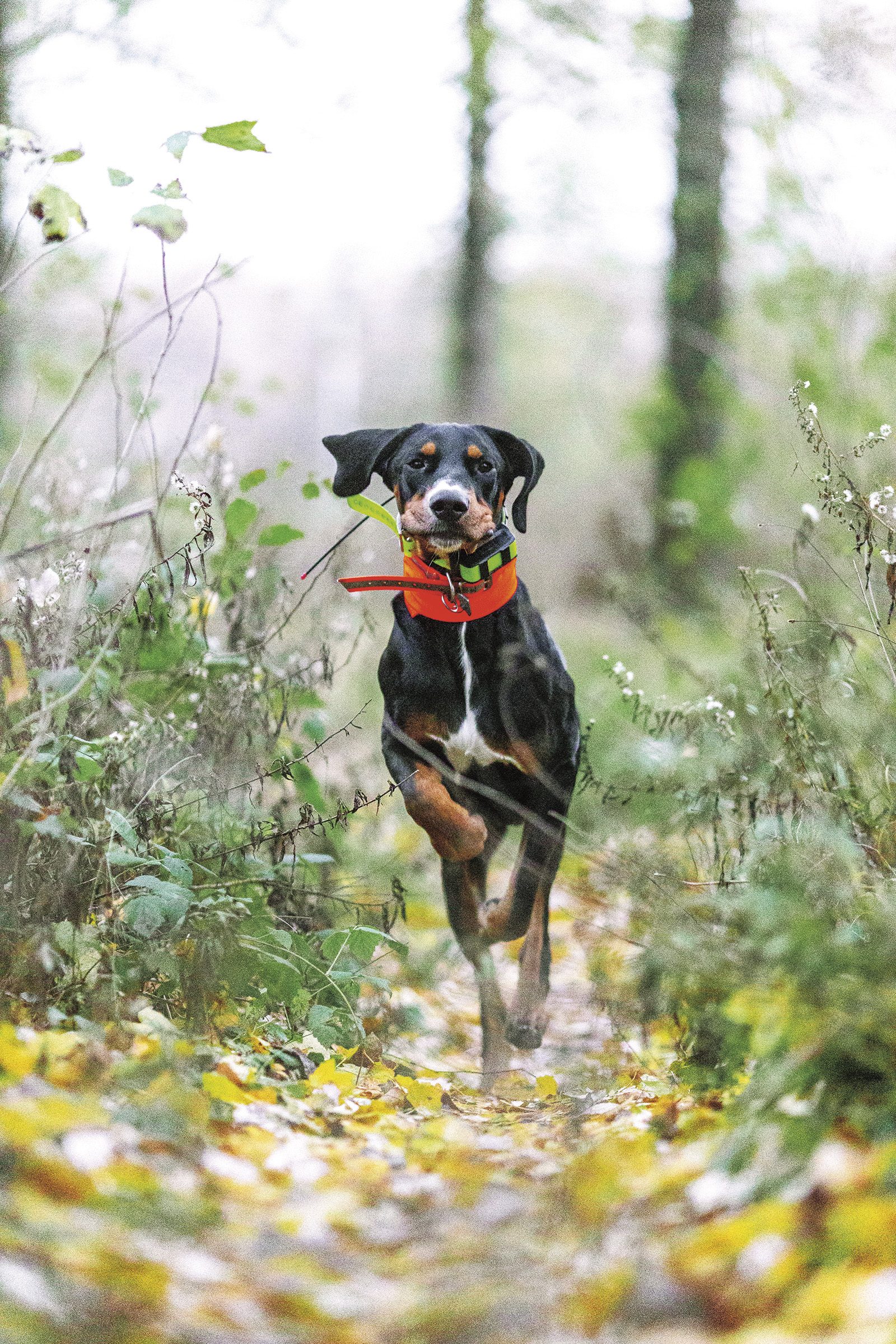
The hunters standing beside me did not move. Nobody whistled. Nobody called the dog back. In the mountains of Transylvania, a good hound is expected to disappear. For several minutes the forest remained hidden in fog and silence, broken only by the steady voice echoing through the valley. Then came the crack of branches somewhere in the thick undergrowth below. A dark shape burst across the slope, followed moments later by the hound itself: black and tan, lean, mud-covered, moving with the effortless rhythm of a dog built for rough country. The boar vanished into another stand of timber. The hound followed without the slightest hesitation.
Why the Transylvanian hound is still a working breed
In much of Europe, old hunting breeds have drifted steadily away from the work they were once bred to do. Many survive today mainly in show rings, as companions, or as reminders of vanished sporting traditions. The Transylvanian hound – known in Hungary as the Hungarian scent hound – remains something different. In the forests of the Carpathians this is still very much a working dog. That fact alone makes the breed unusual.
Outside Central Europe, relatively few hunters have seen a Transylvanian hound in the field. Even among experienced sporting men in Britain, the breed is largely unknown. Yet for generations these hounds were valued throughout the old Kingdom of Hungary for exactly the sort of hunting conditions that defeat softer or more dependent dogs: steep mountainsides, freezing winters, vast forests and dangerous game.
Although the breed nearly disappeared during the 20th century, the qualities that once made it indispensable have survived remarkably intact. To understand the Transylvanian hound properly, it is necessary to see it where it belongs – not exclusively on the manicured grass of the show ring, but deep in the woodland, working after wild boar. The Carpathian forests are not gentle country for either hunter or dog. Thick beech and oak woods cover steep hillsides cut by ravines and old logging tracks. Visibility is often poor.
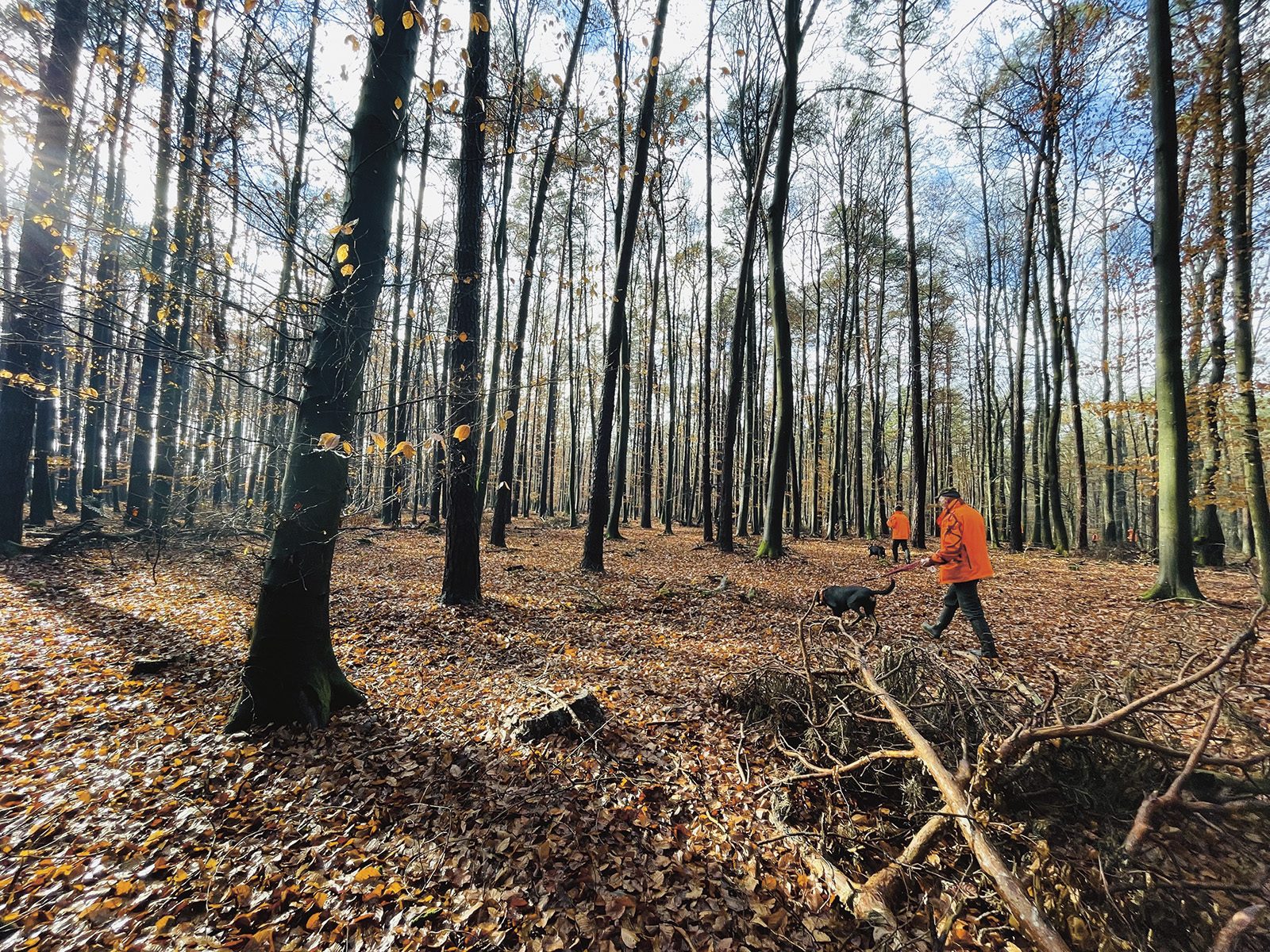
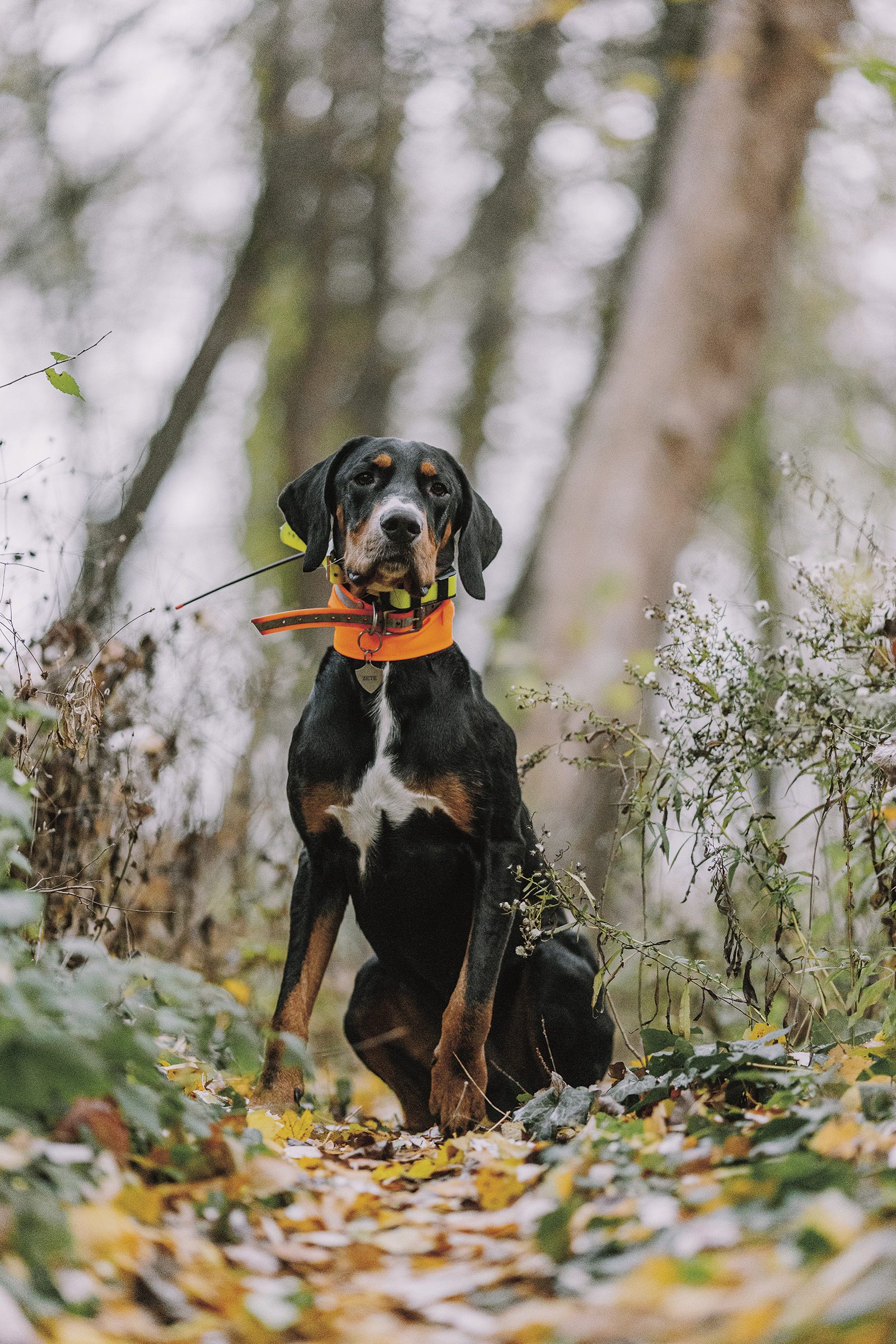
In autumn and winter the ground becomes slick with mud, wet leaves and snow. Wild boar thrive in such terrain and, once disturbed, they can travel astonishing distances through cover that seems almost impenetrable. That is precisely the environment in which the Transylvanian hound developed. Standing roughly 55cm to 65cm at the shoulder and weighing around 35kg to 40kg, the Transylvanian hound is considered a medium-sized boar dog rather than a heavily built catch dog. Its strength lies not in brute force, but in stamina, balance and intelligent pressure on game.
Its independence can surprise those accustomed to more handler-focused breeds. A Transylvanian hound is expected to work far from the hunter. Once on a line, many dogs will continue tracking without visual or verbal contact for long periods. In mountain country, hunters often locate the dog mainly by voice, listening to the changing rhythm of the bark to judge whether the hound is tracking, searching or pressing game forward.
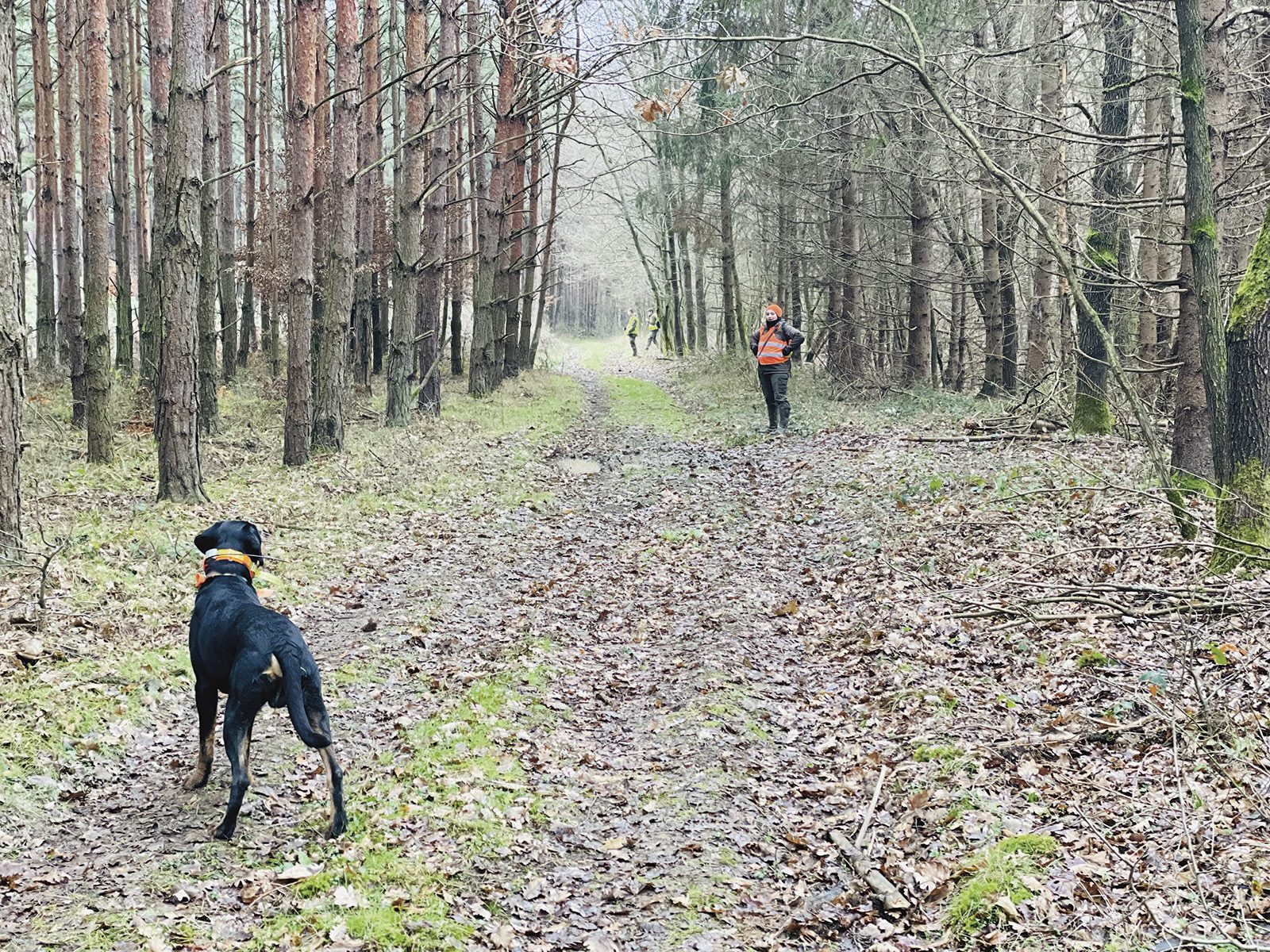
Older hunters in rural Transylvania still speak about particular dogs almost as you would describe respected hunting companions rather than obedient animals. A good hound is remembered for judgement, persistence and reliability. One experienced boar hunter in eastern Hungary explained it simply to me during a winter drive. “You do not control these dogs every second,” he said. “You trust them.” That trust is central to the breed’s character.
Unlike some modern hunting dogs selected increasingly for speed or aggression, the Transylvanian hound works with a kind of measured intelligence. Good dogs learn how to pressure boar without becoming reckless. They must be bold enough to keep game moving, yet sensible enough to avoid injury in thick cover where visibility is minimal and an adult boar can turn suddenly.
Tracking wild boar and wounded game
Watching experienced hounds work mature boar in dense woodland is a lesson in controlled pressure rather than blind attack. The breed is respected for tracking wounded game as well. Across parts of Hungary and Romania, hunters continue to use Transylvanian hounds on cold tracks where patience and concentration matter more than speed. In difficult conditions – frozen ground, rain-washed trails or mountainous terrain – the dog’s nose and determination become particularly valuable. A tracking dog in the Carpathians may work for hours.
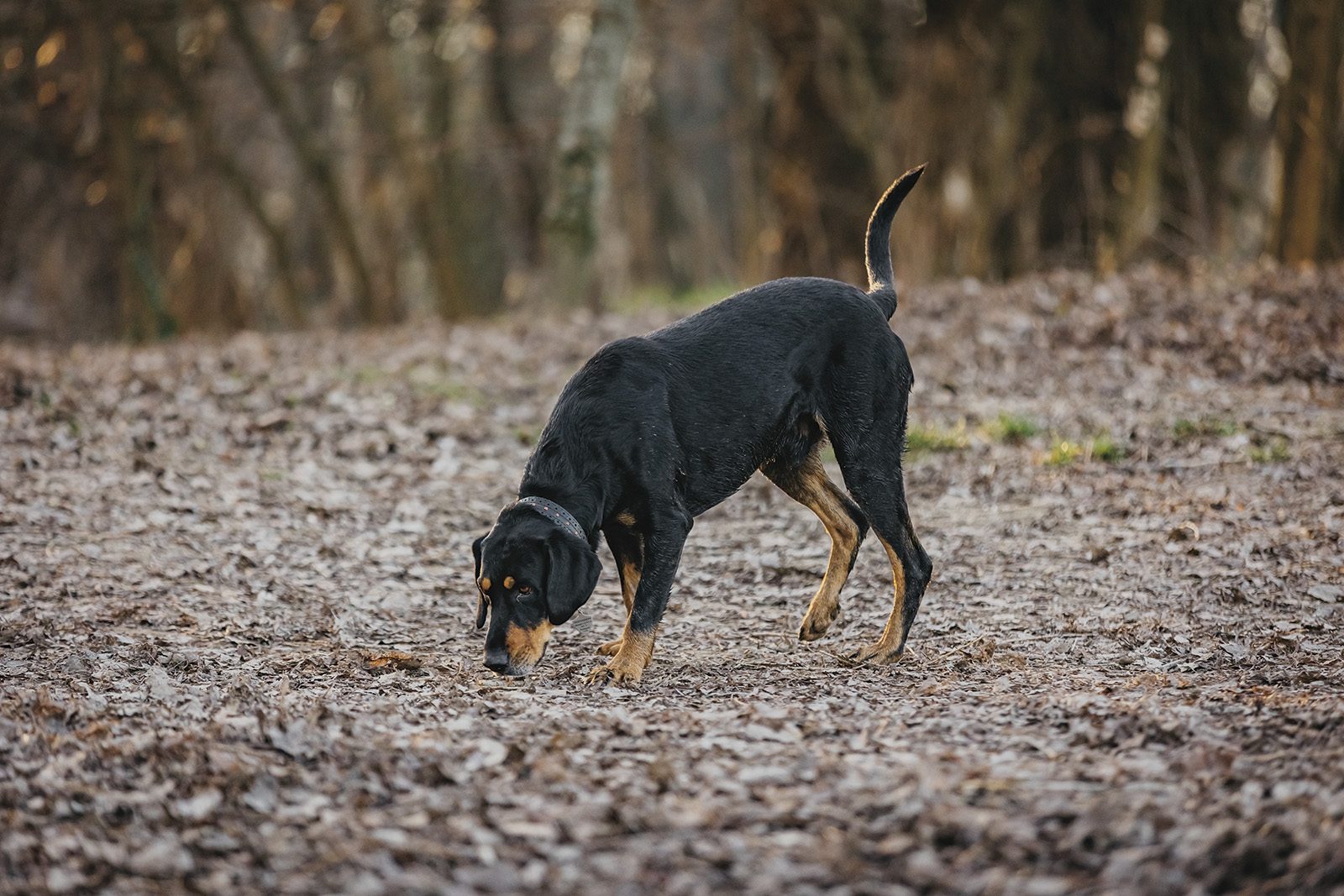
Unlike many highly specialised kennel-bred tracking dogs, however, the Transylvanian hound remains notably versatile. Historically it was used not only on boar, but also on stags, bears and smaller game depending on region and season. Even today the breed retains the adaptable mentality of an all-round hunting hound rather than that of a narrowly specialised dog. That versatility reflects the realities of a much older Central European hunting culture.
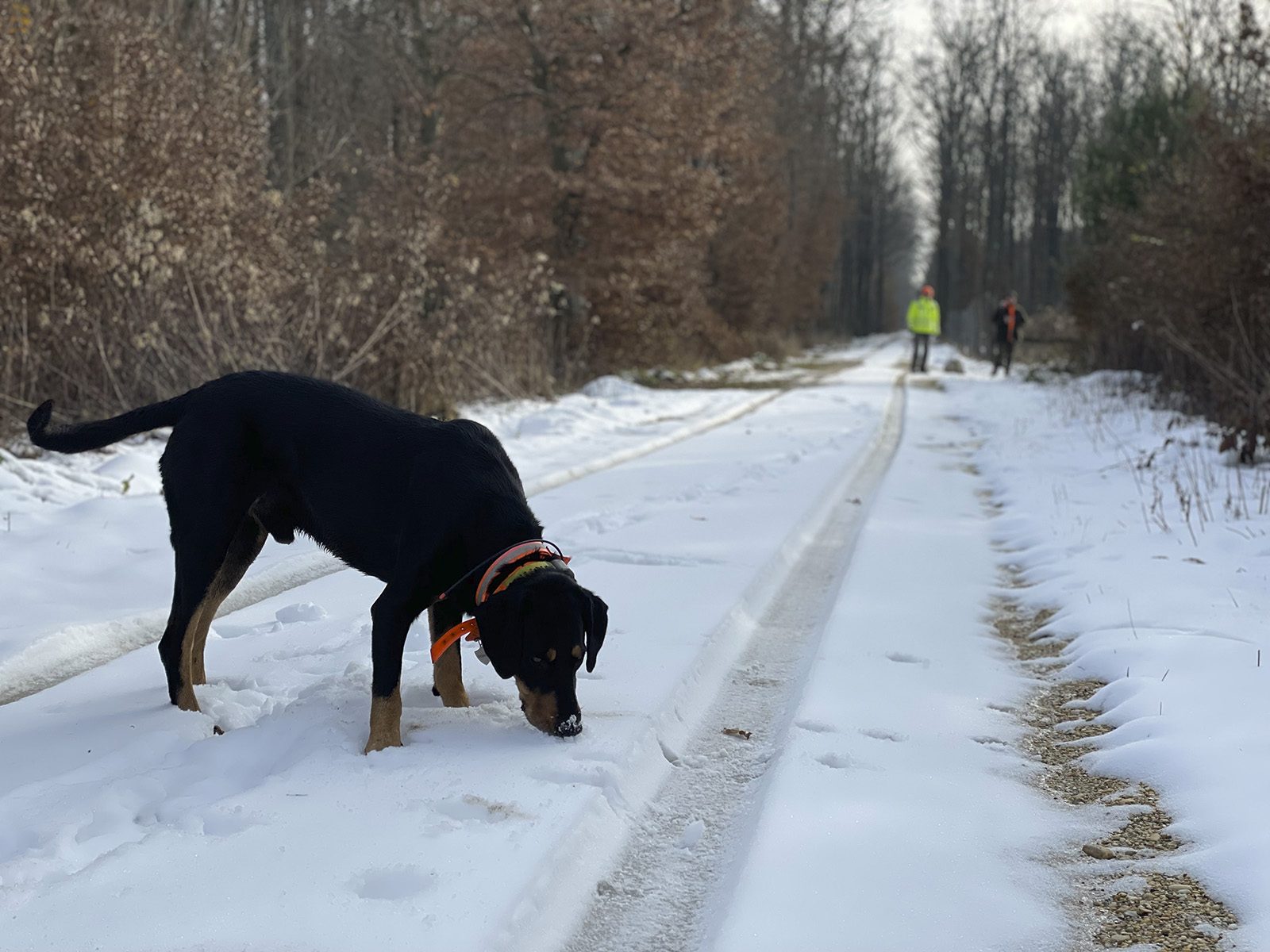
For centuries, hunters in remote mountain regions required practical dogs capable of handling difficult terrain and varied quarry. Romantic ideas about ancient breeds mean little in such conditions. A dog survived because it worked.
The Transylvanian hound survived because, in isolated parts of the Carpathian Basin, hunters continued to need exactly this type of animal. The breed’s history is closely tied to the forests and hunting traditions of the old Hungarian territories stretching across present-day Hungary, Romania and Slovakia. Historical references describe noble hunts using hounds in the mountains of Transylvania, where dense woodland and large game demanded dogs with stamina and courage. Yet history alone does not explain the breed’s survival. Many old European hunting breeds possess impressive back stories while no longer functioning in their original role.
Authenticity: judged on field performance, not looks
What makes the Transylvanian hound unusual is that the line between past and present has never been completely broken. Even today, in certain hunting communities, the breed is judged far more by field performance than by appearance. That consideration has preserved something increasingly rare in the modern dog world: authenticity. The dogs themselves reflect this practical background. They are athletic rather than exaggerated, hard-coated enough for rough weather, and physically balanced for long hours in broken country. There is little excess about them.
Nor are they easy dogs. Like many genuine working hounds, the Transylvanian hound demands time, exercise and opportunity to use its instincts properly. The independence that makes the breed effective in the forest can become stubbornness in inexperienced hands. These are not dogs developed primarily for suburban life. Perhaps for that reason the breed has avoided some of the extremes that accompany popularity.
In Britain, many sportsmen understand the growing divide between working and show bloodlines in numerous traditional breeds. The same concern exists in Central Europe. Hunters involved with the Transylvanian hound are acutely aware that once a working breed loses its practical purpose, recovering those qualities becomes extraordinarily difficult. As a result, serious breeders still place strong emphasis on field ability. This remains clearly visible during hunts.
A day in the Carpathian forests rarely resembles the carefully choreographed image that outsiders sometimes imagine. Conditions are harsh, distances long and success uncertain. Dogs disappear into woodland for extended periods. Hunters listen carefully for movement, voices and changing sound in the forest. Sometimes nothing happens for hours. Then suddenly the woods erupt with noise and motion. The hounds seem perfectly suited to this world.
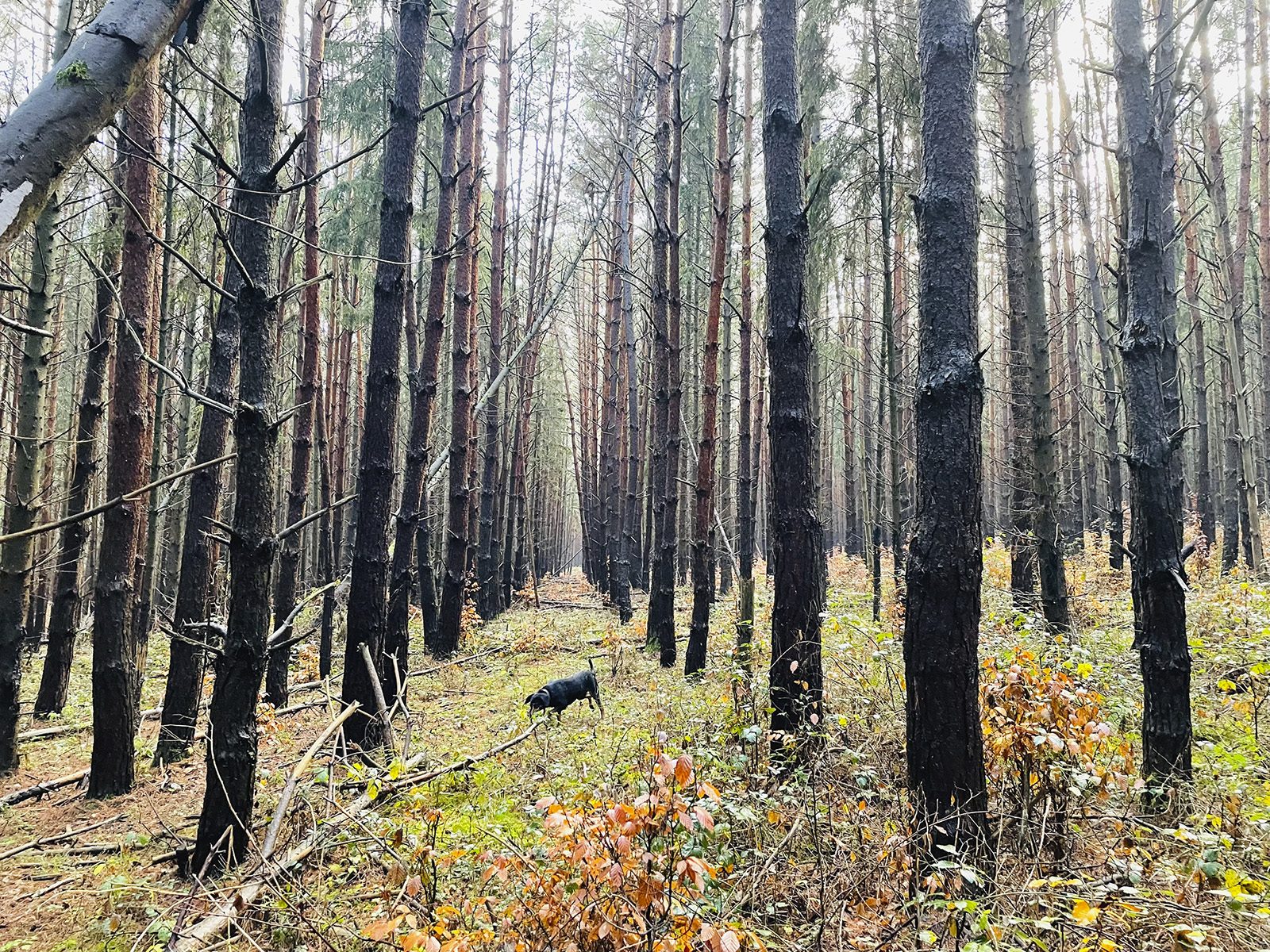
Unlike some faster continental hounds that drive game at extreme pace, the Transylvanian hound often works with a steadier rhythm that hunters describe as easier to follow in broken terrain. The deep voice carries remarkably well through forested valleys, particularly during winter drives when visibility is poor. For many hunters, that voice remains one of the breed’s defining qualities.
The atmosphere of a Carpathian boar hunt
For hunters visiting the Carpathians for the first time, the experience can feel strangely familiar and foreign at once. The rituals of gathering before dawn, loading rifles, discussing wind and game movement all belong to hunting culture everywhere. Yet the forests themselves, the terrain and the sound of hounds working unseen through the valleys create an atmosphere distinctly Central European. Perhaps that is why the breed leaves such a strong impression on those who encounter it properly.
As dusk settled over the mountains after that November hunt, the last drivers emerged slowly from the trees while steam rose from the dogs in the cold evening air. One hound stood quietly beside its handler, mud drying on its coat, ears cut by brambles from hours spent in thick cover. There was nothing polished about the scene. And perhaps that is exactly the point.
In an age when so many old sporting breeds survive mainly in photographs, advertisements and championship pedigrees, the Transylvanian hound still disappears into the forest and goes to work. Long after the dog itself can no longer be seen, its voice continues through the beechwoods.
Frequently Asked Questions
What is a Transylvanian hound?
The Transylvanian hound, known in Hungary as the Hungarian scent hound, is a medium-sized working scent hound from the Carpathian region. It stands roughly 55cm to 65cm at the shoulder, weighs around 35kg to 40kg, and is black and tan with a hard coat. Bred for stamina, balance and intelligent pressure on game rather than brute force, it remains a true working dog rather than a show breed.
What game does the Transylvanian hound hunt?
Its main quarry is wild boar, but the breed is notably versatile. Historically it was used on stags, bears and smaller game depending on the region and season, and it is also valued for tracking wounded game on cold trails. That all-round mentality reflects an older Central European hunting culture in which one dog had to handle difficult terrain and varied quarry.
Does the Transylvanian hound make a good pet?
It is not an easy dog for inexperienced or suburban homes. Like many genuine working hounds it demands time, exercise and the chance to use its instincts, and the independence that makes it effective in the forest can become stubbornness in the wrong hands. It is best suited to people who can give it real work and space rather than to life as a companion alone.
Related Articles
The vital role of gundogs in driven game shooting
For many, what makes the shoot day all the better is the company of our dogs, whether on the peg or beating line, says Julia Newman.
By Shooting Times
Safe gundog travel: why you must restrain your dog in the car
Discover why properly restraining your gundog in the car is essential for safety, legality, and insurance. Learn about crash-tested crates, harnesses and Highway Code rules for travelling with dogs.
By Shooting Times
Get the latest news delivered direct to your door
Subscribe to Shooting Times & Country
Discover the ultimate companion for fieldsports enthusiasts with Shooting Times & Country Magazine, the UK’s leading weekly publication that has been at the forefront of shooting culture since 1882. Subscribers gain access to expert tips, comprehensive gear reviews, seasonal advice and a vibrant community of like-minded shooters.
Save on shop price when you subscribe with weekly issues featuring in-depth articles on gundog training, exclusive member offers and access to the digital back issue library. A Shooting Times & Country subscription is more than a magazine, don’t just read about the countryside; immerse yourself in its most authoritative and engaging publication.