★ Your magazine. Your say. Complete our reader survey with a chance to win Jack Pyke kit worth £500! ★


Royal Kennel Club recognises two French gundog breeds
The Braque du Bourbonnais and the Epagneul Français join the gundog group on 1 October, but neither can be shown or run in field trials yet
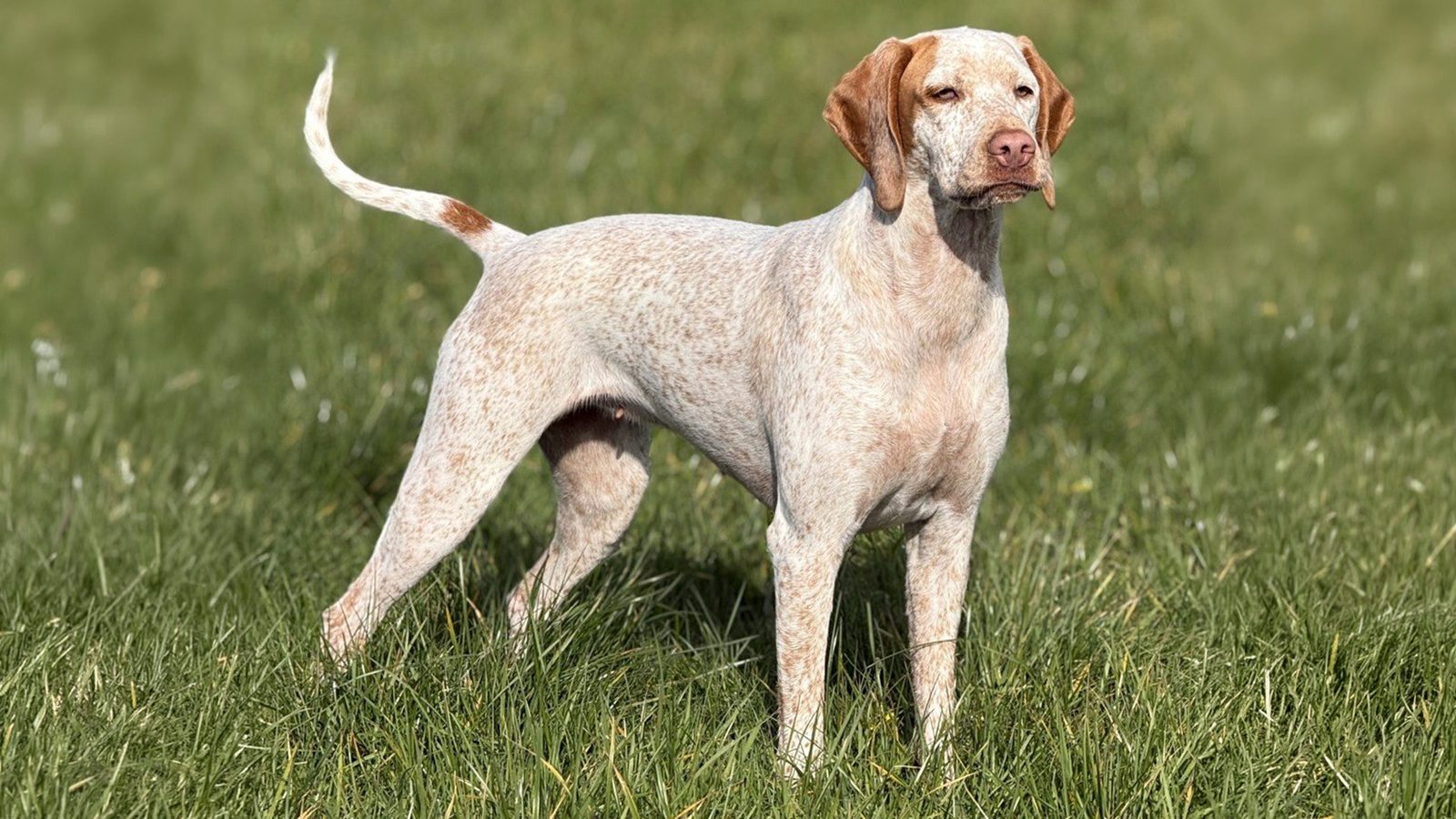 Braque du Bourbonnais, fawn. Credit: Fran Mitchell

Two French pointing breeds will be recognised by the Royal Kennel Club (RKC) from 1 October, taking the number of recognised pedigree breeds to 230. Both go on to the Imported Breed Register, which lets them be registered and bred in this country but keeps them out of the show ring and, for the moment, out of field trials.
What has the Royal Kennel Club recognised?
The Braque du Bourbonnais and the Epagneul Français were announced in separate notices on 24 August, each classified in the gundog group on the Imported Breed Register with effect from 1 October. A third breed outside the gundog group, the silken windhound, is recognised on the same date, and the Yakutian laika and miniature American shepherd were recognised in July.
Neither notice carries a quote from anyone at the RKC. Both run to three short paragraphs setting out the classification and the breed’s history.
Registered, but not yet in the ring
Recognition and exhibition are two separate steps. Both notices state that until an RKC interim breed standard has been published, the breed “is not eligible to compete at Royal Kennel Club licensed breed shows”.
The RKC’s imported breed register policy explains why. Recognition allows registration, but a breed “would not be eligible for exhibition until such time as an Interim Breed Standard is published”, because it is policy “to allow the breed to develop slowly before show participation is permitted”. The policy adds that going on to the register does not automatically lead to an interim standard, which the RKC may defer at its discretion.
No timetable has been published for either French breed, and the wait can be long. The small Munsterlander joined the imported breed register in 2005 and received its interim standard on 1 August this year, 21 years later.
Can they run in field trials?
Not automatically. The imported breed register policy lists working trials, obedience, agility, flyball, heelwork to music, rally and handling as open to a dog the moment it joins the register, then says plainly: “Competition in field trials is subject to approval by the Kennel Club Board.”
The field trial regulations set the same bar from the other side, requiring a dog to be registered on the Breed Register or to hold an Authority to Compete number. An imported register dog has neither.
The Working Gundog Certificate is a different matter. It is an assessment rather than a competition, and the RKC’s own handbook says it is open to all RKC pedigree registered dogs, crossbreeds and unregistered dogs alike.
What the two breeds do in the field
The Braque du Bourbonnais comes from the Bourbonnais region of central France and is recognised by the Fédération Cynologique Internationale (FCI) as a continental pointing dog of braque type. Its FCI standard gives the breed’s use simply as “Pointing Dog” and does not mention retrieving, although the British Braque du Bourbonnais Club describes it as a hunt, point and retrieve breed. Some are born without a tail. The RKC dates the breed to the 16th century and puts its decline after World War I; the FCI standard puts the crisis in the 1930s, when breeders selected hard for a faded lilac coat and a naturally short tail and nearly finished the breed off.
The Epagneul Français is a bigger animal, dogs standing 56cm to 61cm, which makes it one of the largest spaniels. Its FCI standard calls it an “excellent pointing dog” that “also has a talent for retrieving”, and the French breed club describes a methodical dog that hunts with a high head, retrieves naturally on land and in water with a soft mouth, and points game on the plain, in woodland and in marsh. The RKC traces it to the 14th century.
What happens next
Dogs of either breed can be registered with the RKC from 1 October. Neither can be entered at an RKC-licensed show until an interim breed standard is published, and no date has been set for that on either breed. Owners wanting to run one in a field trial will need a decision from the Kennel Club Board first. Neither breed currently has an RKC-registered breed club, although owner groups exist for both.
Frequently asked questions
When are the two breeds recognised?
From 1 October 2026, when both join the Royal Kennel Club’s Imported Breed Register in the gundog group. The announcements were made on 24 August.
Can a Braque du Bourbonnais be shown at a Royal Kennel Club show?
Not yet. Neither breed is eligible to compete at RKC licensed breed shows until an interim breed standard is published for it, and no date has been set. Challenge Certificates are a further step again: they are awarded in breed classes, which are open only to breeds that have moved on to the Breed Register.
Can the new breeds compete in field trials?
Only if the Kennel Club Board approves it. The imported breed register policy opens working trials, obedience, agility and several other disciplines to a dog immediately, but singles field trials out as requiring Board approval.
How many breeds does the Royal Kennel Club recognise?
230 from 1 October 2026, according to both announcements. That counts the Braque du Bourbonnais, the Epagneul Français and the silken windhound, all recognised on the same date.
Related Articles
Stormont bill would criminalise terrier work with no exemption
The Hunting with Dogs Bill creates a flat prohibition on terrier work, unlike the law in England, Wales or Scotland, and the committee's evidence window closed today
By News Desk | 28 August 2026

Firearms licensing not fit for purpose, says police watchdog
HMICFRS wants the 38 police licensing units replaced by a single national authority, and shooting organisations warn that some of its 23 recommendations could crash the system
By News Desk | 28 August 2026
Get the latest news delivered direct to your door
Subscribe to Shooting Times & Country
Discover the ultimate companion for fieldsports enthusiasts with Shooting Times & Country Magazine, the UK’s leading weekly publication that has been at the forefront of shooting culture since 1882. Subscribers gain access to expert tips, comprehensive gear reviews, seasonal advice and a vibrant community of like-minded shooters.
Save on shop price when you subscribe with weekly issues featuring in-depth articles on gundog training, exclusive member offers and access to the digital back issue library. A Shooting Times & Country subscription is more than a magazine, don’t just read about the countryside; immerse yourself in its most authoritative and engaging publication.