★ Your magazine. Your say. Complete our reader survey with a chance to win Jack Pyke kit worth £500! ★


Stormont bill would criminalise terrier work with no exemption
The Hunting with Dogs Bill creates a flat prohibition on terrier work, unlike the law in England, Wales or Scotland, and the committee's evidence window closed today
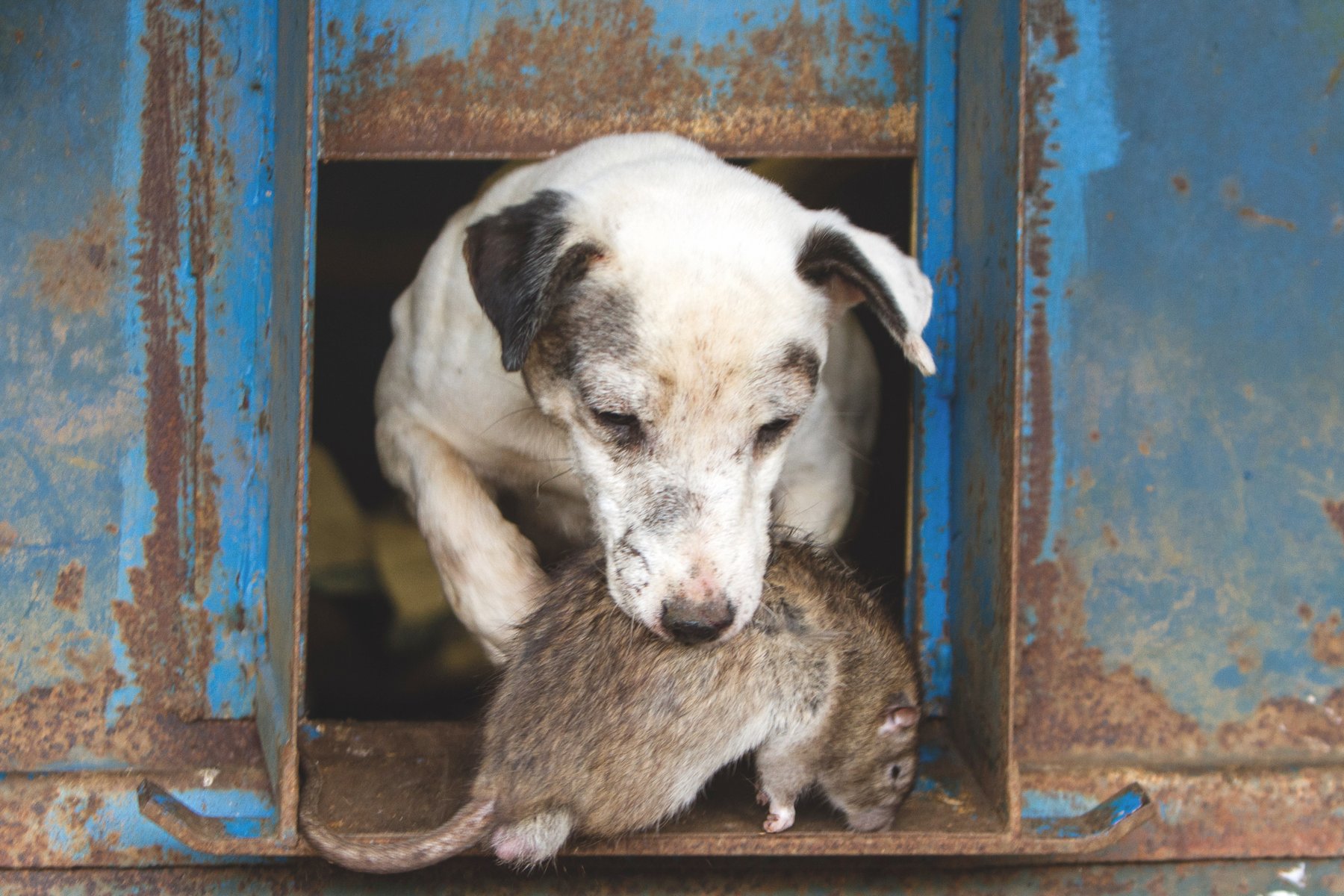 Ratting 2 nick ridley. Credit: Credit – Nick Ridley

A private member’s bill at the Northern Ireland Assembly would make terrier work a criminal offence carrying up to five years’ imprisonment, with no exemption of any kind for gamekeepers, farmers or pest controllers. The Agriculture, Environment and Rural Affairs (AERA) Committee’s call for evidence on the bill closed on 24 August.
What the bill actually says
The Hunting with Dogs Bill, brought by John Blair MLA and introduced on 27 April, inserts a new Part 3A into the Wildlife (Northern Ireland) Order 1985. Clause 4 inserts Article 23D:
“It is an offence to organise or participate in terrier work.” Terrier work is defined as “inducing one or more dogs to enter a hole in the ground, or an enclosed space, in order to flush out or otherwise force a wild mammal to leave the hole or enclosed space, or make it easier or quicker to dig a wild mammal out”.
The bill contains five exemptions, covering rats and mice, the management of wild mammals above ground, relieving the suffering of an injured animal, searching for a dead one, and training a dog to follow a scent. Every one is drafted to disapply Article 23B or Article 23C. Not one touches Article 23D.
That makes the prohibition absolute. Both the Hunting Act 2004 and the Hunting with Dogs (Scotland) Act 2023 retain below-ground provisions in some form. This bill does not.
The two-dog limit and what it leaves out
The above-ground exemption, Article 23F, is the one a keeper or farmer would need, and it is tightly drawn. The permitted purposes are preventing serious damage to livestock, livestock feed, crops, vegetables, fruit, growing timber or pasture; preventing the spread of disease; preserving human health; and preventing serious damage to the biological diversity of an area.
Game birds do not appear on that list. Neither does property, which the Hunting Act 2004 includes.
The exemption also requires that the activity “does not involve the use of more than two dogs”, that the landowner has given permission, and that the mammal “is shot dead as soon as reasonably possible”.
Countryside Alliance Ireland’s guidance to members, published in July, put the objection plainly: “Terrier work is a specialist, often irreplaceable tool for livestock protection, conservation, land management and predator control.” On the exemptions it said: “The permitted purposes fail to account for game birds, or other property as included in the Hunting Act 2004.” And on the cap: “The two dog limit in the exemptions in the Bill would mean that farmers and keepers would be unable to manage foxes with resulting harms to kept animals and wildlife.”
Where does the bill stand now?
Second Stage passed on 26 May by 60 votes to 15, the 15 all DUP and TUV members. That is a reversal: an earlier bill from the same member was defeated in December 2021 by 45 votes to 38, the arithmetic having changed with Sinn Fein’s position.
Penalties would be up to 12 months and a £20,000 fine summarily, or five years and a fine on indictment. The offences would commence six months after Royal Assent.
BASC has taken legal advice. Patsy McGlone MLA told the Assembly on 26 May that the association “has concerns about the implications of ‘searching for and pursuing’ and about the scope of criminal liability”.
Why hunting is lawful in Northern Ireland at all
Two provisions explain the position. Section 17 of the Hunting Act 2004 states that “this Act shall extend only to England and Wales”, so none of the 2004 offences apply in Northern Ireland. And section 53 of the Welfare of Animals Act (Northern Ireland) 2011 provides that nothing in that Act applies to “anything which occurs in the normal course of hunting or coursing any animal, not being a protected animal”, unless the animal is released injured or is hunted in an enclosed space with no reasonable chance of escape.
That is the gap the bill is designed to close, and it closes rather more than hunting.
Farmers and hunts sign a new land deal
On the same day the evidence window shut, the Ulster Farmers’ Union, Countryside Alliance Ireland and the Northern Ireland Masters of Hounds Association published a revised memorandum of understanding, signed on 19 August and effective from the 2027 hunting season.
For the first time it requires hunts to obtain annual written permission from the landowner, with routes agreed in advance. Consent “may be withdrawn at any time, including during a hunt”, and is field-specific. Hunts must move away if the pack comes within one field of livestock, take particular care around heavily in-lamb sheep, and repair damage within two weeks.
John McLenaghan, UFU president, said: “At the centre of the revised agreement is a clear recognition that landowners control their land. Hunts must comply with all instructions issued by landowners, and it is for each landowner to decide whether hunting activity is permitted on their property.” He added: “Members have raised valid concerns regarding hunting activity. We have listened to those concerns and acted.”
Gary McCartney, director of Countryside Alliance Ireland, said the memorandum “provides landowners with real assurance while allowing traditional rural activities to continue on a properly regulated footing”.
The timing is not accidental. A voluntary code strengthening landowner control, published on the closing day of the evidence window, is an argument that the sector can regulate itself.
What happens next
The AERA Committee now takes oral evidence and reports before Consideration Stage. Its chairman is Robbie Butler MLA, who has said his party is “broadly supportive of the principles underpinning the Hunting with Dogs Bill” but that the support is “qualified by the need for robust scrutiny and clear legal certainty”. Mr Blair himself sits on the committee scrutinising his bill.
For keepers and farmers in Northern Ireland, the practical question is what replaces terrier work in the denning season if Article 23D passes unamended. Nothing in the bill answers it.
Frequently asked questions
Would the bill ban terrier work outright?
Yes. Article 23D as drafted makes it an offence to organise or participate in terrier work, and none of the bill’s five exemptions applies to that article. There is no exemption for gamekeepers, farmers or professional pest controllers.
Does the bill affect shooting?
Not directly, but the above-ground exemption requires any flushed mammal to be “shot dead as soon as reasonably possible”, caps the activity at two dogs, and lists permitted purposes that do not include game birds. Fox control around a shoot would sit outside it.
Why is hunting still legal in Northern Ireland?
The Hunting Act 2004 extends only to England and Wales, and section 53 of the Welfare of Animals Act (Northern Ireland) 2011 disapplies that Act to anything occurring in the normal course of hunting a wild animal.
What are the penalties?
Up to 12 months’ imprisonment and a fine of up to £20,000 on summary conviction, or up to five years and a fine on conviction on indictment.
Related Articles

Royal Kennel Club recognises two French gundog breeds
The Braque du Bourbonnais and the Epagneul Français join the gundog group on 1 October, but neither can be shown or run in field trials yet
By News Desk | 28 August 2026
Firearms licensing not fit for purpose, says police watchdog
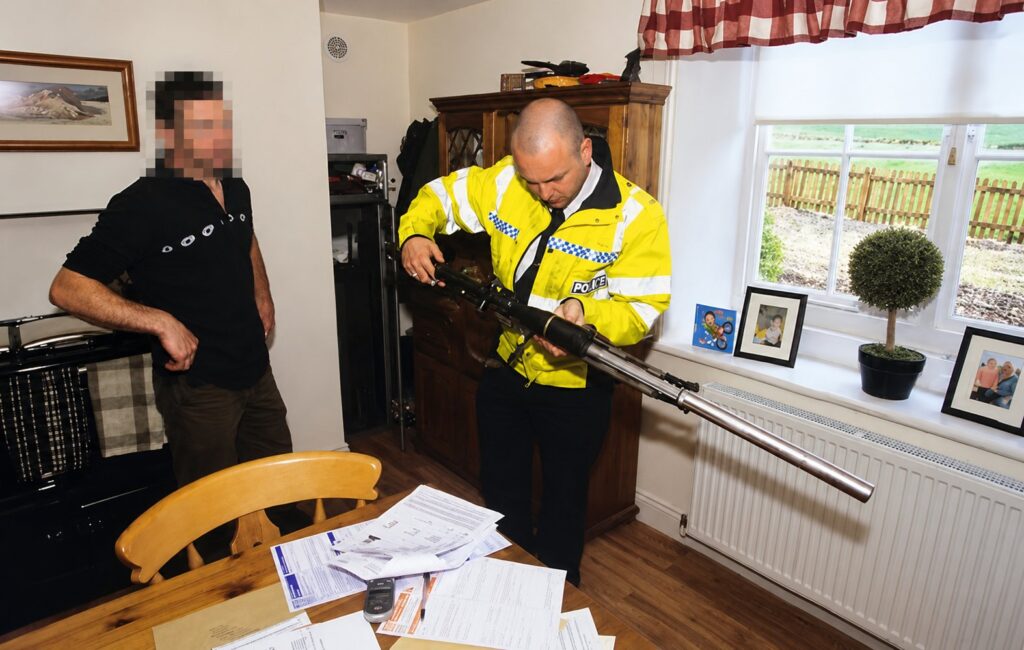
HMICFRS wants the 38 police licensing units replaced by a single national authority, and shooting organisations warn that some of its 23 recommendations could crash the system
By News Desk | 28 August 2026
Get the latest news delivered direct to your door
Subscribe to Shooting Times & Country
Discover the ultimate companion for fieldsports enthusiasts with Shooting Times & Country Magazine, the UK’s leading weekly publication that has been at the forefront of shooting culture since 1882. Subscribers gain access to expert tips, comprehensive gear reviews, seasonal advice and a vibrant community of like-minded shooters.
Save on shop price when you subscribe with weekly issues featuring in-depth articles on gundog training, exclusive member offers and access to the digital back issue library. A Shooting Times & Country subscription is more than a magazine, don’t just read about the countryside; immerse yourself in its most authoritative and engaging publication.