★ Your magazine. Your say. Complete our reader survey with a chance to win Jack Pyke kit worth £500! ★


Moorland Association questions Kielder lynx plan over deer
Twenty lynx could be released in north-west Northumberland from 2027, but the project has published no figure for what that would mean for local roe deer or the stalking that manages them
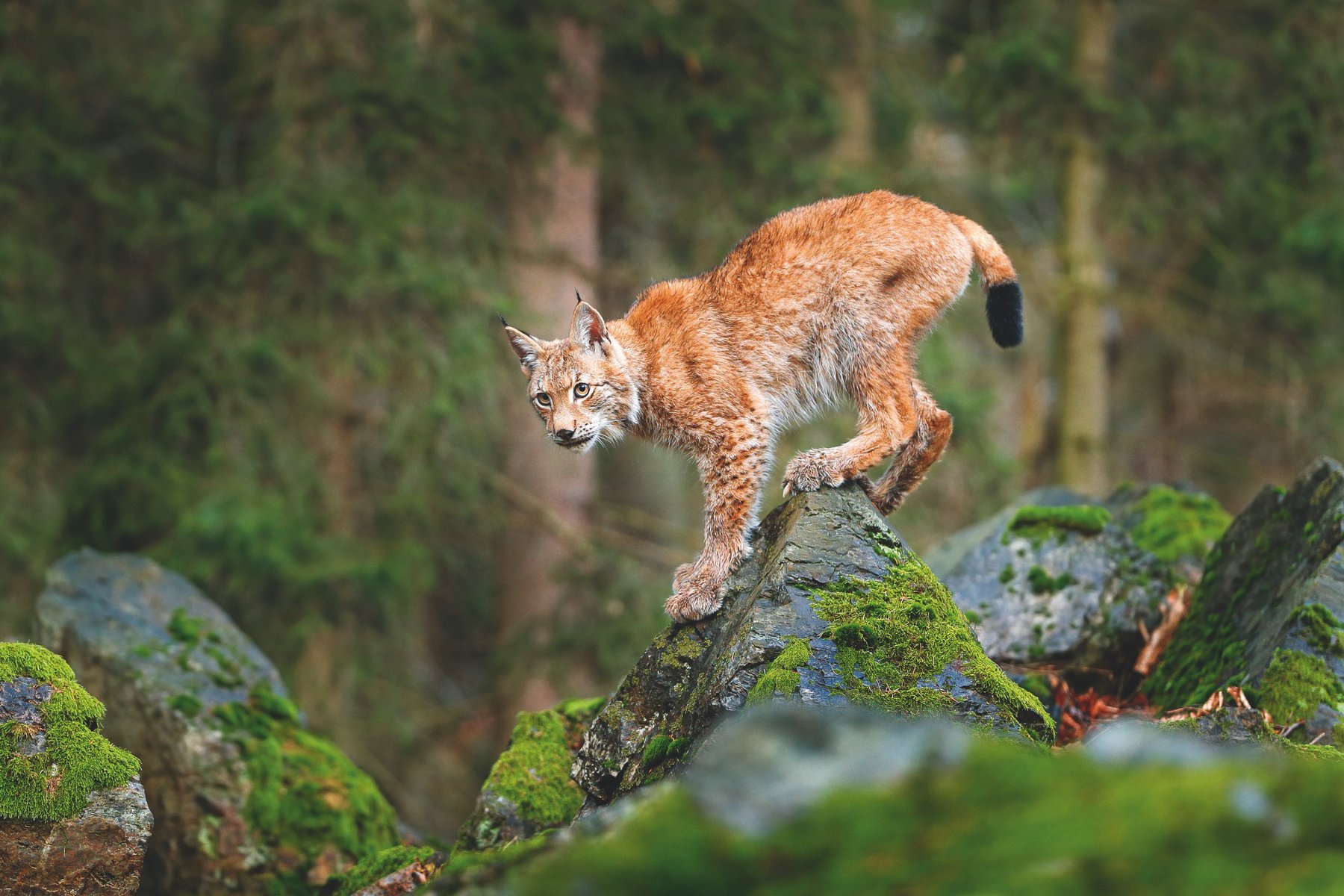 The project's own figure is about 50 deer per lynx per year. Credit: Ondrej Prosicky

A plan to release up to 20 Eurasian lynx in north-west Northumberland has been put back in front of land managers by the Moorland Association, which says the project has never published what 20 cats would take from the local roe deer population. A licence application to Natural England is expected before the end of the year.
What is being proposed?
The Missing Lynx Project is led by the Lifescape Project with Northumberland Wildlife Trust and The Wildlife Trusts. Its own information sheet, issued this summer, says research has shown “a healthy population would grow from 20 lynx released over five years in north-west Northumberland”, and that “a potential application may occur in late 2026”.
The case rests on modelling published in the Journal of Environmental Management in 2025, led by Joe Premier, which found a release in Kielder Forest could produce a population of 50 to 60 independent animals. The paper identified Aberdeenshire, Galloway and Kielder as the sites with robust prospects.
The deer arithmetic
The project’s own ecology page is clear on diet. Roe deer and other ungulates make up 72% to 100% of a lynx’s food in reintroduced European populations, and “each lynx kills a large prey (like a deer) about once a week, which is around 50 deer per year”.
Twenty lynx, at that rate, is a thousand deer a year once the population is established. What the project has not published anywhere is a roe deer estimate for the release area, a figure for what its animals would take from it, or any assessment of the deer management and stalking that currently do that work. It says it is “exploring interest in setting up a game management focus group”, where three farming groups, a forestry group and a business group already exist.
That gap is the Moorland Association’s central point, and it checks out.
What the local authority decided
Consent is where the last attempt failed. On 10 July, Northumberland County Council voted 44 to seven, with five abstentions, to oppose lynx reintroduction, and resolved to write to the environment secretary and to Natural England.
Councillor Steven Bridgett, who moved the motion, said: “The supporters of the project often speak as though Northumberland is some vast, untouched wilderness. It is not. It is a working landscape home to sheep farmers, gamekeepers and tourism businesses.”
The project has consulted widely. Almost 10,000 people visited a touring exhibition over 103 days at 15 venues, 1,700 questionnaires were returned, 1,073 of them from people living in the project region, and it reports that 72% of people in the project area support a potential reintroduction. A council vote of 44 to seven sits awkwardly beside that number, and it is the sort of contrast a licensing decision turns on.
Where the shooting and farming bodies stand
The British Deer Society set out its position in January 2025 and has not moved from it: the society “is unable to support the reintroduction of large predators to the UK for the purpose of managing deer numbers, due to concerns over deer welfare, human safety, and the practicality of natural predation as a population control method”.
The Game and Wildlife Conservation Trust has made a technical argument about scale, noting that the International Union for Conservation of Nature considers a lynx population would need around 250 animals to survive a century without intervention, and that only the Highlands of Scotland could support a population of that size.
The National Sheep Association has been the sharpest critic. Its chief executive, Phil Stocker, wrote to the environment secretary in September 2025 saying the project had declined invitations to farmer meetings and “opted to organise their own small, hand-picked groups of farmers”, and that no plan had been published for who would finance compensation for livestock losses or who would be responsible for removing a rogue animal.
Seven farmers travelled with the project to Germany and Switzerland to meet farmers living alongside lynx. One of them, Lauren Harrison, a sheep farmer from the Hadrian’s Wall area, said: “I saw in Europe that it’s possible to live alongside lynx.”
The National Farmers’ Union, which held member webinars for Northumberland and Cumbria in late July and early August, says farmers and land managers “must not be expected to bear the burden of risk, management, and cost of the reintroduction”.
What the law requires
Lynx is not native to Britain in any current sense, so a release needs a licence under section 14 of the Wildlife and Countryside Act 1981. Guidance is explicit that this covers species previously native but no longer present, and that releasing into an enclosure does not automatically take the animal outside the controls.
The precedent is the same forest. In November 2018 Michael Gove personally refused the Lynx UK Trust application for Kielder, saying Natural England had concluded it did not meet the standards in the IUCN guidelines and that “the proposal did not demonstrate sufficient local support for the project”. He added that the lack of local buy-in also failed to show how the risk of persecution had been managed down to an acceptable level.
Defra ministers have said repeatedly this year that no decision has been taken and that “large predators present some significant challenges and impacts that would need to be overcome”. In Scotland, where the project’s own modelling predicts animals would spread, First Minister John Swinney told NFU Scotland in February 2025 that his government “will not be reintroducing lynx, or indeed any other large carnivorous species, in Scotland”.
What happens next
The project says it will apply only once it has a plan “collaboratively designed with local people”. Its own timetable points to a licence application before the end of 2026, with any release no earlier than 2027. The England Species Reintroductions Taskforce next meets on 24 September and has issued no lynx-specific advice.
Stalkers and syndicates in the Kielder catchment have until that application lands to put the deer question on the record.
Frequently asked questions
How many deer would 20 lynx take?
The project’s own figure is about 50 large prey animals per lynx per year, which is roughly 1,000 a year for 20 established animals. It has not published a roe deer population estimate for the release area, so the proportion that represents is unknown.
Is lynx reintroduction legal in England?
Only under licence. Section 14 of the Wildlife and Countryside Act 1981 makes it an offence to release an animal not ordinarily resident in Great Britain in a wild state, and government guidance confirms this includes species that were previously native. Penalties run to two years on indictment.
Has this been tried before at Kielder?
Yes. The Lynx UK Trust applied for the same forest and was refused by the environment secretary in November 2018, principally because the application did not demonstrate sufficient local support.
Would lynx cross into Scotland?
The project’s own modelling anticipates a population extending into southern Scotland. The Scottish Government has said it has no plans to reintroduce lynx, and in 2017 agreed with Natural England that Scottish views would be taken into account on any cross-border application.
Related Articles
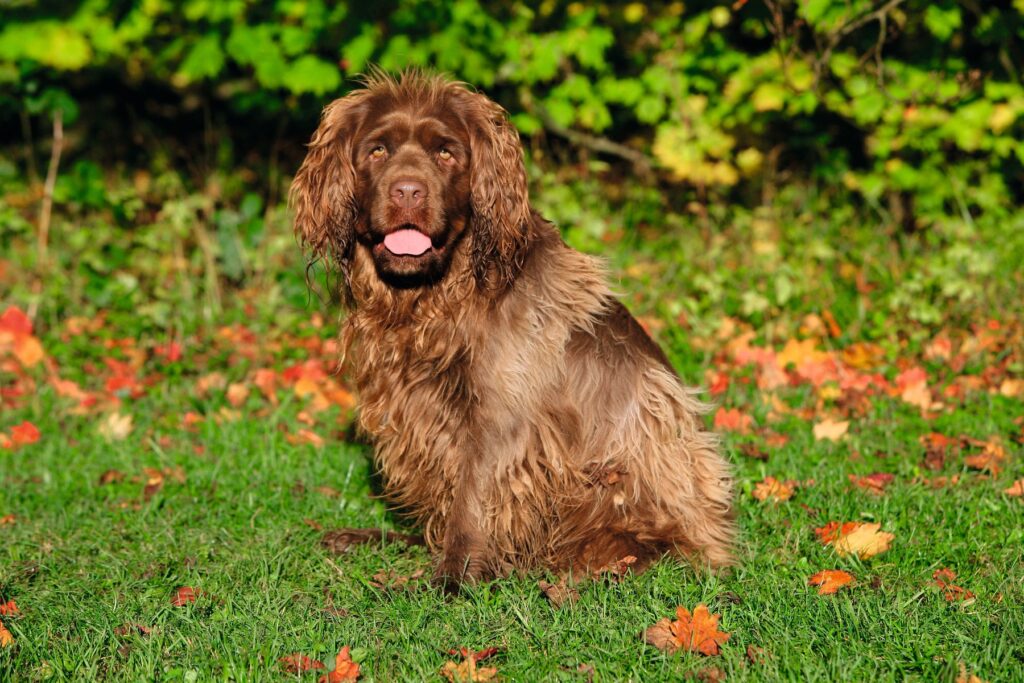
Sussex spaniel DNA project aims to save rarest native gundog
Only 15 puppies were registered last year, and scientists will now map DNA from the whole accessible breed to build a rescue strategy
By News Desk | 26 August 2026
Game dealers warn shoots to book partridges in before 1 September
Processors say more partridges have been put down than the trade can take, and they want accurate numbers and dates from estates now
By News Desk | 25 August 2026
Get the latest news delivered direct to your door
Subscribe to Shooting Times & Country
Discover the ultimate companion for fieldsports enthusiasts with Shooting Times & Country Magazine, the UK’s leading weekly publication that has been at the forefront of shooting culture since 1882. Subscribers gain access to expert tips, comprehensive gear reviews, seasonal advice and a vibrant community of like-minded shooters.
Save on shop price when you subscribe with weekly issues featuring in-depth articles on gundog training, exclusive member offers and access to the digital back issue library. A Shooting Times & Country subscription is more than a magazine, don’t just read about the countryside; immerse yourself in its most authoritative and engaging publication.