★ Your magazine. Your say. Complete our reader survey with a chance to win Jack Pyke kit worth £500! ★

Pigeon flightline shooting: 78 birds when the bean field was ruled out
A week’s reconnaissance had found the flightline over the beans. Then a public footpath, a pheasant pen and a row of houses ruled the field out, and Dan Thor, best known for his pigeon shooting, shot the line like driven birds from a willow ditch instead


Photographs: Matt Kidd
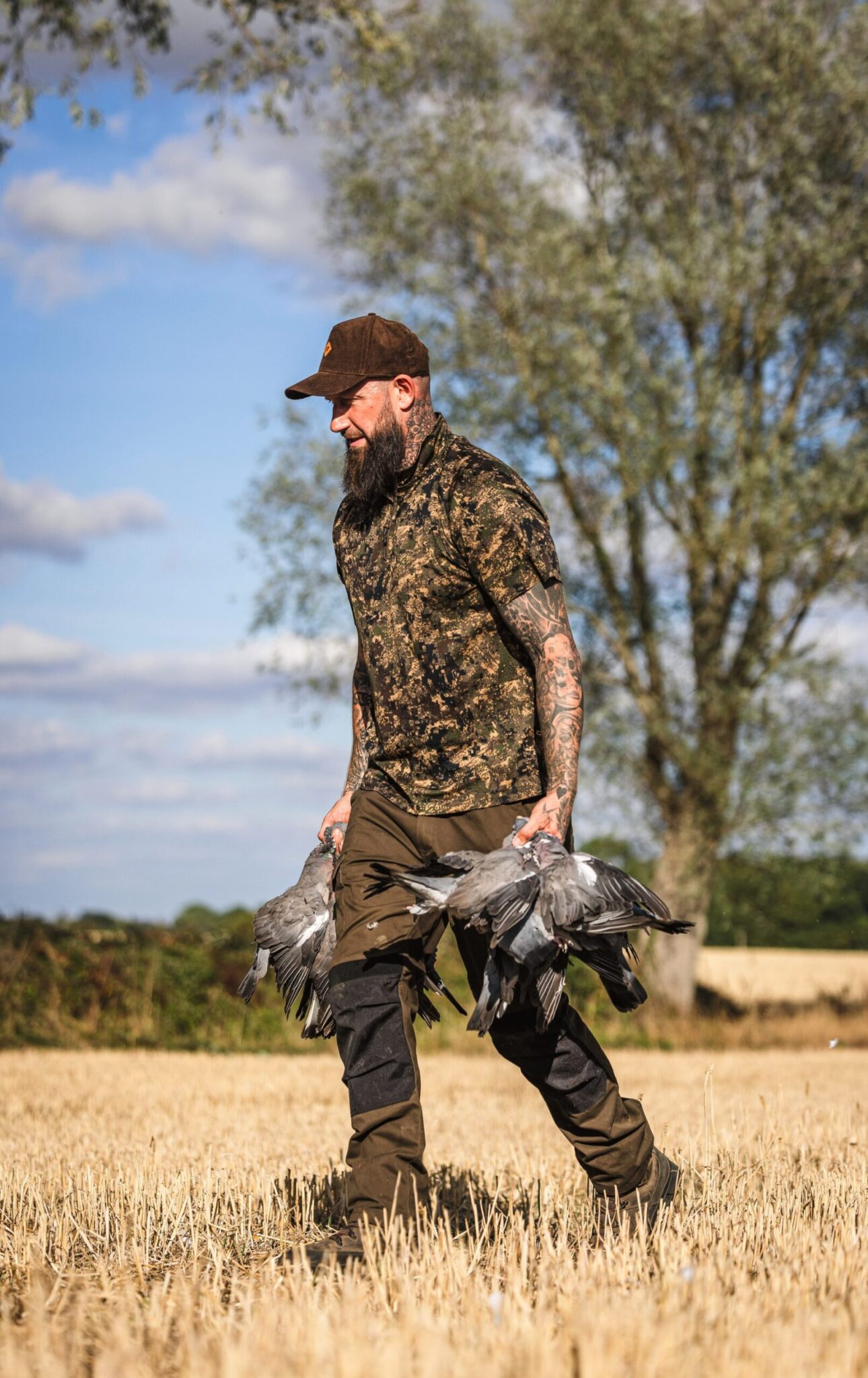
Dan Thor is best known for his pigeon shooting, and for the crop-protection work that goes with it across a large block of farmland. With a rare gap in the diary, I managed to spend a day under a flightline with him and his friend James Elliott.
Dan has spent most of his life in a hide, or planning his next outing in one. He started going out with his father as a boy, picking up the details that decide whether a day works long before he was old enough to carry the responsibility himself. “Dad taught me how to set the pattern for the wind and judge when the pigeons were likely to arrive,” he says. “Reconnaissance is the most important part because you can have all the right kit, but it means nothing if you are in the wrong place.” It was an education in why the birds were there and what the farmer needed from the person controlling them, rather than in measuring success by the final number on the clicker.
Dan now has permission across a patchwork of adjoining farms on the Hertfordshire and Essex border. He first puts the total at 10,000 acres, remembers several more pieces of ground as we talk and settles on a figure nearer 20,000 across roughly 10 farms. Most of it is arable, with grassland, livestock and some lucerne adding further crop-protection and pest-control work. The family farm we were visiting runs to around 2,000 acres. “In a really good year I could be out every week and shoot between 50 and 100 pigeons each time,” he explains. “The past couple of years have been much quieter. The lucerne has produced my best bags this year, usually between 40 and 70, and I have only shot it four times.”
Numbers across the permission – and much of East Anglia – have fallen over the past few years, and Dan has learned not to mistake acreage for opportunity. Cropping on the farm has changed: where oilseed rape was once commonplace it is now infrequent and grown on a smaller scale. To Dan’s delight, rape returns to this part of the permission this autumn, bringing a fresh crop-protection job if the pigeons find it, but nothing is guaranteed.
Expanding towns, new housing, busier footpaths and changing land use have shifted established flightlines too, while heavier shooting pressure has made experienced pigeons warier still. Dan remembers when each farm tended to have its one regular pigeon shooter; several keen Shots might now cover the same ground. Finding the birds is only the first job. Working out how to reach them without creating a problem for the farm or its ever-growing neighbours has become every bit as important.
Young children have cut the hours Dan can give to reconnaissance, but his work as a tree surgeon takes him through the same countryside most days. That regular journey lets him watch numbers ebb and flow and judge whether a movement is becoming dependable, which is exactly how our chance to share a hide came about.
Second choice: a safe stand under the flightline
Dan’s commute runs through the farm where he first spotted pigeons feeding on the standing beans. He would not force an opportunity before it could be managed properly, because going into the crop risked knocking pods from the plants and trampling more while picking up birds than the exercise might save. Once the combine had been through, spilled feed kept drawing them in from the surrounding area. “I had watched them crossing for a good week and the numbers looked strong,” he says. “If we could get on the beans, I thought a bag of more than 200 was not out of the question.”
The beans were going for cattle feed and neighbouring ground was due to carry oilseed rape, so keeping pressure on the local pigeon population remained important to the farm. Google Maps suggested that some birds were travelling three or four miles to reach the field. The ideal would have been to build the hide on the bean field and set the pattern where the birds already wanted to feed. Yet houses, roads, footpaths, livestock and people sometimes force you to give up the best spot.
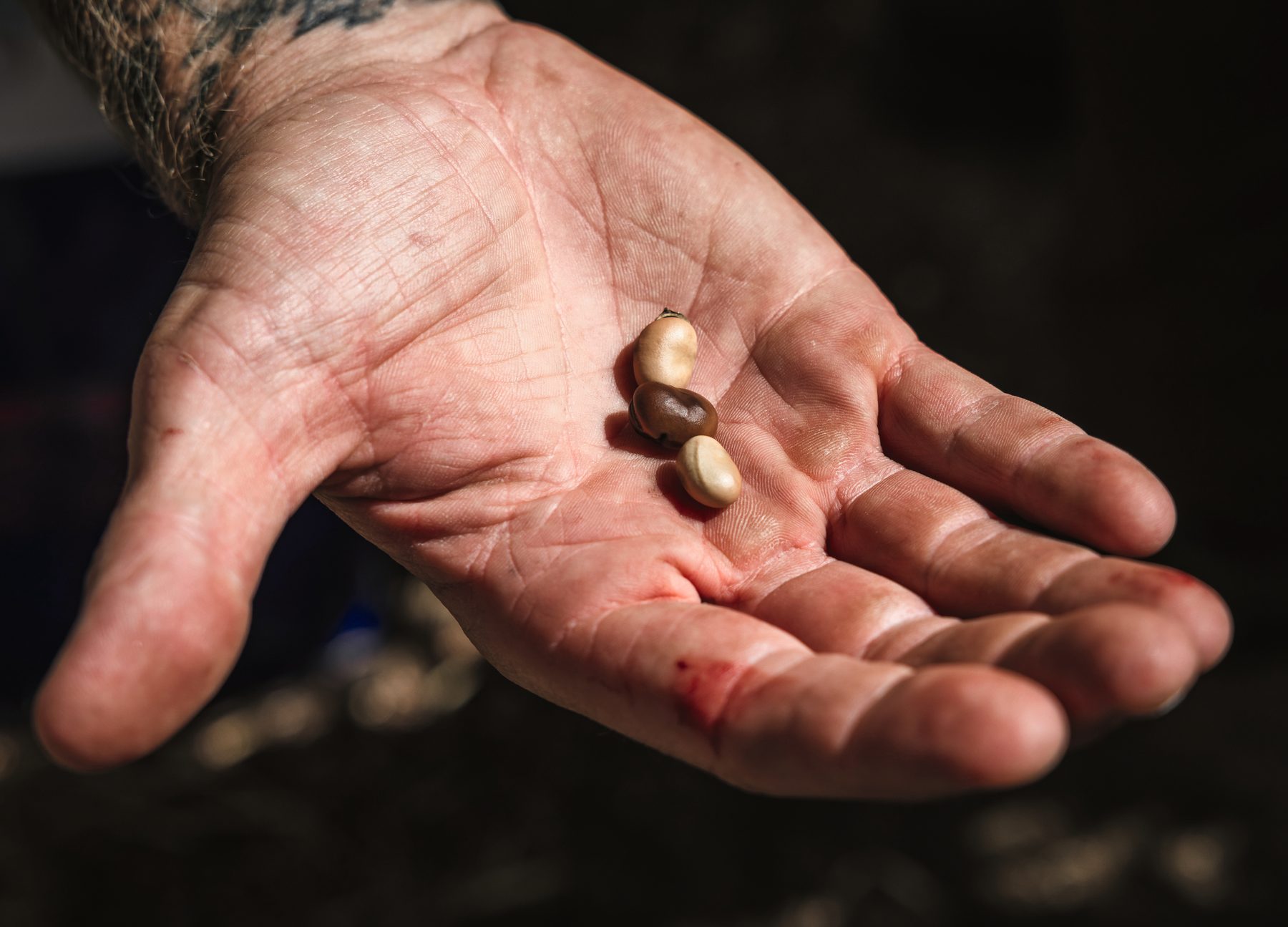
“We had permission to shoot the bean field, but the footpath put me off,” Dan says. “Even if every shot was taken safely away from it, which it would have been, somebody walking behind us might think differently and alert the police. We used to put ‘shooting in progress’ signs out but people just ignored them.” There was more to weigh than the footpath: a pheasant pen occupied part of the wood on the edge of the field, and a row of terraced houses stood parallel to the bottom edge. Dan had notified the police that crop-protection shooting would be taking place, but neither that nor the promise of a bigger bag justified troubling walkers or disturbing the pheasants in the pen. We would try instead to intercept the flight from the wheat stubble.
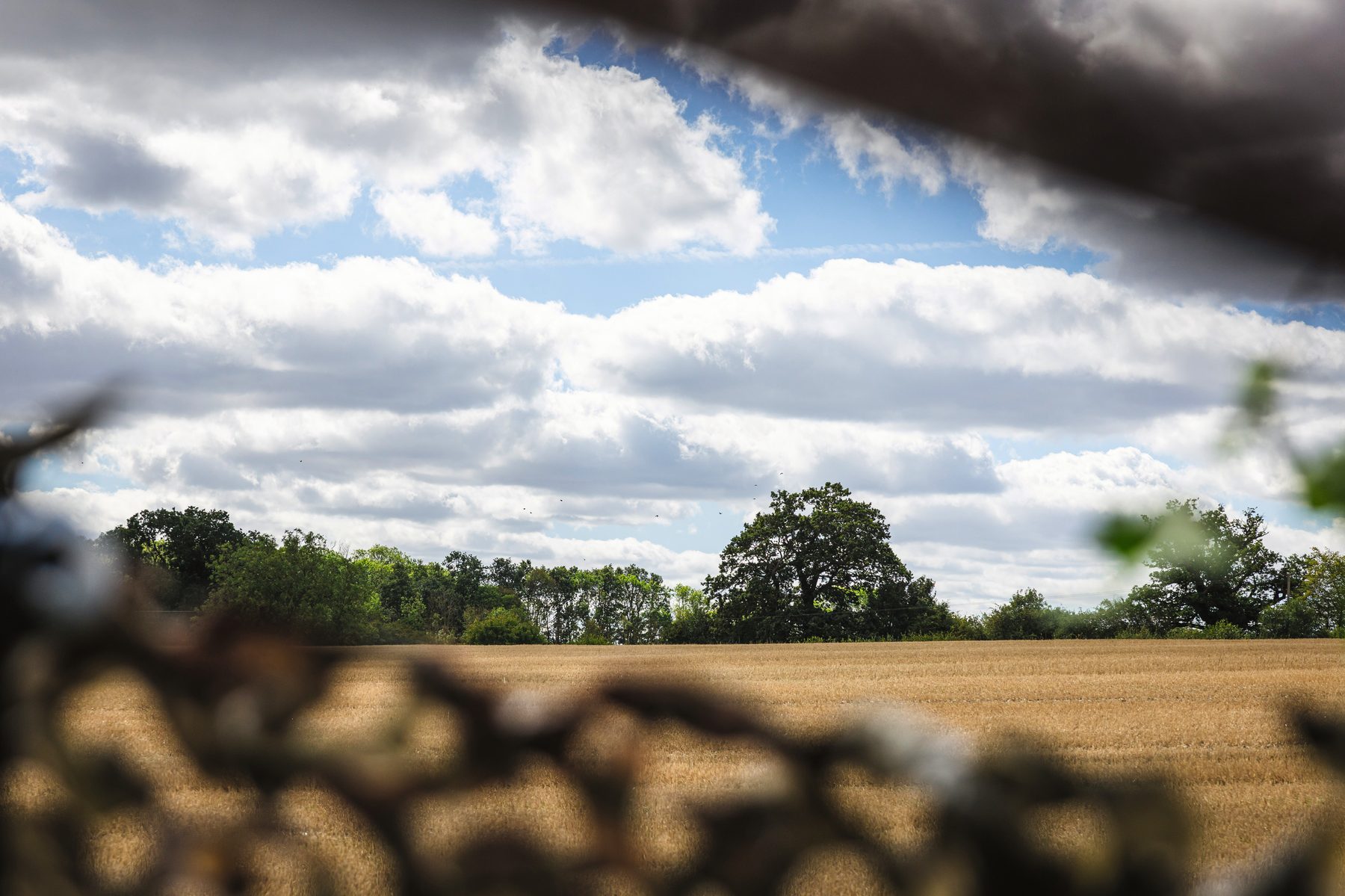
That second option was a ditch with a handful of mature willows dividing a field of 10 acres from another of 14 acres. At one end stood a belt of tall poplars, at the other a small plantation around a pond. A cafe and farm shop lay some way off to our right – no chance of falling pellets, but well within earshot – so considerate arcs of fire would be forward and left. The centre of the flightline would pass directly above the ditch, and there were three positions from which we could cover different sections if it shifted through the day.
Working back to nothing: when the pigeons refused the decoys
The morning brought bright sunshine and barely 8mph of wind – exactly what Dan had feared. Dan, James and I watched from the vehicles in a corner of the field while pigeons crossed through the willows. The line was already spreading the full width of the poplar belt to beyond the pond, an arc of easily 300m.
After a good deal of watching and weighing the options, we agreed to set up in the shade of a large willow. Dan put up the hide poles wide enough to conceal himself, James and me, several cameras, three guns and the tea-making kit that James rightly considered essential. A camouflage umbrella made a roof against the sun, which was also badly placed but would move round as the day wore on, and hawthorn cut from the hedgeline was stuck into the netting to soften the edges of the hide.
Two rotaries went out to the right and around 20 Enforcer decoys formed a pattern in front and to the left. “We might as well see whether we can bring anything in, then work back to nothing if it does not,” Dan said. The first arrivals gave an emphatic answer. Pigeons came straight at us, reached the outer edge of the pattern and veered off to either side as though repelled by it.
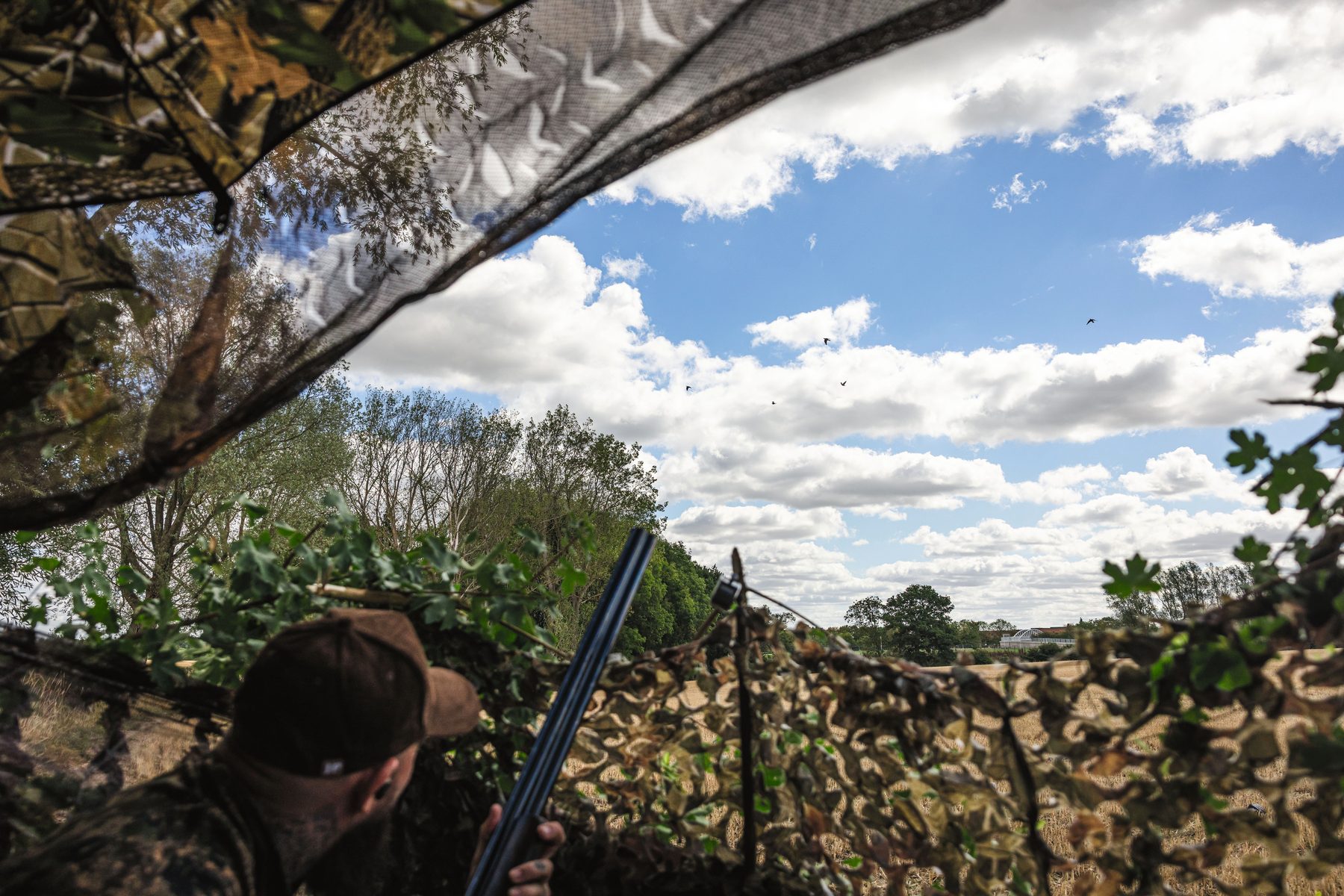
Plenty of pigeons passed without hesitation over our parked vehicles while we set up, yet the rotaries seemed to act as warning beacons. Dan gave them around 15 minutes before bringing them in, suspecting that birds under regular shooting pressure might distrust the movement. The plastic decoys stayed out for a further half-hour, but still the line divided around us. Their surfaces looked shiny under the hard sun. Only two of many birds gave Dan a shot and neither tried to decoy; one fell to his second barrel and the other to his first.
“When you can see that many and do nothing to stop them, it drives you mad,” Dan said. “They are totally fixed on the beans. We will never pull them off the beans to the decoys, so our best chance is to split up and shoot whatever comes within range like driven birds.”
We took the plastic decoys in and Dan pushed roughly 100m to our right and tucked himself into the hedge, while James and I kept our comfortable seats under the willow. As a right-hander, I would take anything to the left and James anything to the right, and we would take turns on whatever came through the middle.
The response was almost immediate. Without the pattern beneath them, pigeons began crossing in a direct line to the beans, and by 1pm the movement had built into regular droves. A bag began to grow, but the lack of wind and the shots from our separate positions warned later birds to spread wider and climb higher. It lacked the reward of pigeons pitching into a well-set pattern, but every bird in the bag was earned.
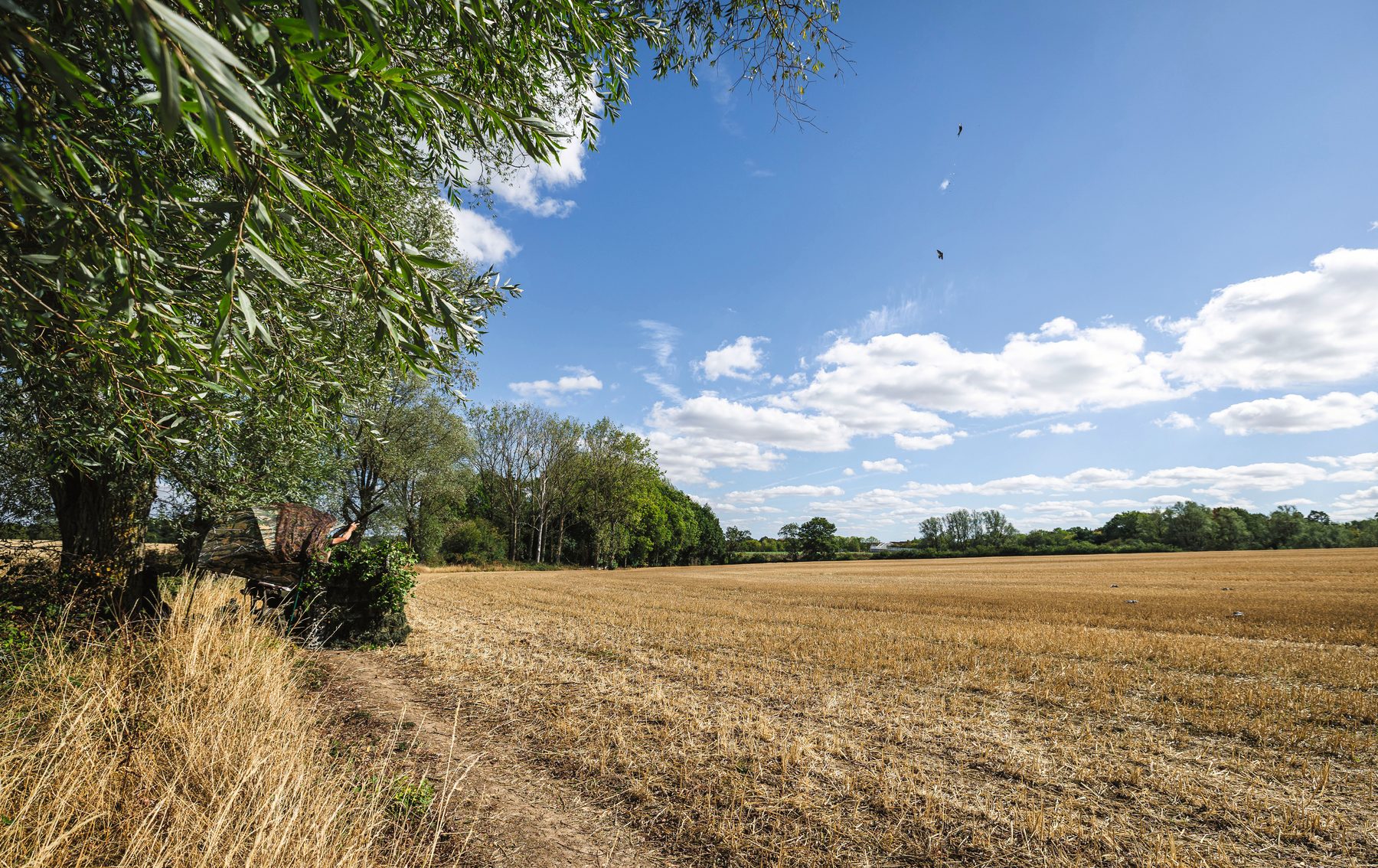
Because Dan intended to pass any pigeons from our day to his falconry contact, we all used a mix of steel loads from Lyalvale Express. They took a little getting used to for James and me, but all of us folded several rangey pigeons out to as far as 60 yards with real conviction, which rather suggests it was our placement, not the payload, that could be blamed for any misses.
James was a valuable companion in the hide. He shared opportunities and stories generously, and produced cups of tea with impressive regularity, usually prompting another flurry just as things went quiet. There was no shortage of missed birds from any of us, nor of laughter when a seemingly straightforward one escaped moments after something considerably harder had folded.
By 2.30pm the line had spread as far as the eye could see and many pigeons were starting to head home. After another mug of tea and a share of James’s collection of sweet and savoury snacks, we decided to split up further. James took his seat and tucked himself in at the base of the last willow, some 75m to the left of the hide. When I missed a pigeon in front and it jinked towards Dan, my eye was wiped. In good humour, that was now happening on my left too.
The bag: 78 hard-won pigeons from a testing line
We finished at around 4.30pm with 78 pigeons accounted for, though between us we reckoned we had watched more than 2,000 cross the surrounding countryside. It was well short of the 200 Dan believed the bean field might have given, but very few had been cheaply won. “They were tough birds and we should probably have had more, but you cannot hit them all,” Dan says. “Most were challenging birds from 30 yards out to 50 or 60. It was not the biggest bag, but it tested us and we all came away very happy.” The figure mattered less than having secured a worthwhile result from a position chosen around safety, public access and the pheasants in the neighbouring wood – the order any keeper or farmer would recognise.
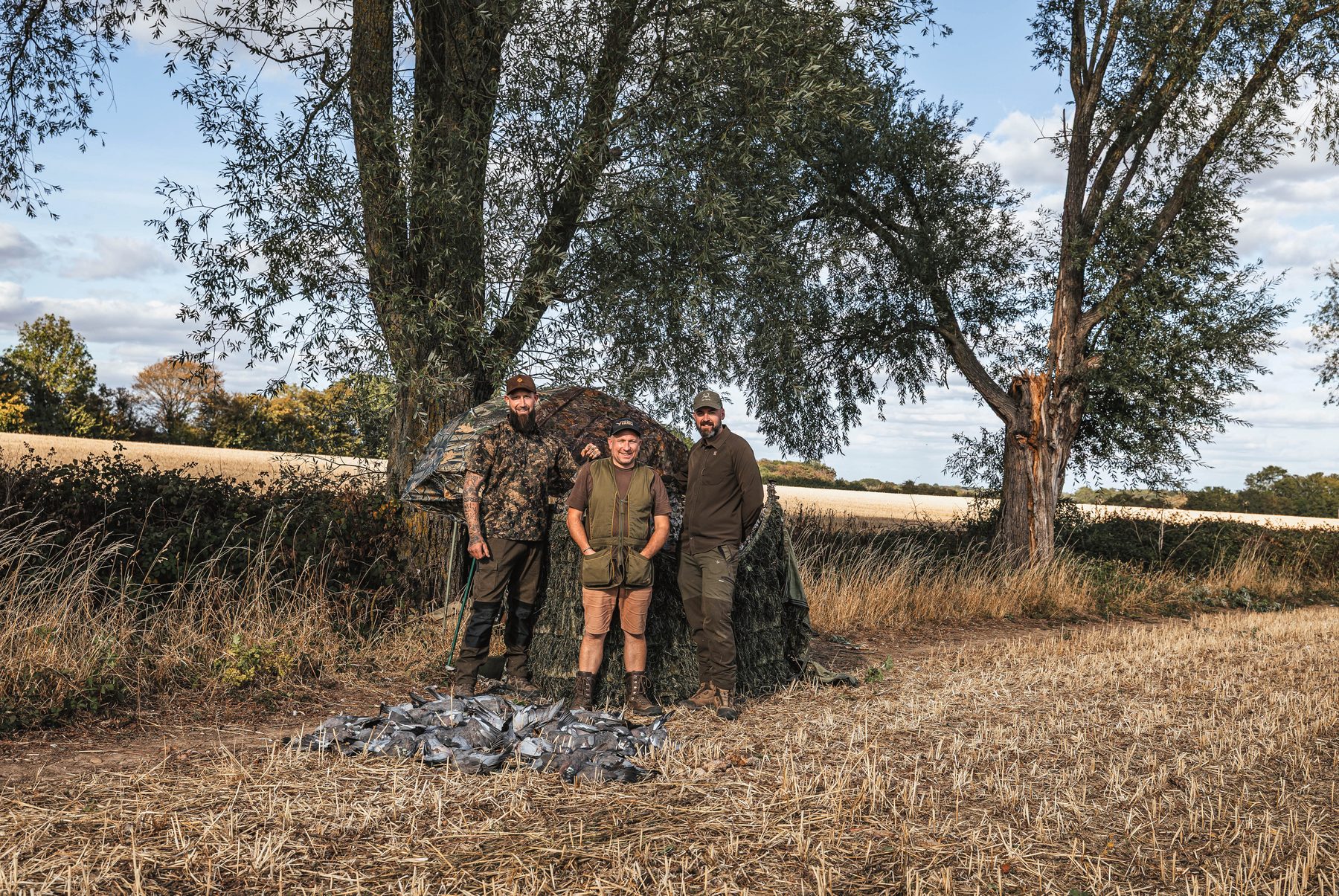
“Knowing what I know now, I would have started with three hides covering the line straight away,” Dan reflects. “That would offer a better chance of meeting birds that had no reason to alter course. The bean stubble would remain the first choice only if the pheasants were no longer in the wood and every concern around the footpath, houses and public activity could be resolved safely.”
It was not the decoying day any of us had pictured. Instead, the afternoon called for changes of position, sound judgement of range, speed and timing, and committed shooting at wild birds. As we packed away, all three of us agreed that, for testing shooting, we would take an afternoon like it over most driven pheasant or partridge days.
Frequently asked questions
Why do pigeons sometimes refuse decoys?
On this day the pigeons were fixed on a bean stubble and, under shooting pressure, veered away from the pattern. The rotaries seemed to act as warning beacons and the plastic decoys looked shiny under a hard sun, so Dan brought them in and shot the birds as they passed.
What is flightline shooting?
Instead of pulling pigeons down to a decoy pattern, the Guns spread out beneath the route the birds take between roost and feed and shoot them as they pass, much as they would driven birds. The shots are usually harder, with the birds higher and wider.
What should you weigh up when choosing where to set up for crop protection?
Public footpaths, nearby houses, livestock, pheasant pens and people all count, as well as where the pigeons are feeding. Dan moved off the bean field he had permission to shoot because of a footpath, terraced houses and a pheasant pen, and picked a position with safe arcs of fire forward and left.
About the author
Matt Kidd
Managing editor of Sporting Gun since 2025, Matt succeeded Paul Austin and runs the magazine alongside a monthly guest editor, a chair filled recently by Andy Crow, George Digweed, Nathan Hales, Vinnie Jones, Jonny Carter and Ben Randall.
 Closes 15 JanuaryWorth £129.90Win a pair of tickets to the British Shooting Show 2027Enter nowFree to enter
Related Articles

The golden eagle that led a stalker to his stag
Three times a golden eagle flew at Steve Connolly and circled the same patch of long grass on a west-coast Highland cull. Writing in Sporting Gun, he describes what lay beneath it, the bird that waite...
By News Desk | 7 October 2026

Stoney Creek Fast Hunt Ascent review: a featherweight shirt and trousers for summer stalking
Keith Edmunds puts Stoney Creek's featherweight Fast Hunt Ascent shirt and trousers through a heatwave summer of roebuck stalking, and finds an outfit that could have been purpose-built for it
By Keith Edmunds | 7 October 2026
Get the latest news delivered direct to your door
Subscribe to Shooting Times & Country
Discover the ultimate companion for fieldsports enthusiasts with Shooting Times & Country Magazine, the UK’s leading weekly publication that has been at the forefront of shooting culture since 1882. Subscribers gain access to expert tips, comprehensive gear reviews, seasonal advice and a vibrant community of like-minded shooters.
Save on shop price when you subscribe with weekly issues featuring in-depth articles on gundog training, exclusive member offers and access to the digital back issue library. A Shooting Times & Country subscription is more than a magazine, don’t just read about the countryside; immerse yourself in its most authoritative and engaging publication.
 New competitionWin a pair of tickets to the British Shooting Show 2027Worth £129.90Closes 15 JanuaryEnter now ›