★ Win four pegs on a Kent simulated game day with JBD Sporting worth £1,000! Click to enter ★


West Mercia drops Section 1 shotgun restrictions
A firm but constructive challenge by shooting representatives, paired with a police force willing to listen, has resulted in a victory for Section 1 shotgun users.
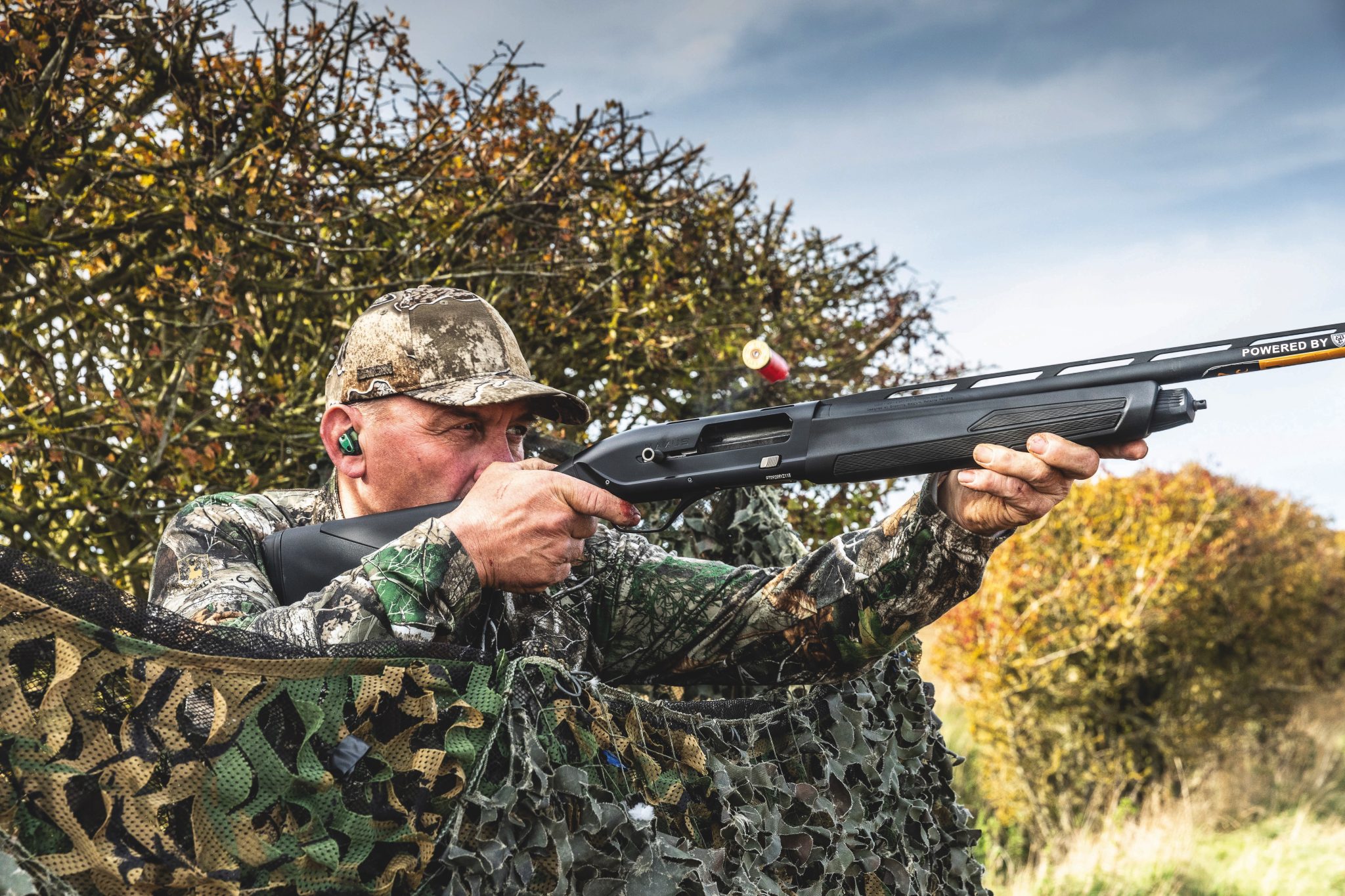 Geoff Garrod with a five-shot Browning Maxus II. Credit: Richard Faulks.

Section 1 shotgun policy sparks dispute
An intervention by BASC and the National Gamekeepers’ Organisation has restored the rights of gamekeepers, farmers and pest controllers in the West Mercia Police area to use high-capacity shotguns for vermin control. The force that reversed course has been applauded for the way it responded.
The dispute centred on shotguns capable of holding more than two cartridges, which are classified under law as Section 1 firearms. Unlike an ordinary shotgun, a Section 1 firearm requires its owner to hold a firearms certificate and demonstrate a good reason for having it. That good reason is often self-evident for those working the land. Gamekeeper Geoff Garrod explained: “A five-shot, to me, is vital. Squirrel draying, for instance: when someone’s poking a dray and three squirrels come out, you’d be very lucky if you killed all three with three shots. But you might kill a couple and with those extra two shots you might kill that third one. If you had to load an auto, an over-and-under or a side-by-side, by the time you’ve got the cartridges out, cartridges in, shut the gun and made it ready, the third squirrel’s disappeared into a hole in a tree not to be seen again that day.”
West Mercia’s licensing team, however, had begun taking a different view. In February, Chief Inspector Andy Wortley, who leads the firearms licensing operation, stated that the force had reviewed its approach to certain categories of firearm. “Higher-capacity, multi-shot Section 1 shotguns will not be routinely authorised for vermin or avian pest control,” he wrote. “These activities can be equally achieved through the use of Section 2 shotguns. Our aim is always to ensure that authorisation reflects genuine need rather than preference, while maintaining the safety of the public as our foremost priority.”
Licence holders had received letters making the position plain: “Please be assured that this is not a decision specific to you. We are applying the same criteria to all new grant and renewal applications where Section 1 shotguns are involved.”
.
Shooting organisations intervene
When members began approaching BASC and the NGO for support, the two organisations looked carefully at the force’s position and reached the same conclusion. Alan Barrell, firearms licensing liaison officer for the NGO, said the force had taken the view that Section 1 shotguns were more dangerous if they got into the wrong hands and had therefore decided not to grant them. “It was an honest belief and a fair judgement,” he said, “but it was wrong in law.” The statutory guidance governing firearms licensing is unambiguous: every application must be considered on its own merits and a force cannot apply a default position across the board.
BASC and the NGO took the matter to Superintendent Adrian Davis of the College of Policing’s National Firearms and Explosives Licensing Working Group, the national coordinator for firearms licensing policy, who convened a meeting of all parties. Rory O’Loughlin of BASC made the legal case; Mr Barrell made the practical one. Both pointed out that a default position applied to every application was, by definition, not a case-by-case approach.

.
Force reverses position
The organisations might have expected a prolonged dispute. Instead, West Mercia engaged without delay, talking through the issues openly and agreeing next steps. The force consulted its legal team and spoke to other forces and, in light of that advice, reversed its stance. CI Wortley told Shooting Times: “We concluded that aspects of our approach in relation to high-capacity Section 1 shotguns were not necessarily in the spirit of the statutory guidance and we have therefore revised our position with the benefit of that legal advice.”
He was also keen to explain what had originally prompted the closer scrutiny. “I understand the frustration but if people knew some of the case specifics, they’d probably have a different opinion. We’re certainly not in the business of upsetting people for the sake of it, but we’ve got to make sure that public safety is never compromised. Ultimately, this was never about gamekeepers or farmers or those who use these firearms as tools of the trade.”
The force has now dropped its standardised approach. Affected licence holders are being contacted. CI Wortley left little doubt about the likely outcome for anyone who can demonstrate their need. “If the individual can demonstrate a genuine good reason for requiring a particular firearm, it’s highly, highly likely it will be granted.”

.
Cooperation praised on both sides
Mr Barrell said the outcome reflected what the shooting organisations and police can achieve when they engage directly and in good faith. “It wasn’t just the NGO, it was BASC as well. Rory O’Loughlin knows the firearms law and the statutory guidance backwards.” He reserved particular praise for the way West Mercia had responded once the problem was raised. “Some forces could have dug their heels in. West Mercia didn’t. They took advice, they listened and they acted. No one needed to make an appeal. That’s to be applauded.”
CI Wortley needed no prompting to return the sentiment. “Rory is brilliant: always robust, fair and constructive. Alan Barrell is superb: a great source of counsel, candour and advice. BASC and the NGO have been, as always, a great help, and we value the excellent working relationships we have with both organisations.”
Do you have a news story to share?
Contact our group news editor Hollis Butler at hollis.butler@twsgroup.com. We aim to respond to all genuine news tips and respect source confidentiality.
Stay in the loop with the latest fieldsports news
Don’t miss a story – get shooting news straight to your inbox or phone. Join our newsletter and WhatsApp channel.
Related Articles
Natural England moves SSSI consents to a new online portal
Shoots, wildfowling clubs and land managers on designated ground must now apply through the online service, BASC has told members
By News Desk | 14 August 2026
Moorland Association calls for a national wildfire agency
The association says Britain has able fire crews but no one in charge of the whole fire chain, and points to Portugal's AGIF as the model
By News Desk | 14 August 2026
Get the latest news delivered direct to your door
Subscribe to Shooting Times & Country
Discover the ultimate companion for fieldsports enthusiasts with Shooting Times & Country Magazine, the UK’s leading weekly publication that has been at the forefront of shooting culture since 1882. Subscribers gain access to expert tips, comprehensive gear reviews, seasonal advice and a vibrant community of like-minded shooters.
Save on shop price when you subscribe with weekly issues featuring in-depth articles on gundog training, exclusive member offers and access to the digital back issue library. A Shooting Times & Country subscription is more than a magazine, don’t just read about the countryside; immerse yourself in its most authoritative and engaging publication.