★ Your magazine. Your say. Complete our reader survey with a chance to win Jack Pyke kit worth £500! ★


What is Hunter Field Target shooting? A beginner’s guide to HFT
Hunter Field Target is the most popular form of airgun competition in Britain, and the easiest to get into. Here is how it works, what the rules say, what rifle and scope you need and where to shoot your first course
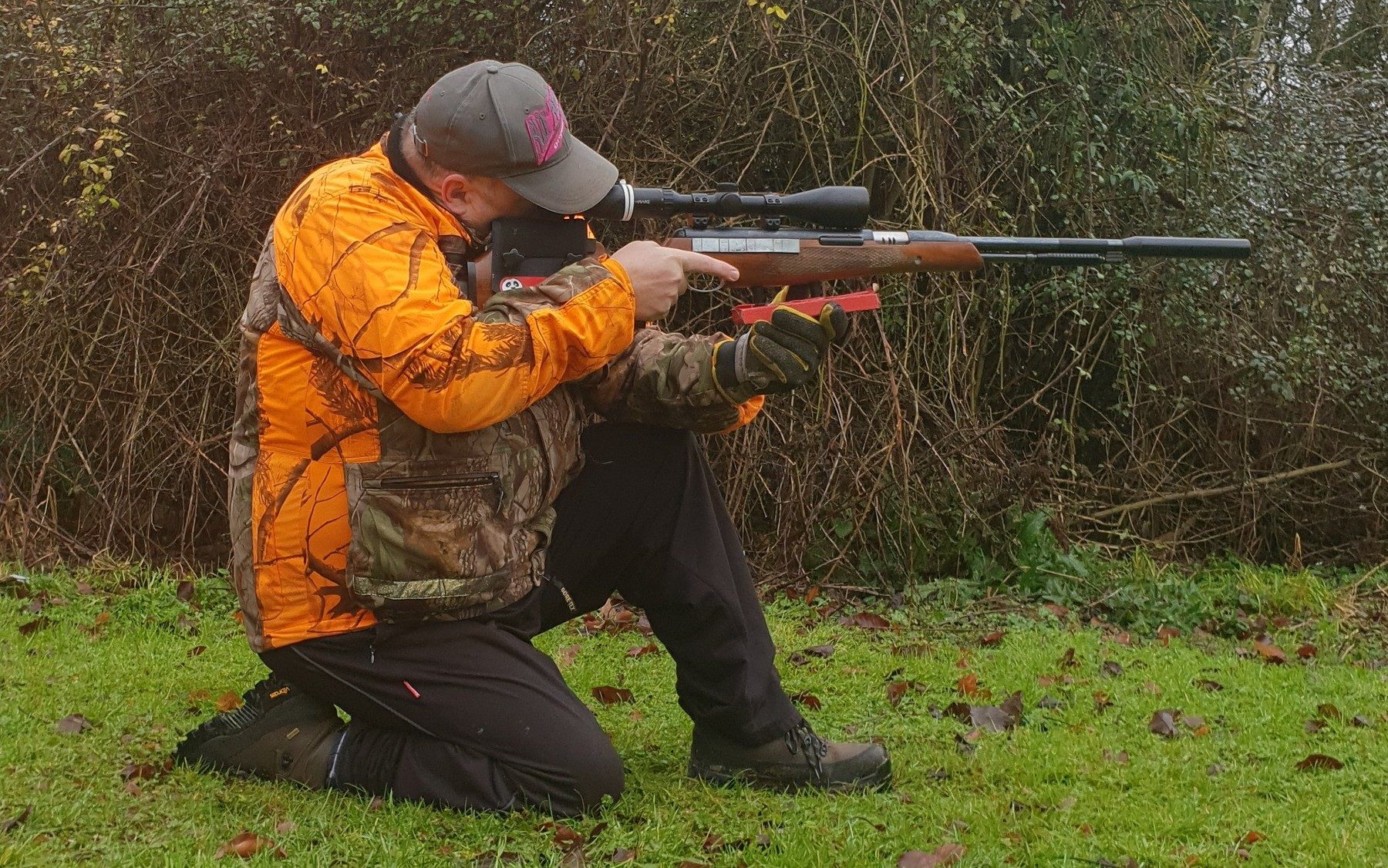

If you own a sub-12 ft·lb air rifle and can hit a rabbit’s head at 30 yards, you already have most of what you need to compete in Hunter Field Target. HFT is an outdoor knock-down target sport shot in woodland and fields with ordinary hunting rifles, and it was designed from the start to be simpler and more instinctive than its older sibling, field target. It rewards exactly the skills a pest controller uses on a permission – judging range by eye, reading wind, holding steady from awkward positions – which is why so many airgun hunters find themselves competing at the weekend.
What is HFT shooting?
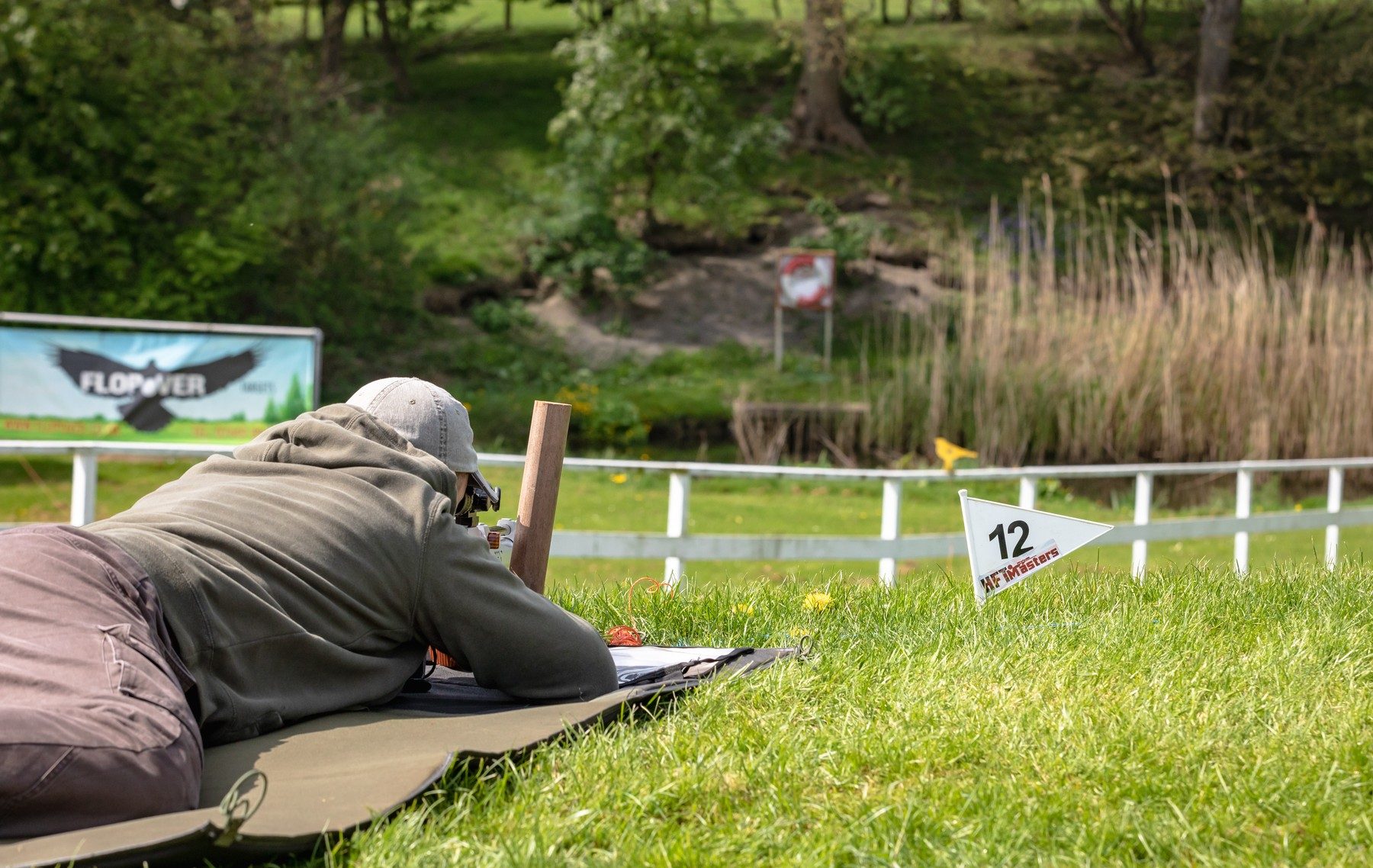
Hunter Field Target is an outdoor airgun target shooting discipline shot with legal-limit air rifles at metal knock-down targets placed in a natural setting. A course consists of 30 targets, one per lane, each shot from a numbered peg. The shooter must be touching the peg with part of their body or rifle when the shot is taken. Targets are of the knock-over type: hit the “hit zone” (the black circle in a yellow faceplate) and the target falls or rotates out of view, then it is reset by pulling a string. The rulebook allows hit zones from 15mm to 45mm in diameter at distances from 8 to 45 yards, though in practice competition courses are built almost entirely from 15mm to 35mm hit zones – the 40mm and 45mm sizes are rarely used. The smaller the hit zone, the shorter the maximum distance: 15mm hit zones sit between 13 and 25 yards, 20mm between 8 and 30 yards, 25mm and 30mm between 8 and 40 yards, and 35mm anywhere from 8 to 45 yards. The unsupported standing and kneeling shots use a 35mm hit zone at 8 to 35 yards.
The national body is the United Kingdom Association of Hunter Field Target, formed in 2002 to create events and a standardised national platform for the sport. Its rulebook is what most HFT clubs shoot to, whether or not they are hosting a national round.
Scoring an HFT round: hits, plates and misses
Scoring could not be simpler. Two points for a hit, when the pellet strikes the hit zone and the target falls. One point for a “plate”, when you hit the faceplate but the target stays up. Zero for a miss. Over 30 targets that gives a maximum of 60, and because a plate still earns a point, most newcomers walk off their first course with a respectable score rather than a demoralising one. Each target may only be shot once and no sighting shots of any kind are allowed during the round. Shooters go round in small groups and mark each other’s cards.
The rules that make HFT what it is
Two rules define the discipline. First, no rangefinding aids: laser rangefinders and binoculars are banned, and any scope with an automatic rangefinding function must have it disabled. Second, once your first shot is fired, nothing on the rifle or scope may be adjusted – magnification, parallax, turrets and illumination all stay exactly where they were, and you write those settings on your scorecard before you start. That means every shot on the course is taken with holdover or holdunder rather than by dialling, exactly as you would in the field.
Beyond that, the essentials are that any rifle may be used providing it stays under 12 ft·lb (16 Joules), and rifles are subject to random or compulsory chronograph testing at every event. Competitors must be at least 9 years old. Everyone attends a compulsory safety briefing before shooting. Six shooting positions are permitted – prone, unsupported standing, unsupported kneeling, supported standing, supported kneeling and, in the Sticks class, from shooting sticks – and sitting is not one of them. Most shots are taken prone, but every UKAHFT course must include one unsupported standing shot, one unsupported kneeling shot, two supported standing shots and two supported kneeling shots. A shooter is allowed two minutes per target. A single “windicator” of wool, string or feather no longer than 300mm may be fitted to the rifle to show wind; electronic and mechanical wind devices may not.
HFT vs Field Target: what’s the difference?
Field Target came first and remains the more technical of the two. In FT, shooters may use their scope’s parallax to range targets and dial turrets for each shot, they typically shoot from a sitting position, and targets extend to around 50m. HFT strips that out: no rangefinding, no adjustments, no sitting, and targets to 45 yards. The result is a sport where a standard sporter rifle and a mid-priced scope are competitive, where a round takes a couple of hours rather than most of a day, and where a hunter’s field skills count for more than a target shooter’s kit. If you want the full precision challenge, FT is run by the British Field Target Association; if you want a Sunday that feels like a very structured day on the permission, HFT is where to start.
Choosing an air rifle for your first HFT course
For your first few shoots, the honest answer is the one you already own, if it is accurate and shoots consistently under the limit. Most Open class competitors use a .177 pre-charged pneumatic – the UKAHFT rulebook itself notes that .177 PCPs are typical – because a PCP has no recoil to manage and .177 gives the flattest trajectory, which matters when you cannot adjust anything between an 8-yard and a 45-yard target. Be aware, though, that at the sharp end the sporter hunting rifle has largely given way to purpose-built HFT rifles: walk the line at a national round and you will see a lot of Steyrs and Air Arms XTi-50s and HFT 500s, and the odd Weihrauch HW100 is now the exception rather than the rule. None of that should put a newcomer off. There is a dedicated Recoil class for spring and gas-ram rifles, a .22 class for anyone shooting .22 or .25, and Ladies, Veteran (60 and over), Junior (9 to 16) and Sticks classes besides. Turning up with a well-set-up break barrel and shooting Recoil is a perfectly good way in.
The rulebook does put a few limits on stock design. Fore-end depth is capped at 150mm measured from the centre of the barrel, FT-style butt hooks are not allowed (paddle-style butt pads up to 63mm deep are), and nothing may be added to a rifle to help it grip a peg or support. In practice this rules out full FT match rifles and very little else.

What is the best scope for HFT?
Because HFT scopes are locked to one setting for the whole course, the “best” scope is not the most powerful one. It is one that lets you see a 15mm hit zone at 25 yards and a 45mm one at 45 yards on a single magnification and a single parallax setting, and that has a reticle with clear reference marks – mil-dots or similar – for holding over and under. Modest magnification is the norm, and many competitors set parallax at a middle distance so that targets at both ends of the course stay usable. Spirit levels are banned, external lenses and aperture-reducing covers are banned, and flip-up caps must be open when shooting. Whatever you choose, note your settings on your card and leave the turrets alone.
Choosing between .177 and .22 for HFT
For Open class, .177 is the overwhelming choice because its higher velocity at 12 ft·lb gives a flatter path and less holdover to remember. That said, .22 has its own class and its heavier pellet is less affected by wind, so a good .22 shooter is far from disadvantaged against other .22s. If you already own a .22 hunting rifle, shoot the .22 class and enjoy it – there is no need to buy a new gun to try HFT.
What distance should I zero my air rifle for HFT?
There is no rule on this. What matters is that you know your pellet’s flight path from 8 to 45 yards at your chosen zero, because you will be aiming off at every distance in between. Most competitors zero somewhere in the middle of the course range so that the holdover at 45 yards and the holdunder at close range are both manageable, and then spend time on paper learning exactly where the pellet lands at every five-yard step. Mike Morton’s guide to zeroing a scope covers the method in detail.
Where to shoot HFT: clubs and the national series
Dozens of clubs across the UK run HFT courses, many with monthly club competitions that are open to visitors for a small entry fee, and most are delighted to see newcomers. The UKAHFT website lists affiliated clubs and the calendar for the national series – nine rounds a year at clubs around the country, culminating in an invitation event, The Gathering, for the season’s top performers. To count in the national league a competitor must shoot at least six rounds, but there is no requirement to shoot any of them; club level is where almost everyone starts. Bring a legal rifle, a scope, a gun bag and pellets, and be prepared for the chronograph and the safety briefing.
Can I practise HFT in my garden?
You can shoot an air rifle in your own garden, but under section 21A of the Firearms Act 1968 it is an offence to fire a pellet beyond the boundary of the premises unless the occupier of the land it lands on has consented, so a proper backstop is not optional. In Scotland you also need an air weapon certificate to possess the rifle at all. Our guide to airgun laws and security requirements covers age limits, storage and transport in full. Garden plinking is useful for learning your holdover at short range, but a real HFT course involves distances, angles and positions a garden cannot replicate, so the fastest way to improve is to find a club and shoot the course.
Why HFT is worth trying
Hunter Field Target costs little to enter, needs no special equipment, welcomes juniors from 9 and shooters of every level, and puts a premium on the fieldcraft skills that make you a better hunter. It is also one of the friendliest corners of the shooting world. If you have ever wondered how good you really are with an air rifle, 30 targets in a wood on a Sunday morning is the way to find out.
With thanks to Gary Chillingworth, Airgun World’s HFT columnist, for checking the technical detail in this article.
Frequently asked questions
How much does it cost to shoot HFT?
Very little. Club competitions are typically open to visitors for a small entry fee, and there is no special equipment to buy beyond a legal-limit air rifle, a scope and pellets. That low cost of entry is one of the reasons HFT has become the most popular form of airgun competition in Britain.
Do I need to join a club to shoot HFT?
No. Most clubs run monthly competitions that are open to visitors, and they are used to welcoming first-timers. Club-level shooting is where almost everyone starts, and there is no requirement to shoot any of the national rounds.
How long does an HFT round take?
Around a couple of hours. A course is 30 targets and a shooter is allowed two minutes per target, so a round takes far less of the day than a Field Target competition, where targets are ranged and turrets dialled for every shot.
What age can children start shooting HFT?
Competitors must be at least 9 years old, and there is a dedicated Junior class for shooters aged 9 to 16. Everyone, junior or not, attends a compulsory safety briefing before shooting.
What should I take to my first HFT shoot?
A legal-limit air rifle, a scope, a gun bag and pellets. Expect your rifle to be chronographed, either at random or as a matter of course, and expect to attend the safety briefing before you go out on the course.
Related Articles

We test a 10m target air rifle for the garden
Gary Chillingworth swaps his scope for a diopter sight and shoots the sub-6ft/lb Precihole Club Pro Junior from the bench, prone and standing at 10m. What the film shows for anyone starting a young sh...
By News Desk | 29 September 2026

One man and his dog: squirrel control with a gundog in the making
Danny Brookfield combines grey squirrel control and early gundog training for a rewarding morning on a pheasant estate
By Danny Brookfield | 7 September 2026
Get the latest news delivered direct to your door
Subscribe to Shooting Times & Country
Discover the ultimate companion for fieldsports enthusiasts with Shooting Times & Country Magazine, the UK’s leading weekly publication that has been at the forefront of shooting culture since 1882. Subscribers gain access to expert tips, comprehensive gear reviews, seasonal advice and a vibrant community of like-minded shooters.
Save on shop price when you subscribe with weekly issues featuring in-depth articles on gundog training, exclusive member offers and access to the digital back issue library. A Shooting Times & Country subscription is more than a magazine, don’t just read about the countryside; immerse yourself in its most authoritative and engaging publication.