★ Your magazine. Your say. Complete our reader survey with a chance to win Jack Pyke kit worth £500! ★

Roe stalking on the Berkshire Downs with Craig Boddington
Three dawn outings near Newbury with Craig Boddington and a Rigby Highland Stalker produced four mature bucks and a guide’s observation that the biggest roe are field animals, not woodland ones. For the keeper and deer manager, that is the lesson


Photographs: Tweed Media
Few mornings beat a spring dawn breaking over the English countryside, the dew still on the fields and the prospect of a decent old buck ahead of you, especially in the company of one of the most accomplished hunters alive. My recent trip with the American hunting legend Craig Boddington on the rolling downland near Newbury gave me exactly that, and it also gave me something any keeper or deer manager can use: a set of observations about where our native roe actually live that challenged the conventional wisdom on the ground.
The roe ground: chalk downland south of Newbury
The ground lay in the heart of Berkshire, just south of the market town of Newbury, where chalk downland meets ancient woodland and farming has shaped the landscape for centuries. The Berkshire Downs extend southward here, their gentle undulations giving roe, muntjac and fallow exactly the habitat they want: open arable broken up by copses, thick hedgerows and remnant woodland that traces its lineage back to the great forests that once covered southern England. It is the mixed farmland-and-woodland ground that most lowland keepers and deer managers will recognise as their own.
For six weeks before our trip last May there had been barely a drop of rain, which is unusual in a country where discussing the weather is a national pastime. The drought had left the ground firm underfoot, ideal for stalking. The spring growth, late for want of rain, was still lush enough to give the deer good cover, while the wide, prairie-like fields gave us clear chances to work quietly along hedgerows into safe shooting positions.

Our guide, Alex Nielson, is one of the most knowledgeable stalkers in the UK, and his understanding of this particular patch of countryside ran deep. It went well beyond knowing where deer might be found: he knew their daily rhythms, their preferred feeding areas and, most usefully for our purposes, where particular mature bucks hung out, intelligence gathered over many hours of observation and through an established network of trail cameras. It is the same groundwork that underpins any sound cull plan.
Who is Craig Boddington?
To hunt with Craig Boddington is to share the field with one of the most storied hunters ever to live. A former United States Marine colonel who served with distinction in the Gulf War and Kuwait, he has written more than 5,000 published magazine articles and 31 books on hunting and shooting, published across six continents. His expeditions have taken him to more than 56 countries in pursuit of some 300 species, and he has reached virtually every milestone the hunting world recognises: Africa’s Big Five, 100 Cape buffalo, all nine principal spiral-horned antelopes, both the Capra Super 30 and the Ovis Super 20, and multiple North American grand slams.
In 2017 Craig also won the highly prestigious Weatherby Award, an accolade given not for a tally of animals hunted but for the breadth, difficulty and ethical standards of a hunter’s lifetime achievements.
Yet for all his international adventures, Craig keeps a deep appreciation of simpler, more traditional sport. It had been nearly a decade since we last stalked roebuck together in the UK, that time in neighbouring Hampshire, and it was a joy to have him back in Britain. His enthusiasm for our native roe was undimmed and his respect for everything that lived on the ground we walked was plain to see. A true gentleman, and still a student of the animals.
Why a Rigby Highland Stalker in .275 Rigby?
Craig had chosen the right rifle for the job: a Rigby Highland Stalker chambered in .275 Rigby. It is the modern incarnation of the classic sporting rifles that made Rigby’s reputation in the early 20th century, in the hands of legendary hunters such as Karamoja Bell and Jim Corbett. With a stunning walnut stock, hand-cut chequering and traditional Rigby-pattern iron sights, it weighed 7.8lb, and with its 22in barrel it embodied everything that makes a British sporting rifle special. A plastic-stocked rifle would have done the job just as well, but it would not have put the same smile on Craig’s face, or Alex’s, or mine.
The .275 Rigby is one and the same cartridge as the 7×57 Mauser, developed in 1892 and rebranded for the British market in 1907, when John Rigby & Co. judged that a metric designation would have less appeal to its British customers than an Imperial one. The 7×57 had also been used in anger against the British in the Boer War, so a new name that carried the Rigby association with adventure and hunting made sound sense. It is one of the only cartridges with two names and can be fired from rifles proofed for either, which underlines the partnership between Paul Mauser and John Rigby that goes back well over 100 years and has thrived again since 2012, when both companies became part of the Blaser Group.
Rigby modernised the cartridge for sporting use, loading both solid and expanding 140-grain spitzer bullets, and its 1924 catalogue claimed a muzzle velocity of 3,000fps. The Highland Stalker Craig carried was the “High Velocity” variant, optimised for 140-grain bullets through a modified throat design that gives better accuracy with these lighter projectiles.
For our roe, Craig opted for Hornady 140-grain soft point ammunition, a sound choice for the species. Moderate velocity, reliable expansion and excellent accuracy made the load well suited to the ranges and the shots that farmland stalking was likely to offer.
Which Leica optics were on the rifle?
The rifle was topped with a Leica Fortis 1.8-12x42i scope in the Glossy edition. Each Glossy Fortis is hand-polished for an hour and a half, which makes every one of them genuinely individual. With a vintage Leica badge and its retro look they suit the Highland Stalker perfectly, while keeping all the benefits of modern Leica optics, including an illuminated reticle for the first and last of the light.
For rangefinding, not that any shot was likely to be beyond 200m, I had lent Craig my pair of Leica 8×32 Geovid Pro binoculars in olive green. They are remarkably compact beside their larger sibling, the 10×42 Geovid Pro, and I would rather give up a marginal amount of last-light performance for something that small around my neck all day. They are my favourite rangefinding binoculars of any I have owned.

Roe biology: why bucks carry hard antlers in May
Roe are one of only two deer species truly native to Britain, the other being red deer, and archaeological evidence places them here in the Mesolithic period, between 6,000 and 10,000 years BC. In the late medieval period their numbers were severely reduced, probably by overhunting and deforestation, until by the 16th century they were confined largely to parts of Scotland. The current boom is the reverse: roe are now estimated at more than 800,000 animals, the most wide-ranging deer species in Britain, with populations growing at about 2.3% a year.
They are a small deer, standing 24 – 30in at the shoulder and measuring 33 – 55in in length, with adults typically weighing 18 – 48lb. Bucks carry short, erect antlers that normally show three points, or tines, on each side when fully developed.
The antler cycle is one of the most fascinating aspects of roe biology, and it is unique. Unlike most cervids, roe cast their antlers in autumn, from October to December and peaking in November, and regrow them through the winter, shedding the velvet in mid-February to March. So they carry hard antlers through spring and summer, which is exactly when we were stalking them in May. The cycle is governed by complex hormonal regulation, with testosterone playing the crucial role in growth, mineralisation and eventual casting.
The rut runs from mid-July to late August, when bucks become highly territorial and aggressive, defending their ground and competing for access to does. After mating, the doe delays implantation of the fertilised egg until January, so the young are not born in the harsher winter months, and two white-spotted, scentless kids are typically born to each doe in May.
What are the roe seasons in England and Wales?
In England and Wales roe are stalked under strict seasons. The buck season runs from 1 April to 31 October and the doe season from 1 November to 31 March, so the species can be managed in some form all year round. The law requires legal minimum calibres and energy and prohibits shooting at night except under licence. Together, those rules are what keep the cull sustainable and the standards high on the ground.
It is legal to borrow a rifle from a licence holder under the ‘estate rifle rule’, which makes travelling from abroad to stalk far less stressful as the airlines become less helpful with firearms, and lets the host put a suitable rifle into a guest’s hands.
Why do the biggest roebucks live in the open fields?
Our hunt ran to three outings, each with the religiously early 4am start that May’s long daylight demands. At 51 degrees north, dawn breaks remarkably early in late spring, and roe are at their most active in those golden hours when the countryside belongs to stalkers and deer alone.
Alex’s knowledge proved invaluable, but it also challenged some fundamental assumptions about roe behaviour. Conventional wisdom says roe prefer woodland edges and thick cover, seeking security in the dappled shade beneath the canopy. His observations over many seasons, however, had revealed a pattern that contradicted that received wisdom.
“The larger, more mature bucks are consistently found in the open fields rather than the woodland,” Alex told me as we glassed across a promising piece of arable land. “It seems counterintuitive given that the fields offer less cover, but the evidence is overwhelming. Woodland bucks take approximately a year longer to reach the same size and consistently develop smaller skulls than their field-dwelling siblings.”
It makes biological sense when you think it through. Open farmland typically offers richer nutrition than woodland browse, particularly in the growing season, and the high-protein crops and varied plants of the field margins supply the building blocks for antler and body condition. Woodland offers security at the cost of nutritional quality, a trade-off that the bigger bucks seem to understand instinctively. For anyone drawing up a cull plan, the lesson is worth having: the mature bucks may not be where the cover is.
Four mature bucks in three dawn outings
The stalking itself was everything one could hope for on English downland. We moved carefully through the early morning, using every fold in the ground, every hedgerow and every copse to mask our approach to the mature bucks we had glassed. The firm, dry conditions let us move with unusual stealth, while the lush spring growth gave cover to the deer and to our stalks alike.
Our patience and persistence were rewarded with encounters with four mature bucks across the three outings. None reached medal class, but each was a worthy head and the culmination of a carefully planned stalk. Of particular note was one buck with fascinating malformed antlers, an unusual asymmetrical formation that delighted Craig. Deformed antlers are not uncommon in roe, and the most extreme form is the ‘perruque’ – a spongy mass of bone and velvet that forms when testosterone fails to arrest antler growth, usually because of a testicular injury, an occupational hazard for a buck that leaps barbed stock fences in southern England.

Shooting at 73, one week after cataract surgery
What made the trip more remarkable still was Craig’s recent medical history. Just one week before arriving in England he had undergone cataract and lens surgery, a procedure that had quite literally transformed his vision overnight. “The clouds have lifted,” he remarked with obvious delight during one of our morning stalks, explaining how the operation had restored a clarity he had not known for years. That renewed vision had rekindled his enthusiasm for using iron sights on a forthcoming African hunt, something he had reluctantly abandoned several years earlier as his eyesight deteriorated.
At 73, Craig’s speed of target acquisition and precision of shot placement were nothing short of extraordinary. His ability to assess the safety of a situation quickly, find his mark in the scope and deliver a precisely placed shot was a masterclass in field shooting, and the kind of marksmanship any keeper would be glad to have on the ground. Years of experience and newly restored vision made a formidable combination.
Perhaps even more impressive was watching Craig handle the right-handed Highland Stalker as a left-handed shooter. He reloaded and cycled the bolt with his left hand in a fluid, practised motion that spoke of decades of adaptation. When I asked him about it, he smiled and explained that he had been forced to develop the skill over the years simply because left-handed versions of many rifle models are not available. “You learn to adapt,” he said with characteristic pragmatism, “especially when you hunt all over the world with different rifles.”
What the roe cull means for the land manager
Roe now present both opportunities and challenges for anyone managing land. They can do significant damage to young woodland and to agricultural crops through browsing, yet many landowners and rural businesses run deer stalking and venison sales as supplementary income. Modern management sets out to balance a sustainable deer population against the needs of the habitat, and culling levels of 15 – 25% are typically enough to prevent an increase in most British roe populations.
Our trip was exactly that kind of management in practice. Each buck taken was selected on age, condition and its contribution to the overall health of the herd. None was a young animal with its best years ahead of it; all were mature individuals whose removal would benefit the population structure, which is the selection any conscientious deer manager makes.
As the hunt drew to a close we reflected on the particular pleasures of roe stalking in the English countryside, especially with a nice rifle. There is something deeply satisfying about pursuing our native deer in their ancestral homeland, something that connects us to centuries of British sporting tradition. Challenging stalks, beautiful countryside, perfect weather, a walnut stock and exceptional company had made this about as good as it gets.
Craig’s genuine enthusiasm, for all his vast international experience, reminded me why roe stalking holds such a special place in the hearts of hunters the world over. These are not exotic trophies from distant lands but our own deer in our own countryside, and that somehow makes the achievement all the more meaningful.
Rigby’s Highland Stalker performed perfectly throughout, proof that traditional design married to modern manufacturing can produce a sporting rifle of exceptional quality. Life is too short for poor rifles. Likewise, the Leica optics showed why they remain the gold standard for serious hunters worldwide.
Most important of all, Alex’s insights into roe behaviour had challenged our preconceptions and deepened our understanding of these remarkable animals. That mature bucks choose open fields over woodland security reveals the complex calculations these deer make every day, putting nutrition before immediate safety in their pursuit of dominance and breeding success, and it should make any deer manager look again at where the trail cameras go.
As we gralloched the final buck and loaded it into Alex’s Toyota Hilux, we watched the sun climb higher over the Berkshire Downs, and I was reminded once again why roe hold such enduring appeal. The hunt had been everything we could have hoped for, from sharing my native UK at its spring finest with a sporting legend to witnessing some exceptional shots and great camaraderie along the way. It was a true reminder of exactly why I love to enjoy and share this every year.
My thanks go to Alex Nielson for his exceptional guiding and deep knowledge of roe behaviour, and to Craig Boddington for his friendship, companionship and knowledge over many years.
Kit box
What Craig Boddington used on the roe
- Rigby Highland Stalker .275 Rigby rifle
- Leica Geovid Pro 8×32 rangefinders
- Leica Fortis 1.8-12x42i (Glossy Edition) riflescope
- Hornady 140gr .275 Rigby soft point ammo
Frequently asked questions
When can roebuck be shot in England and Wales?
The roebuck season runs from 1 April to 31 October and the doe season from 1 November to 31 March, so roe can be managed in some form all year round. Shooting at night is prohibited except under licence, and legal minimum calibres and energy apply.
Do the biggest roebucks live in woodland or in open fields?
On the Berkshire ground, guide Alex Nielson’s trail cameras and years of observation show the larger, more mature bucks consistently in the open fields rather than the woodland. Woodland bucks take about a year longer to reach the same size and develop smaller skulls, most likely because open farmland offers richer nutrition.
What is a perruque head on a roebuck?
A perruque is the most extreme form of malformed roe antler: a spongy mass of bone and velvet that grows when testosterone fails to stop antler growth, usually because of a testicular injury, often picked up leaping barbed stock fences.
About the author
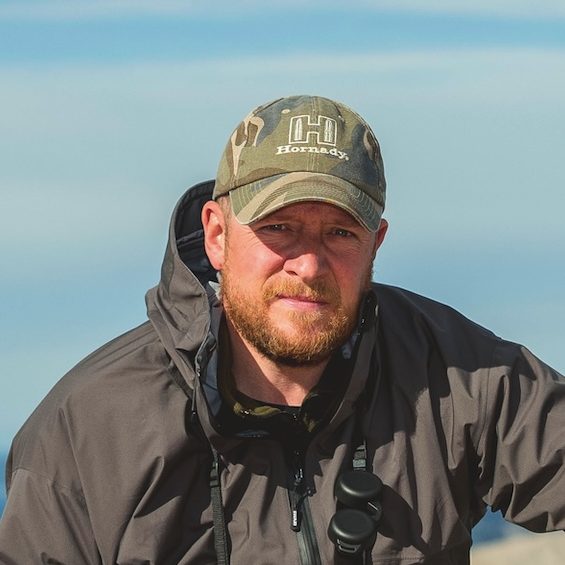
Simon K. Barr
Chief executive of Time Well Spent Group and a co-owner of the company with Selena Barr, Simon is a sporting journalist, photographer and film-maker who co-founded Tweed Media and launched Fieldsports Journal and Gundog Journal before the group acquired Shooting Times, Sporting Gun, Airgun World, Rifle Shooter and Trout & Salmon. He has hunted and fished across the world, from ibex in the Tien Shan mountains of Kyrgyzstan to blackbuck on the Argentine pampas, and moved from Sussex to the Scottish Borders in 2014 partly to be closer to the Tweed and master a double-handed rod. He completed the Macnab, a salmon, a stag and a brace of grouse in a day, after ten years of trying, and named the group's Edinburgh headquarters Macnab House after John Buchan's novel.
 Closes 15 JanuaryWorth £129.90Win a pair of tickets to the British Shooting Show 2027Enter nowFree to enter
Related Articles

Stoney Creek Fast Hunt Ascent review: a featherweight shirt and trousers for summer stalking
Keith Edmunds puts Stoney Creek's featherweight Fast Hunt Ascent shirt and trousers through a heatwave summer of roebuck stalking, and finds an outfit that could have been purpose-built for it
By Keith Edmunds | 7 October 2026
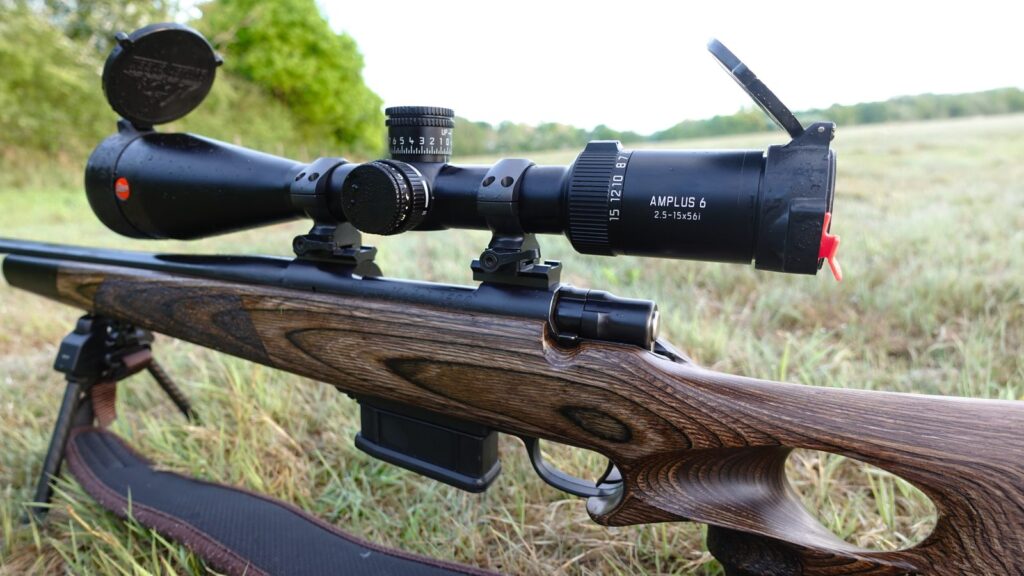
The Countryman: a lifelong love affair with guns, from a toy rifle to a Schultz & Larsen
From a homemade toy rifle with a garden-gate bolt to a Schultz & Larsen Victory, Keith Edmunds argues that a love of fine guns is nothing to be ashamed of
By Keith Edmunds | 7 October 2026
Get the latest news delivered direct to your door
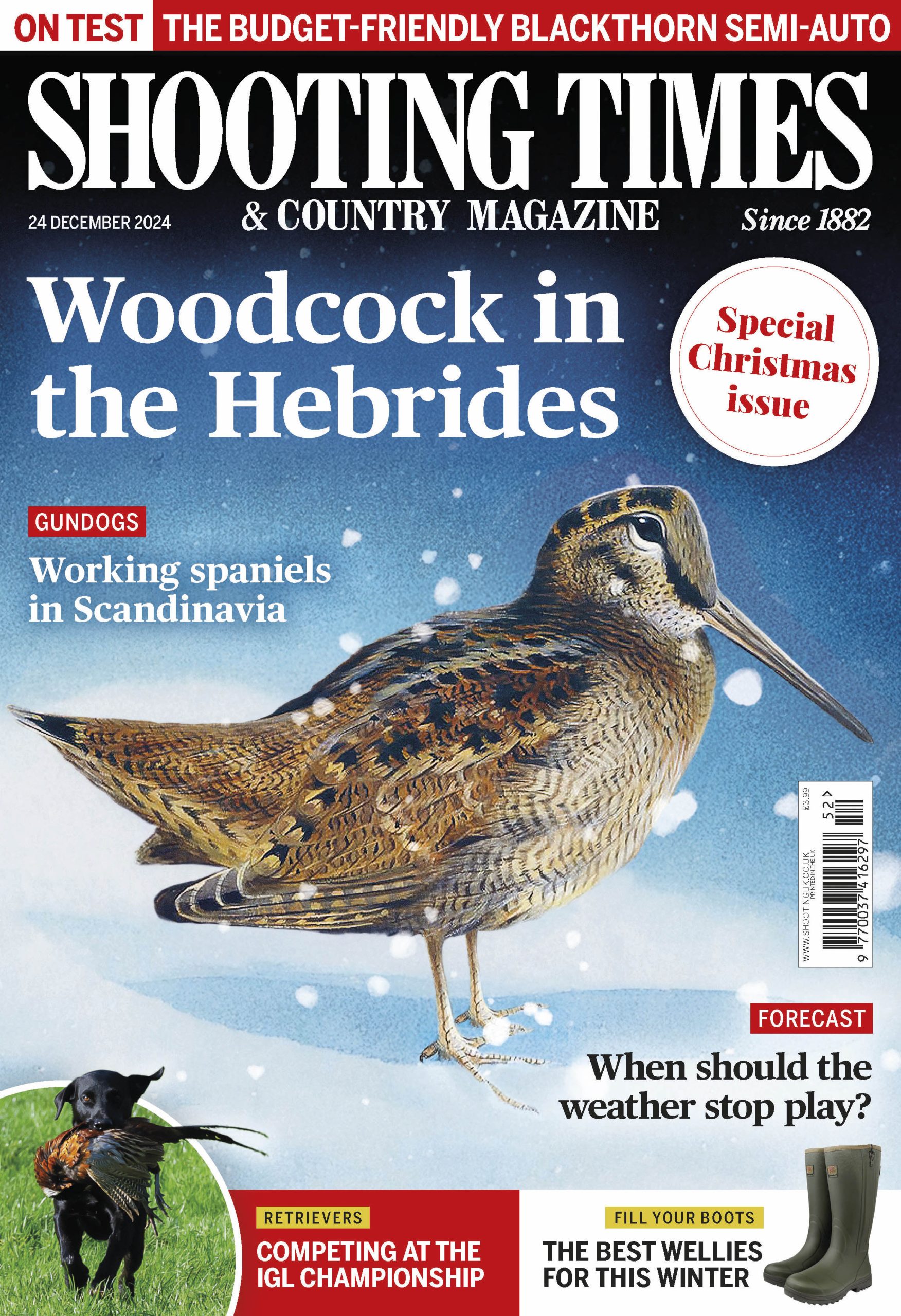
Subscribe to Shooting Times & Country
Discover the ultimate companion for fieldsports enthusiasts with Shooting Times & Country Magazine, the UK’s leading weekly publication that has been at the forefront of shooting culture since 1882. Subscribers gain access to expert tips, comprehensive gear reviews, seasonal advice and a vibrant community of like-minded shooters.
Save on shop price when you subscribe with weekly issues featuring in-depth articles on gundog training, exclusive member offers and access to the digital back issue library. A Shooting Times & Country subscription is more than a magazine, don’t just read about the countryside; immerse yourself in its most authoritative and engaging publication.
 New competitionWin a pair of tickets to the British Shooting Show 2027Worth £129.90Closes 15 JanuaryEnter now ›