★ Your magazine. Your say. Complete our reader survey with a chance to win Jack Pyke kit worth £500! ★


Partridge shooting explained: every question answered
The season, the law, the birds, the cost and the day itself – straight answers to the questions people actually ask about partridge shooting in Britain
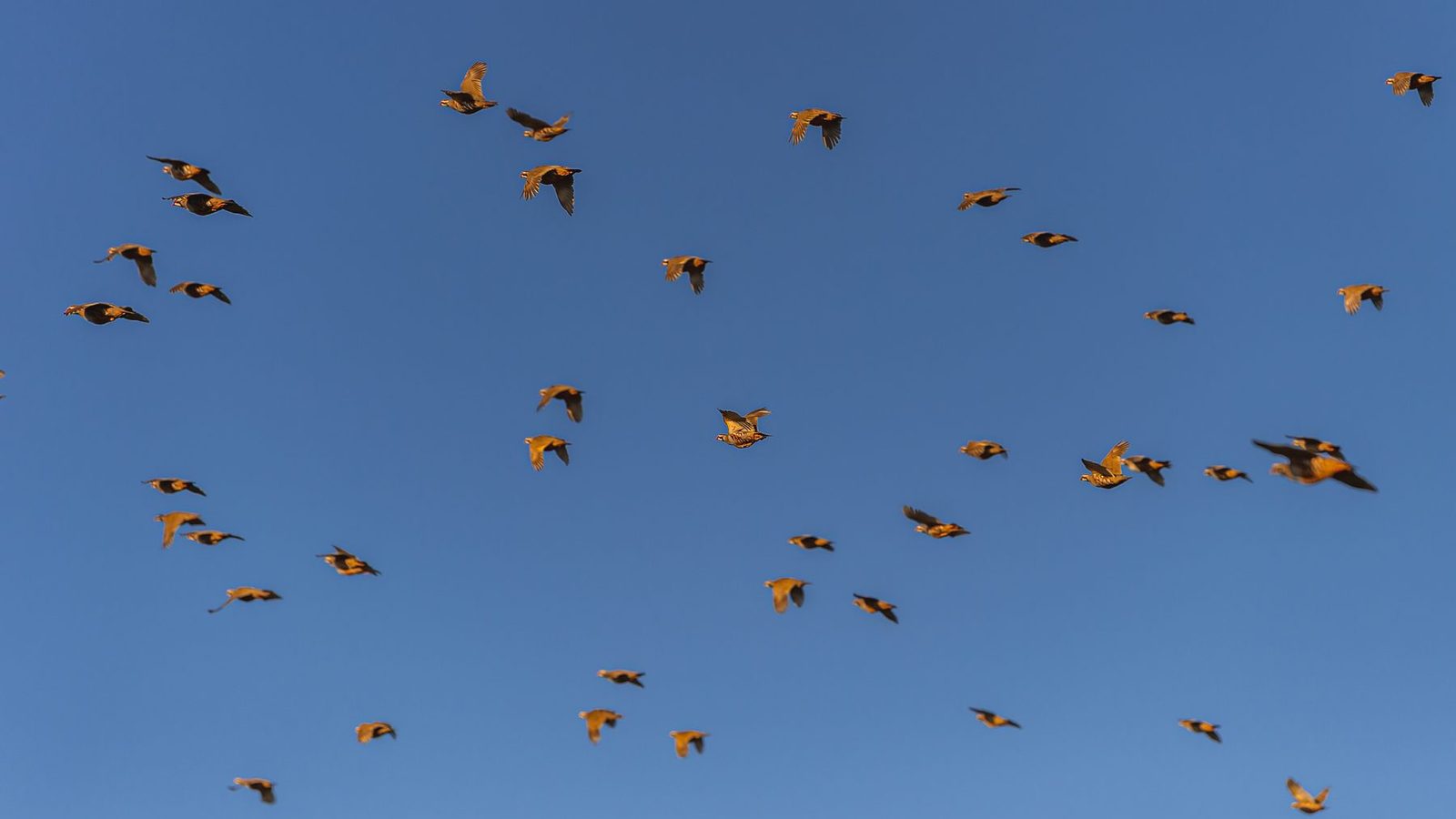

Photographs: Sarah Farnsworth, unless otherwise credited
Partridge shooting opens the British game season on 1 September, ahead of pheasant and after grouse. For many Guns it is the best sport of the year: fast, low, unpredictable birds that arrive in coveys rather than singly, shot in shirtsleeve weather over stubbles and hedgerows rather than in the mud of January. It is also the part of the shooting calendar that generates the most questions, because partridge shooting covers two very different species, several very different styles of day and a legal framework that has changed considerably in the past few years. This guide answers the questions that come up most often, whether you are booking your first day or want to check that what you knew five years ago still holds.
When does the partridge shooting season start and end?
The partridge season opens on 1 September across the United Kingdom. In England and Wales it runs to 1 February inclusive. Section 3 of the Game Act 1831 makes it an offence to kill or take any partridge between 1 February and 1 September, which leaves both of those dates available to shoot.
Scotland arrives at the same effective dates by a different route. The Game Act 1831 was repealed in Scotland in 2011 by the Wildlife and Natural Environment (Scotland) Act, which brought gamebirds within the definition of a wild bird under the Wildlife and Countryside Act 1981. That Act sets the close season for partridge as 2 February to 31 August, so the Scottish season likewise runs 1 September to 1 February.
Northern Ireland is the outlier. Under the Game Preservation Act (Northern Ireland) 1928, as amended by the Game Preservation (Amendment) Act (Northern Ireland) 2002, the close season for partridge runs from 1 February to 31 August. The season there therefore ends on 31 January.
One quirk catches people out. Because no game may be killed on a Sunday in England and Wales, when 1 February falls on a Sunday the season effectively ends on Saturday 31 January rather than rolling forward to the Monday.
Can you shoot partridge on a Sunday or Christmas Day?
Not in England and Wales. Section 3 of the Game Act 1831 prohibits killing or taking game, which includes partridge, on a Sunday or Christmas Day, and that provision remains in force. In Northern Ireland the taking of game on a Sunday is likewise prohibited under the 1928 Act. Scotland has no statutory prohibition on shooting game on a Sunday, although the practice is not customary and most Scottish shoots do not offer Sunday days.
Which partridge can you shoot in Britain?
Two species are quarry in season. The grey partridge, Perdix perdix, is the native bird, known to older generations as the English partridge. It is a small, round, greyish bird with a chestnut horseshoe on the breast of the cock, an orange-buff face and a rasping, creaking call. Greys break from a hedge in all directions at once, which is precisely what makes them such demanding quarry.
The red-legged partridge, Alectoris rufa, is the bird you will almost certainly be shooting. Sometimes called the redleg or the Frenchman, it was introduced to England from continental Europe in the eighteenth century and did not become the mainstay of British partridge shooting until the 1950s. It is larger and more boldly marked than the grey, with a white throat, a black gorget and barred flanks, and unlike the grey it tends to follow the same line of flight over a hedge as the birds ahead of it.
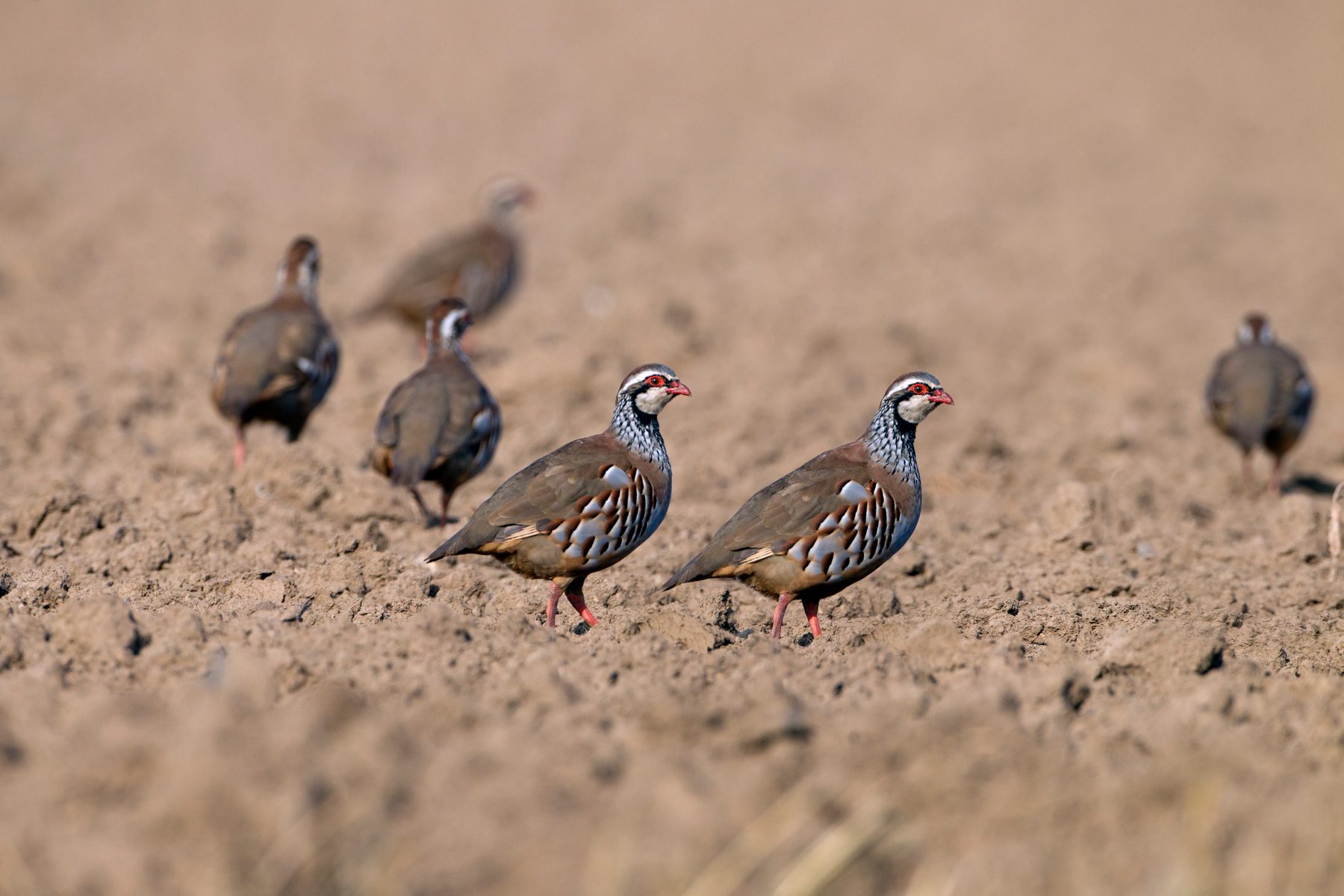
A third species turns up on trips abroad. The Barbary partridge is indigenous to North Africa, larger than a redleg and notably strong on the wing, and is the quarry on Moroccan driven days.
Should you shoot a grey partridge?
This is the most important question in the sport and the one most often asked. Shooting a grey in season is lawful. Whether you should is a different matter.
The grey partridge is red-listed as a Bird of Conservation Concern. The British Trust for Ornithology Breeding Bird Survey recorded a decline of 91% in the United Kingdom population between 1967 and 2010, driven principally by the loss of nesting and brood-rearing habitat and by predation pressure. Where wild greys are shot at all, it is on ground where they are counted carefully in spring and again after harvest, and where a surplus has genuinely been produced.
Northumberland Estates at Alnwick, which has run one of the most serious wild grey projects in the country since 2004, illustrates how that works in practice. Head keeper Garry Whitfield and his team use the autumn counts, carried out at dusk with the help of thermal imaging, to determine how much shooting will take place. A good year might produce two full driven days and two or three smaller ones. A poor year might produce none at all.
The practical rule for a visiting Gun is simple. On a redleg day, leave the greys alone unless the keeper tells you otherwise at the briefing, and if you are not certain what is coming at you, do not shoot it. Plenty of shoots make this an explicit condition of the day.
Do you need a licence to shoot partridge?
Not necessarily your own. Section 11A of the Firearms Act 1968 lets someone without a shotgun certificate borrow a gun on private premises and shoot game with it, which is how a good many guests get their first day. The lender must be 18 or over, hold a certificate for that gun, and either have the right to bring others onto the land to shoot or written authority from someone who does. The borrower has to stay within the lender’s sight or earshot. Outside those conditions, possessing a shotgun without a certificate is an offence under section 2 of the Act.
You will also need permission from whoever holds the sporting rights, and in practice third-party shooting insurance, which most shoots now check.
What you do not need is a game licence. That system was abolished in England and Wales in 2007 by the Regulatory Reform (Game) Order, in Scotland in 2011 by the Wildlife and Natural Environment (Scotland) Act, and in Northern Ireland the same year by section 35 of the Wildlife and Natural Environment Act (Northern Ireland) 2011.
What are the rules on releasing partridge?
This affects shoot managers rather than visiting Guns, but it shapes where partridge shooting now happens. In England, common pheasant and red-legged partridge are listed on Schedule 9 of the Wildlife and Countryside Act 1981 for the purposes of release on or within 500 metres of a European site. Releasing within that zone without a licence is an offence.
General licence GL43 covers release on, or within 500 metres of, a special area of conservation. It was most recently updated on 9 March 2026. No application or registration is required, but the conditions must be met in full and release activity must be reported to Defra. GL43 cannot be used where the site is both a special area of conservation and a special protection area.
GL45, the equivalent general licence for special protection areas, expired on 1 February 2025 and has not been reissued. Natural England confirmed in its March 2026 bulletin that no general licence is available for release on or within 500 metres of a special protection area, citing the risk of avian influenza spreading from released gamebirds to protected bird populations, and that individual licence applications would be assessed instead. Shoots more than 500 metres from a European site need no release licence at all, though separate consent is required on a site of special scientific interest, and the Defra and APHA bird flu rules apply to everyone keeping gamebirds.
What is happening with lead shot?
The REACH (Amendment) Regulations 2026 came into force on 1 April 2026 and apply in England, Scotland and Wales. From 1 April 2029, placing lead shot on the market and using it will not be permitted. In practical terms that makes the coming three seasons the transition. A good many shoots already require non-lead, and the game dealers who still take partridge increasingly ask for it, so check what the shoot expects when you book rather than on the morning. If you are moving to steel, most nitro-proofed guns made from 1954 onwards will handle standard steel loads, but open your chokes and take advice from a gunsmith before putting steel through anything older or tightly choked.
What does a day of partridge shooting cost?
Driven days are sold on a price per bird, quoted plus VAT, against an agreed bag with a tolerance either side. Because the fixed costs of putting on a day are much the same whether the bag is 150 or 300, the price per bird generally falls as the bag rises, which is why smaller days can look expensive on paper.
The headline figure is not the whole cost. Budget for cartridges, which mount up quickly on partridge because coveys tempt you into shots you would not take at a single pheasant, and for the keeper tip, travel and any accommodation. Prices move year to year and vary enormously between a moorland-fringe day and a flagship chalk valley shoot, so ask the shoot or the agent for the current rate rather than relying on a figure you saw quoted a few seasons ago.
What happens on a driven partridge day?
You will be asked to meet in the morning for coffee and a safety briefing, at which the shoot captain or keeper will set out the arcs of fire, the rules on ground game and greys, and the signal that ends each drive. Guns draw for pegs and usually move up two between drives. A typical day runs to four to six drives with elevenses partway through and lunch either in the middle or at the end.

Partridge drives differ from pheasant drives in rhythm. Birds often arrive in a rush and then nothing happens for several minutes, so the discipline is to stay alert through the quiet spells and to pick a single bird out of a covey rather than firing at the mass. When the horn sounds, guns go straight into slips. Tips go to the keeper at the end of the day, and you should expect to be offered a brace to take home.
What gun and cartridge suit partridge?
A 20-bore is a popular choice for early-season partridge and handles the fast, close, jinking birds well, but there is nothing wrong with a 12-bore and most Guns shoot what they shoot best. Choke matters more than bore. Open chokes suit birds coming over a hedge at 25 yards; the high birds shown in the deep valleys of Wiltshire and the Borders justify tightening up.
On cartridge choice, the instructors ShootingUK has canvassed tend to converge on much the same advice: for a 12-bore, 28g of No 6 or even No 7, and for a 20-bore, 25g of No 6 through quarter and half choke, moving to half and three-quarters on genuinely high birds. Older English guns with 65mm chambers need cartridges loaded to suit them. If you are shooting steel, size up your shot and open your chokes, because steel patterns tighter and carries less energy downrange than lead of the same nominal size.
Are partridge faster than pheasant?
No, and this is where most Guns miss. A redleg flies at around 30mph to 35mph, which is slower than a pheasant. The rapid, whirring wingbeat and the small body give an impression of far greater speed, and the instinctive response is to give the bird far too much lead. Cut back by a third to a half of what you would give a pheasant at the same range and angle. On a mixed drive, being able to make that adjustment instantly between a partridge and a pheasant in the same piece of sky is one of the real pleasures of the sport.
What are the safety rules on a partridge day?
Partridge shooting is more demanding on safety than any other form of driven game, because the birds are low and the beating line is often visible in front of you. The absolute rule is that you must see sky beneath the bird before you fire. Early-season partridge lose height very quickly once they cross the line, so a bird that was safe over the hedge is not necessarily safe 20 yards behind you.
Know where your neighbours, the beaters, the flankers and the pickers-up are before the drive starts, and acknowledge them. Do not start shooting at pigeons before the first partridges have crossed the line, because it disrupts the drive and confuses the beaters. And be careful in September with young hen pheasants, which are regularly mistaken for partridge in the heat of the moment on higher-flying shoots.
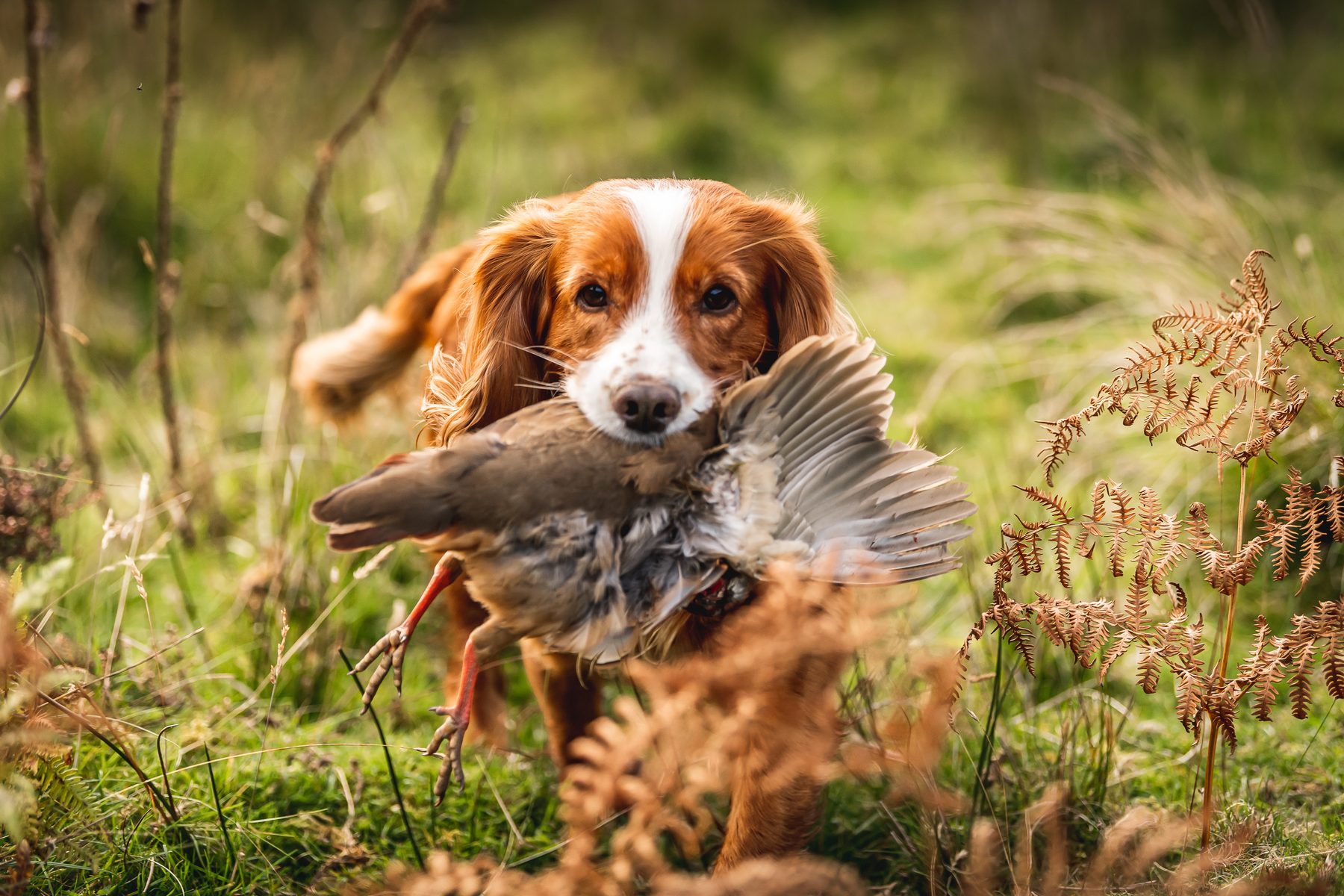
What should you wear partridge shooting?
The first weeks of the season can be genuinely hot, and dressing as though it were January is the commonest mistake. Prioritise breathability over weight: a lightweight merino-blend or open-weave cotton shirt in a subdued green, olive, tan or brown, avoiding both white and very dark colours. Wear low boots and merino socks rather than wellies, take a lightweight waterproof for the inevitable, and carry more water than you think you need. Most hosts will not object if you take your tie off after the briefing on a hot morning, though it is worth asking. From late October the calculation reverses entirely and the usual tweed rules apply.
Is there partridge shooting other than driven days?
Plenty, and it is often the better sport. Walked-up days and walk-one-stand-one formats are common on smaller shoots and hill ground, where a modest bag of 30 or 40 head over a long day gives everyone a share of the shooting and the beating. Rough shooting and shooting over pointers and setters both suit wild birds on open ground. And many small farm shoots and syndicates put down a few partridge simply to add variety to a day that is otherwise mostly pheasant, which for a great many Guns is the only partridge shooting they do.
How should you handle and cook partridge?
Partridge is at its best young and early in the season, and unlike pheasant it does not need long hanging. Birds can be eaten on the day they are shot. The breasts are delicate and dry out fast, so the reliable approach is to remove the legs and roast the breasts on the bone as a crown, or to spatchcock the whole bird. The legs are worth keeping: poached in stock until tender, then crumbed and fried, they make excellent elevenses.

There is a wider point here. Demand from the game trade for partridge has weakened sharply in recent seasons, with processors finding the bird more time-consuming to handle than pheasant and some abandoning small game altogether. Taking more than your brace home, and cooking it, is now a meaningful contribution rather than a courtesy.
Where is the best partridge shooting in Britain?
It depends what you want to shoot. For sheer height, the chalk valleys of south-west England are hard to beat, particularly the ground off the A303 beyond Stonehenge, where deep, wide, treeless combes send redlegs across from one valley top to the other. For classic sport in the traditional style, East Anglia still shows birds over tall hedgerows in the old-fashioned way. For something wilder and considerably more testing, a number of grouse moors and northern estates now show partridge off the moorland fringe, where the topography does the work and the wind does the rest. The South Downs offers testing sport within an hour of London.
What about partridge shooting abroad?
Spain is the heartland of driven partridge, with the great estates of Castilla-La Mancha, Extremadura and Andalucía showing redlegs over terrain that produces heights British ground rarely matches. Portugal offers lower-volume driven and walked-up days on a mix of wild and released birds. Morocco shows Barbary partridge over entirely natural ground in the Jbilet hills. Croatia has a small driven redleg operation on the Istrian coast.
The practical attraction is the calendar. Iberian seasons run well into the spring, long after the last British drive has been shot, so a trip need not compete with your home shooting. Factor in gun permits or hire guns, cartridge allowances, the secretario who loads and guides you, and a tipping culture that differs from the British one. Ask your agent to spell all of it out before you book.
The bottom line on partridge shooting
Partridge shooting rewards preparation more than most disciplines. Know which bird you are looking at, know the safety picture on a low-bird day, cut your lead, dress for the weather you will actually get in September, and check the shoot rules on greys and on non-lead before you arrive rather than on the peg. Do that and the first weeks of the season will be the best of your year.
Frequently asked questions
What is a covey of partridge?
A covey is a family group of partridge, and the reason the birds are so testing: they cross the line together rather than singly, and the temptation is to fire at the group instead of picking one bird. Redlegs in a covey tend to follow the same line over a hedge as the bird in front; greys break in all directions at once.
What is a Frenchman in partridge shooting?
A Frenchman is an older name for the red-legged partridge, reflecting where the early stock came from when the bird was introduced from continental Europe in the eighteenth century. You will still hear it in East Anglia. The same bird is more usually called a redleg.
How fast does a red-legged partridge fly?
Around 30mph to 35mph, which is slower than a pheasant. The whirring wingbeat and small body make it look much faster, so most Guns give far too much lead. Cut back by a third to a half of the lead you would give a pheasant at the same range and angle.

About the author
Selena Barr
Originally cutting her teeth as Shooting Times news editor two decades ago, her career in sporting journalism has taken her all over the world turning field adventures into reports that focus on conservation and sustainability.
 Closes 15 JanuaryWorth £129.90Win a pair of tickets to the British Shooting Show 2027Enter nowFree to enter
Related Articles

Black labradors, pubs and Defra: why your email to the gamebird review matters
Labour's conference showed the countryside is still misunderstood. Your email to Defra can change that, urges BASC's Conor O'Gorman
By Conor O'Gorman | 10 October 2026
Gamekeeper: keeping the Holkham team safe, sharing the reality of keepering and a day on the greys
Holkham head keeper Mark Fitzer on why lone-working safety comes first, why keepers should talk about what they do, and a first go at the grey partridges
By Shooting Times | 10 October 2026
Get the latest news delivered direct to your door
Subscribe to Shooting Times & Country
Discover the ultimate companion for fieldsports enthusiasts with Shooting Times & Country Magazine, the UK’s leading weekly publication that has been at the forefront of shooting culture since 1882. Subscribers gain access to expert tips, comprehensive gear reviews, seasonal advice and a vibrant community of like-minded shooters.
Save on shop price when you subscribe with weekly issues featuring in-depth articles on gundog training, exclusive member offers and access to the digital back issue library. A Shooting Times & Country subscription is more than a magazine, don’t just read about the countryside; immerse yourself in its most authoritative and engaging publication.