★ Win four pegs on a Kent simulated game day with JBD Sporting worth £1,000! Click to enter ★
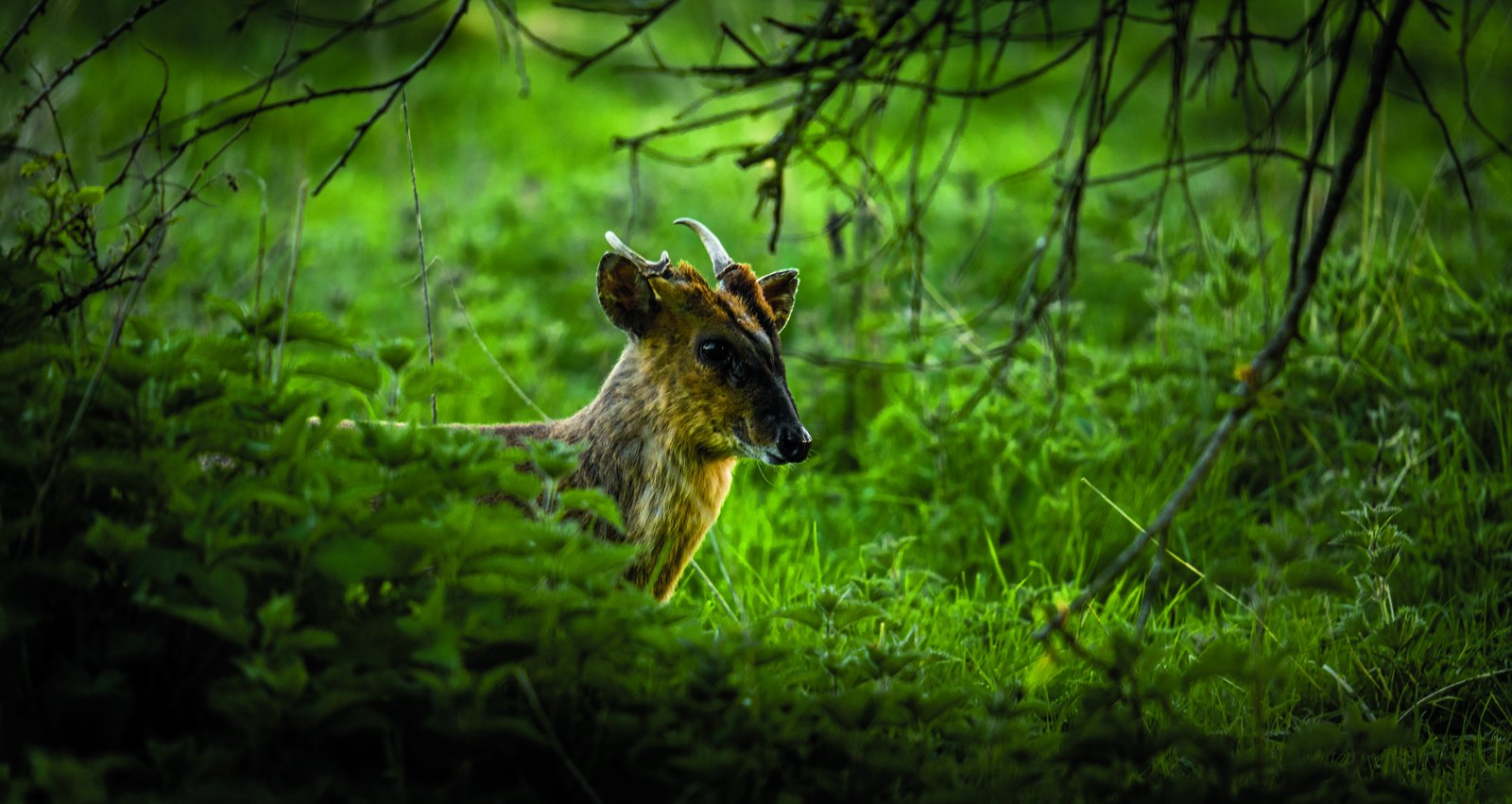

Rabbit control with an air rifle: thermal spotting and summer fieldcraft
Using modern thermal gear and classic fieldcraft, Danny Brookfield spends a summer evening with an FAC air rifle, protecting an arable farmer's oilseed rape from ravenous rabbits
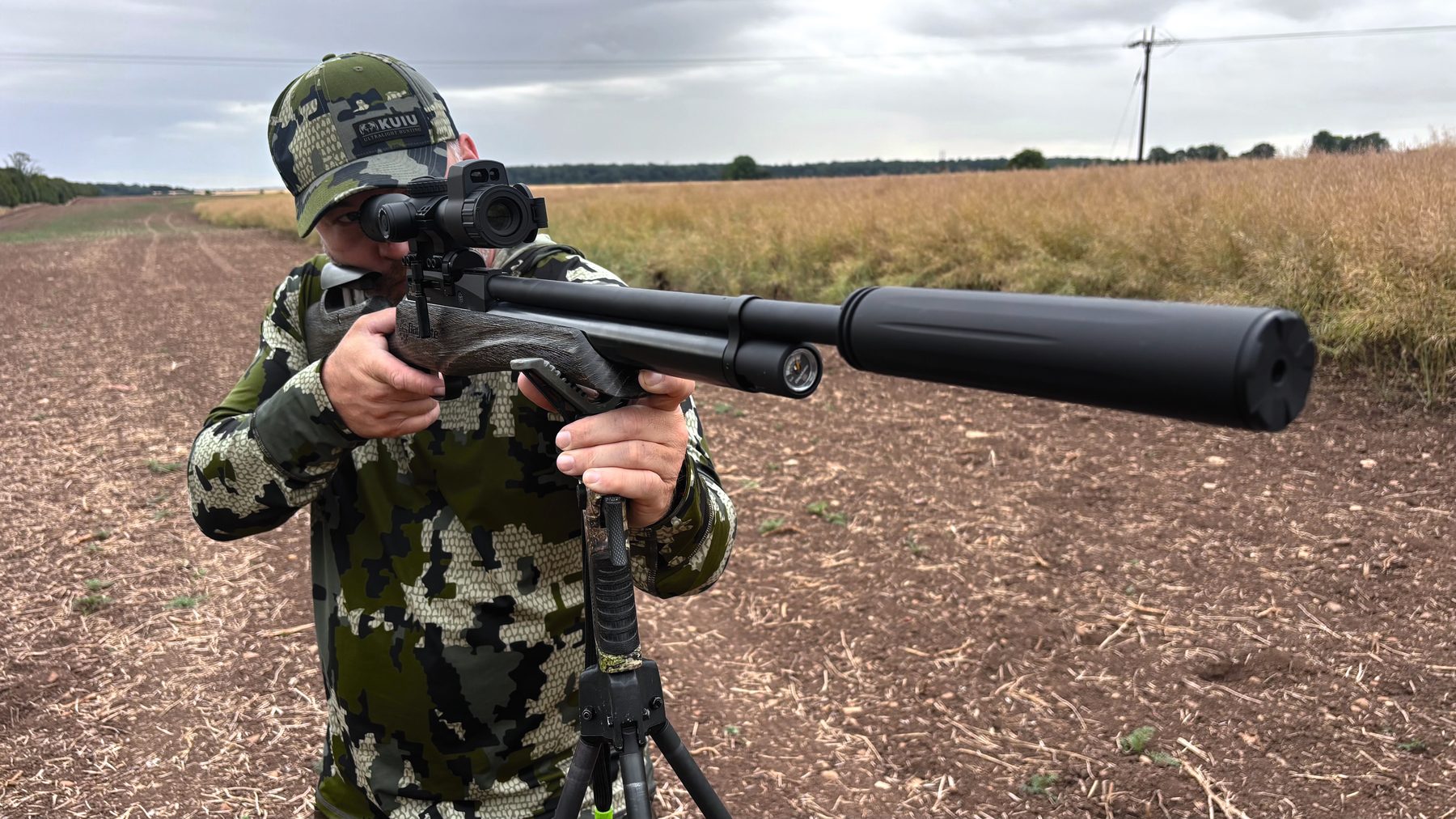 An FAC-rated air rifle ensures clean kills and accuracy at longer ranges.

There’s something special about an English summer evening. As the working day draws to a close and the last tractors leave the fields, the countryside settles into a gentler pace and the light softens to a warm golden glow. It’s unquestionably my favourite time to be out with an air rifle, especially when there’s a genuine purpose behind the outing.
A recent visit to one of my regular permissions reminded me why. The farm is predominantly arable, with large fields of oilseed rape bordered by mature hedgerows, rough grass margins and small pockets of woodland. It’s a beautiful place to spend an evening, but for the farmer it presents an ongoing challenge. Rabbit numbers had begun to build again, and fresh grazing damage was becoming noticeable around the field edges.
Although rabbits are often associated with pastureland, arable farms can be just as attractive to them. The hedgerows provide cover while the crops and lush headlands offer a constant food supply; oilseed rape is particularly vulnerable around the margins where rabbits emerge to feed. Left unchecked, their grazing thins the crop and their burrowing weakens banks, gateways and field edges, creating extra work and expense for the farmer. The aim is never to remove every rabbit, but to keep numbers manageable before they become a serious problem. Regular visits through the year keep that balance.
Conditions couldn’t have been better as I parked the truck beside the first field. There was barely enough breeze to move the crop, and the evening sun stretched long shadows across the headlands. I was carrying my trusted FAC air rifle, a Daystate Huntsman Revere Safari producing around 30ft/lb, topped with a digital scope and kept quiet by a moderator, with tripod shooting sticks for the longer shots. Before setting off, I reached for my thermal binoculars, switched to thermal mode and began scanning the headlands.
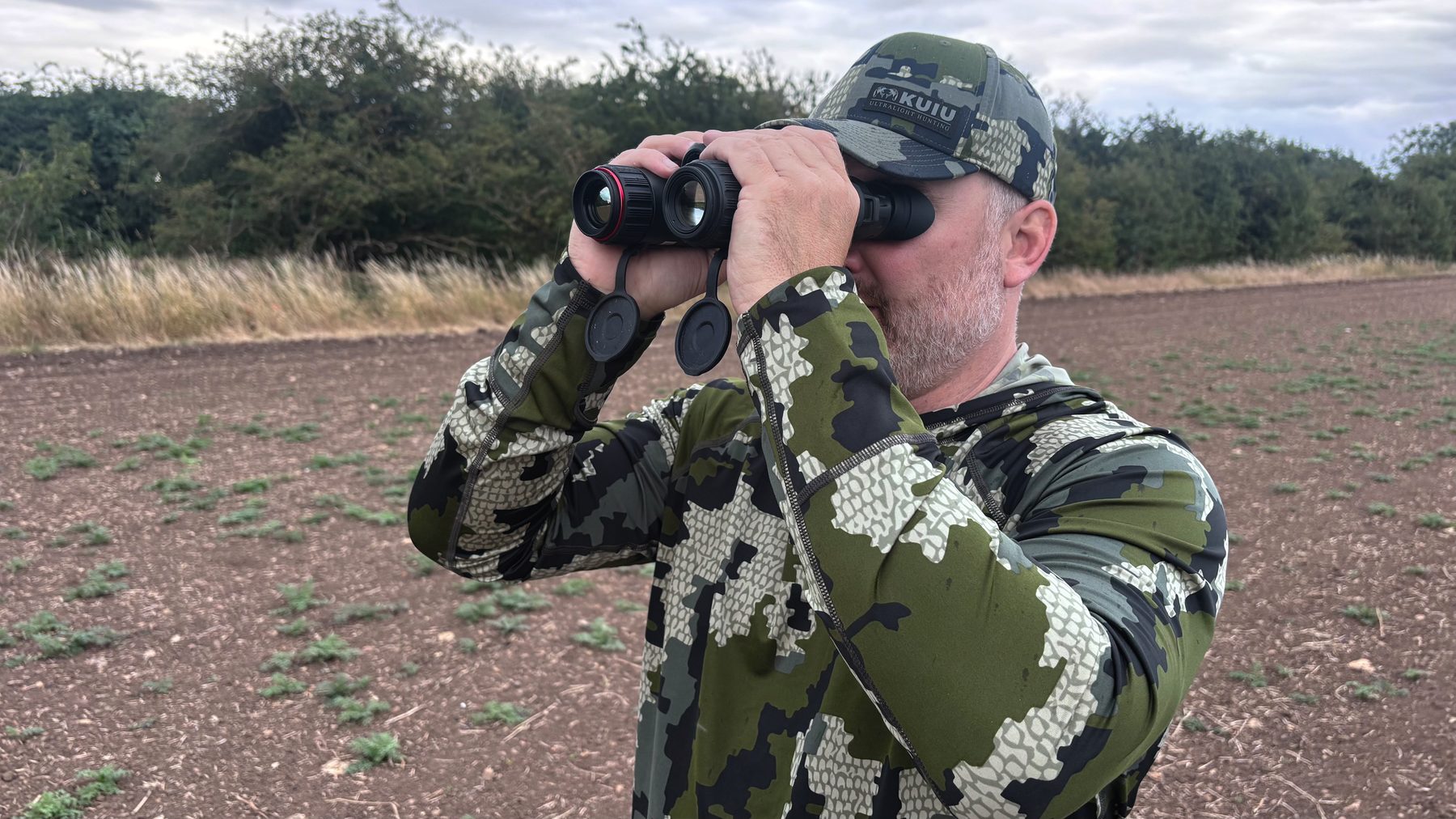
Reading the ground with thermal binoculars
This is where thermal comes into its own on open arable ground. Rabbits can vanish against bare soil and stubble, unseen by the naked eye, but through the thermal binoculars they stood out immediately as bright heat signatures against the cooler background. It let me see exactly where they were feeding before I started, so I could plan each approach rather than wander the fields and risk unnecessary disturbance. With several located around the edge of the rape, I began working my way round.
Rather than sitting and waiting, I prefer to stalk from one margin to the next, using the contours of the land, gateways and hedgerows to stay concealed, advancing only when heads are down or the crop gives cover. This kind of hunting relies every bit as much on fieldcraft as on accurate shooting. The binoculars told me where the rabbits were, but it was still up to me to make each stalk count.
The first opportunity came along one of the headlands. A rabbit had ventured out from beneath the hedge and was feeding contentedly on the lush vegetation bordering the crop, completely unaware as I extended the sticks and settled the rifle. The rangefinder read 43 yards, which turned out to be the closest shot of the evening. With the rifle well supported and the air almost still, I let the crosshairs settle and squeezed. The moderated report was little more than a muted crack, and the rabbit dropped where it had been feeding.
After making the rifle safe and retrieving the rabbit, I paused to scan again rather than press on; it’s surprising how often another appears if you stop and watch. Sure enough, a second signature showed further along the margin. Using the hedgerow as cover, I closed the distance. This one was warier, sitting up to check its surroundings between mouthfuls, so each time it paused I froze. Eventually it relaxed enough to offer a safe shot, the sticks gave a rock-solid platform, the pellet struck true and the rabbit was cleanly despatched.
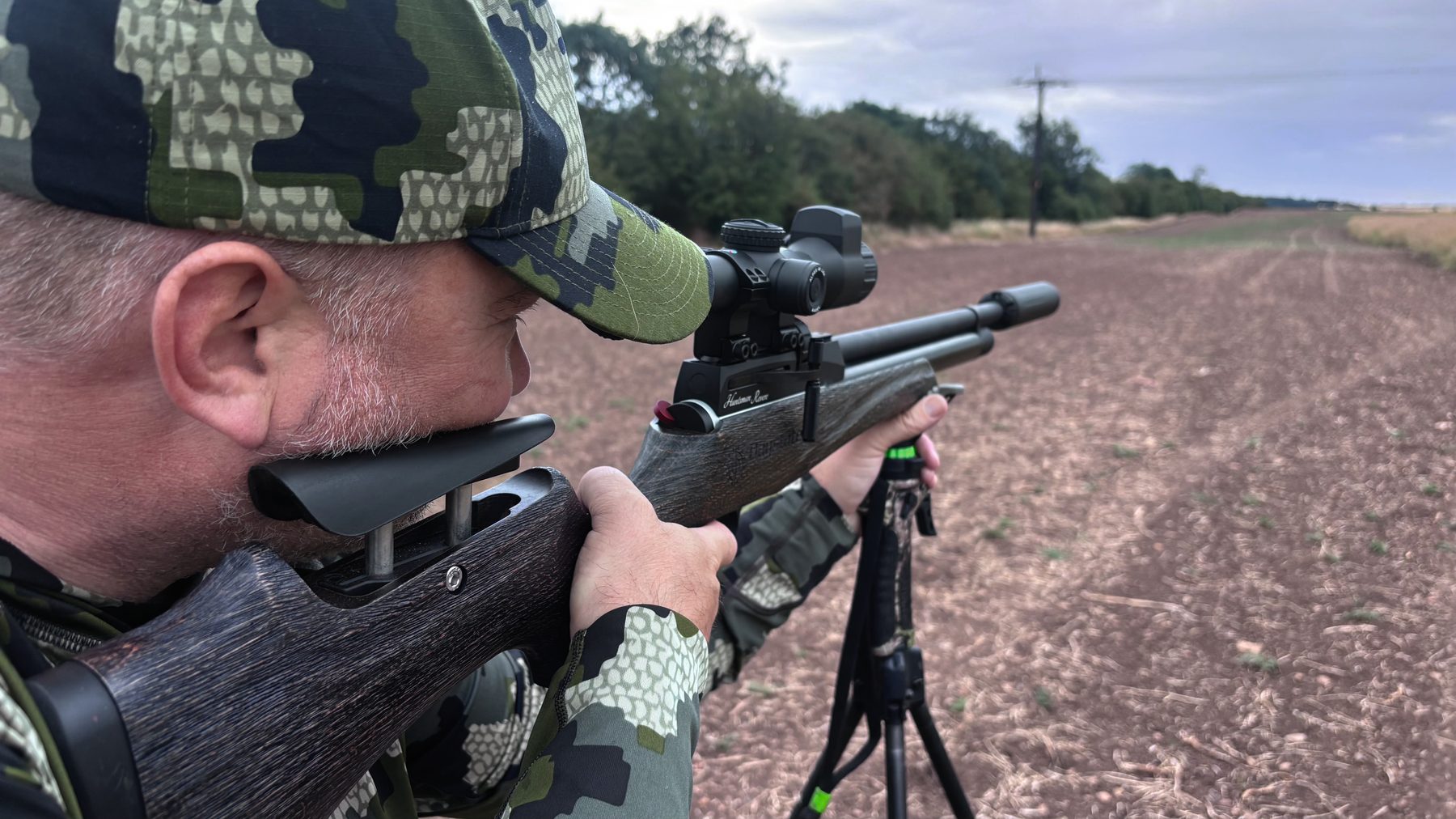
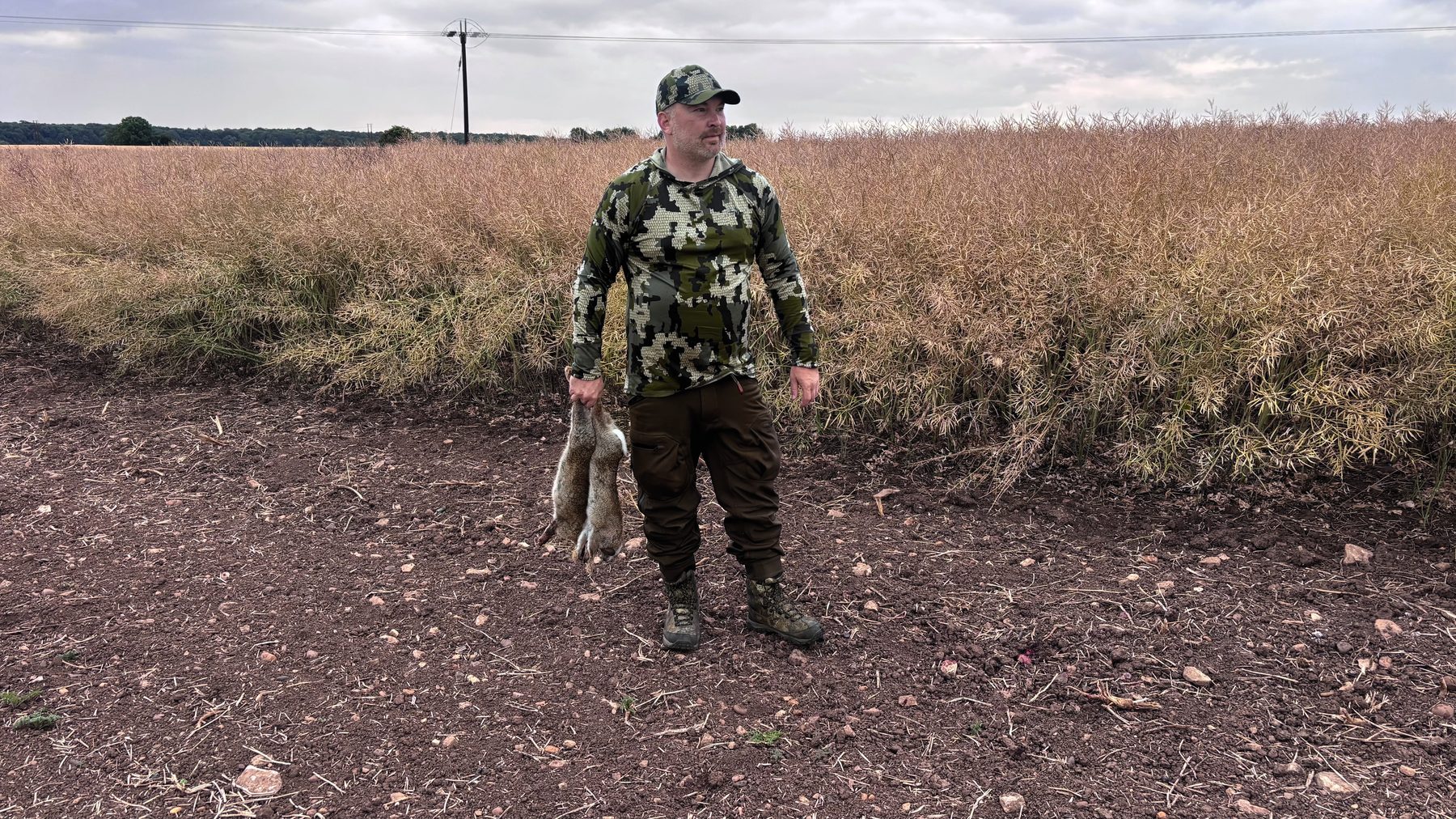
With two accounted for, I slowed to read the next field. The light was softening, which experience says is when activity often picks up. Almost at once another signature appeared against the dark soil of the next headland. To the naked eye there was little to see, but through the thermal the rabbit was obvious, feeding just beyond the rape. Without it I could easily have walked past or spooked it.
Rather than head straight over, I took a wider line, using the undulations and the hedge to stay hidden, because on open ground you have to think several moves ahead – rabbits have excellent eyesight and vanish at the first movement. Checking its position every few yards, I worked into place, deployed the sticks and settled the rifle. A steady breath, a gentle squeeze, and the familiar thump told me everything. Three for the evening.
There was no rush. One of the biggest lessons over the years is that rabbit control is rarely about covering ground; it’s about moving efficiently, observing constantly and making the most of every opportunity.
Why patience matters on the longest shots
As the sun dropped lower, the light became ideal for spotting rabbits along the margins, and the final one gave the most memorable shot. I’d watched it for several minutes as it fed along the field edge, but every time I thought I had a chance it slipped behind a rise or edged back to the hedge, so I waited. Patience is often the difference between success and failure, and eventually it moved to where I could approach. I closed the distance as far as the ground allowed and checked the range. It was 70 yards, the longest shot of the evening.
At 70 yards, this was not a shot to take lightly with an air rifle, but I knew the conditions were right – no meaningful wind, the rifle stable on the sticks and plenty of practice at that range behind me. That confidence only comes from regular range time. The scope held a crisp image despite the fading light, so I checked my aim, let everything settle and squeezed. A fraction of a second later the rabbit collapsed exactly where it had fed.
It’s easy to fixate on the distance, but that wasn’t what made the shot. What mattered was that every part of the process had come together – spotted early, stalk planned, conditions favourable, rifle fully supported. Any different and I wouldn’t have taken it.
With the last rabbit retrieved, I unloaded and headed back to the truck as the light faded beyond the hedgerows. Four rabbits may not sound much, but that was never the point: each one meant less grazing pressure on the rape, and regular management like this beats letting numbers build unchecked. Those results depend on trust, too – every permission is earned by turning up when you say you will, respecting the land, leaving gates as you found them and doing the job safely.
Evenings like this are a reminder that success isn’t about the equipment you carry. Thermal has made locating rabbits far easier, but it doesn’t replace fieldcraft, patience or good decisions – it simply lets you make better-informed ones. Every rabbit was despatched cleanly and humanely, exactly as responsible pest control should be, and helping a farmer protect his crop on a peaceful summer evening is a combination that’s hard to beat.
Frequently Asked Questions
Do you need an FAC air rifle to control rabbits?
No. A great deal of effective rabbit control is done with sub-12ft/lb air rifles at sensible ranges. Danny uses a firearms certificated air rifle producing around 30ft/lb because it gives a flatter trajectory and more margin for a clean kill at longer distances, such as the 70-yard shot he describes here, but that extra power brings extra responsibility over range, backstops and shot placement.
How do thermal binoculars help with rabbit control?
On open arable ground rabbits can disappear against bare soil and stubble to the naked eye. Through thermal binoculars they show as bright heat signatures against the cooler background, so you can locate feeding rabbits before you start, plan each stalk and avoid disturbing the field. Danny stresses that thermal locates the quarry but does not replace the fieldcraft needed to close the distance.
Why are rabbits a problem on arable farms?
Hedgerows give cover while crops and lush headlands offer a constant food supply, so arable farms can be just as attractive to rabbits as pasture. Oilseed rape is especially vulnerable around the margins where rabbits emerge to feed. Left unchecked, grazing thins the crop and burrowing weakens banks, gateways and field edges, creating extra work and cost for the farmer.
What is a safe range for an air rifle on rabbits?
It depends on the rifle, the conditions and the shooter. Danny’s closest shot was 43 yards and his longest 70 yards, but he only took the 70-yard shot because there was no meaningful wind, the rifle was stable on tripod sticks and he had plenty of practice at that distance. The confidence to stretch the range comes from regular target practice, not from the kit alone.
Related Articles

Deer Stalking, Shooting
Hide and sika: stalking muntjac and sika through the early-autumn canopy
Stalking muntjac and sika through the early autumn canopy calls for closer shots, ghostlike concealment and superior fieldcraft
By Selena Barr

Shooting
Blackbuck in Argentina: a hunting and conservation success story
Threatened in its native India, the blackbuck runs wild and abundant on the Argentine pampas. Simon Barr hunts it, and finds a lesson in what managed sport does for a species
By Simon K. Barr
Get the latest news delivered direct to your door
Subscribe to Shooting Times & Country
Discover the ultimate companion for fieldsports enthusiasts with Shooting Times & Country Magazine, the UK’s leading weekly publication that has been at the forefront of shooting culture since 1882. Subscribers gain access to expert tips, comprehensive gear reviews, seasonal advice and a vibrant community of like-minded shooters.
Save on shop price when you subscribe with weekly issues featuring in-depth articles on gundog training, exclusive member offers and access to the digital back issue library. A Shooting Times & Country subscription is more than a magazine, don’t just read about the countryside; immerse yourself in its most authoritative and engaging publication.