★ Your magazine. Your say. Complete our reader survey with a chance to win Jack Pyke kit worth £500! ★


Hornady Outfitter and Superformance non-lead CX ammunition review
With the 2029 lead ban looming, Ed Jackson tests Hornady's Outfitter and Superformance 6.5 Creedmoor loads to see how the 120gr CX copper bullet performs in the field
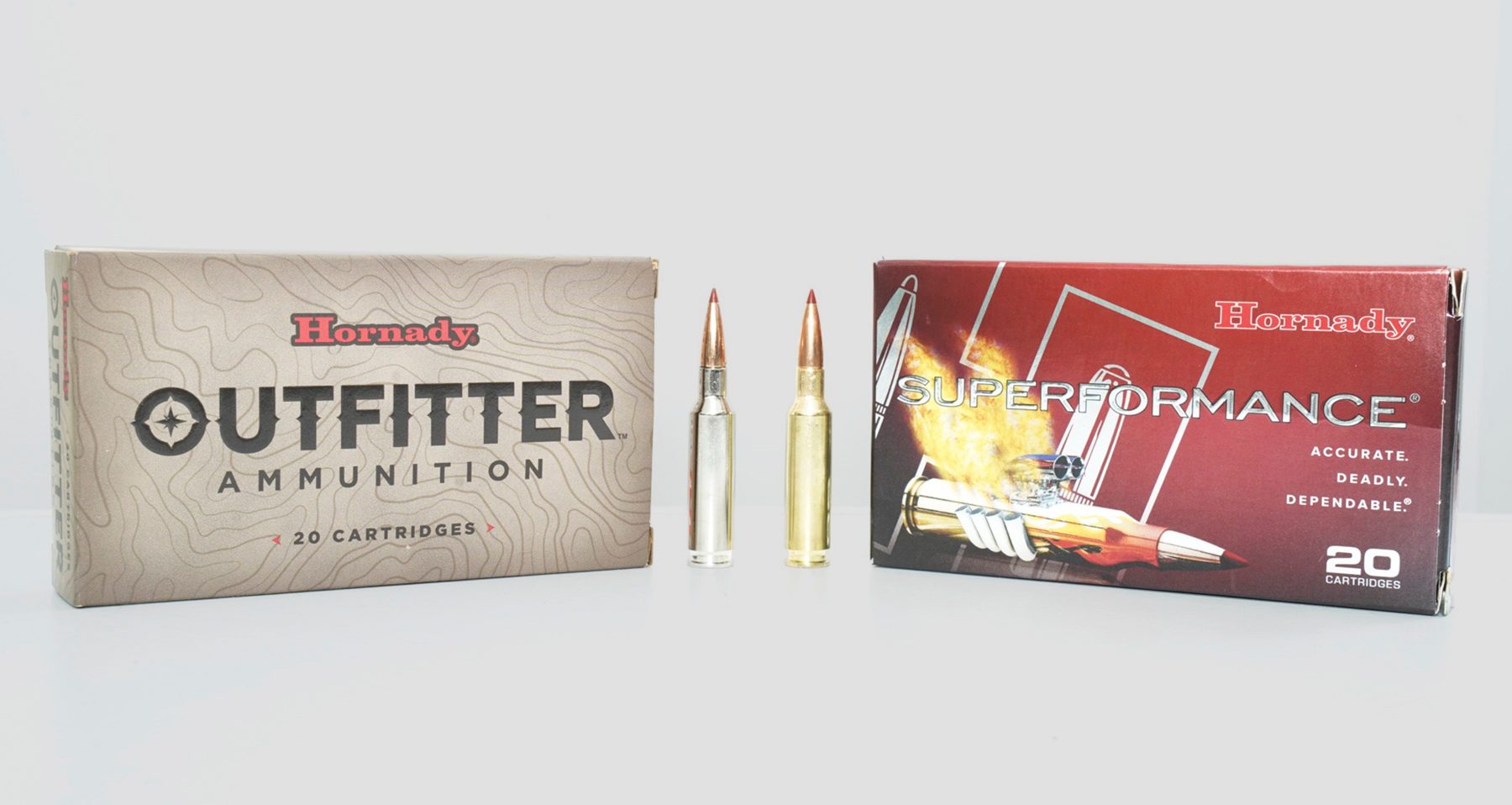
I made the switch to non-lead ammunition for my deer stalking a few years back, while others have persevered with lead. That choice is about to be made for us. From 1 April 2029, stalkers will no longer be able to use lead ammunition in calibres of 6.17mm (.243) and above. Between now and then, I expect a lot of shooters still on lead to start dipping a toe into the non-lead water, so it seemed sensible to try some ammunition from one of the most popular manufacturers, Hornady, in one of the most popular calibres, the 6.5 Creedmoor.
Edgar Brothers, Hornady’s UK distributor, kindly sent me some Superformance and Outfitter ammunition to put through its paces. Both are factory loads aimed at hunters, and both offer a straightforward route to non-lead for anyone who would rather buy off the shelf than start reloading. Prices quoted here are RRP at the time of writing and may have changed.
Hornady Outfitter v Superformance: the figures
| Specification | Hornady Outfitter | Hornady Superformance |
|---|---|---|
| On test | 6.5 Creedmoor | 6.5 Creedmoor |
| Bullet | 120gr CX (Copper Alloy eXpanding) | 120gr CX (Copper Alloy eXpanding) |
| Case | Nickel-plated, sealed | Brass |
| Average muzzle velocity (24in barrel) | 2,881 fps | 2,957 fps |
| Muzzle energy | 2,212 ft/lbs | 2,329 ft/lbs |
| Extreme spread | 42 fps | 6 fps |
| Best three-shot group | 0.783in | 0.907in |
| Reliable expansion to | 365m (400 yards) | 434m (475 yards) |
| Price (guide RRP) | £62.18 | £67.36 |
| Distributor | Edgar Brothers | Edgar Brothers |
The CX projectile
In 6.5 Creedmoor, both lines are loaded with Hornady’s 120gr CX (Copper Alloy eXpanding) monolithic hunting bullet, which is designed to retain 95% of its weight. The pitch is dependable terminal performance at longer ranges by holding on to downrange velocity, and that matters because copper bullets like the CX need to arrive at around 2,000 fps to expand properly. To keep that impact speed up you want a decent muzzle velocity and a high, Doppler-radar-verified ballistic coefficient, which is exactly what Hornady says it has delivered. Time to find out.


Hornady Outfitter
Hornady designed the Outfitter line to be tougher than traditional ammunition, which helps both with storage and with reliable function in poor conditions. If you regularly shoot in harsh British weather, or your ammo cabinet lives somewhere less than ideal, it is worth a look. The standout feature is the case: instead of standard brass, Outfitter uses corrosion-resistant, nickel-plated cases that are fully sealed at the primer and case mouth to keep them watertight. That is one less thing to worry about.

Sticking to the common UK calibres and the CX bullet, the Outfitter range runs from .243 Winchester (80gr), 6.5 Creedmoor (120gr), 6.5 PRC (130gr) and .270 Winchester (130gr) through to .308 Winchester (150gr or 165gr) and .30-06 Springfield (150gr or a heavy 180gr).
Hornady Superformance
Where Outfitter prioritises ruggedness, Superformance is all about squeezing maximum ballistic performance out of the cartridge. Hornady pitches it as the ultimate all-rounder, using specialised progressive propellants to lift muzzle velocity by up to 200 fps over conventional ammunition, and crucially it does that without raising peak chamber pressure or recoil.

For the stalker moving to non-lead, that extra velocity is a genuine perk. Because copper monolithics like the CX depend so heavily on speed to expand reliably, the extra 200 fps is welcome. In practice it means a flatter trajectory and less wind drift, while pushing that critical 2,000 fps impact threshold further downrange. In effect it extends your ethical shooting distance, ensuring maximum energy transfer and a humane kill even on longer, wind-exposed shots. Like most hunters, I will take any advantage I can get. The Superformance line covers .223 Remington (50gr), 6mm Creedmoor (90gr), 6.5 Creedmoor (120gr), .270 Winchester (130gr), .308 Winchester (165gr) and .30-06 Springfield (165gr) with the non-lead CX bullet.
Accuracy and velocity at the range
I ran the accuracy and velocity testing at 94m (104 yards) using my Bergara B14, a rifle that already lives on a strict diet of non-lead ammunition. That was deliberate. In my experience, pushing copper monolithics down a barrel long seasoned on lead can take a fair few conditioning shots before accuracy settles, which is an important point for anyone making the switch.


From the 24in barrel, the Outfitter ammunition produced a healthy 2,881 fps average muzzle velocity, equating to 2,212 ft/lbs of energy, with an extreme spread of 42 fps. Plug the projectile’s 0.428 (G1) BC into the Hornady 4DOF ballistic calculator and you are covered for reliable expansion all the way out to 365m (400 yards), which is plenty for most, and certainly for me. On accuracy, it was consistently sub-MOA, with my best three-shot group measuring 0.783in. That will do nicely.


The Superformance did even better for velocity at 2,957 fps, with 2,329 ft/lbs of muzzle energy and an extreme spread of just 6 fps. That is a 76 fps uplift, which stretches the effective range to 434m (475 yards). On accuracy it managed borderline sub-MOA, with the best group measuring 0.907in, so my rifle clearly has a preference. Yours may well be different. With both loads the recoil, as ever with 6.5 Creedmoor, was lovely and manageable, and feed, extraction and ejection were 100% reliable.
Expansion in the field
Research suggests the CX has a proven record across a wide range of deer species, and word of mouth from the field backed that up, so I went stalking to test its lethality for real. It did not take long for the bullet’s performance to show. Terminal performance on a muntjac buck, an unusually tough little deer, was excellent. A neck shot dropped it instantly. Monolithic copper can sometimes pencil straight through a narrow neck without opening, due to a lack of heavy resistance, but the CX expanded very effectively and delivered a rapid, humane kill.
You can see both loads on test in these short clips.
Superformance on test
Outfitter on test
Strengths and weaknesses
- Easy route to non-lead: proven factory loads that need no reloading to go copper.
- Reliable expansion: the 120gr CX opened well even on a tough muntjac neck shot.
- Manageable recoil: both loads were comfortable to shoot, with faultless feeding and ejection.
- Outfitter’s sealed cases: nickel-plated, watertight cases suit damp storage and hard weather.
- Superformance speed: up to a claimed 200 fps more velocity for a flatter trajectory and more downrange reach.
- Rifle dependent: in my Bergara, Outfitter out-grouped Superformance, so results will vary from rifle to rifle.
- Conditioning needed: a barrel used to lead may need a good clean and a number of copper rounds before accuracy settles.
Verdict
With the 2029 lead ban fast approaching, Hornady’s CX factory loads offer a stress-free transition for UK stalkers. Superformance delivers the most downrange velocity, while Outfitter won the accuracy test in my Bergara with a tidy 0.783in sub-MOA group. Either way you get manageable recoil and devastating field performance. If you want to dip a toe into non-lead, you can make the switch here with confidence. Just give your barrel a good clean and put a decent number of non-lead rounds down the tube to help it transition to lead-free.
Frequently Asked Questions
When does the UK lead ammunition ban start?
From 1 April 2029, stalkers will no longer be able to use lead ammunition in calibres of 6.17mm (.243) and above, which is prompting many shooters to trial non-lead alternatives now.
What is the difference between Hornady Outfitter and Superformance?
Both use the 120gr CX bullet in 6.5 Creedmoor. Outfitter focuses on ruggedness with sealed, nickel-plated cases, while Superformance uses progressive propellants to add up to 200 fps of velocity without raising pressure or recoil.
How accurate is Hornady’s CX ammunition?
In a Bergara B14 at 94m, Outfitter grouped a best of 0.783in (sub-MOA) and Superformance 0.907in (borderline sub-MOA). Which load a rifle prefers varies, so it is worth testing both.
How much do Hornady Outfitter and Superformance cost?
At the time of writing, the guide prices are £62.18 for Outfitter and £67.36 for Superformance. Prices are RRP and may have changed. In the UK the loads are distributed by Edgar Brothers.
Do I need to do anything to my rifle before switching to copper?
Yes. A barrel long used to lead can take a number of conditioning shots before copper accuracy settles, so give it a thorough clean and put a decent quantity of non-lead rounds through it before you rely on the results.

About the author
Ed Jackson
Group reviews editor for Time Well Spent Group and a former editor of Gun Mart, Ed reviews guns and optics for ShootingUK and is responsible for sourcing the newest products to test, often before anyone else has had hands on them. He works across rifles, shotguns, airguns and thermal and night optics, from the Bergara Premier CIMA Pro to the AirMaks Arms Krait MKII bullpup, and fronts much of the group's video output, including the First Shots series of first impressions and the stand-by-stand coverage from the British Shooting Show at the NEC. He also visits ranges, gun shops and training providers for the titles, and rounds up the best of the new kit each year from the show floor.
Related Articles
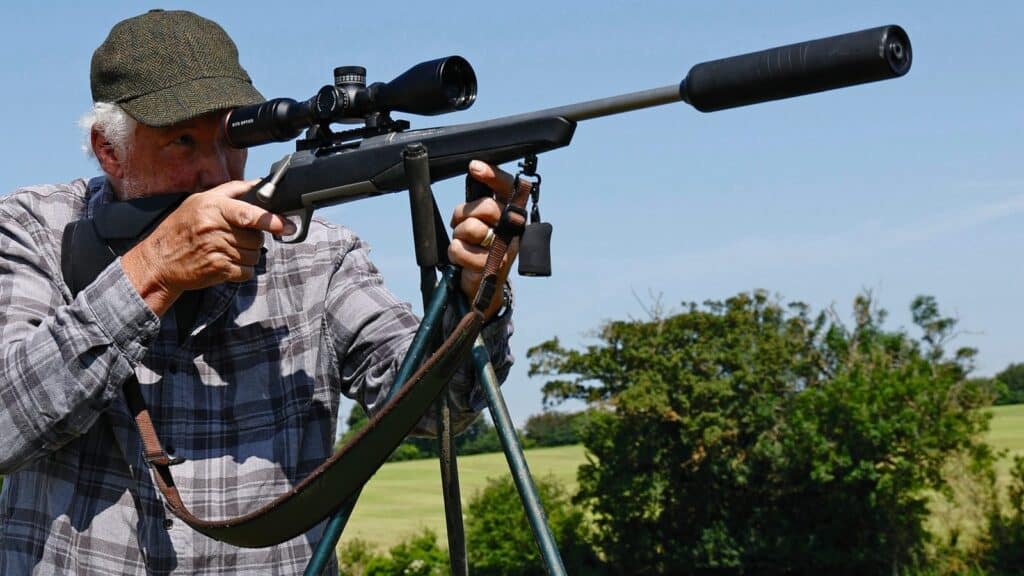
Browning X-Bolt 2 Vari-Tech Nordic review: a practical stainless stalking rifle
Browning’s updated X-Bolt 2 arrives in stainless Vari-Tech Nordic form at 6lb 12oz, with a 20in threaded barrel, an adjustable stock and a crisp DLX trigger. Bruce Potts finds the changes subtle but...
By Bruce Potts | 16 September 2026
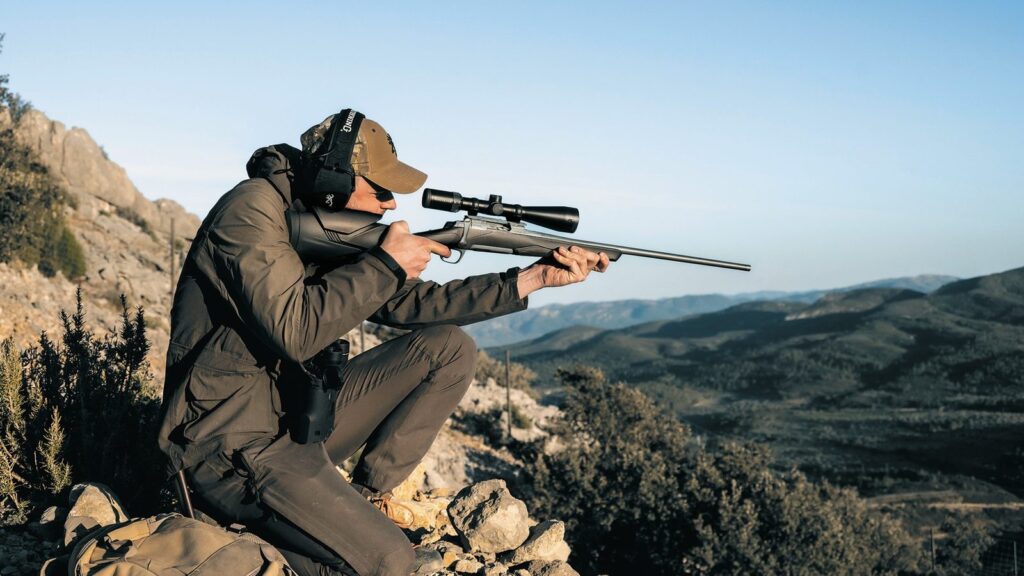
Browning X-Bolt 2 Stainless Vari-Tech Black: ready for every hunt
Browning's new X-Bolt 2 Stainless Vari-Tech Black is a bolt-action rifle built to adapt to the shooter, with an adjustable stock and comb, a stainless barrel and action, and a threaded 51cm barrel. Ma...
By Browning | 15 September 2026
Get the latest news delivered direct to your door
Subscribe to Shooting Times & Country
Discover the ultimate companion for fieldsports enthusiasts with Shooting Times & Country Magazine, the UK’s leading weekly publication that has been at the forefront of shooting culture since 1882. Subscribers gain access to expert tips, comprehensive gear reviews, seasonal advice and a vibrant community of like-minded shooters.
Save on shop price when you subscribe with weekly issues featuring in-depth articles on gundog training, exclusive member offers and access to the digital back issue library. A Shooting Times & Country subscription is more than a magazine, don’t just read about the countryside; immerse yourself in its most authoritative and engaging publication.