★ Your magazine. Your say. Complete our reader survey with a chance to win Jack Pyke kit worth £500! ★


The lost art, reforged: the first British damascus gun barrel in 130 years
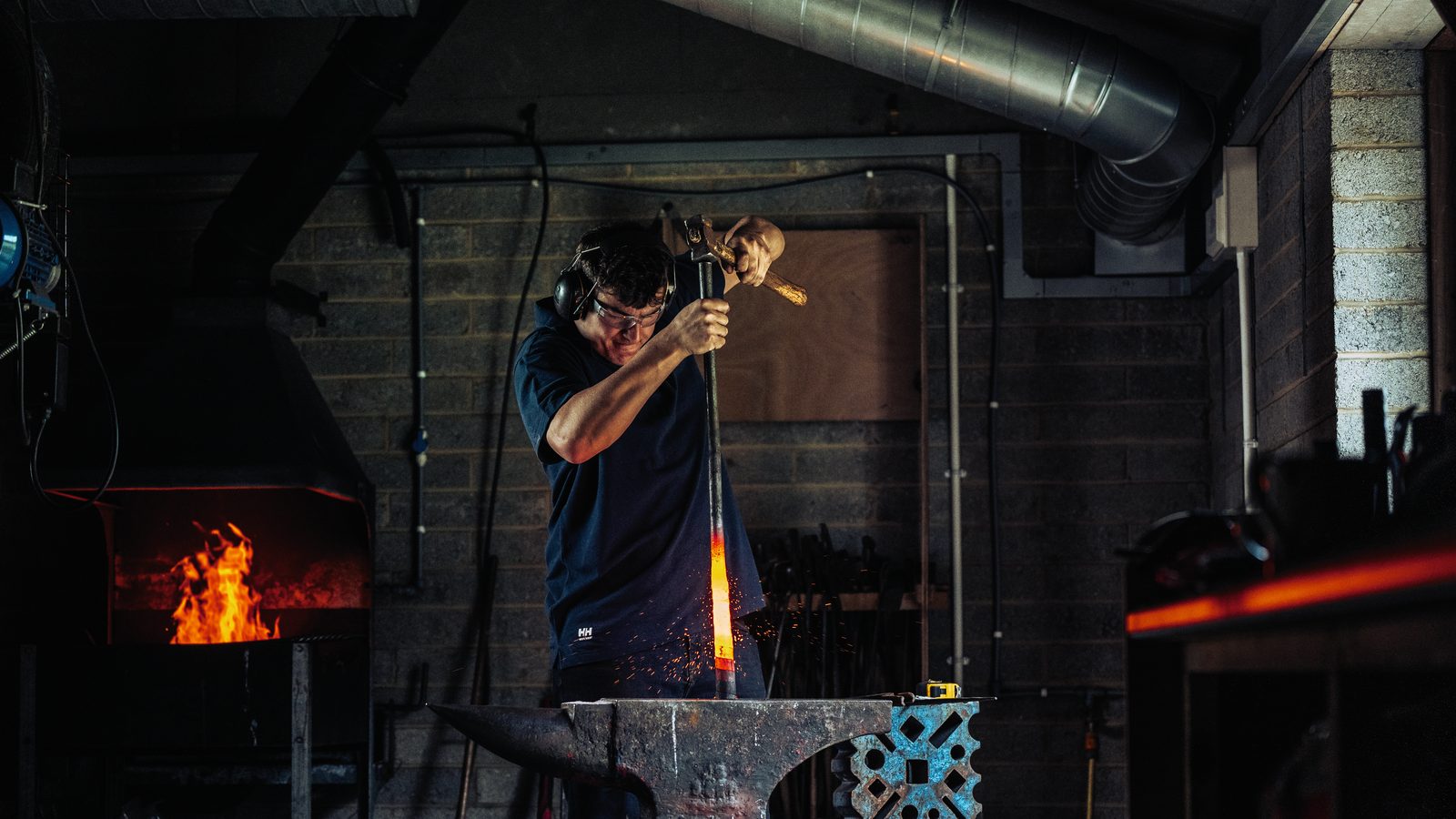
Graham Downing meets Toby Smith, the young Hertfordshire blacksmith who has forged the first damascus gun barrel made in Britain for around 130 years

Photographs: Callum McInerney-Riley
For those of us who love and admire vintage firearms, there are few things as beautiful as a fine damascus barrel. The subtle, swirling twist and intricate patterning of hand-forged metal revealed through a softly gleaming browned finish sets an old gun apart from the plain blued-steel of its more modern successors.
Until the introduction of steel barrels in the 1880s, many top-quality gun barrels were handmade by twisting strips of metal around a mandrel and forge-welding them into a tube.
The last damascus barrels to leave a British workshop were probably made in the 1890s, although manufacture continued in Belgium until the 1930s. Then in March 2026 blacksmith Toby Smith produced what is almost certainly the first damascus gun barrel to have been made in Britain for around 130 years.
From the National School of Blacksmithing to gun barrels
Toby’s road to Damascus started at Herefordshire’s Holme Lacy College, home of the National School of Blacksmithing, where he enrolled on a three-year course in 2022 at the age of 17, emerging with a Double Distinction First. He went straight on to set up his own business making ornamental ironwork such as gates and railings. But in 2025 he started to investigate gun barrel making.
“My father and I have always shot, and in October last year a YouTuber started a series on barrel-making techniques, so I thought I’d have a go,” Toby informed me when I paid him a visit at his Hertfordshire forge.
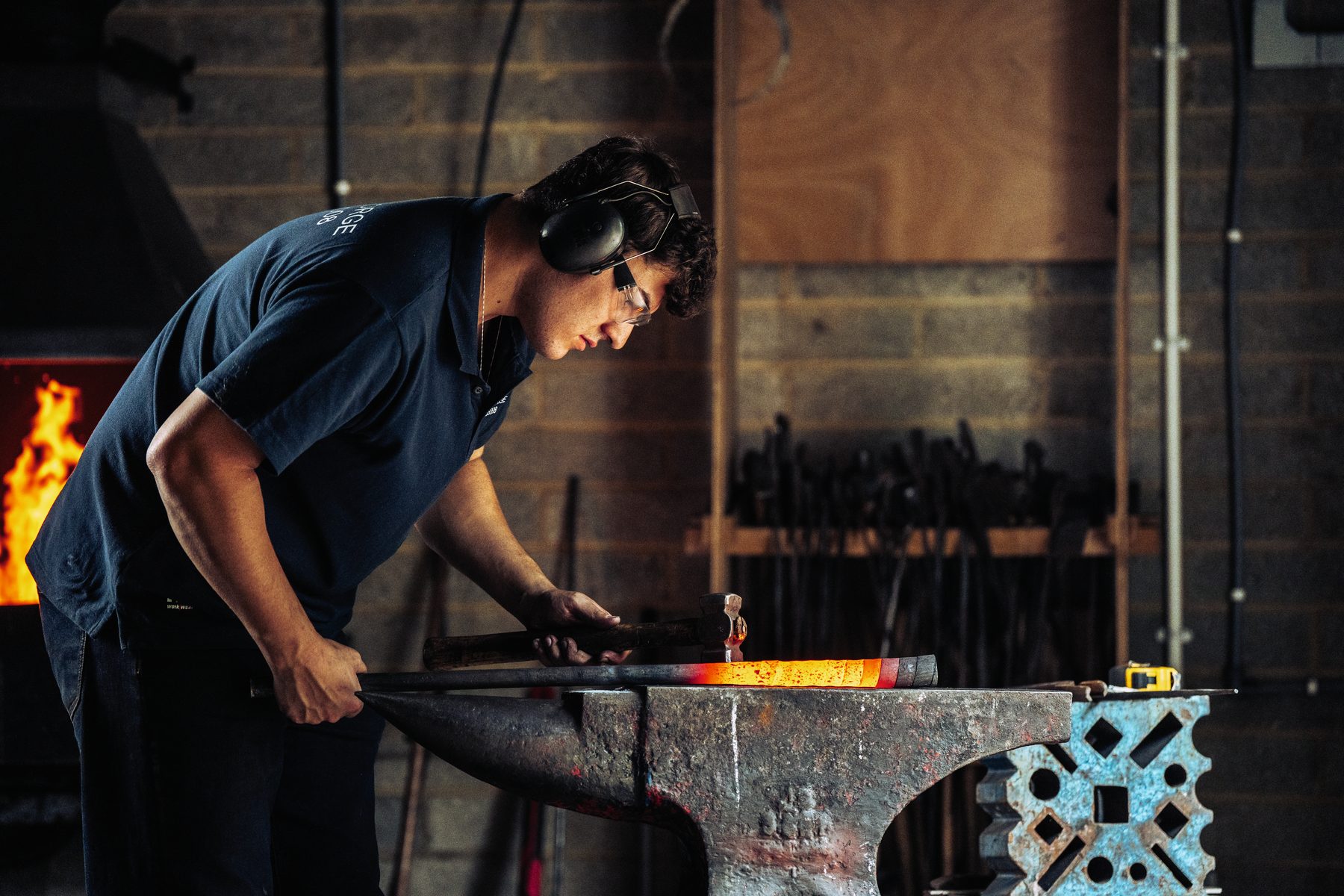
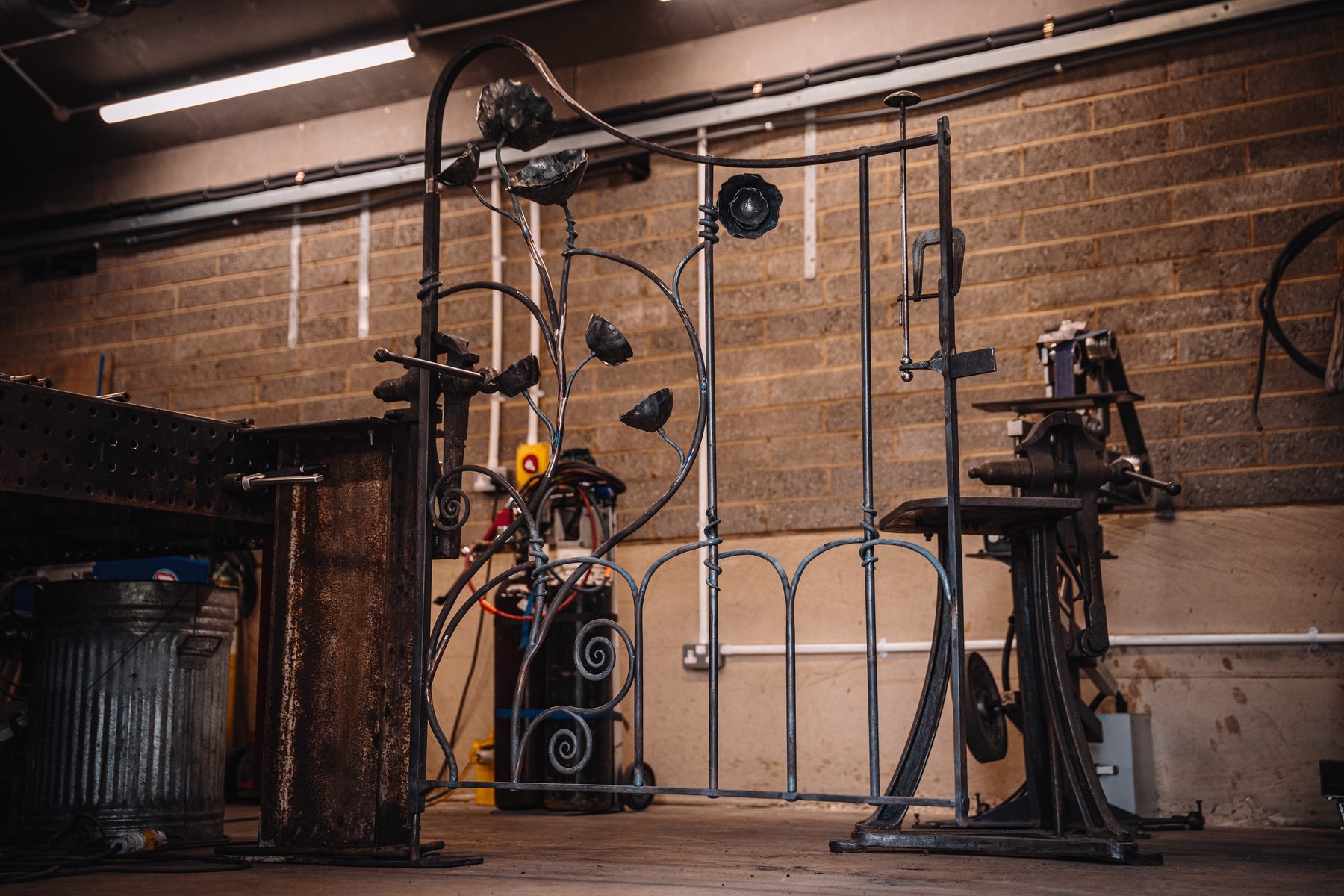
“I made my first piece about 4in long and it came up perfectly, so I did another one. Around Christmas I had made a piece about 10in long, and I decided that I could do a full-sized barrel.”
It was at that point that Toby contacted master barrel maker and chairman of the certification panel of the Worshipful Company of Gunmakers, Bill Blacker. Bill has amassed 50 years of experience in the trade and worked for both Holland & Holland and Purdey before operating as an independent barrel maker. There are few people alive with his knowledge and experience of gun barrels.
At first he was sceptical: “All the people I’ve tried to see make old-time damascus have fallen by the wayside because there’s just too much time and money to invest,” Bill told me. “But I’ve never had someone like Toby that has got so much go in him to produce this. The young man is so clever that I’m prepared to give him my time.”
How a damascus barrel is made
After many conversations, the two finally met at the Great British Shooting Show. Bill provided Toby with the wall thicknesses and other technical details that he needed, and a full-sized barrel was finished at the end of March. This then went to a machinist for boring, with Bill doing all the striking, browning and finishing. The result is a damascus gun barrel with its pattern revealed through a glossy chestnut finish.
The manufacture of a damascus barrel, a description that derives from the type of layered steel used in Middle Eastern sword making, is complex and demands great blacksmithing skill.
Traditionally, alternating strips of iron and steel were forge-welded together and drawn out into square-sectioned rods. These were twisted and then beaten into a flat bar known as the riband, which was then coiled around a central bar known as a mandrel, the whole thing looking at this stage like a spring. This was then heated in the fire and forge-welded into a tube. The blacksmith’s work having been completed, the tube was then drilled out and finished by the barrel maker.
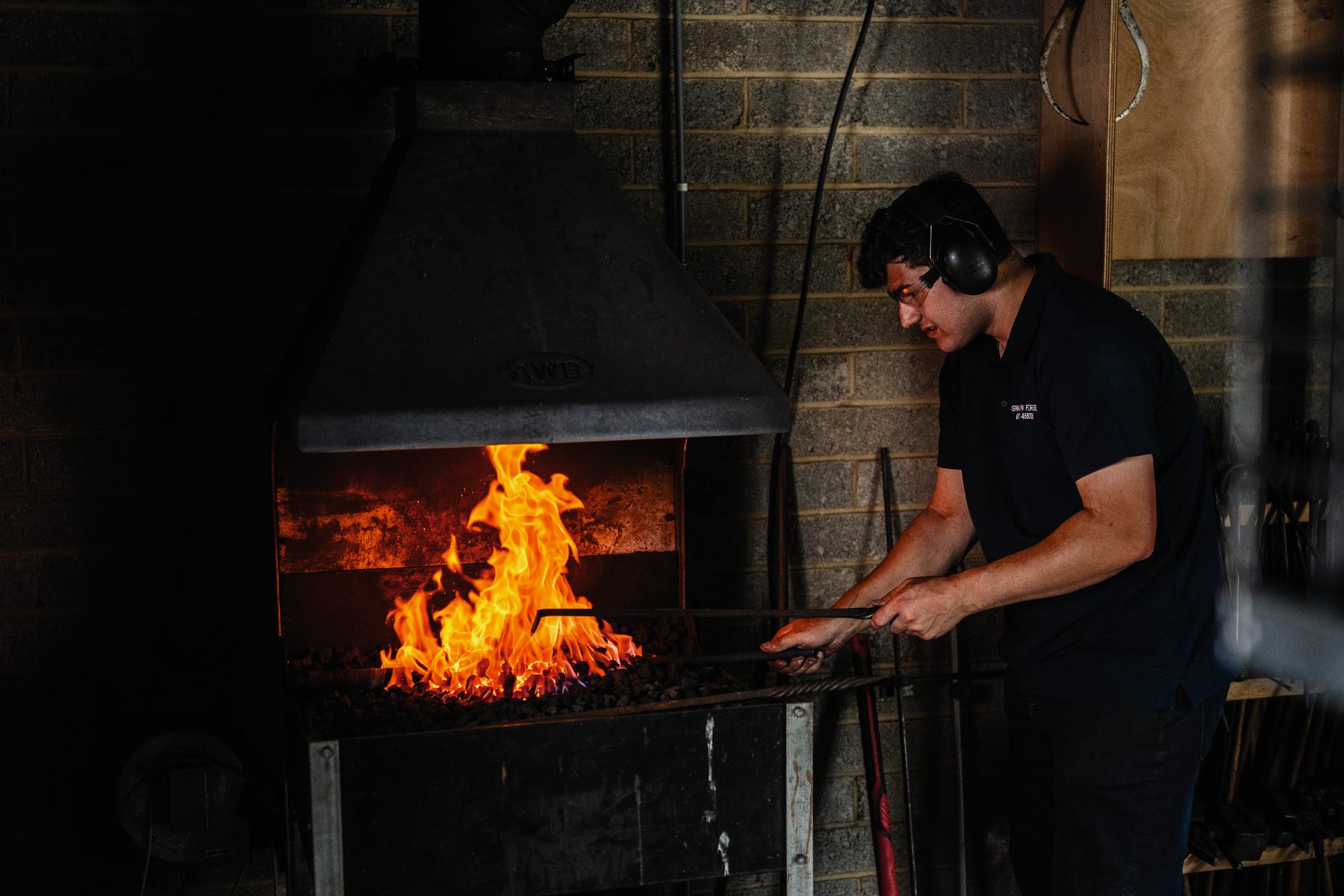
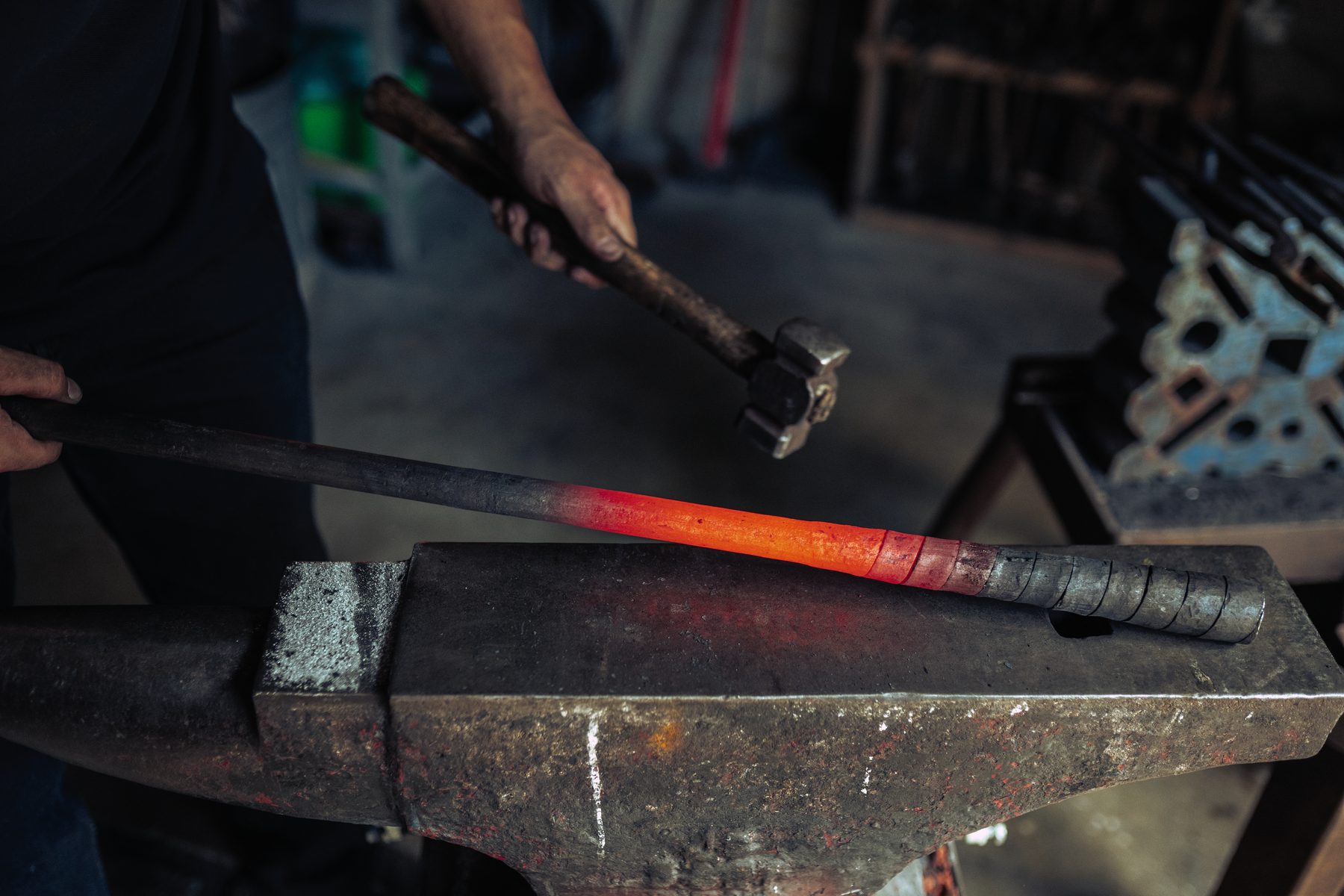
All these steps have been re-learned and replicated by Toby, but with one important addition.
“Traditional barrels were made with iron and low-carbon steel, the difference in the carbon content bringing out the pattern. It’s okay for black powder or light loads, but it’s not as strong as what a lot of people today will want to shoot with. So I make mine with modern alloy steels, which are more difficult to forge but are significantly stronger,” says Toby.
He layers together EN19 and EN24 steels, both of which are tough modern chromium-molybdenum alloys, but with the latter containing nickel, which stays brighter against the metal it is partnered with.
Modern alloy steels and steel shot proof
“They are a lot tougher to forge, but still perfectly forgeable, and EN24 has especially high tensile strength. It’s the sort of steel that you would make forklift tines or hydraulic rams out of.”
Modern metals can produce barrels that can take superior steel shot, which would make it possible for the first time to match traditional handmade damascus with today’s high-performance steel shot cartridges. When I spoke to Toby, his first barrel was about to go to the London Proof House for provisional proof.
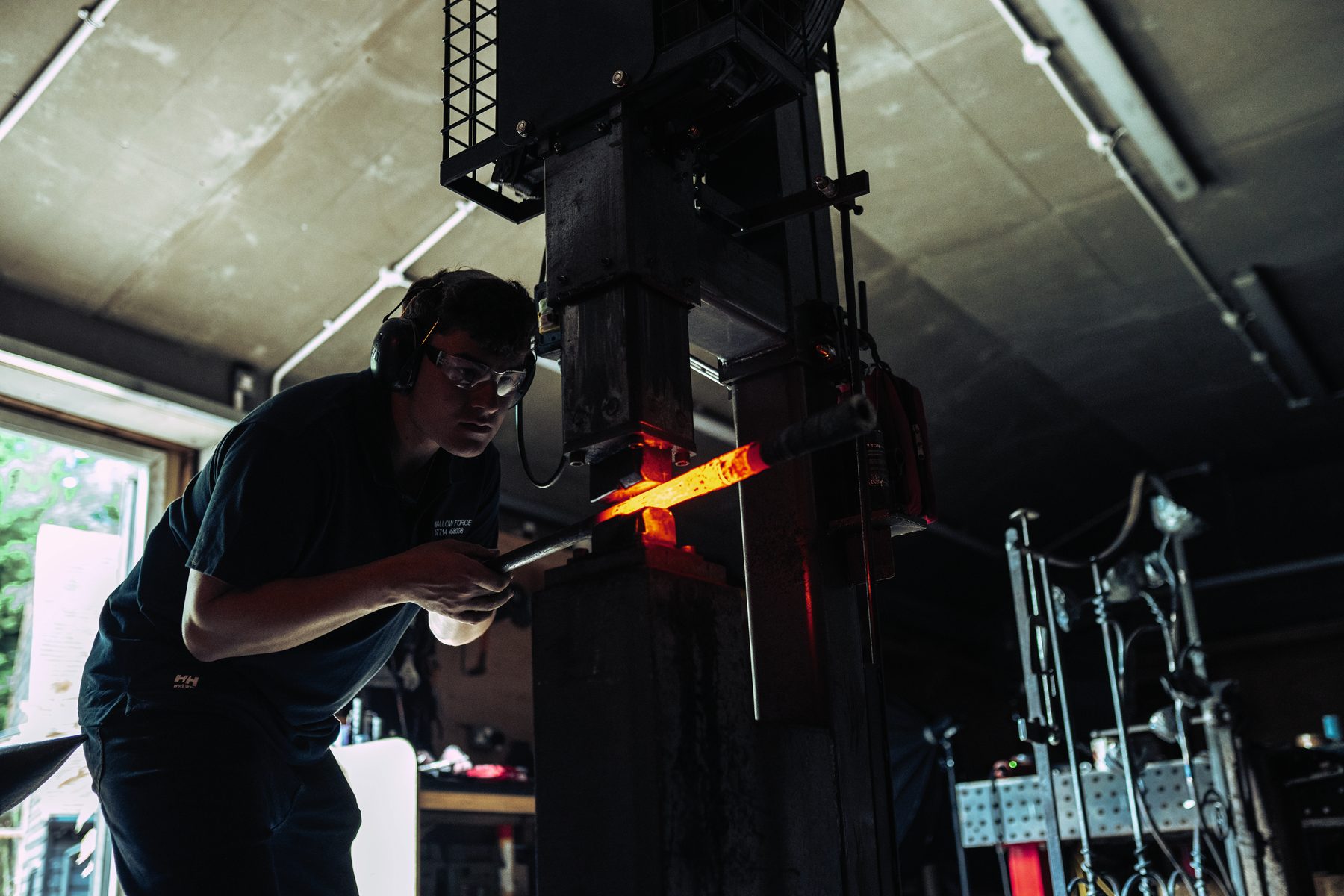
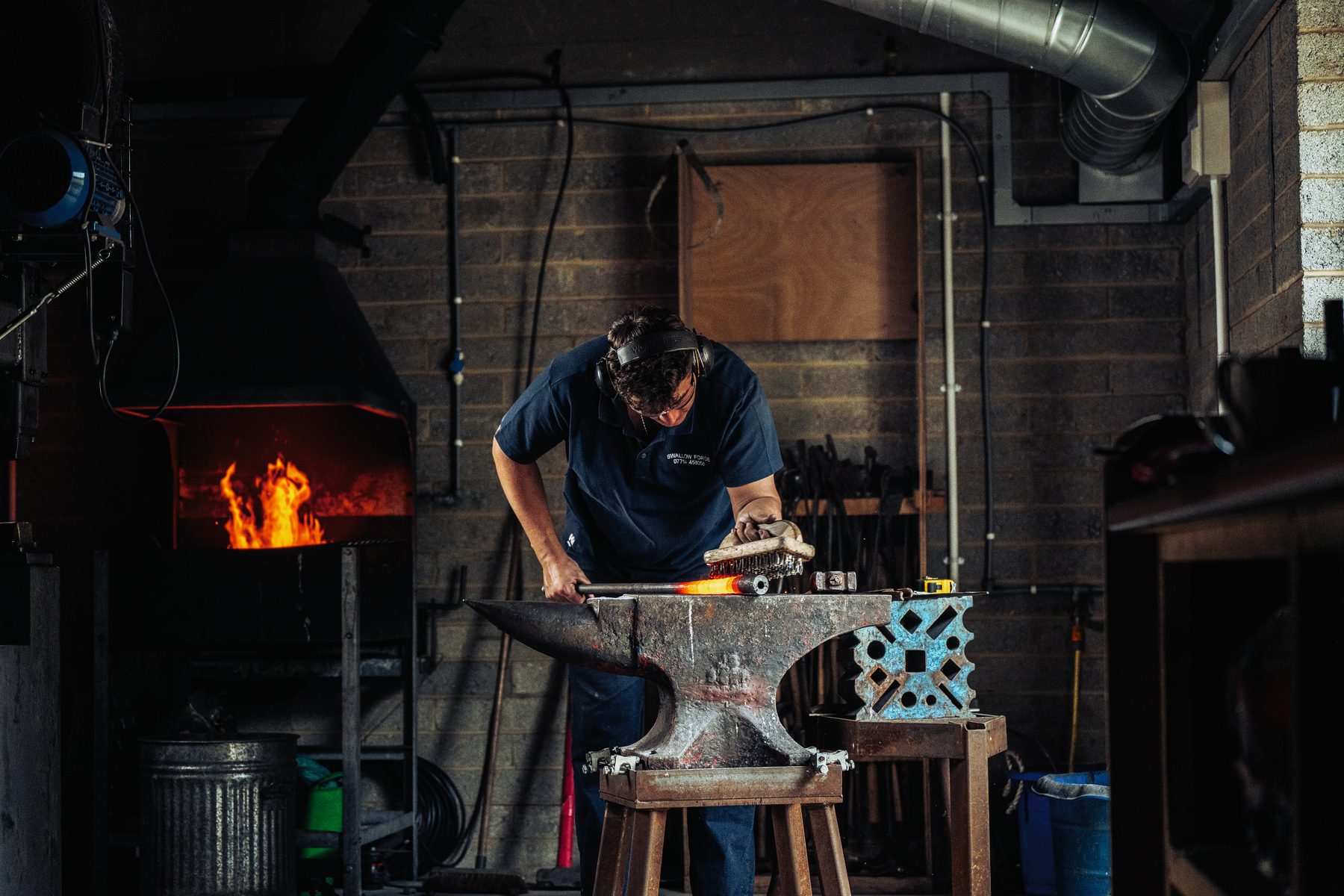
“I’ve made a lot of samples now, and I’ve yet to have any visible flaws or inclusions. I have also worked out how to deal with problems like that should they arise. There’s always something I can do if things go wrong,” he says.
In July Toby took his barrel samples to the Game Fair, along with a practical demonstration of barrel forging that he performed at a portable forge. This generated considerable excitement in the gun trade, and already he has had plenty of interest from the manufacturers of best English guns. He is now working with one gunmaker to get a pair of barrels fitted to an existing action so that the entire assembly can be nitro proofed.
“The goal at present is just to get them to pass for standard steel shot. Superior steel shot proof is on the way,” confirms Toby.
Bill believes that modern damascus barrels made of high-tensile alloys and proofed for steel shot could add considerably to the offerings of the top-flight gunmakers. “We always need something new to sell our high-end guns. We’ve gone from side-by-sides to over-and-unders and to different calibres. Damascus barrels would be something new and different, and if we were producing hand-forged barrels again, then the charge for Toby’s labour could be swallowed up in a £200,000 gun. I think there will be a lot of interest when he gets to the stage of producing a lot of barrels.”
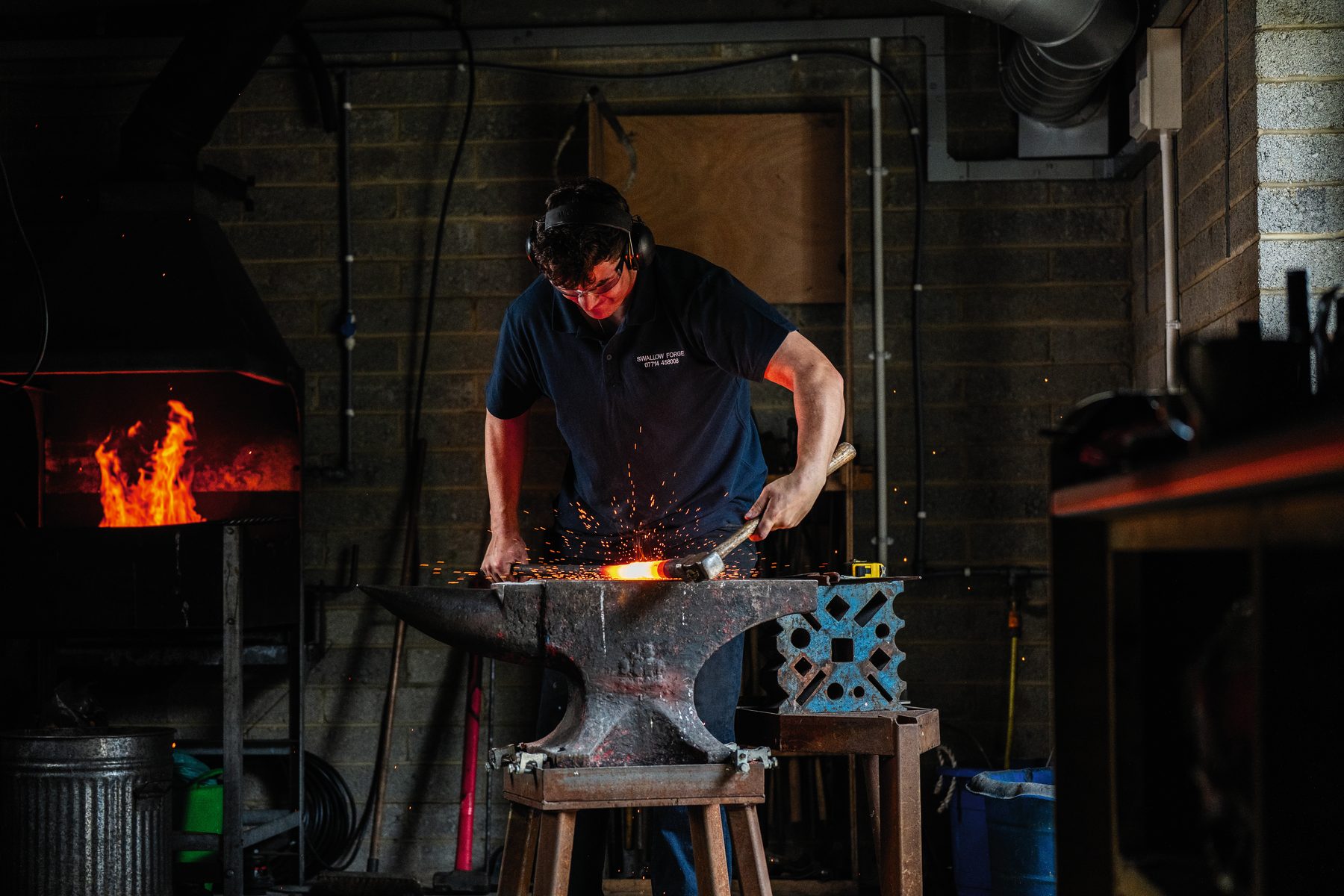
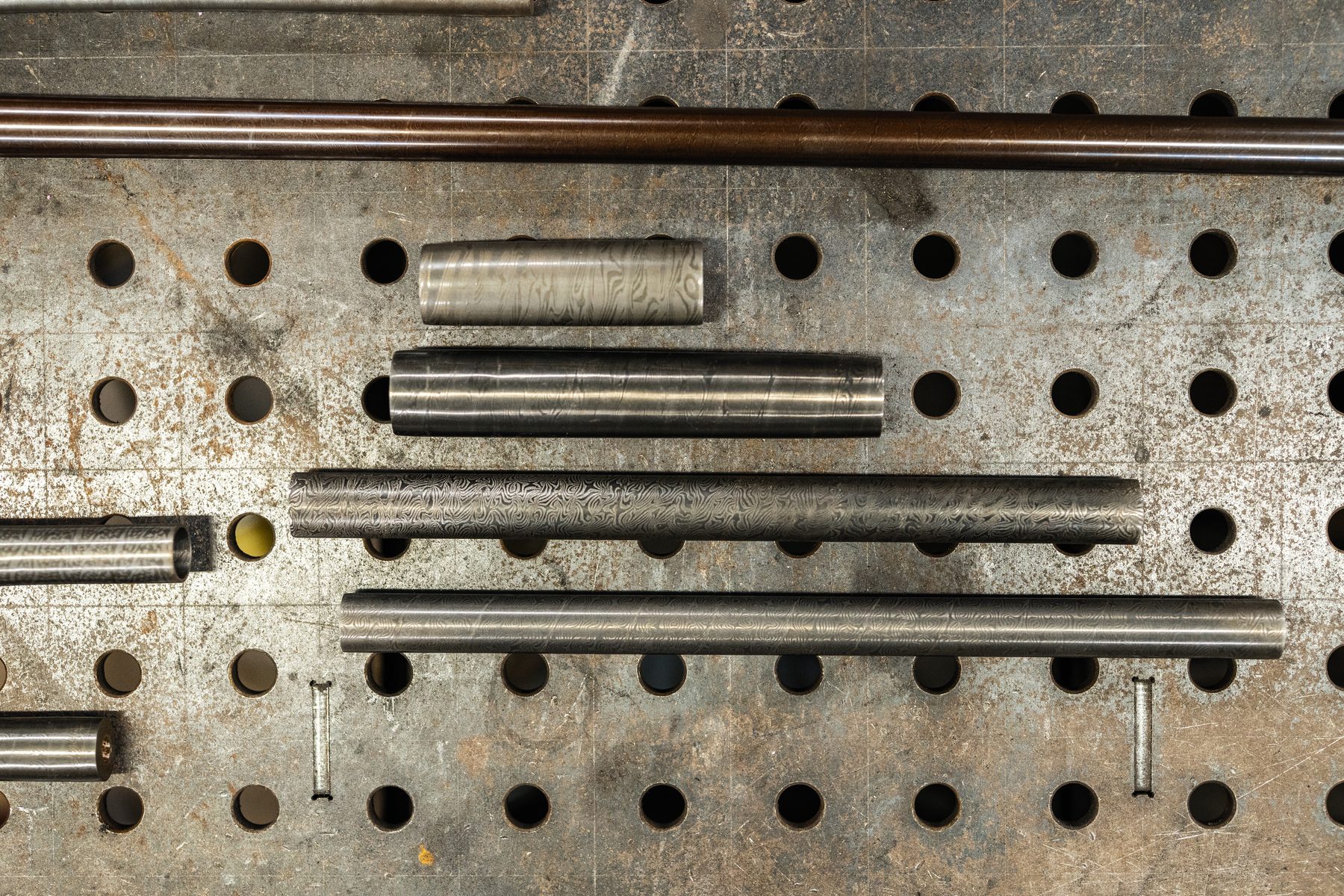
Bill is confident that, with modern steels and the right wall thicknesses, superior steel proof is achievable. “What we want to do is get a pair of tubes together. I’ll do the barrel making side for him and then get them tested, with X-ray crack detection and then off to the Proof House. That gives Toby a real selling point. Because he’s doing it by hand, on an anvil and hitting it with a hammer, you can’t make it as consistently as turning it out of a machine, but there’s nothing that looks better.”
And Toby himself believes that with handmade damascus the sky is the limit: “You can make some crazy patterns with modern technology, I could have names or a family crest running up the barrel, I could do a portrait – it’s really limitless the patterns you can get.”
Bespoke barrels for best guns
His dream is to offer buyers of absolute top-end shotguns the most bespoke experience that they can get, and to establish a company that produces best-quality barrels combining refined, traditional looks with complete modern performance.
According to Bill, Toby, at the age of 22, has given back to the English gun trade the skill of making damascus barrels – something that hadn’t been done for over a century.
“What I’ve seen him do, the perfection and evenness of this damascus he’s producing, is amazing for such a young man,” says Bill. “I never thought that, after my 50 years in the trade, that I would be overseeing the making of damascus barrels. I’ve seen lots of people try. They’ve got to the knife and sword stage, but they haven’t got to the stage of wrapping it around a mandrel and putting it together with the skill that Toby’s got. Before I fall off my perch I’d like to see him succeed.”
Frequently asked questions
What is a damascus gun barrel?
A barrel forged from alternating strips of iron and steel that are welded together, twisted, beaten into a flat bar called a riband, coiled around a mandrel and forge-welded into a tube. Once the barrel is browned, the layered metal shows as a swirling pattern. The name comes from the layered steel used in Middle Eastern sword making.
When were damascus barrels last made in Britain?
Probably in the 1890s, after steel barrels were introduced in the 1880s, although manufacture continued in Belgium until the 1930s. Toby Smith’s barrel, finished in March 2026, is almost certainly the first made in Britain for around 130 years.
Can a damascus barrel be proofed for steel shot?
Traditional iron and low-carbon steel barrels are suited to black powder or light loads. Toby Smith forges his from modern EN19 and EN24 alloy steels, and the aim is to pass them for standard steel shot first, with superior steel shot proof to follow. Bill Blacker believes superior steel proof is achievable with modern steels and the right wall thicknesses.
About the author
Graham Downing
A Suffolk-based independent shooting consultant with 50 years' practical experience of shotguns and rifles across all areas of shooting sport, Graham has been a regular contributor to Shooting Times for more than 30 years. Appointed secretary of the British Shooting Sports Council in 2019, he co-ordinates political lobbying across Britain's major shooting associations on firearms control, and is a vice-president of BASC. He gave oral evidence to the Home Affairs Committee's 2009 inquiry into firearms controls. A keen deer stalker, wildfowler, game and rough shooter who has shot since the age of 13, Graham is the author of nine books, including The Deer Stalking Handbook, Practical Woodland Stalking, Stalking Muntjac, The Sporting Shooter's Handbook and A Sporting Century, the history of BASC.

 Closes 15 JanuaryWorth £129.90Win a pair of tickets to the British Shooting Show 2027Enter nowFree to enter
Related Articles

Beretta 687 500 Years LE review: more than just a collector's piece?
Lloyd Pattison puts the limited-edition Beretta 687 500 Years LE through its paces to see whether anniversary styling makes it more than just a collector's piece
By Lloyd Pattison | 10 October 2026

Beretta A400 Solo: one semi-auto for the foreshore, hide and peg
Beretta’s anniversary-year semi-auto carries the AX800’s gas piston, trigger and recoil pad on the proven A400 platform, with steel proof and a 3in chamber, at almost £1,000 less. How it shoots, and w...
By Lloyd Pattison | 6 October 2026
Get the latest news delivered direct to your door
Subscribe to Shooting Times & Country
Discover the ultimate companion for fieldsports enthusiasts with Shooting Times & Country Magazine, the UK’s leading weekly publication that has been at the forefront of shooting culture since 1882. Subscribers gain access to expert tips, comprehensive gear reviews, seasonal advice and a vibrant community of like-minded shooters.
Save on shop price when you subscribe with weekly issues featuring in-depth articles on gundog training, exclusive member offers and access to the digital back issue library. A Shooting Times & Country subscription is more than a magazine, don’t just read about the countryside; immerse yourself in its most authoritative and engaging publication.

