★ Win a pair of Brandecosse Capriolo boots worth £219! Click here to enter ★

How to deal with wet weather when you put your birds out
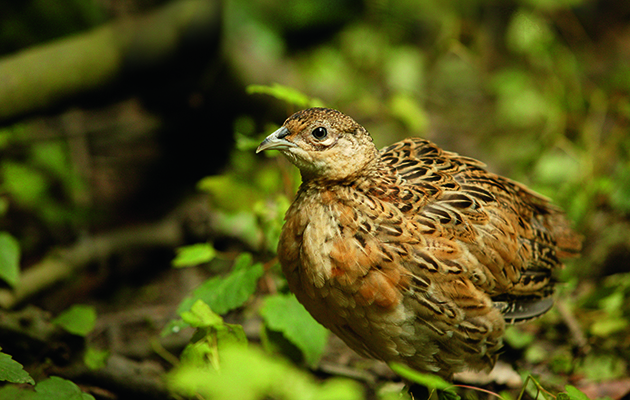 P.Quagliana. July 2008. Phillip rears the pheasants on the shoot. The birds go into release pens with plenty of cover and sunny spots.
USED 4 JUNE 09 NEWS 4/5
Usd 27 july 16 on your shoot
P.Quagliana. July 2008. Phillip rears the pheasants on the shoot. The birds go into release pens with plenty of cover and sunny spots.
USED 4 JUNE 09 NEWS 4/5
Usd 27 july 16 on your shoot

If the weather is on your side when you put your birds out it makes such a difference. A nice run of dry days — when the birds can sit out, dust and sun themselves, followed by warm nights and sunshine first thing in the morning to dry off any dew and perk the birds up a bit — is just about perfect. Sadly, the past few summers have been cold and wet and this current one seems to be no exception. Therefore, it helps if you plan for a worst-case scenario; for wet weather, cold days and a less-than-ideal release period. Should the summer turn out to be hot and dry, no one is going to complain.
Access
The single biggest issue when the weather is wet, aside from the effect it has on your birds when they are actually released, is access to the pens. It is all well and good driving up steep banks and along shaded rutted tracks when it is dry, but they can become impassable or even dangerous when it is wet.
It is a good idea to take a critical look at the route you take to your pen. If it is not great, see if there is some way of moving or improving it that will make accessing the pen easier. Often all it will take is an hour or so with a chainsaw to cut a new route or open up the existing one so the wind and the sun can get at it and dry it up.
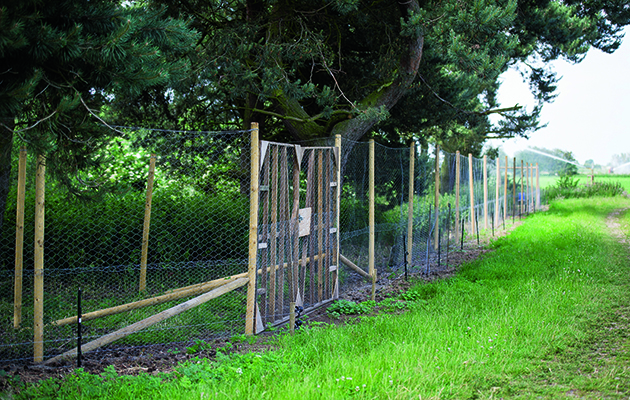
Take a look at the access routes to your pen, as they can become cut up and muddy during spells of heavy rain
Rides
Rides within a pen are important for several reasons. Not only do they help the birds navigate the pen and give them somewhere to sun themselves when the sun is actually shining, but they also provide a place for them to dry off when it stops raining.
We swipe our rides as near to the release date as we can. The later we leave it, the shorter the grass will be when the poults go in and the quicker it will dry out after a shower of rain. In a really wet year, it is almost impossible to avoid cutting the rides up a bit, but we try to get it done on the drier days if we can.
Feeders and drinkers
After gateways, the muddiest and dirtiest area of a pen is usually around the feeders and drinkers. Feeders can be moved quite easily, likewise drinkers unless they are on a mains water supply or connected to a header tank. If they are on mains water or tanks, it is just not practical to move the water line when the ground gets wet. The simplest way to allow for some movement of the drinkers is to use longer-than-average lengths of micro pipe. An 8ft to 10ft length of micro-pipe should be able to reach a patch of dry and relatively unsoiled ground in all but the wettest of summers.
Feeders are best filled the day before the birds are due to go in. I have made mistakes in the past, when we have tried to get in front and put the food in the feeders a few days before the birds were due to go out, only to have it rain for four or five days at a time.
By the time the weather had dried up enough for us to go into the wood, the pellets were wet and we had to unblock most of the feeders. We wasted quite a bit of food, but more frustratingly we spent a lot of time unblocking the feeders and refilling them with fresh pellets.
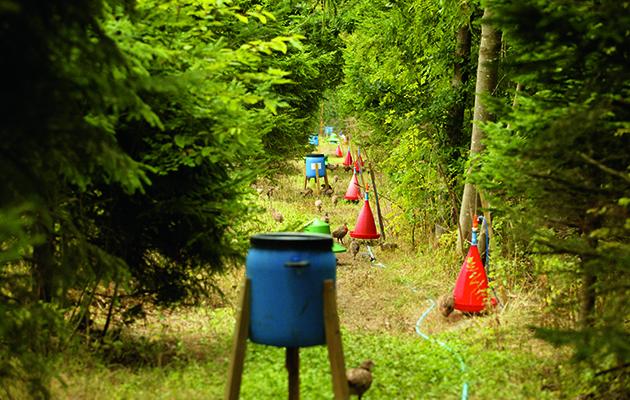
After gateways, the muddiest areas in the pen will around the feeders and drinkers, so move them if you can
Shelters and medication
Whether you need shelters in the pen or not is debatable. Some people swear by them, others won’t have any at all. I’m not a fan because they can get a bit smelly and dirty and the birds tend to congregate under them and start picking on each other when it gets wet. It is far better to improve the habitat within the pen and release birds that can cope with the weather without shelters than it is to rely on them. Having said that, if your pen is less than ideal or the woodland is newly thinned, they can be a real help.
If you do decide to use them, make plenty so that there is less bullying, build them high enough for you to be able to see what’s going on underneath, and try to make them as tidily as you can so they look less out of place when people walk past them on shoot days.
When poults get wet and cold, even well-grown ones, they can lose condition and become more susceptible to viruses and bacterial infections. If you see any that look ill or you pick up a few dead ones, take them to the vet for examination.
If you have a good relationship with your vet and you are expecting a spell of inclement weather, talk to them about getting some medicated feed for the first few weeks the birds are out.
The feed firm will need the vet’s details when you put your order in. They’ll then contact the vet directly for the prescription and the rate. Medicated feed with the additives at even the lower preventative rate can make all the difference, and should be enough to see them through all but the worst of challenges.
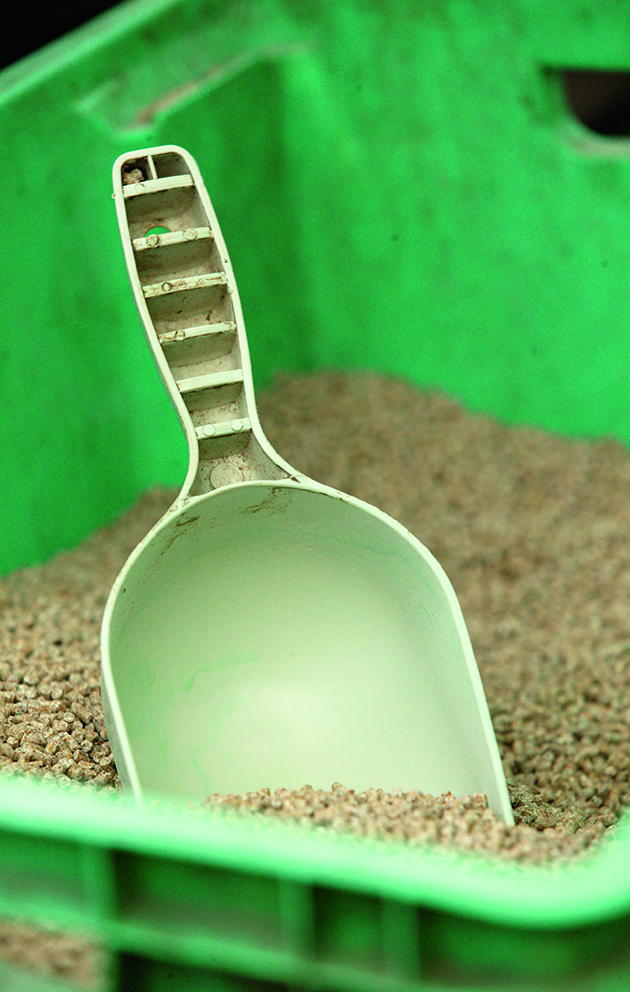
Make sure pheasant pellets do not get wet, as they will block the feeders and will have to be replaced
Worming and vitamins
Worming will need doing regardless of the weather, but if it is wet you may find you have to repeat the treatment. We do ours when they have been in the pen for about a week, then again three to four weeks later, before they start getting about. It is almost impossible to dose them properly once they are out of the pen, so we try to get a couple of doses in while we can.
Finally, I think it is worth adding solulytes and multi-vitamins to the water for the first two to three days after release, to help them replace any lost body salts and to aid their recovery from any stress related to the catching and transporting to the pen.
If the weather takes a turn for the worse once they are out, I would suggest that you pulse dose the multi-vitamins for another two to three weeks.
Related Articles
Stalking diary: the boundary-crossing buck that made the morning hard work
Waking at 3am is only half the battle when a boundary-crossing young buck decides to make Charlie Blance's morning roe stalk as difficult as possible
By Charlie Blance
Simulated game shooting: like game shooting minus the feathers
Once dismissed as mere off-season practice in tweed, the simulated game day has become a sport in its own right; Selena Barr asks four leading operators what separates a standout day from a chaotic on...
By Selena Barr
Get the latest news delivered direct to your door
Subscribe to Shooting Times & Country
Discover the ultimate companion for fieldsports enthusiasts with Shooting Times & Country Magazine, the UK’s leading weekly publication that has been at the forefront of shooting culture since 1882. Subscribers gain access to expert tips, comprehensive gear reviews, seasonal advice and a vibrant community of like-minded shooters.
Save on shop price when you subscribe with weekly issues featuring in-depth articles on gundog training, exclusive member offers and access to the digital back issue library. A Shooting Times & Country subscription is more than a magazine, don’t just read about the countryside; immerse yourself in its most authoritative and engaging publication.