★ Your magazine. Your say. Complete our reader survey with a chance to win Jack Pyke kit worth £500! ★

Shotgun shot sizes explained: what to use for clays, game and wildfowl
Bigger number, smaller pellet – and that is only where the confusion begins. A guide to what the numbers mean, what to load for clays, game and wildfowl, and how the switch away from lead changes every one of those answers
 The number on the case means one thing in lead and another in steel

Photographs: Callum McInerney-Riley
Shot size is the single most argued-about number in shooting, and the one most often got wrong. It matters more now than it did 20 years ago, because the move away from lead has changed the arithmetic. A load that killed cleanly as lead No 5 does not behave the same way as steel No 5, and the difference is not academic when a bird is at 40 yards. Here is how the numbering works, what to use for what, and what changes as the lead restrictions bite.
How shot sizes work
The numbering runs backwards, which is where most of the confusion starts. The higher the number, the smaller the pellet. No 9 is tiny, No 1 is large, and beyond No 1 the scale abandons numbers altogether and moves to letters: BB, BBB and larger still.
The trade-off is simple. Small pellets give you a great many of them in the load, so the pattern is dense and the chances of a hit are high, but each pellet carries little energy and sheds it quickly. Large pellets carry energy further and penetrate better, but there are far fewer of them, so the pattern thins and gaps open up. Every sensible shot size recommendation is an attempt to balance those two things against the size of the quarry and the range you expect to shoot it at.
English sizes are not continental sizes
This is the trap. English shot sizes and continental sizes do not correspond, and British shooters routinely buy cartridges loaded to one standard while thinking in the other.
Broadly, most continental and American clay loads run about half a size larger than the English equivalent, so what a British loader calls No 8 may well be sold elsewhere as 8.5. Eley lists its No 7 at 2.4mm and its 7.5 at 2.3mm, but an Italian-made cartridge labelled 7.5 may in practice hold pellets nearer English No 7. Some UK brands use continental sizing too.
The practical answer is not to trust the number on the box across brands. If it matters to you, open a cartridge, measure a handful of pellets and count them. If you are switching brands mid-season, do it before the season rather than after a bad day.
What shot size for clays?
Clay loads sit at the small end. No 9 is a skeet load, thrown at close range where pattern density is everything and energy is almost irrelevant. No 8 covers most sporting targets. No 7.5 is the standard trap and down-the-line size, giving a little more reach for going-away targets.
The common question of whether 7.5 or 8 is better has no universal answer, and the honest response is that on most sporting layouts you will not see a difference you can attribute to shot size rather than to your own shooting. Choose on the basis of the longest target on the stand, not the shortest.
What shot size for game?
Driven game is No 6 country, and No 6 remains the most useful all-round game size in Britain. It carries enough energy for pheasants at sensible heights while keeping the pattern dense enough to be forgiving.
For high birds, or late-season cocks carrying heavy feather, No 5 gives more penetration at the cost of pellet count. Partridge shooters often drop to No 7 or 6.5 early in the season, when birds are close and the pattern matters more than the punch. Anything larger than No 4 on driven game is generally more use to the beaters than the birds.
What shot size for duck and geese?
Wildfowl need more. They carry dense feather and down, they are often shot at longer range in poor light, and the consequences of a marginal pellet strike on a bird over water are worse than on dry land.
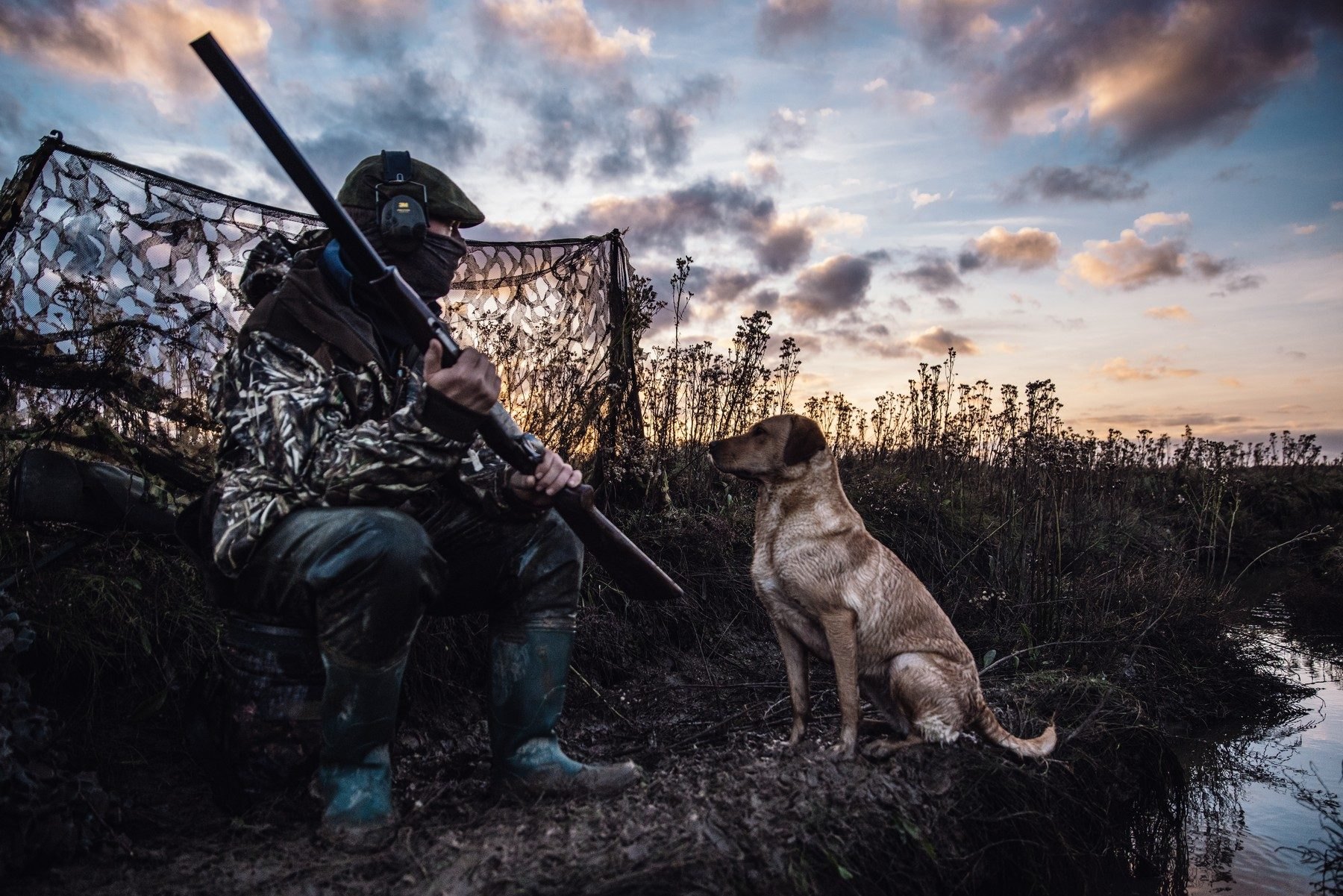
Working in lead terms as a baseline, duck over decoys sit around No 5, duck at range around No 4, and geese around No 3 or larger. Almost nobody shoots wildfowl with lead any more, for reasons set out below, so those numbers matter mainly as the starting point for the conversion that follows.
Converted to steel, that puts teal and duck over decoys at No 4 or 3, duck at range at No 3, and geese at No 1 or BB. A fowler carrying one load for a mixed flight will usually settle on steel No 3, which is the compromise most British wildfowling cartridges are built around.
Bore size is a separate question and less decisive than most people assume. A 20-bore throwing an adequate steel load kills duck perfectly well inside sensible range; what the 12 and the longer chamber buy you is payload, and therefore pattern density at distance, not magic in the barrel.
Non-lead changes the arithmetic
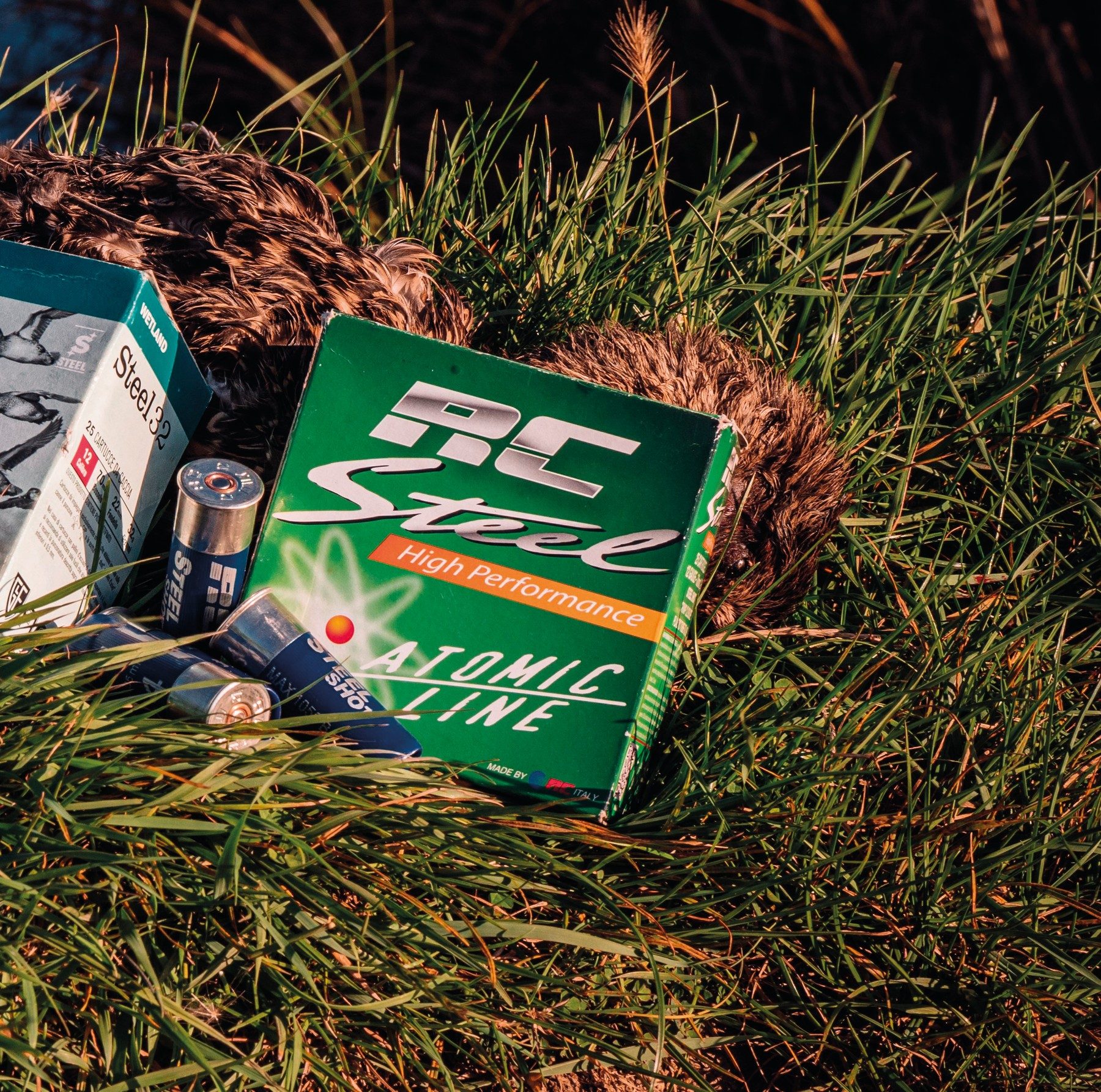
Density is what does the killing. Lead is roughly 11 grams per cubic centimetre. Steel is about 7.8, so a steel pellet of a given diameter is markedly lighter than the lead pellet it replaces, carries less energy and loses velocity faster.
The correction is to go up in size. BASC’s guidance is to move up at least two shot sizes when switching from lead to steel, so a lead No 5 becomes a steel No 3, and a lead No 3 becomes a steel No 1. Because the pellets are larger, you get fewer of them, which is why steel loads tend to be heavier than the lead loads they replace.
Bismuth sits between the two at around 9.6 grams per cubic centimetre. It is denser than steel but lighter than lead, so one size up from your lead equivalent is the usual advice rather than two. It is also soft, which makes it the sensible choice for older guns that should never see steel. It is considerably more expensive.
Tungsten-based loads are denser again, in some cases denser than lead, and can be used in the same size as lead or smaller. They are the most expensive option by a distance, and the harder tungsten types bring their own gun and choke restrictions.
Steel shot, proof and choke
This is the part where getting it wrong damages the gun rather than the bag, so it is worth being precise.
There are two categories of steel cartridge. Standard steel can be fired through most guns carrying modern nitro proof. High performance steel must only be fired through guns that have passed steel shot proof, which means barrels stamped STEEL SHOT and carrying the fleur-de-lys proof mark. High performance cartridges must say so on the box; if a box says nothing, it is standard steel.
If your gun is not nitro proofed, do not put steel through it at all. Older English guns, Damascus barrels and anything of uncertain provenance should be on bismuth.
Choke matters too. Steel does not deform as it passes a constriction the way lead does, so tight chokes and large steel pellets are a poor combination. CIP guidance restricts larger steel pellets to half choke or more open, and the British proof authorities go further for lightweight English game guns, where a quarter choke maximum is recommended. If you are in any doubt about your own gun, ask a gunsmith or the Proof Authority rather than a forum.
What the lead ban means, and when
Wildfowlers have been off lead for a generation already. In England, the Environmental Protection (Restriction on Use of Lead Shot) (England) Regulations 1999 prohibit lead shot below the high-water mark, over listed SSSIs, and for shooting ducks, geese, swans, coot and moorhen anywhere. Wales has equivalent regulations. Scotland and Northern Ireland took a different approach, banning lead over wetlands whatever you are shooting at.
What is new is that the restriction is going universal. The REACH (Amendment) Regulations 2026 came into force on 1 April 2026 and write a lead restriction into UK REACH across England, Scotland and Wales. From 1 April 2029, the placing on the market and use of lead shot will not be permitted, for live quarry or for recreational target shooting, indoors or out. A conditional exemption applies to elite athletes. Airgun ammunition is outside the scope of the restriction. BASC has published answers to the most common questions on the restrictions.
That gives game shooters roughly two more seasons on lead. The sensible course is not to stockpile, because cartridges bought now to use later may become unusable, but to spend those seasons finding a non-lead load that works in your gun.
Pattern your gun
Every recommendation above is a starting point, not an answer. The only way to know what a given cartridge does out of your barrels with your chokes is to put it on a pattern plate at the range you actually shoot.
Steel patterns differently from lead, usually tighter, which is another reason to open chokes rather than close them. Two cartridges of the same nominal size from different makers can pattern quite differently. An afternoon at the plate before the season costs a box of cartridges and will tell you more than any table.
Frequently asked questions
What shot size should I use for duck and geese with steel?
Teal and duck over decoys take steel No 4 or 3, duck at range steel No 3, and geese steel No 1 or BB. A fowler carrying one load for a mixed flight will usually settle on steel No 3, which most British wildfowling cartridges are built around.
How many shot sizes do you go up when switching from lead to steel?
BASC’s guidance is at least two sizes, so a lead No 5 becomes a steel No 3 and a lead No 3 becomes a steel No 1. Bismuth is denser than steel, so one size up from the lead equivalent is the usual advice.
Can I fire steel shot through my gun?
Standard steel can be fired through most guns with modern nitro proof. High performance steel needs a gun that has passed steel shot proof, with barrels stamped STEEL SHOT and carrying the fleur-de-lys mark. A gun that is not nitro proofed, and any Damascus-barrelled gun, should be on bismuth.

About the author
Selena Barr
Originally cutting her teeth as Shooting Times news editor two decades ago, her career in sporting journalism has taken her all over the world turning field adventures into reports that focus on conservation and sustainability.
Related Articles

Which geese can you legally shoot in the UK?
Only four species of goose are quarry in Britain, the list is not the same in every country, and it changed within the past few years. A guide to what you may shoot, what you may not, and how to tell ...
By Selena Barr | 27 August 2026

Can you shoot wildfowl on a Sunday? The UK rules explained
The wildfowling season opens on 1 September, and one of the questions asked most often is whether Sunday counts as a shooting day. The answer depends on where you are standing, and the picture is more...
By Selena Barr | 26 August 2026
Get the latest news delivered direct to your door
Subscribe to Shooting Times & Country
Discover the ultimate companion for fieldsports enthusiasts with Shooting Times & Country Magazine, the UK’s leading weekly publication that has been at the forefront of shooting culture since 1882. Subscribers gain access to expert tips, comprehensive gear reviews, seasonal advice and a vibrant community of like-minded shooters.
Save on shop price when you subscribe with weekly issues featuring in-depth articles on gundog training, exclusive member offers and access to the digital back issue library. A Shooting Times & Country subscription is more than a magazine, don’t just read about the countryside; immerse yourself in its most authoritative and engaging publication.