★ Your magazine. Your say. Complete our reader survey with a chance to win Jack Pyke kit worth £500! ★


Can you shoot wildfowl on a Sunday? The UK rules explained
The wildfowling season opens on 1 September, and one of the questions asked most often is whether Sunday counts as a shooting day. The answer depends on where you are standing, and the picture is more complicated than most Guns realise
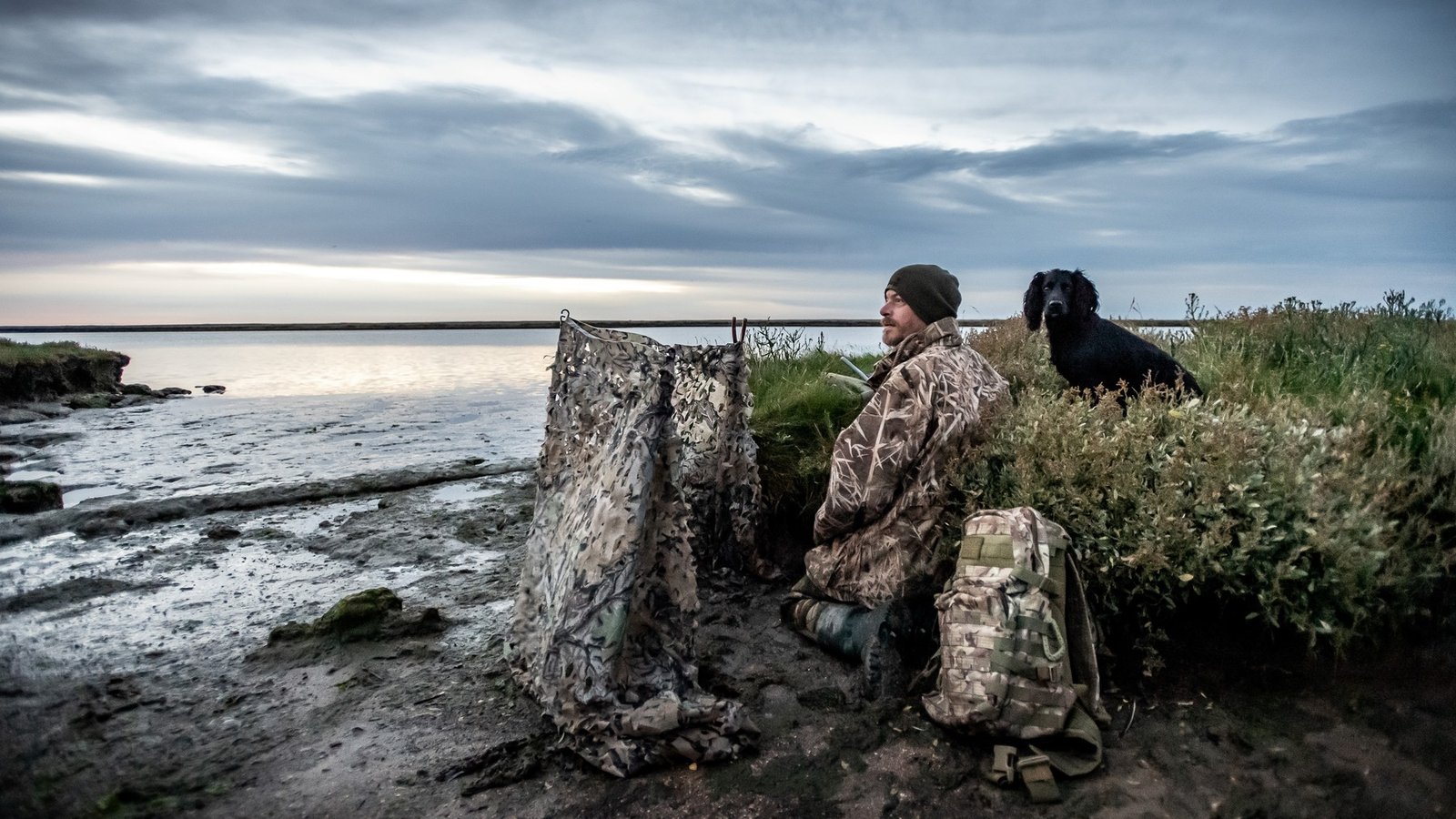

Few areas of shooting law are as widely misunderstood as the question of which days you may go out. Part of the confusion is that game and wildfowl are governed by entirely separate statutes, so what applies to a pheasant does not necessarily apply to a wigeon. The rest comes from a set of local orders in England and Wales that were never repealed and are now difficult to trace. Here is where the law stands as the season opens.
Why there is no single answer
There is no single UK-wide answer. In Scotland, no. In Northern Ireland, no. In England and Wales it depends on where you are shooting, and across most of the country the answer is yes.
The starting point is section 2 of the Wildlife and Countryside Act 1981. That is the provision allowing quarry species to be shot at all outside their close season, and it is switched off in particular places and at particular times.
The consequence matters. Shooting a mallard on a Sunday in a prescribed area is not a technical breach of a shooting convention. It removes the exception that made the shot lawful in the first place, leaving an offence under section 1 of the same Act, which is the general prohibition on killing any wild bird.
Sunday shooting in England and Wales
Section 2(3) of the 1981 Act gives the Secretary of State power to prescribe areas of England and Wales in which wildfowl may not be shot on Sundays. Orders of that kind were originally made under sections 2 and 13 of the Protection of Birds Act 1954, and a number were never rescinded when the 1981 Act came into force.
The orders were a product of their time. Local authorities in the 1950s and 1960s sought them for a mix of reasons, from Sabbath observance to pressure on heavily shot estuaries, and once made they simply stayed on the books. No mechanism was built in to review them, and successive wildlife statutes have preserved rather than tidied them.
BASC and the Countryside Alliance both publish a list of the counties concerned, using boundaries as they stood before the 1974 local government reorganisation: Anglesey, Brecknock, Caernarvon, Carmarthen, Cardigan, Cornwall, Denbigh, Devon, Doncaster, Glamorgan, Great Yarmouth County Borough, Isle of Ely, Leeds County Borough, Merioneth, Norfolk, Pembroke, Somerset, and the North and West Ridings of Yorkshire.
That list deserves care. It is reproduced identically across shooting organisations, retailers and reference sites, but the underlying instruments are not readily traceable on legislation.gov.uk, and pre-1974 boundaries do not map neatly onto modern local authority areas. If you shoot in or near any of those counties, ask your club or BASC directly rather than relying on a published list.

Sunday shooting in Scotland
Scotland is clearer. Section 2(3), as amended, disapplies the open season permission on Sundays and on Christmas Day for birds listed in Part IA of Schedule 2 to the Act.
That list covers everything a fowler is likely to be after: mallard, teal, wigeon, pintail, shoveler, gadwall, pochard, goldeneye and tufted duck, along with Canada, greylag and pink-footed geese. Coot, moorhen, snipe, golden plover and woodcock are on it too. In practice, if you are shooting wildfowl or waders in Scotland, Sunday is not a shooting day.
Sunday shooting in Northern Ireland
Northern Ireland has separate legislation, the Wildlife (Northern Ireland) Order 1985. Article 5(3) disapplies the open season exception on Sundays, and also between one hour after sunset and one hour before sunrise.
That night shooting restriction is a significant departure from the rest of the UK and rules out a good deal of what fowlers elsewhere take for granted. The Northern Ireland quarry list also differs: scaup appears on it, while white-fronted goose does not.
What about Christmas Day?
In Scotland the Christmas Day restriction sits in the same provision as the Sunday one and covers the same species.
England and Wales are different, and this is where game and wildfowl part company. Section 3 of the Game Act 1831 makes it an offence to kill or take game on a Sunday or Christmas Day, but game in that Act means hares, pheasants, partridges and grouse. Wildfowl are not game for these purposes, so the 1831 Act says nothing about shooting duck on Christmas Day. Where a county Sunday order applies, it is that order doing the work, not the Game Act.
When does the wildfowling season start and end?
Section 2(4) of the 1981 Act sets the close seasons, and it does so in reverse, defining when you may not shoot rather than when you may. For wild duck and wild geese in or over any area below the high-water mark of ordinary spring tides, the close season runs from 21 February to 31 August. Everywhere else it runs from 1 February to 31 August.
Translated, that gives the two dates every fowler needs. Inland, and anywhere above the high-water mark of ordinary spring tides, the season runs from 1 September to 31 January. Below that mark, on the foreshore, it runs from 1 September to 20 February.
The extension is narrower than it is often described. It applies to wild duck and wild geese only. Everything else closes on 31 January, waders, coot and moorhen alike.
The phrase doing the work is high-water mark of ordinary spring tides, and it is not the water’s edge on the day you are out. It is the line reached by an average spring tide, which on many marshes sits well inland of where the water stops on a neap. February fowling therefore depends on knowing precisely where that line falls on your ground. Clubs and lease holders can usually show you, and on strange ground it is worth asking rather than assuming.

Snipe, woodcock and golden plover
These three waders have their own dates and are easy to get wrong. Snipe may be shot from 12 August to 31 January. Golden plover runs from 1 September to 31 January. Woodcock opens on 1 October in England and Wales and on 1 September in Scotland, closing on 31 January in both. None of them may be shot after 31 January, wherever you are standing in relation to the tide.
Many clubs and conservation bodies also ask for voluntary restraint on woodcock well beyond anything the statute requires, and the Game and Wildlife Conservation Trust publishes current guidance.
Check locally before you go
Everything above is the statutory floor. Above it sit club rules, foreshore lease conditions, council byelaws and voluntary restraint agreements, any of which can be more restrictive than the law. Several local authority foreshores require a permit and impose their own no-shooting windows, and some clubs bar Sunday shooting as a matter of policy whether or not an order applies.
Severe weather suspensions are a further layer. Where prolonged freezing conditions set in, the shooting of wildfowl and waders can be suspended at short notice, and it falls to the individual Gun to know whether a suspension is in force.
If in doubt, ask your club, your lease holder or BASC before you set out, and read the BASC wildfowling code of practice. It is a good deal cheaper than a conversation with the police.
Frequently asked questions
Can you shoot wildfowl on a Sunday in Scotland?
No. Section 2(3) of the Wildlife and Countryside Act 1981, as amended, disapplies the open season permission on Sundays and Christmas Day for the ducks, geese and waders listed in Part IA of Schedule 2, which covers everything a fowler is likely to be after.
When does the wildfowling season end on the foreshore?
Below the high-water mark of ordinary spring tides, wild duck and wild geese may be shot until 20 February. Inland the season closes on 31 January, and waders, coot and moorhen close on 31 January wherever you are standing.
Which English and Welsh counties have Sunday wildfowling orders?
The published list, using pre-1974 boundaries, is Anglesey, Brecknock, Caernarvon, Carmarthen, Cardigan, Cornwall, Denbigh, Devon, Doncaster, Glamorgan, Great Yarmouth County Borough, Isle of Ely, Leeds County Borough, Merioneth, Norfolk, Pembroke, Somerset, and the North and West Ridings of Yorkshire. Check with your club or BASC before relying on it.

About the author
Selena Barr
Originally cutting her teeth as Shooting Times news editor two decades ago, her career in sporting journalism has taken her all over the world turning field adventures into reports that focus on conservation and sustainability.
 Closes 15 JanuaryWorth £129.90Win a pair of tickets to the British Shooting Show 2027Enter nowFree to enter
Related Articles

Jottings for wildfowlers: a first foreshore greylag on the Medway, and the wigeon that stole the show
A September day on the Medway in 1986 brought Mike Swan a first foreshore greylag – but it was the incoming wigeon that stole the show
By Mike Swan | 9 October 2026
Jottings for wildfowlers: opening-day greylags and picking the right spot on the saltings
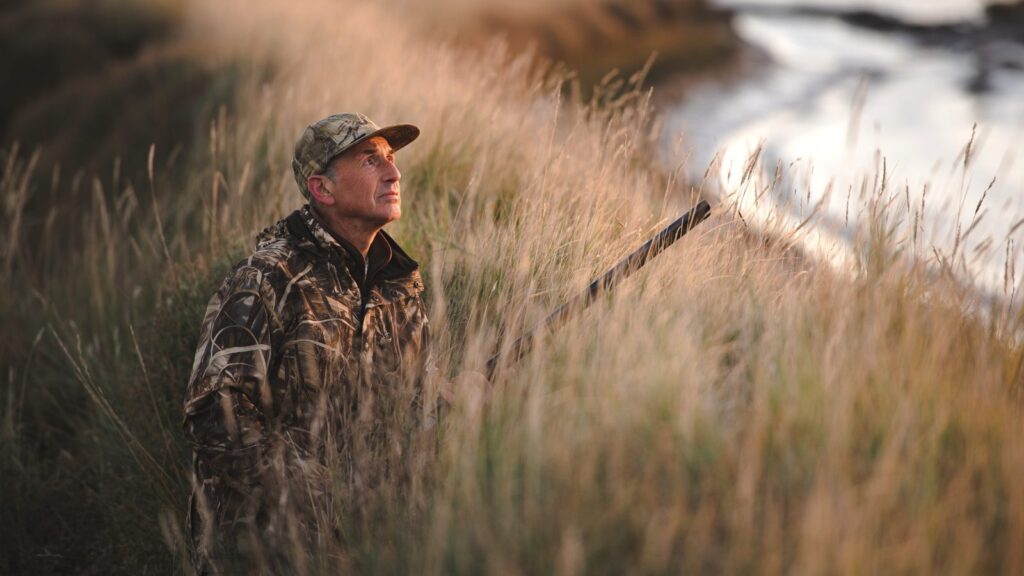
Opening day brings greylags off the estuary in their hundreds, and Graham Downing learns that it pays to pick the right spot on the saltings
By Graham Downing | 7 October 2026
Get the latest news delivered direct to your door
Subscribe to Shooting Times & Country
Discover the ultimate companion for fieldsports enthusiasts with Shooting Times & Country Magazine, the UK’s leading weekly publication that has been at the forefront of shooting culture since 1882. Subscribers gain access to expert tips, comprehensive gear reviews, seasonal advice and a vibrant community of like-minded shooters.
Save on shop price when you subscribe with weekly issues featuring in-depth articles on gundog training, exclusive member offers and access to the digital back issue library. A Shooting Times & Country subscription is more than a magazine, don’t just read about the countryside; immerse yourself in its most authoritative and engaging publication.