★ Your magazine. Your say. Complete our reader survey with a chance to win Jack Pyke kit worth £500! ★


Some places will never be too dry: wildfowling a drought
Drought has emptied most of the marsh ditches, but Alan Jarrett finds that the falling tide still leaves pools that hold a duck or two


The summer of 2026 brought the driest July on record and here in the deepest south-east of England, the driest month ever recorded. When we at last had a few downpours, they had little initial impact, with water running off into storm drains or disappearing into rock-hard, thirsty ground.
There are areas that I have never seen dry before, where now the ditches are bare and cracked under the gaze of a relentless sun. We have had a succession of heatwaves the like of which few of us have seen before.
A favourite area that always yields a few chances at ducks during the early season is completely dry, meaning that sport there will be almost non-existent. Some luck with flighting ducks or geese might make a trip worthwhile, but our web-footed friends will need to search elsewhere for life-giving water.
Even where we have water it is most likely to be shallow and easy for the dog to stir up the sort of black sediment that many of these ditches hold. A black and smelly dog is not welcome at home and not particularly welcome in the truck either.
Why a poor ditch can become the honeypot
Where there is water, sport is more likely to follow, for wildfowl are ubiquitous and resourceful and will soon find areas that are to their liking. The wildfowler also needs to be at his most resourceful if a shot or two is to be had, and a likely-looking ditch that might in normal times produce nothing at all may just be the sought-after honeypot.
It was way back in my wildfowling career that conditions were last as dry as they are today. The marshes were brown and seemingly lifeless, while almost every ditch was either empty or holding black slime into which nothing ventured. Far out in the marsh lay one narrow ditch that I knew to be too deep to wade and therefore bound to retain some water.
So it transpired because, at my approach, a dozen mallard in scattered pairs rose and headed towards the shore. The ditch was narrow and seemed uninviting, but it was obviously much to the liking of those mallard.
It was an early September afternoon and pleasant enough to lounge there in the hope that some of the mallard would eventually return at flight time. It was possible to tuck into the edge of the sea club-rush, knowing that once the light began to fade the dog and I would remain virtually invisible to incoming ducks.
However, the bane of early-season wildfowling soon became evident as hungry mosquitoes found me easily enough. They also took a liking to the dog, settling around her eyes and head and leaving bloody smears when I swatted them away from her. She did not seem overly bothered by the pesky insects, contenting herself with the occasional shake of the head to discourage them.
I would not know how much effect they had on me until the morrow, when the red blotches appeared and the itching began. That would be the price to be paid for leaving insect repellent in the car.
An errant ferret and a stolen shoveler
A single bird followed the line of the ditch and fell on to the grass at the shot. It was a shoveler and was laid alongside me against one of the large anthills that are a feature of these marshes. After a while a sound attracted my attention and there was a large white ferret doing its best to make off with my shoveler.
Errant ferrets are occasionally found on these marshes, no doubt as a result of animals lost while being used to flush one of the rabbits to be found in their burrows along many a ditch side. They are an accidental addition to the predators of the marsh.
After that, with the sun just slipping below the horizon, the first of the mallard came. There was none of the customary cautious circling common with mallard; rather the early-season cavalier approach as they came diving in with a whoosh of wings. Over the next few minutes there were several chances and, when it was obvious no more were coming, there were five plump birds to add to the lone shoveler.
I was able to shoot that place once more before the rains came and the birds had more choice of places to either feed or rest across the wide marshes. Once again a modest bag of mallard accompanied me home, although this time there was no shoveler and no ferret.
Why the estuary is never too dry
Of course, the open estuary is the one place where water is guaranteed, for irrespective of weather conditions the salt flats and the irrepressible tide will always be there. Those who know the estuary will be familiar with the places where pools of water are left isolated by the departing tide, and in times of near-drought they might just attract a duck or two.
Walking out as the tide drops away is always an interesting exercise, for the shore is full of life. We take the wading birds and the gulls for granted: they are the ever-presents of the moving tide as they forage along the edge of the water or drop in a seemingly random manner on the wet flats as they take advantage of the bounty to be found there.
Every small curvature of the flats traps a sliver of tide and each has the potential to hold a meal for a hungry bird. Whether this be a tiny crab, a small ragworm or an upturned shell hosting a succulent mussel or clam, there is something to be found.
Sometimes, as wader-clad feet press down on the flats, a squirt of water gives away the presence of a ragworm or even a cockle – the birds may find them later.
Then I would find a choice of pools by which to wait in the gloaming. None was, it seems, appreciably different from another, but ducks will prefer one to another for reasons that only they know. No doubt my decoys assist them in their decision-making, but there is no guarantee that birds will come to me, for there are miles of shore from which they can choose. Only my wildfowling knowledge guides me to this place.
Waiting on the black shore with a groundsheet
Knowing this for the muddy place it is, I always found a small groundsheet of some kind or other essential, unless a thorough coating of black mud was to accompany me home. Then it was a case of waiting for the sun to slip away and the light to gradually fade from the western sky.
The shore was always alive with sound: the soft flute of a golden plover as it slipped by unseen; the rasp of a dunlin as it dropped in to feed; and the soft sounds of the shore moving all around in pops and scrapes as the living creatures found their way in the gloom. A hen wigeon purrs from somewhere out on the flats – once, twice and then silence again.
Then the stutter of mallard from the dark part of the sky in the east. The swish of their wings as they pass close by, followed by more silence. This is the time to call softly – not the raucous highball note of the female mallard so prevalent in those American videos, but the soft rasp of the drake that is drawn from the back of my throat and repeated several times over.
On that occasion two birds soon appeared as indistinct shapes coming from the north and edging into the western sky. The rasp from my throat once more and then they turned and came right to me, eventually to lie beside me on the black shore.
When all the light was gone and it was time to turn for home, the groundsheet was sploshed in a nearby pool in order to remove most of the mud, and then it was stowed in the rucksack with the two mallard atop. With the dog gambolling this way and that, it was time to trudge back, my boots squelching through everything that lay underfoot.
The marshes may have been largely dry, but here on the shore there was water everywhere. The resourceful ducks had met a tragic end, but the wildfowler returned in triumph, thinking about the next visit and knowing this place would never be too dry for ducks.
Alan Jarrett has been wildfowling for more than 50 years and is experienced in every facet of the sport.
Frequently asked questions
Where do ducks go when the marsh dries out?
To whatever water is left. A deep ditch that produces nothing in a normal season can become the honeypot, and the estuary always holds water, with pools left isolated by the departing tide.
How do you call mallard on the foreshore?
Softly. Alan Jarrett uses the soft rasp of the drake, drawn from the back of the throat and repeated several times, rather than the raucous highball note of the female that is common in American calling videos.
Why do ferrets turn up on a saltmarsh?
They are usually animals lost while being worked to rabbits, whose burrows run along many a ditch side. They become an accidental addition to the predators of the marsh.
About the author
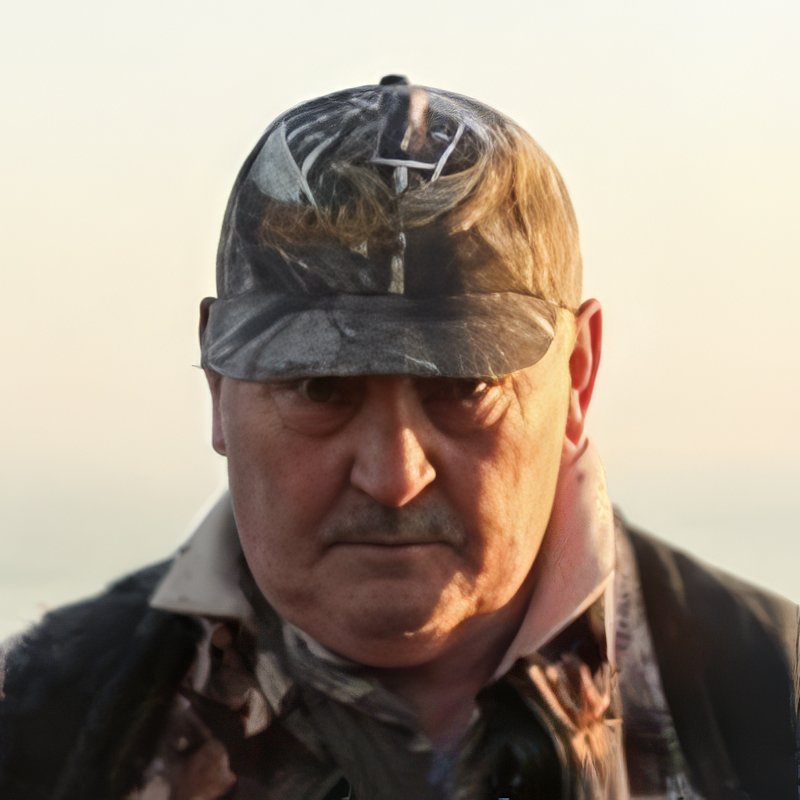
Alan Jarrett
A Kent wildfowler with more than 40 years on the North Kent marshes, Alan is chairman of the Kent Wildfowling & Conservation Association, the largest wildfowling club in the country, and has driven its programme of freehold land purchases across the Medway estuary, the Swale, Essex, Sussex and north Norfolk. He was a founder member of BASC’s wildfowling liaison committee in 1984, was elected to BASC council in 1989, became vice-chairman in 1997 and chairman in 2002. He is particularly fond of tide flighting and decoying duck in the North Kent estuaries, and has shot abroad in South Africa, Canada and the United States. Alan is the author of several wildfowling books, among them Wildfowling: A Winter’s Tale, Wildfowling Ways, Wildfowling Tales, When the Wind Blows and A Wildfowler’s Year, as well as Shooting at Clays.
Related Articles

September is more than just partridges
From midnight marshland vigils to vital conservation initiatives, a new wildfowling season opens following a record-breaking summer, writes BASC's James Green
By James Green | 4 September 2026

When waders were quarry: memories of a lost wildfowling era
From navigating unregulated foreshores to harvesting waders for pies, Alan Jarrett reflects fondly on a bygone era of wildfowling freedom
By Alan Jarrett | 4 September 2026
Get the latest news delivered direct to your door
Subscribe to Shooting Times & Country
Discover the ultimate companion for fieldsports enthusiasts with Shooting Times & Country Magazine, the UK’s leading weekly publication that has been at the forefront of shooting culture since 1882. Subscribers gain access to expert tips, comprehensive gear reviews, seasonal advice and a vibrant community of like-minded shooters.
Save on shop price when you subscribe with weekly issues featuring in-depth articles on gundog training, exclusive member offers and access to the digital back issue library. A Shooting Times & Country subscription is more than a magazine, don’t just read about the countryside; immerse yourself in its most authoritative and engaging publication.