★ Win a pair of Brandecosse Capriolo boots worth £219! Click here to enter ★



Shooting under fire – but does the RSPB’s argument stack up?
A decade of data, 921 "confirmed" incidents and a call for sweeping legislative change. But shooting organisations say the RSPB's argument doesn't add up.
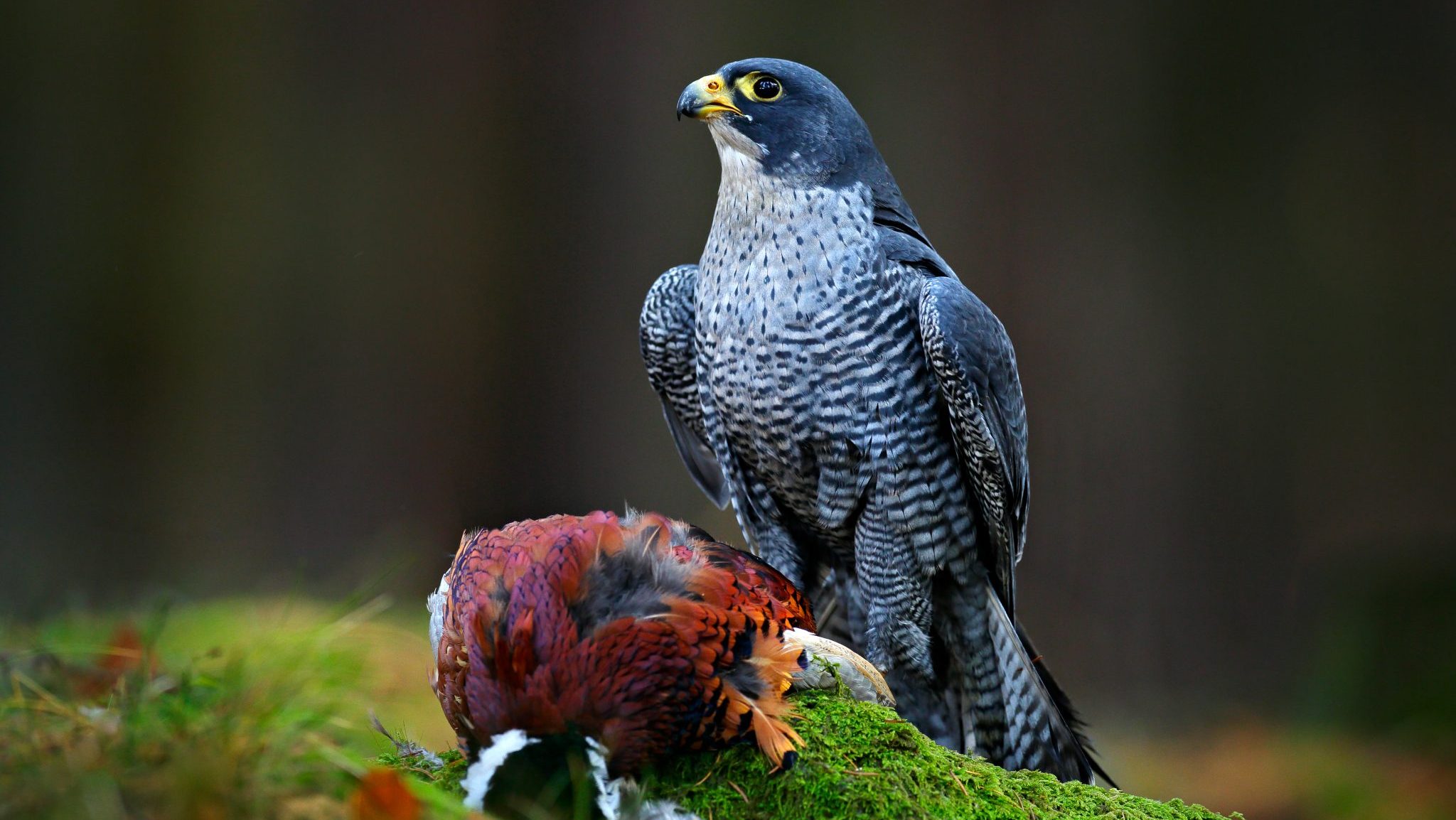 A Peregrine falcon feeds on a pheasant, by Ondrej Prosicky via Getty Images.

Calls for licensing across UK shooting sector
The RSPB this week took its campaign against shooting to a national audience, using BBC television and radio to publicise its latest report, which claims 921 birds of prey were illegally killed across the UK between 2015 and 2024, more than half of them on land managed for gamebird shooting.
Published on 27 May, the charity’s Patterns of Persecution report presses for gamebird shooting to be licensed across the UK, citing figures that, according to critics, do not bear scrutiny, and proposing a remedy that, those same critics argue, would punish an entire industry for the actions of a few.
The report claims the 921 incidents represent only “the tip of the iceberg”, arguing the illegal killing of birds of prey is “relentless”. Of the 24 individuals convicted of persecution-related offences during the 10-year period, the RSPB says two thirds were associated with the gamebird industry and more than half were gamekeepers at the time of their offence.
.
Shooting organisations condemn persecution offences
Representatives across the shooting industry do not dispute that the crimes occur and are indefensible. BASC, the Countryside Alliance, the NGO and Scottish Land & Estates are among those who have publicly responded to the RSPB’s report unreservedly condemning the illegal killing of birds of prey. “These incidents are carried out by a small minority and have no place in the modern shooting community,” said BASC’s deputy director of conservation, Dr Marnie Lovejoy.
Where she and her industry peers part company with the RSPB, however, is on the proposed solution. The RSPB is pressing for a licensing system like the one introduced for Scottish grouse shooting to be extended across all gamebird shooting in the UK. Under such a scheme, shoots found to have evidence of bird of prey persecution on their land could have their licence suspended or revoked on the civil standard of proof (the balance of probabilities) even where the evidence falls short of what a criminal prosecution would require.
BASC argues that if the evidence is not strong enough to convict an individual, it isn’t strong enough to close down a business. “Licensing punishes the responsible majority for the crimes of a few,” Dr Lovejoy said. “Behind every shoot are gamekeepers, farmers and rural workers whose jobs and communities depend on this sector. Together they manage 7.6 million hectares and deliver £500 million of conservation work every year. That is what genuine partnership with nature looks like and it is what licensing puts at risk.”
.
Questions raised over persecution data
Another point of contention in the RSPB’s report is the very data it relies on. Scottish Land & Estates’ Ross Ewing pointed out that for 2019-20, the RSPB recorded 65 incidents in Scotland; Police Scotland’s official figure was 25. For 2020-21, the RSPB recorded 50 against 11 in the official statistics. “That degree of variation merits careful scrutiny,” he said, “particularly where such data is used to inform public policy and political debate.”
Mr Ewing suggested the discrepancy may reflect differences in how the two organisations classify incidents. “That distinction matters,” he said. “Public confidence and informed discussion depend on clarity around incident reporting. There is no doubt that the police are best placed to assess confirmed incidents and whether cases can be directly linked to a specific type of land management activity. It is vital that data is robust, independently verifiable and consistent to support balanced and proportionate policymaking.”
.
RSPB defends methodology
The RSPB’s investigations manager, Ian Thomson, insisted its figures are robust, arguing the comparison was “wholly invalid” as it conflates Scottish Government financial year statistics with RSPB calendar year data. He said the RSPB confirms incidents through government laboratory post-mortems, police investigations, video evidence, peer-reviewed analysis and eyewitness testimony, working to a confidence level of greater than 95%.
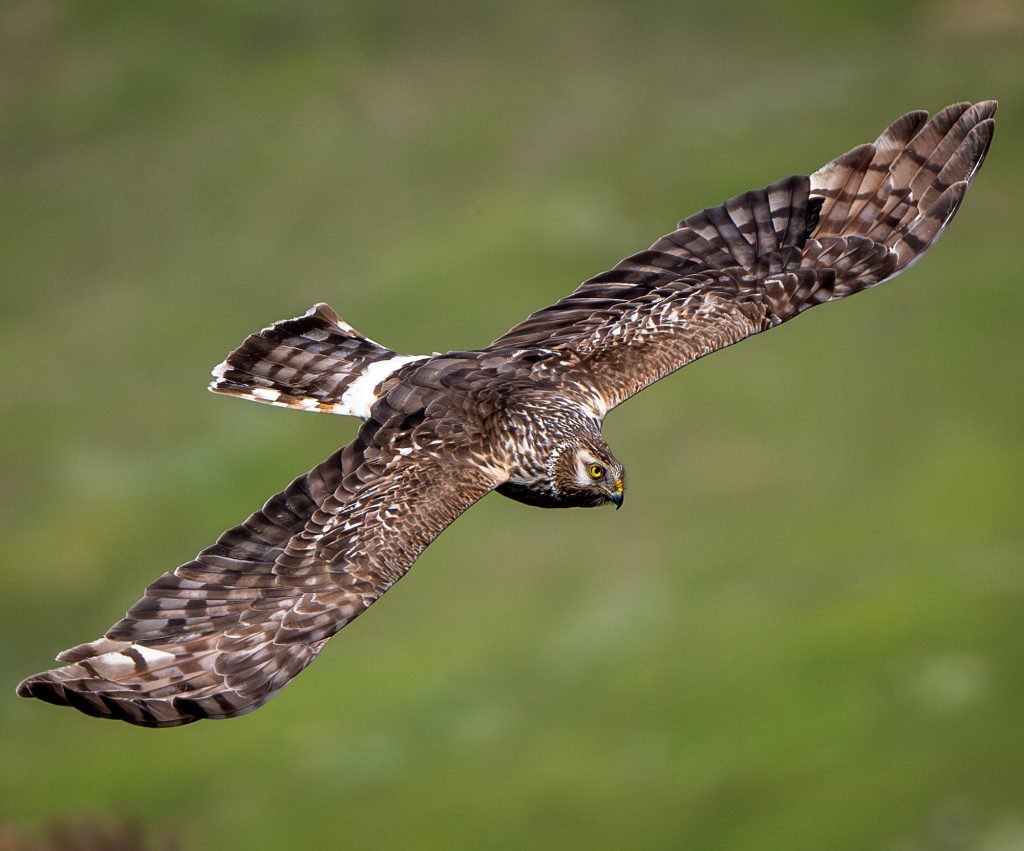
However, the Countryside Alliance’s Adrian Blackmore was similarly concerned by what he described as “the RSPB’s partial and unbalanced presentation of the data”. He pointed out that Patterns of Persecution records 49 confirmed incidents of hen harrier persecution over the 10-year period, yet a separate RSPB publication, Hen Harriers in the Firing Line, published last year, claimed 102 recorded incidents of illegal persecution against the species between 2020 and 2024 alone – a shorter period producing more than twice the figure.
“These figures just don’t add up and yet they are being used by the RSPB to call for urgent legislative change,” Mr Blackmore said. “The use of unconfirmed figures and unsubstantiated accusations by the RSPB cannot be used to justify the introduction of licensing for all gamebird shooting across the UK.”
.
Government stops short of backing licensing
The Government has not endorsed the licensing call. A Defra spokesperson told the BBC ministers would work with the shooting sector to explore wider measures, including licensing, adding that many estates already meet high environmental standards.
BASC said it would support greater investment in the National Wildlife Crime Unit and rural policing, pointing out that the RSPB’s own report records 24 convictions over 10 years as evidence that enforcement, properly resourced, works.
Three convictions have already been secured this year. In January, gamekeeper Thomas Munday was convicted at Scarborough Magistrates’ Court after covert footage showed him beating a buzzard to death on an estate near Hovingham in North Yorkshire. That same month, gamekeeper Racster Dingwall was convicted at York Magistrates’ Court and fined £1,520 following covert surveillance at a hen harrier roost in the Yorkshire Dales National Park – the first ever conviction for hen harrier persecution in England. Then in April, gamekeeper Russell Mason was convicted at Perth Sheriff Court of killing a goshawk, receiving a 200-hour Community Payback Order.
.
Debate over responsibility and regulation continues
Nobody disputes that the crimes are real. The argument is about how many there are, who bears responsibility and what the law should do about it. “Catch the criminals,” Dr Lovejoy said. “Don’t punish the countryside.”
Do you have a news story to share?
Contact our group news editor Hollis Butler at hollis.butler@twsgroup.com. We aim to respond to all genuine news tips and respect source confidentiality.
Stay in the loop with the latest news
Don’t miss a story – get news straight to your inbox or phone. Join our newsletter and WhatsApp channel.
Related Articles
News
Shooting app puts a score on the day
The new TopGun app allows game shots to digitally track performance, record shoot days and compete on national leaderboards.
By Hollis Butler

News
Nick Beavis wins sixth BASC .410 world title
Staffordshire shooter Nick Beavis has won his sixth BASC .410 World Championship title at Oakedge Shooting Ground.
By Hollis Butler
Get the latest news delivered direct to your door
Subscribe to Shooting Times & Country
Discover the ultimate companion for fieldsports enthusiasts with Shooting Times & Country Magazine, the UK’s leading weekly publication that has been at the forefront of shooting culture since 1882. Subscribers gain access to expert tips, comprehensive gear reviews, seasonal advice and a vibrant community of like-minded shooters.
Save on shop price when you subscribe with weekly issues featuring in-depth articles on gundog training, exclusive member offers and access to the digital back issue library. A Shooting Times & Country subscription is more than a magazine, don’t just read about the countryside; immerse yourself in its most authoritative and engaging publication.