★ Your magazine. Your say. Complete our reader survey with a chance to win Jack Pyke kit worth £500! ★


Modern fox control after dark: a night of thermal foxing in Essex
Miles Malone joins an expert two-man team on a north Essex shoot for a night of fox control, where thermal optics, close teamwork and precision shooting have replaced the lamp he grew up with

Photographs: Callum McInerney-Riley
It was already growing gloomy as the Polaris reversed off the trailer but, despite the late hour, the orange evening light stubbornly refused to fully yield to the dark. Seemingly endless fields of stubble glowed in those final glimmers. Successive heatwaves had made for an early harvest and that heat persisted. Despite the gentle breeze from the west, the air felt thick with heat and the heady scent of sun-baked straw and warm earth.
A skein of greylags, freshly back on the wing, flew low downwind towards us, letting loose a rolling call in unison as they passed overhead. These conditions made the shooting season feel very far away, but the work that precedes it never stops. Immediately following harvest there is a short window for fox control. This night we were joining an expert team on one of their frequent night patrols to learn the secrets of their success.
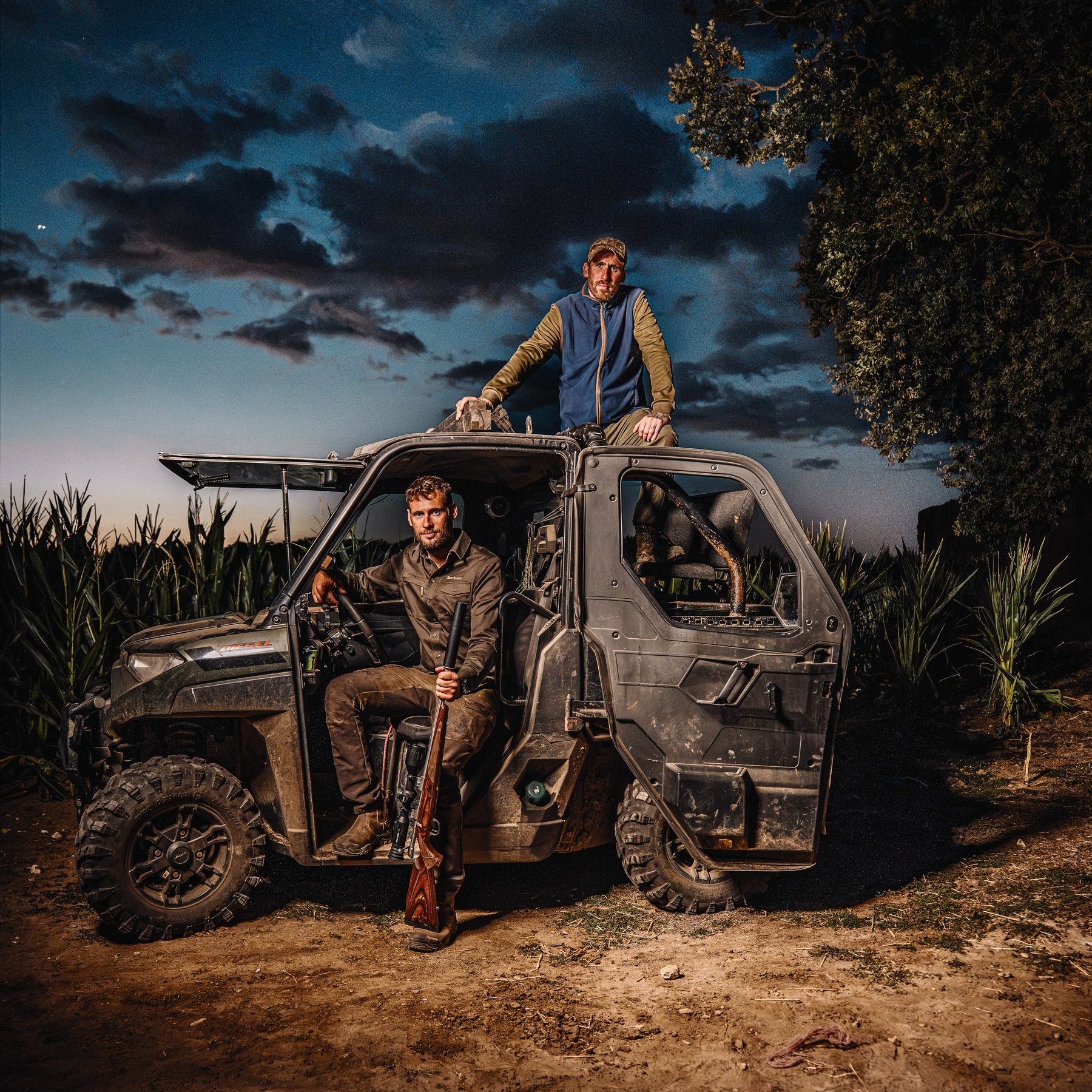
Jon and Tim have a passion for fox control; it is a mix of the necessity of the job, the challenge it provides and a healthy respect for the fox. “I really do respect them,” Jon says. “They are the wiliest of animals. You have to respect their cunning. They truly are clever.”
How Jon and Tim work as a night-foxing team
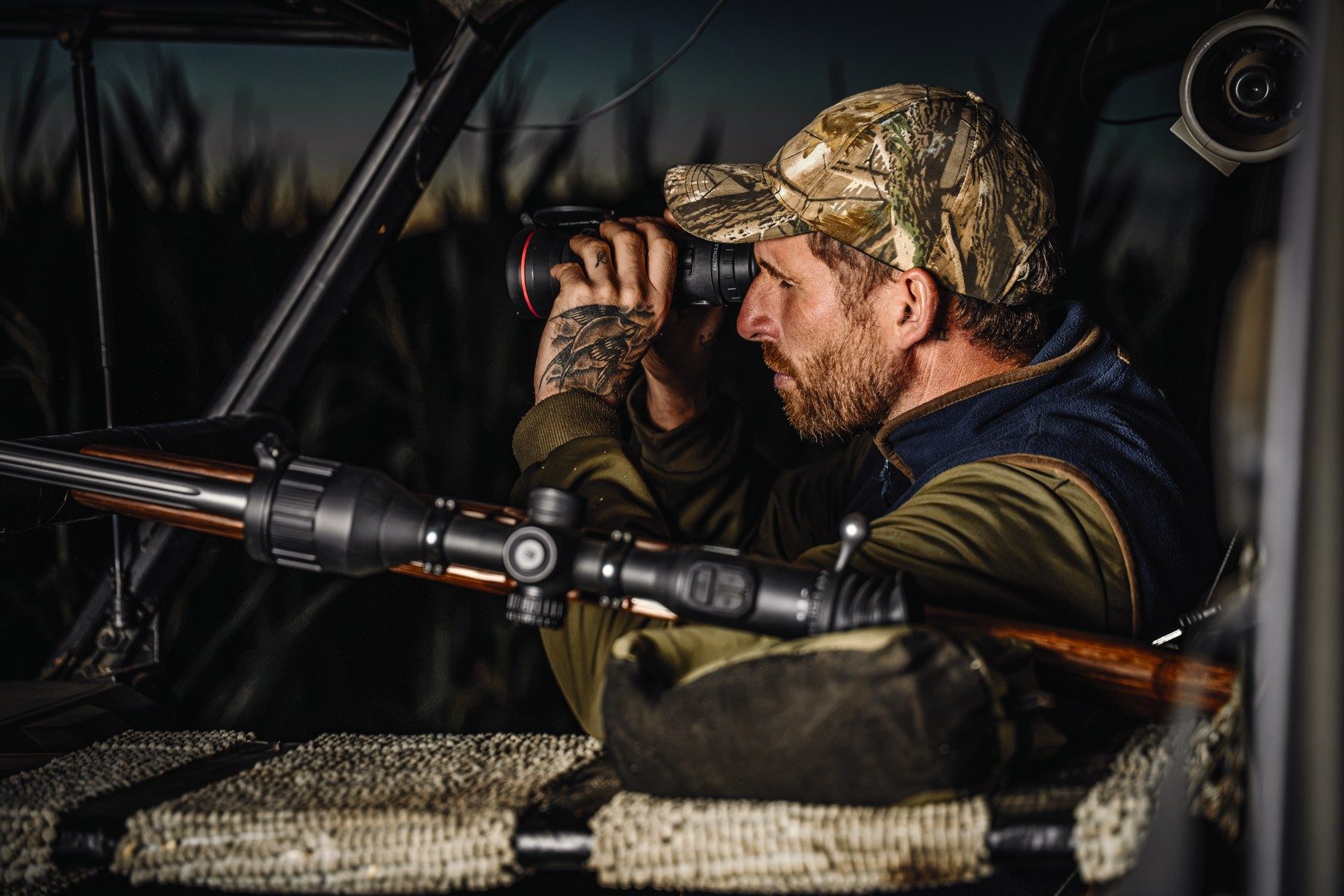
Jon and Tim work as a team. They have a dedicated Polaris ATV to provide a stable shooting platform and adopt the latest technology to aid their task. Tim drives and spots with a thermal monocular and has gained an incredible ability to differentiate a fox from muntjac, roe or hares at range. Working together, they coordinate a plan to comb the ground and get into a position for safe shots at ethical ranges. Jon does the shooting, firing from a carpeted support they have fashioned to fit the open Polaris window to enable the best opportunity for precise, accurate shooting.
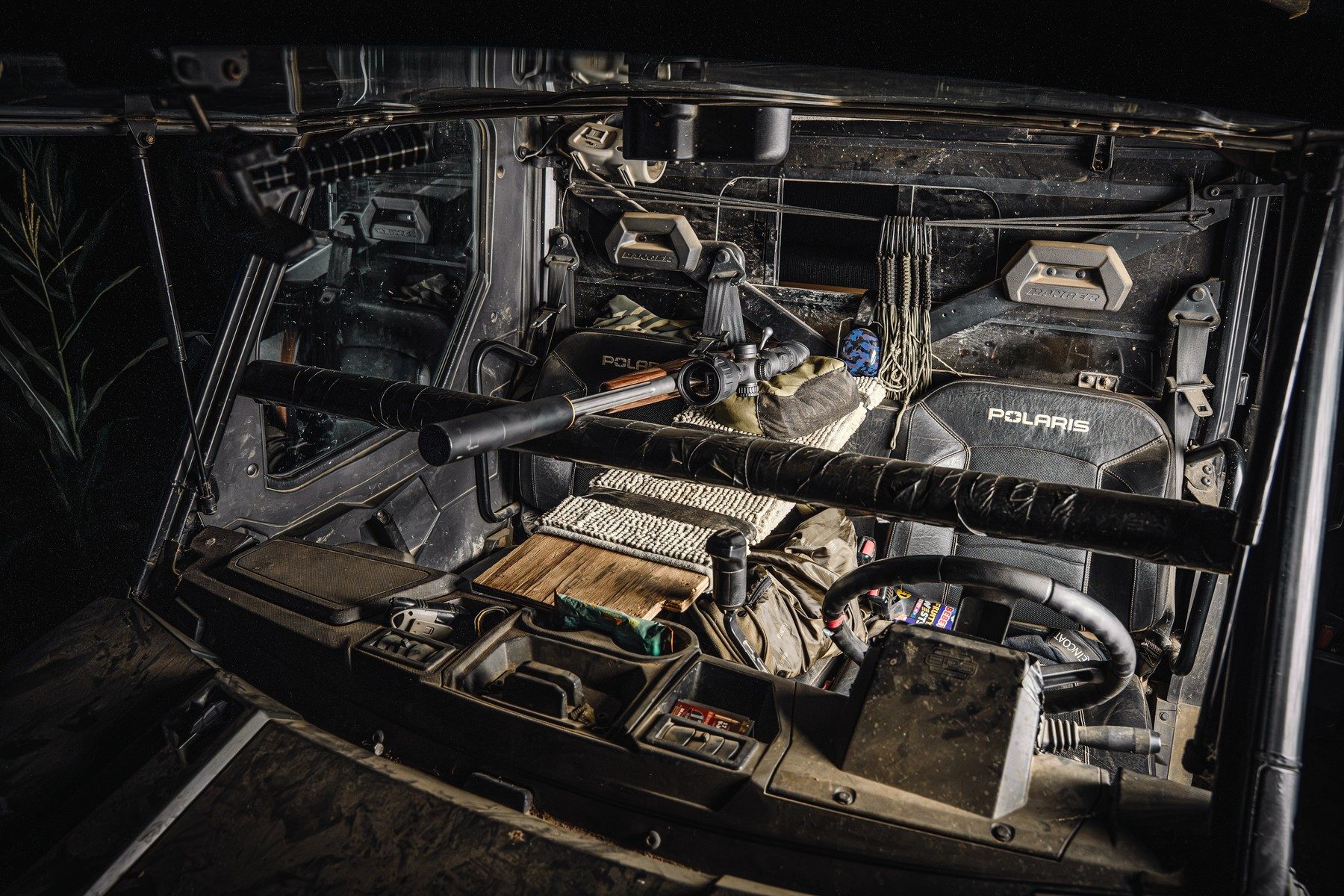
As the night drew in, Jon applied duct tape to cover the illuminated dashboard to prevent the glare from disrupting Tim’s night vision while driving. Jon took the opportunity to discuss their foxing year and educate me on why this point of the year is so critical. “Once the crop is down we have the ability to really cover ground, and after months of standing crops we finally have visibility. Knowing the ground is essential and a lot of learning goes in before we have nights like this.”
Cubs, born between February and April, spend their first months below ground. Most begin to emerge in late April and by June are becoming increasingly adventurous. They gain more independence, learning to hunt from their mother and then explore on forays of their own. By August they are often hunting far and wide.
Why fox cubs range widely by late summer
This emergence of independent cubs is wisely timed by nature; they arrive above ground at a time of plenty. Young rabbits, field mice, shrews, grubs, fruit and even amphibians make for plentiful opportunities and a laden table. On the whole, foxes have adapted well to the managed landscape that now dominates Britain. This is especially true in East Anglia, where the dry climate, plentiful prey and landscape of arable fields and woods provide a perfect fox habitat.
In some instances they have adapted perhaps too well. With no natural predators remaining but man, numbers can rocket and this imbalance is then to the detriment of ground-nesting birds, such as the wild grey partridge, which this shoot seeks to nurture and protect.
Gamekeepers, grey partridges and the case for predator control
Gamekeepers are perhaps our greatest conservationists, being preservers of biodiversity, managers of the landscape and true custodians of the land they serve. Yet rarely do they get the praise they deserve for this work. Intuitively they know that conservation requires three areas of active management: food provision, habitat and predator control. All three need to be provided or the system simply collapses, to the detriment of a range of species.
Jon, a gamekeeper himself, had come to assist this north Essex shoot after an increase in the number of fox sightings and evidence of loss of wild broods. With cubs now hunting independently and ranging widely, it was time to gain control before the reared poults began to leave the pen.
10 months and 100 nights with the HikMicro Stellar 3.0 SQ50L
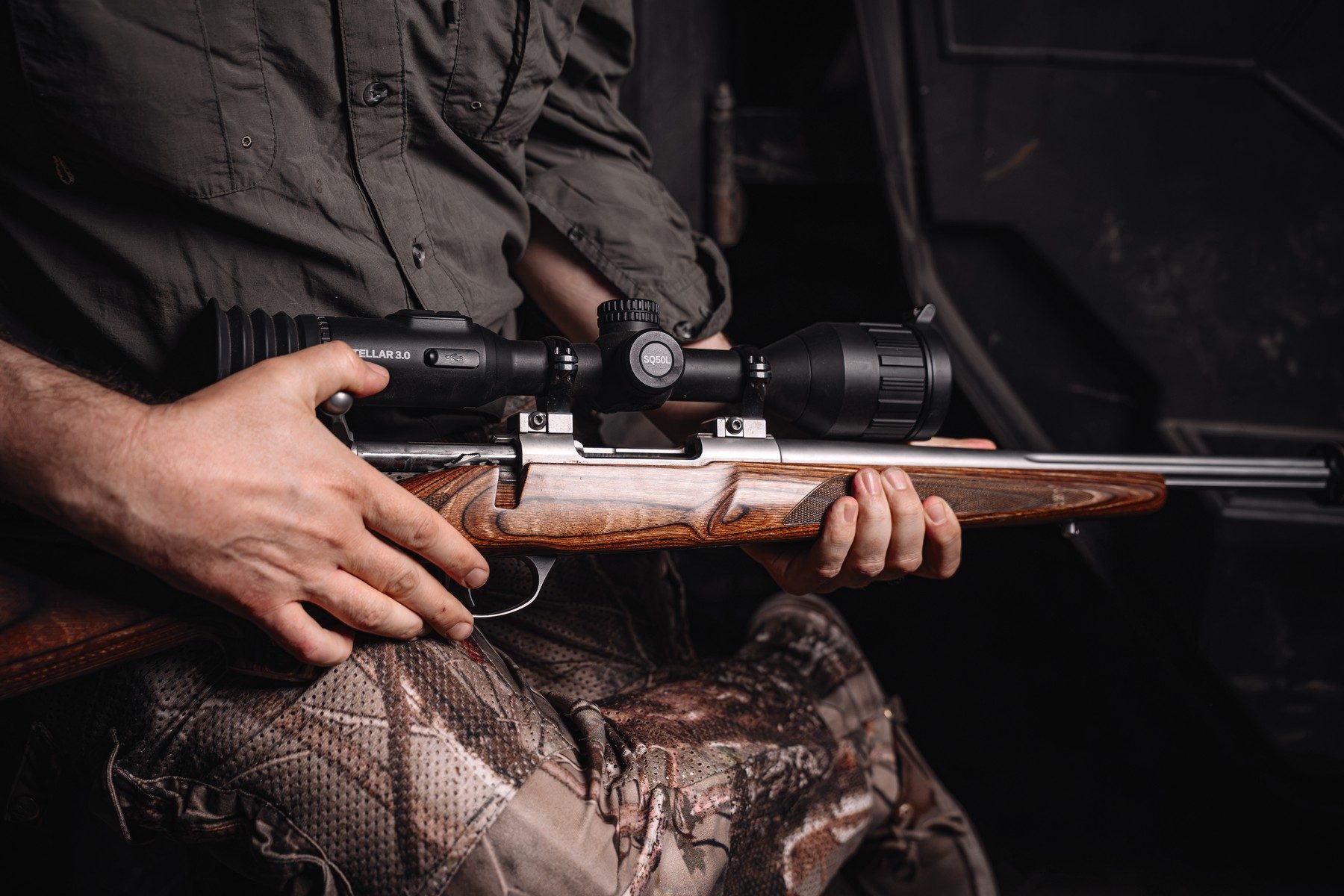
HikMicro had lent me one of its thermal scopes, the Stellar 3.0 SQ50L, which has been on the market for around 18 months. I had fixed it to my .17 HMR and enjoyed some incredible night shooting for rabbits, marvelling at how far the technology has come. I was also very aware that this rimfire shooting was not deploying the technology to anywhere near its limit. When trialling equipment I always prefer to speak with someone who has extensive field time with the product, seeing how it fares in the hunting environment, not just on a sanitised range.
Jon has given the same scope 10 months of heavy use with over 100 nocturnal foxing trips. As he shoots around 250 foxes in multiple locations each year, he has a wealth of experience to share. “It is the best we have used,” he told me. “It has been a massive step up and definitely given us the edge. There is great view quality that really helps when confirming your shot. The laser rangefinder is accurate, which is important in these big, open fields, and the field of view is good for acquiring the target quickly – important as you work hard for a shot and they rarely hang around for long.”
Jon and Tim’s fox-control kit
- Rifle: Sako 90 Varmint, from GMK
- Scope: HikMicro Stellar 3.0 SQ50L, from HikMicro
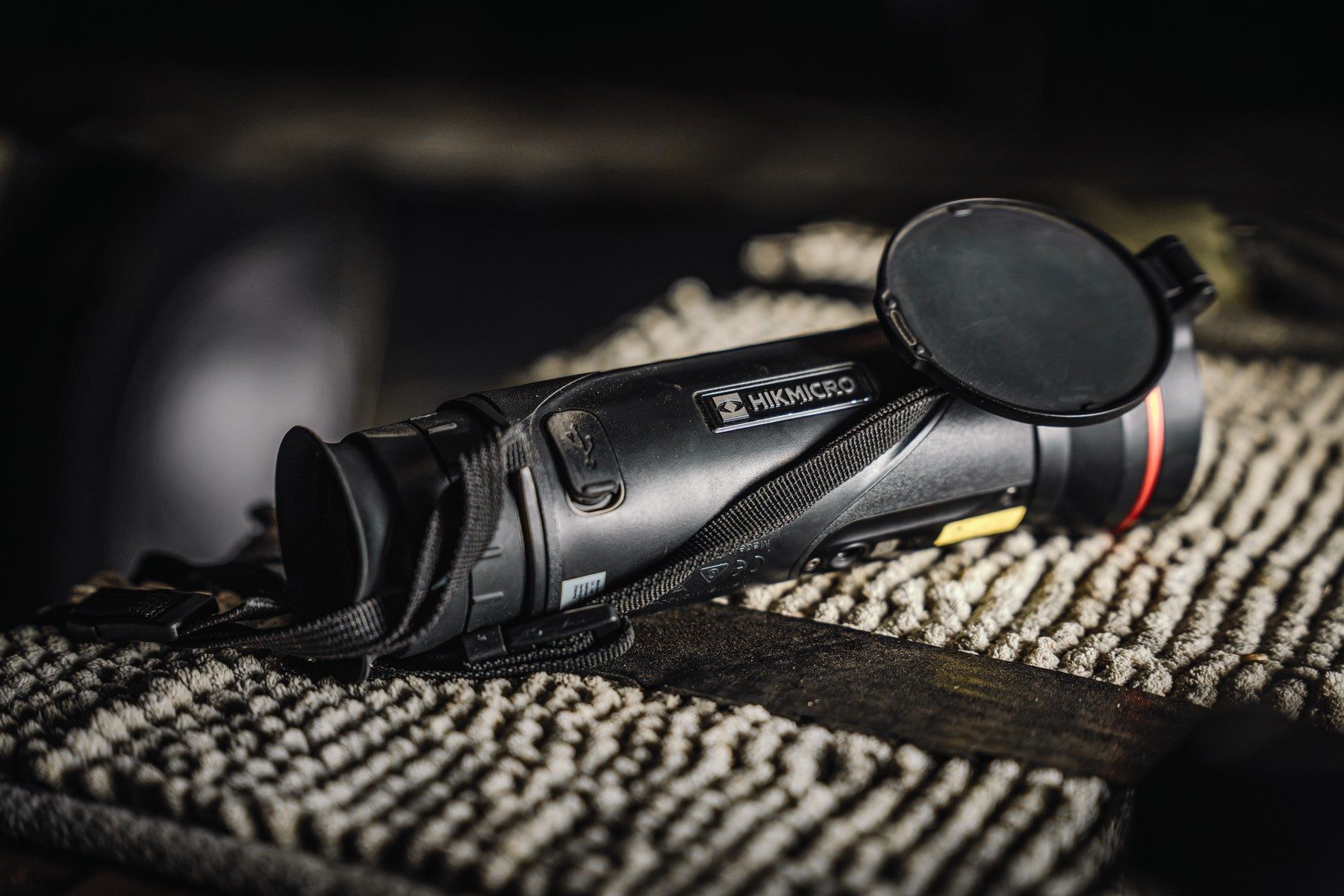
- Spotter: HikMicro Falcon FQ50, from HikMicro
- Ammunition: Hornady 75-gr V-Max, from Edgar Brothers
- ATV: Polaris Ranger XP900, from Polaris Britain
- Shooting sticks: Viper-Flex
The first fox of the evening
We were soon on our way, travelling at a steady speed in the dark with Tim driving and scanning with his Falcon thermal spotter, also recently acquired from the HikMicro stable. We did not have long to wait for the action to start, finding in the first field a fox that was steadily making progress towards a vast field of high standing bio maize. “He’s long gone,” said Tim and we moved on to the next field through a gateway. “Muntjac,” said Tim, and Jon soon confirmed with his spotter.
I asked them how they get so good at differentiating the animals of the night at range. “Over time you get used to the different movement. You quickly pick up on aspects of the shape as well. Thermal imaging takes some getting used to but has really been a game changer for us.”
This was soon put into practice as another fox was spotted and the Polaris soon positioned to give Jon the chance of a shot. “We’ll wait until he goes down into the dip,” Jon whispered. Silence followed as we waited in the dark.
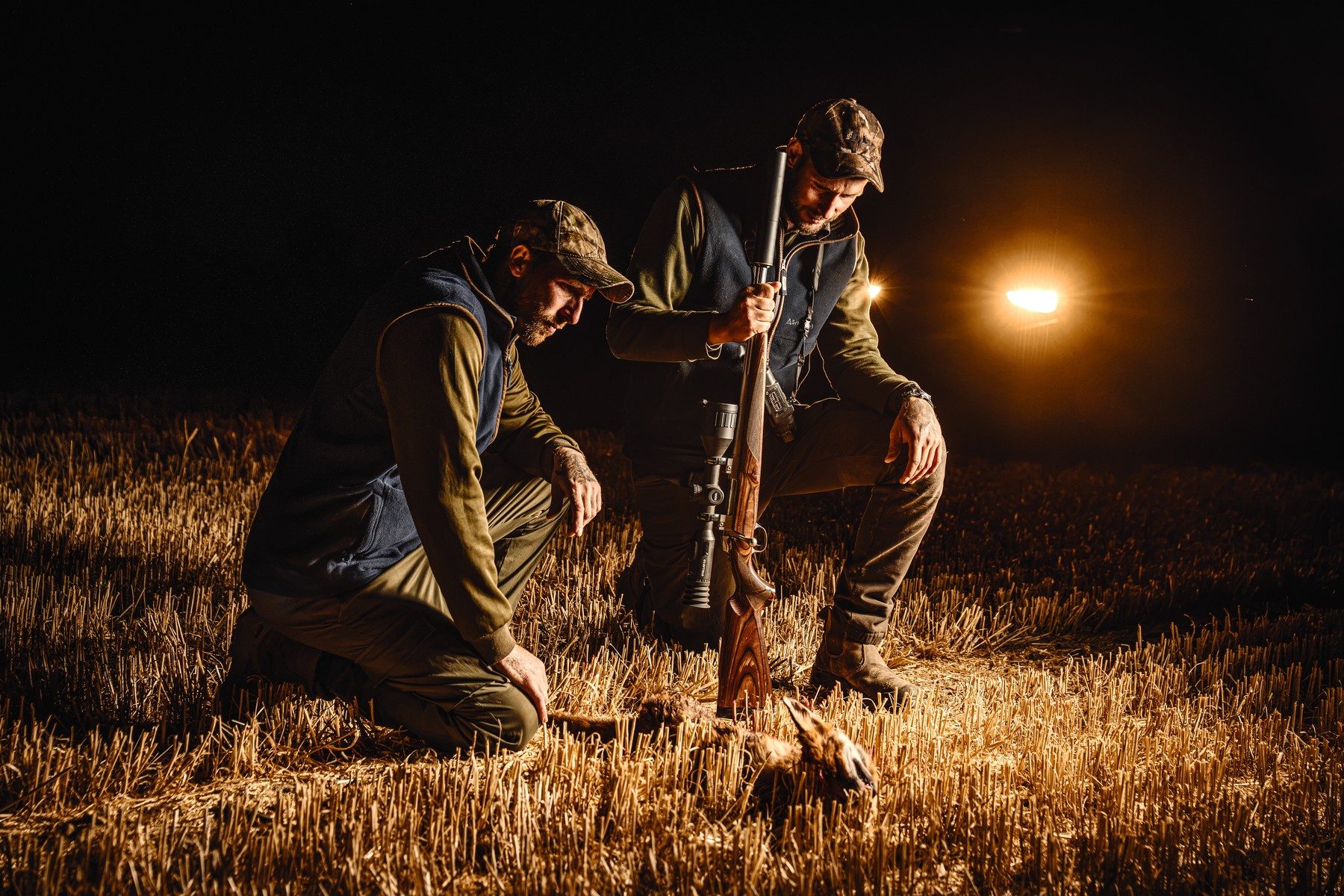
After what seems like an age, there was a loud crack from the moderated rifle followed almost immediately by the solid thump of the round making impact. The Polaris soon crawled forward and we shortly arrived at the first fox of the evening, which had been cleanly despatched.
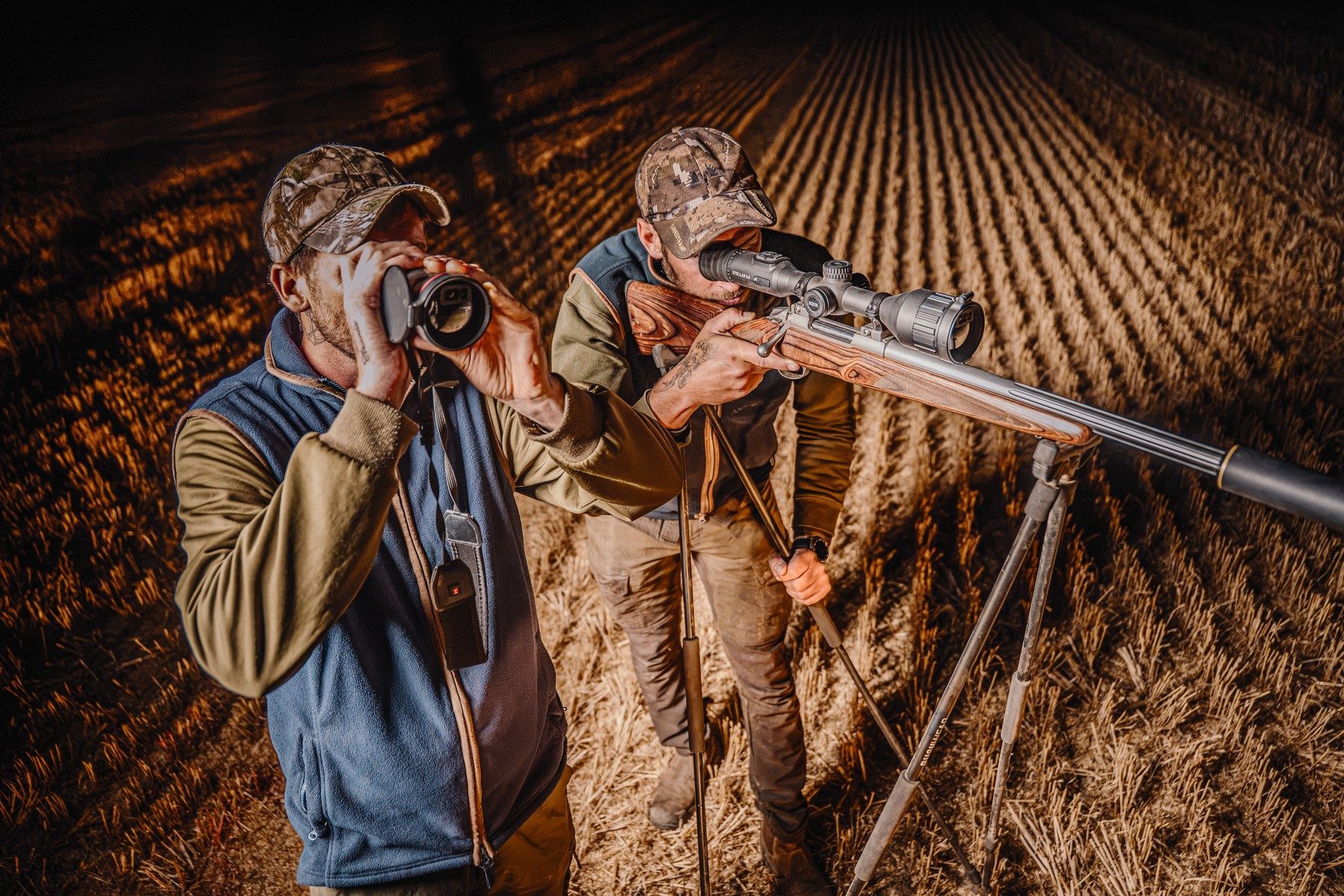
It was impressive to see Jon and Tim work as a team, built by thousands of hours of shooting together. The result was that the decision-making was smooth and timely: foxes that were positioned where a safe shot would be hard to obtain were left undisturbed while those that were deemed possible were pursued carefully, with the Polaris positioned intuitively to meet the fox in a position where a safe backdrop would make a shot possible.
There was never any chasing. It was calm, gradual and highly efficient. The second fox crossed a hedgerow and made its way directly towards us. The line of approach would soon have us winded and to start the engine and move again would undoubtedly have sent the fox bolting for cover. Silently, Jon slipped out and drew his shooting sticks from a rack and stalked out on a flank to best get the angle for a safe shot, which was soon made. A dog cub lay in the stubble, despatched instantly at the shot.
Leaving the team to press on after midnight
As it was now way after midnight we took our leave and left the team to press on. “Lightweights! Part-timers!” called Jon and Tim out of the window, laughing, as they dropped us back at the car. They were just getting started; there were 1,500 acres to cover.
A message the next day told me they had managed six more foxes. This was a new form of shooting for me. The evolution of technology made it a different world from the lamping I had spent so much of my youth engaged in. I was not quite sure what I was going to make of it but was left with lasting impressions. It was a humane and efficient method of fox control that requires huge dedication and skill. The necessary stewardship that proper, ethical fox control brings corrects imbalances to the benefit of a range of species, not just gamebirds.
Will I go again? Too right. I have much to learn.
Frequently asked questions
Why is late summer such an important time for fox control?
There is a short window immediately after harvest when the crop is down and the ground can finally be covered and seen properly, after months of standing crops. It also coincides with the point at which cubs born in the spring are hunting independently and ranging widely, and with the weeks before reared poults leave the pen, so it is the moment to gain control.
How do you tell a fox from a deer or a hare through a thermal spotter?
Mostly by movement and shape rather than by heat signature alone. As Jon and Tim put it, over time you get used to the different movement and you quickly pick up on aspects of the shape as well. It takes practice, and on this night Tim called a muntjac at range before Jon confirmed it with his own spotter.
Does thermal imaging make fox control more humane?
On the evidence of this night it does, because it makes the decision-making smooth and timely. Foxes positioned where a safe shot would be hard to obtain were left undisturbed, while those that were deemed possible were approached carefully, with the vehicle placed so that a safe backdrop was available. There was no chasing, and both foxes were despatched instantly at the shot.
Related Articles
Natural England refused permission to appeal gamebird ruling
The July judgment that Natural England acted unlawfully over gamebird release licensing now takes effect immediately, after Mr Justice Ritchie refused the regulator leave to appeal and awarded BASC it...
By News Desk | 4 September 2026
Pine martens could return across much of Britain, study finds
Keepers and shoot managers from the High Weald to Galloway could be sharing their coverts with the recovering predator, a Europe-wide habitat model suggests
By News Desk | 4 September 2026
Get the latest news delivered direct to your door
Subscribe to Shooting Times & Country
Discover the ultimate companion for fieldsports enthusiasts with Shooting Times & Country Magazine, the UK’s leading weekly publication that has been at the forefront of shooting culture since 1882. Subscribers gain access to expert tips, comprehensive gear reviews, seasonal advice and a vibrant community of like-minded shooters.
Save on shop price when you subscribe with weekly issues featuring in-depth articles on gundog training, exclusive member offers and access to the digital back issue library. A Shooting Times & Country subscription is more than a magazine, don’t just read about the countryside; immerse yourself in its most authoritative and engaging publication.