★ Your magazine. Your say. Complete our reader survey with a chance to win Jack Pyke kit worth £500! ★

3,000 clays and 30 years of practice: the simulated game day at Great Tew
Writing in Fieldsports Journal, Ben Palfreyman takes a peg on a syndicate day at the Cotswold estate that has run simulated game since the 1990s. For shoot owners and keepers it is a working example of what a shoot’s drives can earn between seasons, and a reminder that the footwork lesson never changes
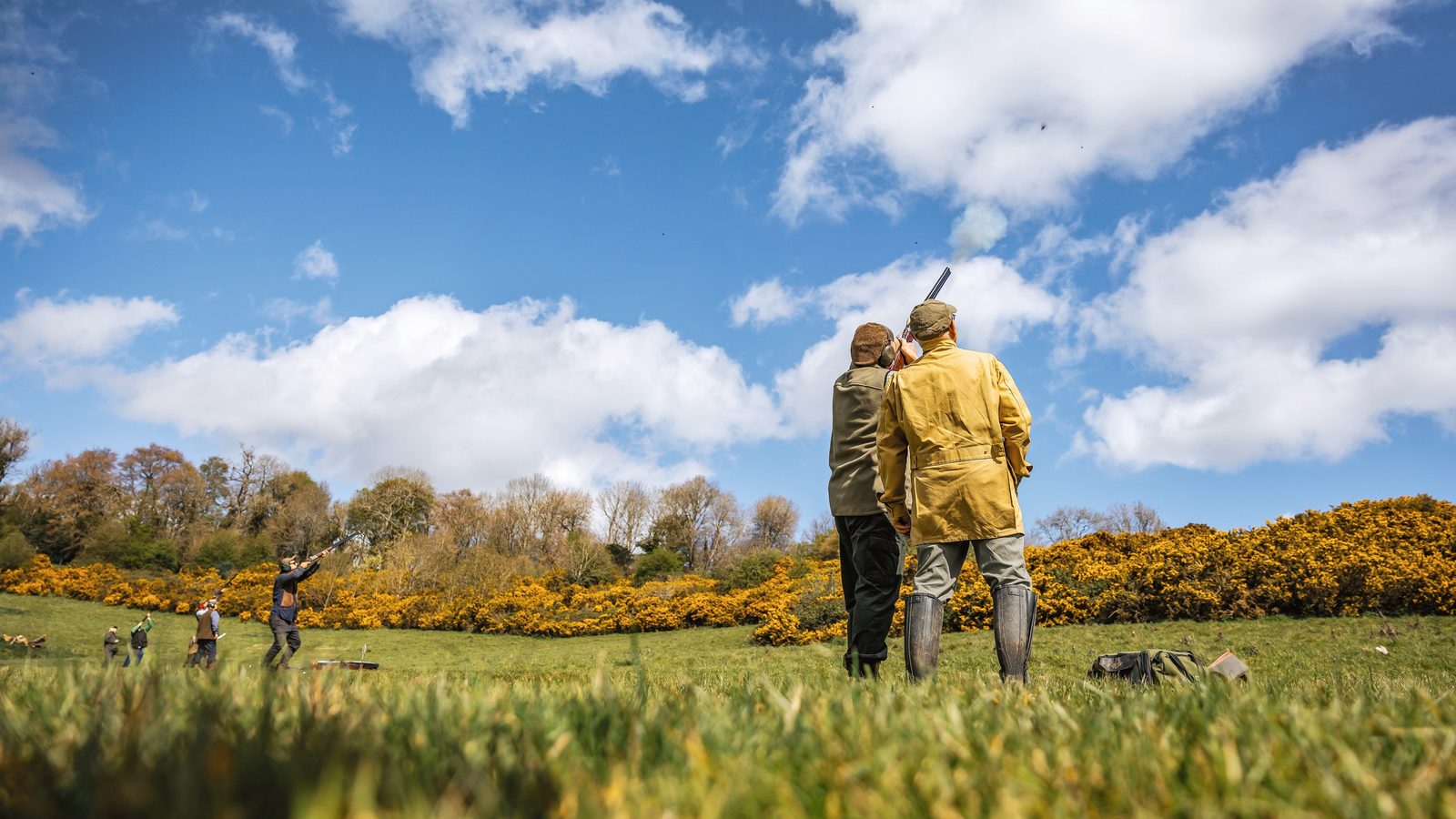

Simulated game days have been part of the shooting calendar for three decades, and Great Tew was among the first estates to offer one. Writing in Fieldsports Journal, Ben Palfreyman took a peg on one of the Cotswold estate’s syndicate days, with the photographer Matt Kidd alongside him, and his account repays the attention of any shoot owner weighing what the drives could earn between the end of one season and the start of the next.
The day began with a lesson in humility over the Gorse Bank. “With the promise of over 3,000 clays to be thrown over the line of Guns during the course of the day, there thankfully will be plenty more opportunities to redeem myself,” Palfreyman writes, after a starburst of targets caught him off guard. The other Guns at breakfast, he notes, were repeat customers, which he takes as the surest mark of the sport on offer.
Why did Great Tew start simulated game in the 1990s?
“Great Tew has been running simulated game days since the 1990s, and was among the first estates to offer this version of the sport,” Palfreyman writes. The idea came from Roddy Richmond-Watson, one of the day’s shoot hosts, who grew up on the neighbouring farm and, in Palfreyman’s words, “represents the third generation of the Richmond-Watson family to run the hugely respected West London Shooting School in Northolt”.
“The land at Great Tew Estate is really quite unique,” Richmond-Watson tells Fieldsports Journal, “and I really just felt that it lent itself to simulated game shooting. The contours of the rolling ironstone hills here are perfect to put on a great variety of drives – and are quite different to most of the downland escarpments you see across most of the Cotswolds.”
“I put the notion to Nicholas Johnston, the estate owner, and I was absolutely delighted when he embraced the idea,” he adds. “He built the grouse butts using the iconic blue and brown ironstone quarried from the estate, which you see in many manor houses and farmhouses in these parts.”
What does a simulated day mean for the shoot owner and the keeper?
For the shoot owner, the model is the point of the story. The same banks, woods and cover crops that carry pheasants and partridges from October are put to work from spring, with hidden traps in place of the beating line and a line of paying Guns on the pegs. The West London Shooting School, which takes the bookings, runs its simulated season from 1 March to the start of the game season, so the ground is earning in the months when a shoot otherwise earns nothing, and a breakfast table of repeat customers is the sign that the drives, the hosts and the lodge are doing their job.
For the keeper, the habitat is part of the product. Palfreyman writes that Richmond-Watson and his fellow host Roger Bryan walk the Guns round the drives, pointing out the woodlands and cover crops that hold birds in the season, and the light-touch management behind them is, in Richmond-Watson’s account, what sets the ground apart. “The owners of Great Tew have historically worked the land here with quite a light touch,” Richmond-Watson says. “While many farmers have ploughed the fields, and taken various government grants to remove hedges, these modern practices have largely passed us by here.” The estate’s focus now, Palfreyman reports, is on preserving and improving those habitats, with the gamekeepers’ work supporting the wildlife on the ground.
“A peg on a sim shoot doesn’t simply give you the opportunity for an exhilarating day of sport,” he writes; it also offers the Gun a few hours in the middle of that natural history.
What are the drives at Great Tew like?
The variety of the ground is what the hosts sell, and Palfreyman describes each drive in turn. “A short walk from the lodge where breakfast is served is ‘Polly’s’: a charming line of native hedging and cherry trees, where the clays mimic a typical partridge drive,” he writes, with fast, low targets. “A neighbouring drive, named ‘Spike’, which is overlooked by the lodge terrace is more of a pheasant drive, with the targets appearing out of the gorse.”
After elevenses came Cottenham Bank, where Kidd “produces his side-by-side – an old shotgun acquired from an estate sale which attracts a bit of attention along the line”. One fellow Gun, Palfreyman notes, “had shot exclusively with side-by-sides until a couple of years ago, when a change in his eye dominance forced the switch to an over-and-under”. In the sunshine there was a practical consequence of the volume of shooting: “The barrels get hot quickly; there are a lot of cartridges going through them.”
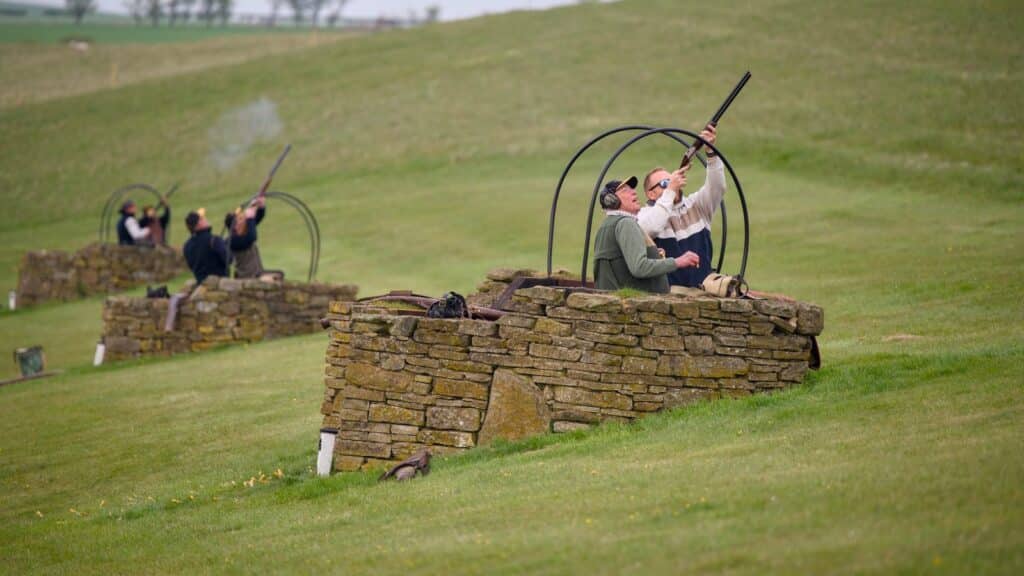
The final drive was Grouse, shot from the ironstone butts, which Palfreyman says were built with expert advice so that they were true to the real thing. “The grouse explode like tiny missiles from the horizon in front,” he writes.
Why is footwork the lesson that keeps coming back?
Palfreyman shot a Browning B325, with Kidd reloading for him at the Gorse Bank and offering advice on his feet. “Of course I know that not moving your feet into position before addressing the bird is likely to result in a miss behind,” he writes. “It is probably the most common mistake seen on a game shoot.” He spells out the mechanics: “If you don’t move your feet into the correct position for where you plan to kill the bird, the movement of the gun will be greatly restricted, leading to a miss behind or underneath and behind.” Once he moved them, the clay broke. “‘Ah, now you’re smoking them!’ comes Matt’s encouragement in my ear.”
The Grouse drive made the case for the format better than any brochure. “I miss one behind. I overcorrect, and miss in front. In fact, in the space of a single drive, I manage to demonstrate almost every possible way to miss a driven bird,” Palfreyman writes. “But the great thing about a simulated day is the repetition of the targets thrown. In traditional game shooting, you might miss a bird and then not see a similar one for a number of weeks. On a sim day, you are able to practise a particular presentation multiple times and cement the technique into your muscle memory.”
For the shoot operator whose Guns arrive on the first day in October having not lifted a gun since the end of January, that is the argument for putting a simulated day in the syndicate’s calendar: the same faults corrected in April on clays are fewer birds pricked in the season.
What happens next
“As the day comes to a close, with a delicious lunch served back at the lodge, the team of Guns reflect on the day,” Palfreyman writes, before the closing image of the piece: “I pat the head of a cocker puppy who is just starting its training to become a peg dog for one of the Guns.” The full feature, with Matt Kidd’s photographs, is on Fieldsports Journal now. “To enquire about simulated or game shooting at Great Tew Estate, contact the team at the West London Shooting School,” he writes; the school’s simulated season opens on 1 March each year and runs to the start of the game season.
Frequently asked questions
What is a simulated game day?
A simulated game day recreates driven game shooting with clays instead of birds: hidden traps throw targets over a line of Guns on pegs to mimic partridges, pheasants and grouse, drive by drive, with elevenses and lunch as on a shoot day. At Great Tew, Ben Palfreyman writes, more than 3,000 clays are thrown over the line in a day.
When do simulated game days run?
They fill the months when live quarry is out of season. The West London Shooting School, which runs the Great Tew days, starts its simulated season on 1 March and runs it to the start of the game season.
Why do Guns miss driven birds behind?
Footwork, according to Palfreyman: if the feet are not moved into position for where the bird is to be killed before the gun is mounted, the swing is restricted and the shot goes behind, or under and behind. He calls it probably the most common mistake on a game shoot.
How does a simulated day improve game shooting?
Repetition. On a real day a missed bird may not be followed by a similar one for weeks; on a simulated day the same presentation comes again and again, so the correction can be practised until it is in the muscle memory.

About the author
Ben Palfreyman
Former managing editor of Fieldsports Journal, Ben ran the bi-monthly through a period of growth for the title, working across game shooting, fishing and big game features, and wrote for ShootingUK during his time with the group.
 Closes 15 JanuaryWorth £129.90Win a pair of tickets to the British Shooting Show 2027Enter nowFree to enter
Related Articles
Where to shoot simulated game: seven UK venues for the summer and the syndicate
A simulated game day puts the clays where the birds would be, and for the shoot owner, the keeper and the syndicate Gun it is the honest way to earn from the ground and get the swing back between seas...
By News Desk | 7 October 2026
Picker-up at eight, first bird at 12: how a father passed shooting on
Writing in Fieldsports Journal, Jamie Culpan recalls being pressed into service as his father’s picker-up on the West Coast of Scotland after the family dog died, and the syndicate family day, four ye...
By Jamie Culpan | 7 October 2026
Get the latest news delivered direct to your door
Subscribe to Shooting Times & Country
Discover the ultimate companion for fieldsports enthusiasts with Shooting Times & Country Magazine, the UK’s leading weekly publication that has been at the forefront of shooting culture since 1882. Subscribers gain access to expert tips, comprehensive gear reviews, seasonal advice and a vibrant community of like-minded shooters.
Save on shop price when you subscribe with weekly issues featuring in-depth articles on gundog training, exclusive member offers and access to the digital back issue library. A Shooting Times & Country subscription is more than a magazine, don’t just read about the countryside; immerse yourself in its most authoritative and engaging publication.
 New competitionWin a pair of tickets to the British Shooting Show 2027Worth £129.90Closes 15 JanuaryEnter now ›