★ Your magazine. Your say. Complete our reader survey with a chance to win Jack Pyke kit worth £500! ★


Picker-up at eight, first bird at 12: how a father passed shooting on
Writing in Fieldsports Journal, Jamie Culpan recalls being pressed into service as his father’s picker-up on the West Coast of Scotland after the family dog died, and the syndicate family day, four years later, when he was first handed a gun. For the keepers and shoot owners who run those days, it is a reminder of what they are for


The syndicate family day, held in the days between Christmas and Hogmanay, is where a great many shoots see their next generation arrive, and Jamie Culpan’s account of his own is a case study in how it happens. Writing in Fieldsports Journal, he traces the road from an eight-year-old sent into the brambles after a fallen bird to the 12-year-old on a peg to his father’s left, and what was learned on the way.
The bond, he writes, was made in the field and nowhere else. “We don’t go to the pub together and sink pints or follow the same football team as many of my compatriots with their fathers; we shoot,” he writes. “Our bond has been forged through long drives to remote locations, early morning coffees, sharing kit and occasionally birds.”
Why was an eight-year-old picking-up on the West Coast?
The introduction was not planned. “My actual introduction to our sport resulted from a tragedy; our family dog had died the summer before, and my dad needed someone to pick-up for him,” Culpan writes. “As a result, my first foray into the field was as my Dad’s chief picker-upper at all of eight years old.”
The first day set the tone. “Remember, this was on the West Coast of Scotland, so we awoke to biblical rain and biting wind,” he recalls, and then his father stood up to give the safety briefing. “The room descended into reverent silence, hanging on his every word.” Once the first beat began, the eight-year-old was turned out into the forest. “It felt liberating, almost mischievous, to be let loose,” he writes.
Watch the shot, follow the bird and go and collect it
The lesson that stuck came at the end of a drive, when the boy could not find a bird. “‘What do you mean you can’t find it?’ My dad exclaimed as I stood there, drenched and scratched from the merciless brambles, feeling like I’d been tossed in a thorny washing machine,” Culpan writes. “‘All you need to do is watch the shot, follow where the bird falls and go collect it. Were you even watching?’”
Two seasons of that followed. “Over the next two years, I became a well-seasoned picker, and Dad was never shy of offering me out to other guns who had particularly tricky birds to find or sending me up a tree to retrieve a shot bird caught amongst the branches,” he writes. Complaints of being cold, wet or tired were met with the same two words: “character building”. In the same period he met his first runner, learned to hang, pluck and breast a bird, absorbed the etiquette of the day and, in his words, “ceased my pesky habit of pilfering others’ game”.
For the keeper and the shoot owner, that apprenticeship is the point of the story. A picker-up who learned the job at eight, without a dog, by watching the shot and marking the fall, is the kind of hand every shoot is short of on a wet January Saturday, and a shoot that lets a child behind the line, with a parent and a plan, is growing its own.
What happened on the syndicate family day?
The gun came four years after the first bramble. “It was on our syndicate family day, held every year between Christmas and Hogmanay, that at 12, I was first handed a gun and placed on a peg to my Dad’s left,” Culpan writes. The first chance went the way first chances often do. “Then I heard the shout, ‘Jamie, on your right.’ I quickly turned, raised my gun and watched with much chagrin as my Dad downed the first bird that I had ever had the opportunity to shoot.”
After another turn in the beating line he was handed a 12-bore again and put in a field. “Harking back, I still hold that this was one of the best shots I’ve made,” he writes. “In my memory, that bird was sky high and flying at full pace down the line; two shots had already rung out to break me from any stupor, and I downed the bird with my first barrel.” The cheer from the other Guns, he admits, may have grown in the retelling.
The moment he keeps is a quieter one. “I shook the hands of my fellow guns, but when it came to my Dad, he pulled me in for a hug and told me in my ear that he was proud of me,” he writes. “Later that day, I shot another few braces of pheasants, but they pale in comparison with my first.”
Nineteen years on, the field is where the bond lives
“It has been 19 years since that fateful December morning, and looking back, some of the best days of my life have been spent in a field with my Dad,” Culpan writes, and the piece closes on where he expects to find that bond when his father is no longer there. “I know that when he’s gone, it won’t be standing by a graveside; it’ll be standing alone in a field looking to my right that I’ll always feel connected to my father.”
What happens next
The full feature, with Matt Kidd’s photographs, is on Fieldsports Journal now. For the shoot owners and syndicate captains planning this season’s family day, it is a prompt on what those days are for: a peg beside a parent for the youngster who has already served a season or two behind the line. On the gun itself, BASC’s guidance is that a young person of any age may be granted a shotgun certificate, but that under 15 an assembled shotgun may be held only under the supervision of an adult aged 21 or over, or when it is in a securely fastened cover so that it cannot be fired.
Frequently asked questions
How old do you have to be to shoot a shotgun on a game shoot?
There is no minimum age for a shotgun certificate, according to BASC, but a person under 15 may only hold an assembled shotgun when supervised by an adult aged 21 or over, and nobody under 18 may buy or hire a shotgun or cartridges. Jamie Culpan was first handed a gun at 12, on a peg beside his father.
What does a picker-up do on a shoot?
A picker-up works behind the line of Guns, usually with dogs, marking and collecting the shot birds, particularly those that fall at a distance, in cover or wounded, so that nothing is left in the field. Culpan did the job for his father from the age of eight, after the family dog died.
What is a runner in game shooting?
A runner is a bird that has been hit and brought down but is still alive and able to run, and finding and dispatching it is the picker-up’s first priority.
 Closes 15 JanuaryWorth £129.90Win a pair of tickets to the British Shooting Show 2027Enter nowFree to enter
Related Articles
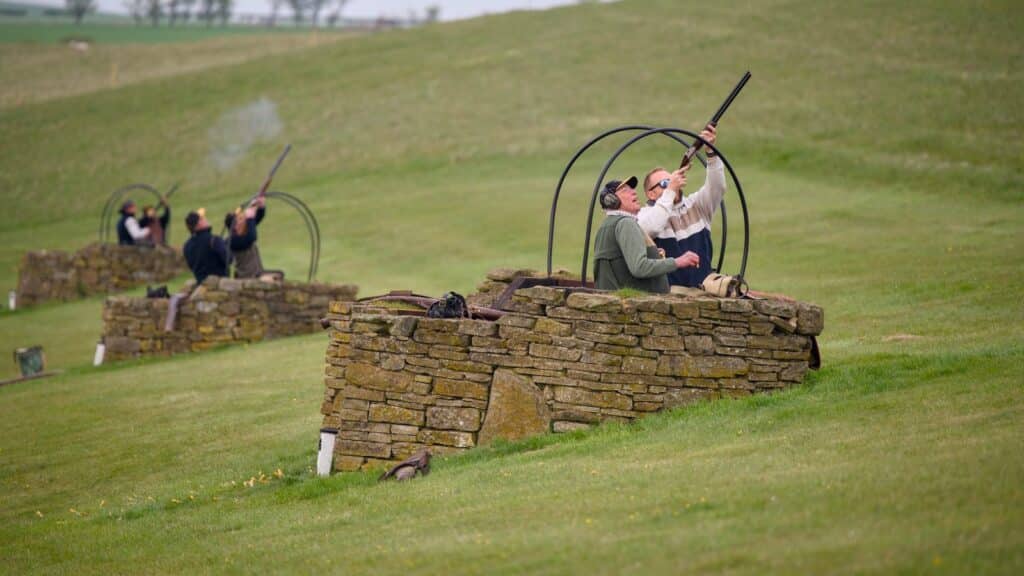
Where to shoot simulated game: seven UK venues for the summer and the syndicate
A simulated game day puts the clays where the birds would be, and for the shoot owner, the keeper and the syndicate Gun it is the honest way to earn from the ground and get the swing back between seas...
By News Desk | 7 October 2026

No release pens, steel for seven years: how Constable Burton shoots
Writing in Fieldsports Journal, Matt Kidd visits the North Yorkshire shoot where D’Arcy Wyvill gave up release pens 15 to 20 years ago, went to steel with biodegradable wads seven seasons back and sen...
By News Desk | 7 October 2026
Get the latest news delivered direct to your door
Subscribe to Shooting Times & Country
Discover the ultimate companion for fieldsports enthusiasts with Shooting Times & Country Magazine, the UK’s leading weekly publication that has been at the forefront of shooting culture since 1882. Subscribers gain access to expert tips, comprehensive gear reviews, seasonal advice and a vibrant community of like-minded shooters.
Save on shop price when you subscribe with weekly issues featuring in-depth articles on gundog training, exclusive member offers and access to the digital back issue library. A Shooting Times & Country subscription is more than a magazine, don’t just read about the countryside; immerse yourself in its most authoritative and engaging publication.
 New competitionWin a pair of tickets to the British Shooting Show 2027Worth £129.90Closes 15 JanuaryEnter now ›