

Katsu-style pheasant with a tikka and cream sauce
A young peregrine’s first pheasant is an occasion worth celebrating and José Souto marks the milestone with a delicious katsu-style dish
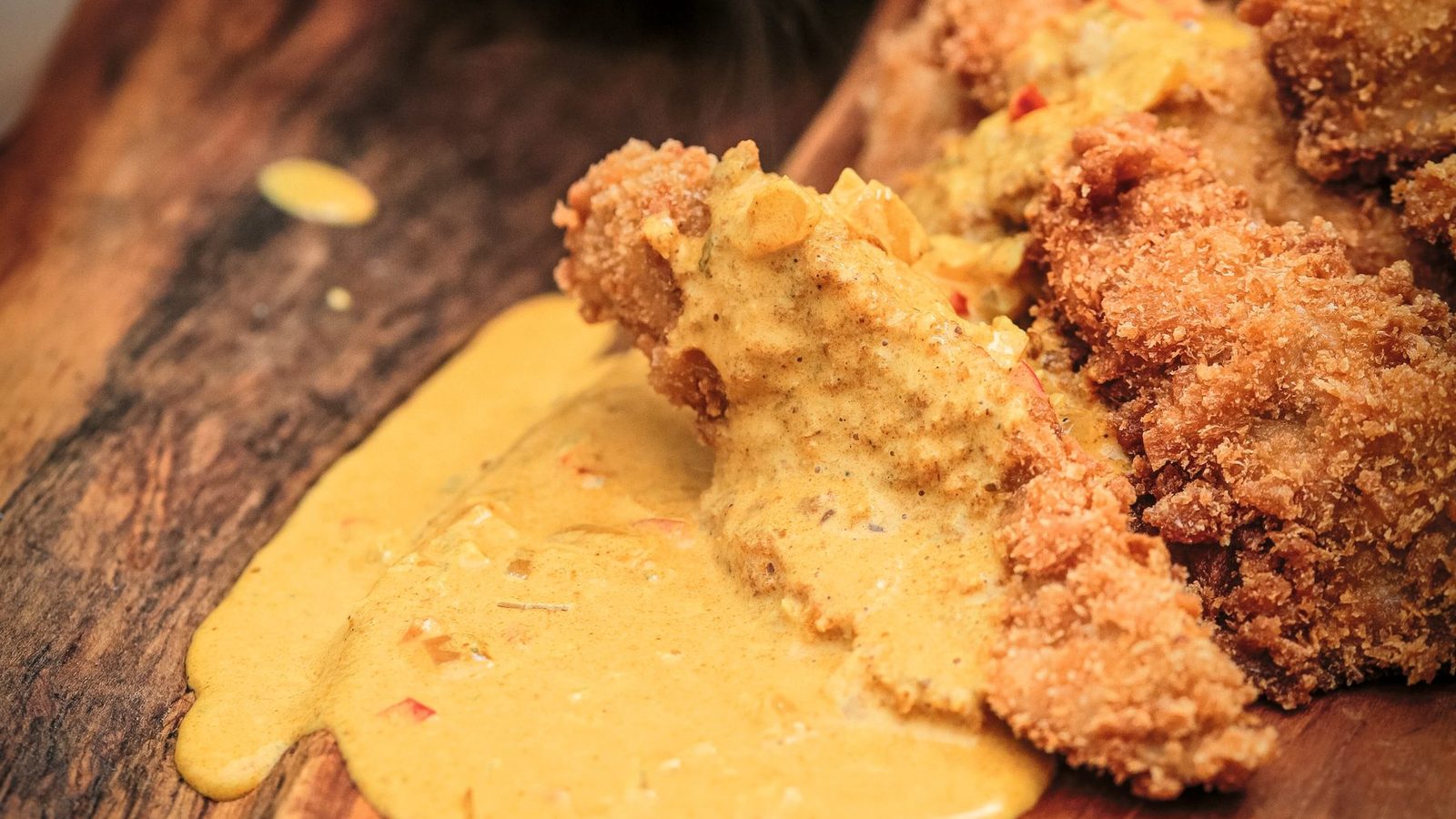

My good stalking buddy Ian Richardson gave me the idea for this recipe. He makes a very similar dish and it’s a great meal that takes no time.
I first made this recipe quite a while ago with the first pheasant caught by my peregrine, Isabela. I remember it well in that she had been quite a hit-and-miss merchant in her first year. Like all young peregrines, her footing was terrible, even on partridges. This is why many young peregrines do not make it to maturity – if they cannot quickly learn to hunt and kill after leaving their parents, they will starve.
A peregrine’s first pheasant on the Fens
This particular day, I was flying out on the Cambridgeshire Fens. I normally spy out the fields for potential slips, but on this day I decided to walk a rape field, allowing the bird to wait on around 250ft to 300ft above me.
As I walked, she followed, keeping a good pitch above me and intently watching my every move. I sent Chloe, my pointer, to search for anything that was held up in the cover. Since Isabela was up commanding the skies, any game was certain to clamp down and wait until the last second before it broke cover. Chloe ran on and skidded to a stop in one of those classic moments when her body caught up with her nose.
The dog was set solid and Isabela knew exactly what was happening as she shifted her position to be above the dog. As I approached the dog, her tail started wagging, which meant the game had moved. I double-checked the bird’s position and sent the dog in to flush. Chloe ran forward into a thick clump of rape. It should have given up a gamebird, but nothing. She went on point again a little further on and again we went to flush, but nothing. This happened three times.
At this point, I was looking at the dog thinking “you are having me on”, especially as she was now pointing at a spot not far from where we had started. Again, I approached the dog, with the falcon faithfully waiting above. This time, before I got near, a big old cock bird broke cover and Isabela raced towards it.
The anticipation of the flushes meant she was all wound up and coming in at a phenomenal speed of about 100mph. She hit the pheasant so hard that it bounced about 10ft in the air. When it settled on the ground, she gracefully swung around to land on the prize.
That evening, we had katsu-style pheasant from the breasts of that bird. Isabela had the legs and neck, and I have the long tail feather in my car to mark her first one.
Ingredients
- 4 pheasant breasts, skin removed
- 50g onion
- 2 red chillies
- 1 large garlic clove
- Oil, for frying
- 75g tikka paste
- 500ml chicken or game stock
- 50ml double cream
- Coriander, chopped
- 150g panko breadcrumbs
- Flour
- 1 egg, beaten
- Oil, for deep frying
How to make katsu-style pheasant – step by step
- Step 1. Remove the inner fillet of each pheasant breast and cut the breast in half lengthways so that there are three pieces.
- Step 2. Finely chop the onion, red chillies and garlic.
- Step 3. In a saucepan, heat up a little oil and add the onion and garlic. Allow them to sweat. Be careful not to fry them, simply allow them to soften without changing colour.
- Step 4. Once the onion is cooked, add the chillies and cook for three to four minutes.
- Step 5. Now add the tikka paste. Turn up the heat a little and cook for four to five minutes.
- Step 6. Bring the stock to the boil and add it to the tikka mix, stirring well.
- Step 7. Bring the sauce to the boil and allow it to simmer for 20 minutes. It should reduce by a third.
- Step 8. Take the sauce off the heat and add the cream. Return it to the heat and bring it to a simmer, reducing it to a coating consistency. Finish the sauce with some chopped coriander.
- Step 9. Mix the breadcrumbs, a little flour and a beaten egg. Coat the pheasant by rolling it in the mixture. Heat oil to 170°C in a deep fat fryer. Fry the pheasant until golden brown.
- Step 10. Serve with the sauce and basmati rice.
Tips for katsu-style pheasant
Sweat the onion and garlic gently without letting them colour, then reduce the sauce by a third before the cream goes in, so it ends up thick enough to coat the pheasant. Keep the deep fat fryer at 170°C so the panko crumb turns golden while the breast pieces stay moist.
Frequently asked questions
How do you prepare pheasant breasts for katsu?
Remove the inner fillet from each skinless breast and cut the breast in half lengthways, giving three pieces, then coat them in a mix of panko breadcrumbs, a little flour and beaten egg.
What temperature do you fry pheasant katsu at?
José Souto heats the oil to 170°C in a deep fat fryer and fries the coated pheasant until golden brown.
How is this different from a classic katsu curry?
The sauce here is built on tikka paste, chilli and stock, reduced and finished with double cream and coriander, rather than a traditional katsu curry sauce.

About the author
José Souto
A London chef, lecturer and game specialist, José is senior chef lecturer in culinary arts at Westminster Kingsway College, where he trained himself. Born in Britain to Spanish parents, he spent childhood holidays hunting and fishing with one side of the family in Andalucia and learning about produce from the farming side in Galicia. He cooked at the House of Commons for more than 11 years, with sabbaticals at Mosimann’s, The Ritz, the Savoy Grill and the Intercontinental Park Lane, and it was a game training manual he wrote there that took him back to the college to lecture. He is the author of Venison: The Game Larder and Feathers: The Game Larder, both photographed by Steve Lee, runs game seminars for chefs and the public, and is a keen stalker and falconer.
 Closes 15 JanuaryWorth £129.90Win a pair of tickets to the British Shooting Show 2027Enter nowFree to enter
Related Articles
The Bloody Mary: “If it lacks authority, add more vodka”
You come in wet, ravenous and pink about the ears. Only one drink is worth the walk back to the house – here is its history, and how to make it sing
By Shooting Times | 6 November 2026

Partridge stroganoff: Eat Wild chef’s 30-minute recipe for Game Week
Great British Game Week runs to 9 November, and Eat Wild’s Leon Challis-Davies has a creamy partridge stroganoff, written for Sporting Gun, that gets six redleg breasts and 350g of pappardelle on the...
By Leon Challis-Davies | 5 November 2026
Get the latest news delivered direct to your door
Subscribe to Shooting Times & Country
Discover the ultimate companion for fieldsports enthusiasts with Shooting Times & Country Magazine, the UK’s leading weekly publication that has been at the forefront of shooting culture since 1882. Subscribers gain access to expert tips, comprehensive gear reviews, seasonal advice and a vibrant community of like-minded shooters.
Save on shop price when you subscribe with weekly issues featuring in-depth articles on gundog training, exclusive member offers and access to the digital back issue library. A Shooting Times & Country subscription is more than a magazine, don’t just read about the countryside; immerse yourself in its most authoritative and engaging publication.

