★ Your magazine. Your say. Complete our reader survey with a chance to win Jack Pyke kit worth £500! ★


Judge grouse moor management by results, Moorland Association says
The association’s submission to the gamebird call for evidence argues red grouse are wild birds, and that any new regulation must be shown to beat the available alternatives
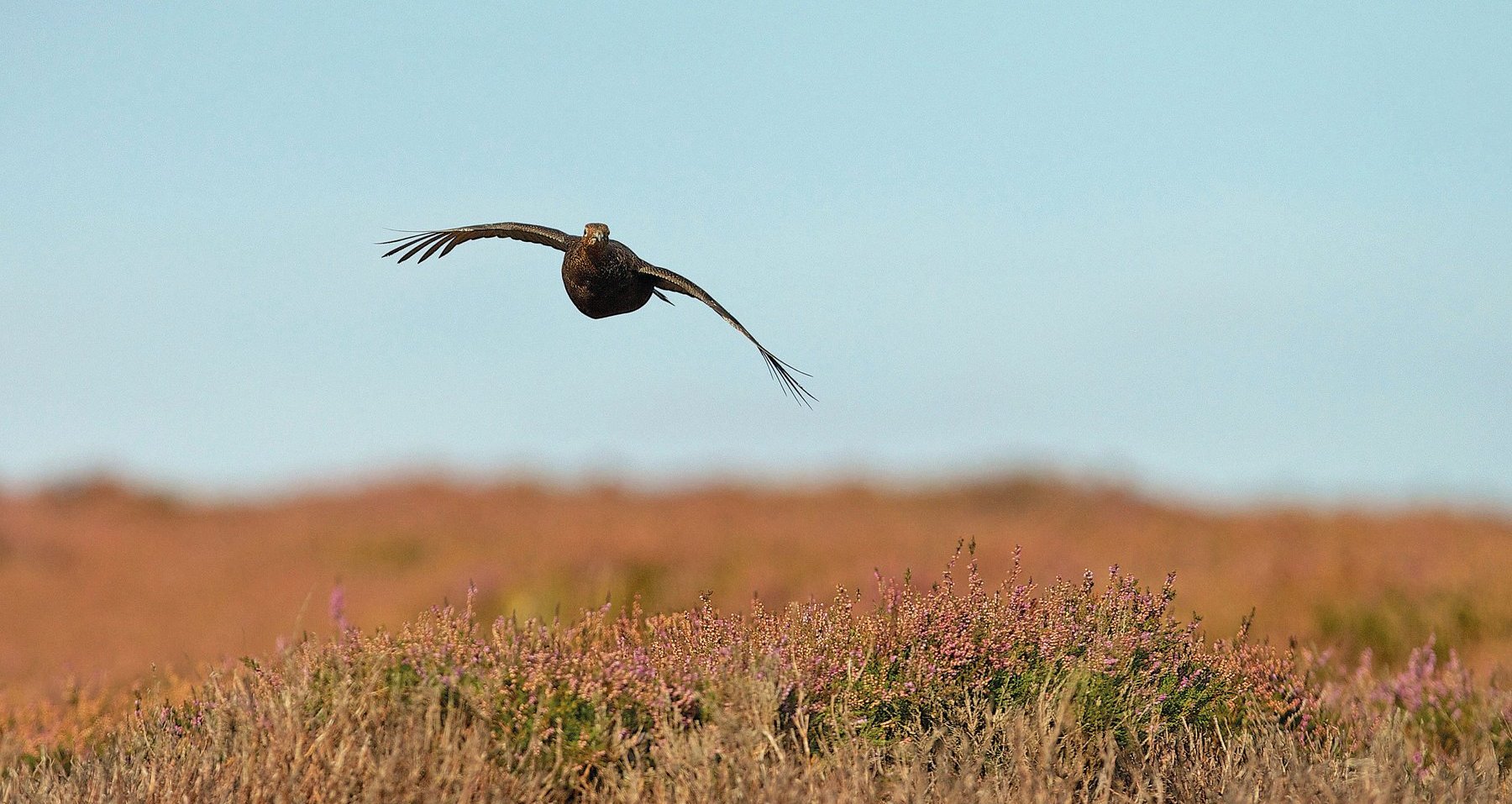

The Moorland Association has asked the Department for Environment, Food and Rural Affairs (Defra) to judge every grouse moor practice by its measured outcomes, in a response to the call for evidence on gamebird release, shooting and welfare submitted on Sunday, 1 November. The association argues that grouse moor management can be treated as neither uniformly beneficial nor uniformly harmful, and that red grouse, as wild birds, should not be judged on evidence about reared and released pheasants and partridges.
What does the evidence say about predators and waders?
The submission’s conservation case rests on an eight-year field experiment which found that lawful control of generalist predators increased breeding success roughly threefold, on average, for moorland birds including curlew, lapwing and golden plover. Separate observational research found curlew productivity about four times higher on the grouse moors studied than on paired moors without grouse management.
Six areas of evidence
Six areas are examined: ground-nesting birds, habitat and vegetation management, wildfire, protected sites, bird-of-prey crime, and rural employment. On wildfire, the association cites a 2026 study of 206 wildfires in England and Wales which found fires in areas managed by burning were smaller than those in unmanaged areas, while noting the study did not establish cause. On burning, cutting, grazing and rewetting, it argues the techniques are not interchangeable and no single one suits every site.
On bird-of-prey crime, the association states that it unequivocally condemns the illegal killing and persecution of birds of prey, acknowledges peer-reviewed evidence that illegal killing has harmed hen harrier populations, and asks Defra to distinguish confirmed offences, suspected incidents, unexplained satellite-tag disappearances and statistical patterns, because each supports different conclusions.
What is the association asking Defra to do?
Five asks are made: publish the methodology by which evidence will be selected and weighted; judge individual practices by measured outcomes rather than treating grouse shooting as a single pressure; examine realistic alternatives, including what would happen to predator control, monitoring and wildfire response if management changed; consider proportionate responses such as better enforcement and improved standards; and set clear tests of success for any intervention. “Any additional regulation must be shown to be necessary, proportionate and likely to produce better outcomes than the available alternatives,” the submission says.
What happens next
The call for evidence closed on 1 November and Defra has given no timetable for its findings, though it has told Parliament the two-month window was proportionate and that two requests for an extension were refused. The association’s full submission and seven supporting annexes are linked from its website for anyone who wants to examine the evidence.
Frequently asked questions
What did the Moorland Association tell the gamebird review?
That each grouse moor practice should be judged by its measured outcomes, that red grouse are wild rather than released birds, and that any new regulation must be shown to beat the available alternatives.
Are red grouse reared and released like pheasants?
No. Red grouse live and breed wild on the moor, which the association says makes grouse shooting fundamentally different from systems that rear and release pheasants, partridges and mallard.
When did the gamebird call for evidence close?
At 23:59 on 1 November 2026; the department has yet to give a timetable for its findings.
 Closes 15 JanuaryWorth £129.90Win a pair of tickets to the British Shooting Show 2027Enter nowFree to enter
Related Articles

Police anti-poaching training with BASC pays off within 24 hours
Nottinghamshire officers trained on the Thoresby Estate in firearms law, lawful deer stalking and wildlife crime forensics, and one used her new knowledge on a search warrant the very next day
By News Desk | 5 November 2026
Moorland managers invited to trial garlic-based grouse grit
Ecospray and livestock nutrition specialists Denis Brinicombe are recruiting estates for larger trials of a natural garlic grit, after a one-year pilot on Scottish moors suggested grouse took it more...
By News Desk | 5 November 2026
Get the latest news delivered direct to your door
Subscribe to Shooting Times & Country
Discover the ultimate companion for fieldsports enthusiasts with Shooting Times & Country Magazine, the UK’s leading weekly publication that has been at the forefront of shooting culture since 1882. Subscribers gain access to expert tips, comprehensive gear reviews, seasonal advice and a vibrant community of like-minded shooters.
Save on shop price when you subscribe with weekly issues featuring in-depth articles on gundog training, exclusive member offers and access to the digital back issue library. A Shooting Times & Country subscription is more than a magazine, don’t just read about the countryside; immerse yourself in its most authoritative and engaging publication.

