
Fox control kit: what a former keeper carries beyond the rifle
Lance Barton has spent thousands of nights on foxes, many of them straight after a day’s keepering. Writing in Rifle Shooter, he lists the kit that decides whether a night works: spare batteries, a mouth squeaker, cat food, netting, taped sticks and a flask
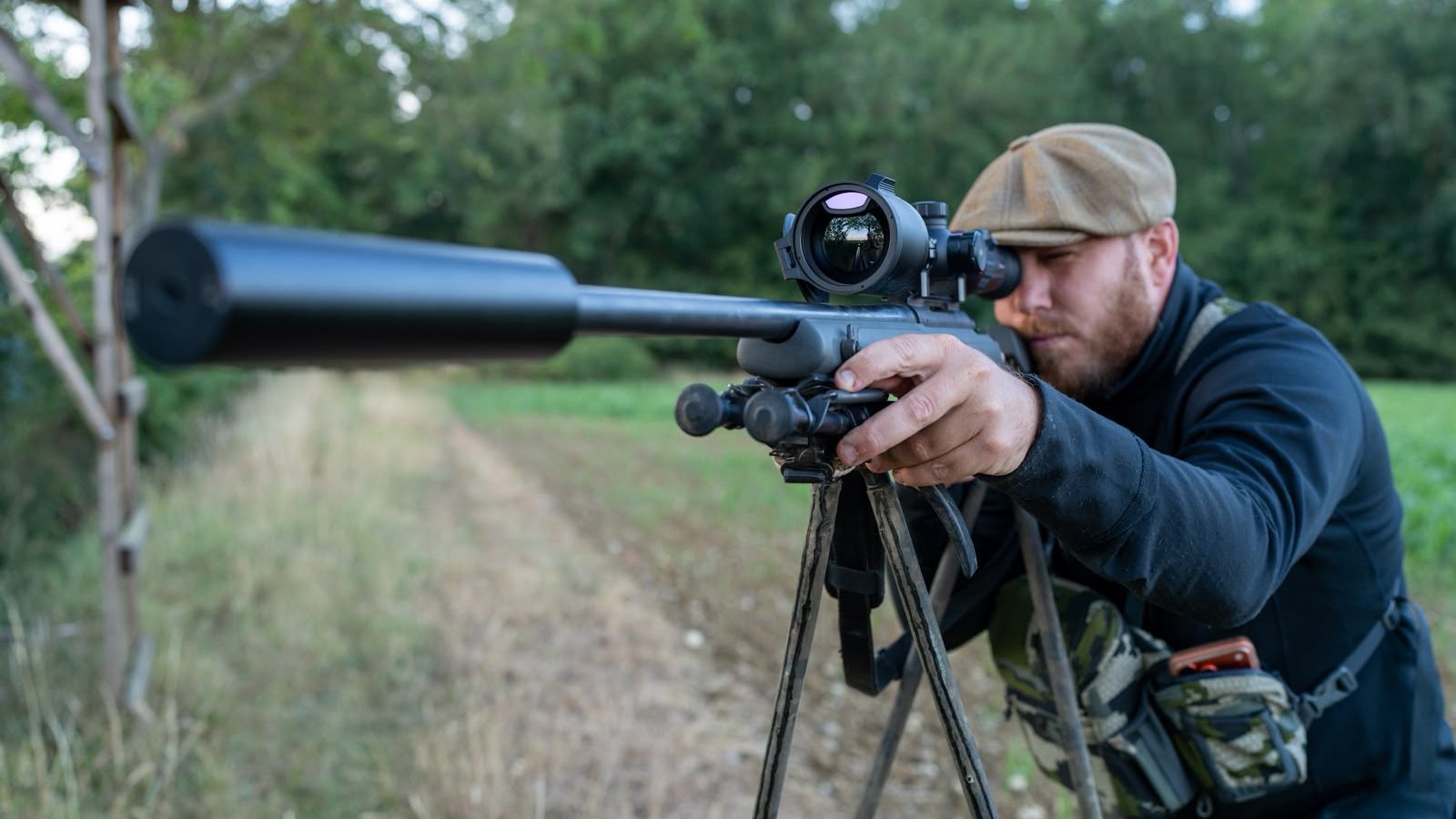

The piece of foxing kit most likely to end a night early is not the rifle, the thermal or the caller but a flat battery, according to Lance Barton, the Kent countryman and former gamekeeper who writes on fox control for Rifle Shooter. In a new feature for that title he sets out what he carries after “thousands of hours out foxing, often finishing a long day on the estate only to head back out again as darkness falls”, and most of it costs very little.
Why does the small kit matter more than the optics?
“The rifle itself is only one part of the equation, and while good optics are undoubtedly important, it’s often the smallest pieces of kit that make the biggest difference,” Barton writes. For a keeper with release pens to protect or a farmer counting the weeks to lambing, his list reads as a checklist, and the lesson he draws from it is a working one: “good preparation is often what separates an enjoyable and productive evening from a frustrating one”.
What thermal kit does he use, and how?
Barton’s set-up is a pair of Nocpix QUEST S50R thermal binoculars and a Nocpix ACE S60R thermal riflescope, both with 1280×1024 sensors. What he values is not detection range but the detail once an animal is found. “There’s an enormous difference between detecting an animal and positively identifying it, particularly when hares, badgers and deer might all be occupying the same field as the foxes I’m after,” he writes.
He scans with both eyes through the binoculars, and after several hours he returns to the green palette, which he finds “considerably gentler on my eyes” than white hot or black hot. Both units carry laser rangefinders, and on arriving at a position he ranges gateways, hedgerows and prominent trees before settling in, sometimes writing the distances on his phone. “Judging distances in darkness can be surprisingly deceptive, especially across open fields,” he writes. The technology, he adds, “should always support good fieldcraft rather than replace it”: positive identification, a suitable backstop and a proper understanding of the ground “remain absolutely essential, regardless of how impressive the thermal image might be”.
What goes in the truck?
Spare batteries first. Cold weather cuts their performance, and his electronic fox caller needs spares for both the main unit and its remote handset: “It’s surprisingly easy to remember one and forget the other.” A mouth squeaker still rides alongside the caller because “sometimes, the simplest choice is the best”, and so do a few sachets of cat food as bait, “preferably one of the really smelly varieties in jelly”.
For a long sit he stretches pigeon hide netting and ghillie netting around the truck to break up its outline, held on with small hooked magnets stuck to the bodywork, which he says “save an awful lot of messing about with knots”. His ViperFlex shooting sticks have their height-adjustment holes covered in camouflage tape, because “anyone who’s experienced the whistling sound of wind passing through them will understand why”, and a pair of small steps that attach to the truck, one for each side, are taped for the same reason. “Naturally, any elevated position must be secure, and safe firearm handling must always come first,” he writes.
Why does comfort count as safety?
A woolly hat, layers, warm footwear, hand warmers in the colder months, a head torch and a flask of coffee all make the list, because the cold shortens a night and, he argues, makes it less safe. “Anyone who has spent time in freezing conditions knows how quickly you can begin to lose feeling in your fingers. Proper control and sensitivity are essential when handling a firearm, both for safety and performance,” he writes. An energy drink waits in the truck for a late one, but “caffeine is no substitute for proper rest, and knowing when to call it a night is every bit as important as having the equipment and determination to stay out”.
The least glamorous item is a packet of baby wipes, for hands that have handled bait and for the moment when “nature will call, usually at the most inconvenient moment”, with a plastic bag for used wipes and any other rubbish. “It’s down to each and every one of us to make sure we leave nothing behind to litter the countryside,” he writes.
What happens next
Barton’s closing argument is for anyone who thinks the fox control kit list ends at the rifle and the thermal. The technology has changed how the job is done, he writes, but “the basic principles remain the same: patience, observation, good judgement and an understanding of both the quarry and the countryside”. His full feature, with his pictures and his answers on palettes, sticks and callers, is on the Rifle Shooter website, linked below.
Frequently asked questions
Which thermal palette is easiest on the eyes for long foxing sessions?
Green, in Lance Barton’s experience. Writing in Rifle Shooter, he says he returns to it on his Nocpix QUEST S50R binoculars because it is considerably gentler on the eyes than white hot or black hot after several hours of scanning.
How do you stop shooting sticks whistling in the wind?
Cover the height-adjustment holes with camouflage tape. Barton does the same to the small steps that attach to his truck, to cut noise and reflections.
What should a fox controller carry besides the rifle and thermal?
Spare batteries for the caller and its remote handset, a mouth squeaker, a few sachets of cat food as bait, pigeon hide and ghillie netting with hooked magnets to fix it, shooting sticks, a head torch, hand warmers, a flask and baby wipes, with a bag for the rubbish.

About the author
Lance Barton
A Kent countryman and former gamekeeper, Lance writes on fox control for Rifle Shooter, drawing on his keepering background. He covers the foxing calendar as a keeper sees it, among it cub time - a narrow but important window in the year, where planning and preparation pay dividends.
 Closes 15 JanuaryWorth £129.90Win a pair of tickets to the British Shooting Show 2027Enter nowFree to enter
Related Articles

How much to tip the gamekeeper: an indispensable guide to shoot-day gratuities
An indispensable guide to tipping the keeper, by Jean-Paul Gaudin: the only shot of the day that truly must hit its mark is the one involving your wallet
By Jean-Paul Gaudin | 18 November 2026

Putting our wild harvest on the table: how simple recipes could get more people eating game
BASC’s new head of wild food, Heidi Savage, explains how simple recipes and practical education could get more people eating game
By Heidi Savage | 18 November 2026
Get the latest news delivered direct to your door
Subscribe to Shooting Times & Country
Discover the ultimate companion for fieldsports enthusiasts with Shooting Times & Country Magazine, the UK’s leading weekly publication that has been at the forefront of shooting culture since 1882. Subscribers gain access to expert tips, comprehensive gear reviews, seasonal advice and a vibrant community of like-minded shooters.
Save on shop price when you subscribe with weekly issues featuring in-depth articles on gundog training, exclusive member offers and access to the digital back issue library. A Shooting Times & Country subscription is more than a magazine, don’t just read about the countryside; immerse yourself in its most authoritative and engaging publication.

