★ Your magazine. Your say. Complete our reader survey with a chance to win Jack Pyke kit worth £500! ★

No release pens, steel for seven years: how Constable Burton shoots
Writing in Fieldsports Journal, Matt Kidd visits the North Yorkshire shoot where D’Arcy Wyvill gave up release pens 15 to 20 years ago, went to steel with biodegradable wads seven seasons back and sends every bird to dealers supplying M&S and Waitrose. For keepers and shoot operators, it is a working model of where the sector is heading


Constable Burton, the Wyvill family’s shoot near Leyburn in North Yorkshire, employs 12 people full time through the year and around 50 on a shoot day, and every one of them works a system that most commercial shoots are still talking about. D’Arcy Wyvill, who has run the shoot for 15 years, set out that system to Matt Kidd for Fieldsports Journal, and for the keeper or shoot operator weighing the same changes it is a rare account of open release, steel and a supermarket-grade game chain running together on one estate.
The estate has 2,500 acres in hand, rents another 500 and keeps the sporting rights over land sold in the past, giving more than 4,000 shootable acres over which pheasants, partridges and duck are released. “In the season, we are up to 50, I think, something like that. Last year there were 52 people in the end-of-season photograph,” Wyvill told the magazine.
Why did Constable Burton give up its release pens?
The decision predates most of the current argument about release densities. “We stopped doing that about 15 years ago, maybe even more than that, maybe 20 years ago,” Wyvill told Fieldsports Journal. Birds are now put out by open release across the ground rather than concentrated behind wire.
His case for it will be familiar to any keeper who has walked a pen in a wet August. “The principle is straightforward: less concentrated pressure on the ground, less damage to flora and fauna, and birds that wild up more quickly,” he said. The feature is candid about the cost: open release means more feed, seasonal predator control and a more hands-on job of holding game on the ground, and that work falls on the keepering team.
Perma-crops, 45,000 trees and a bird count of 28 species
The cover has changed with the release method. Maize-heavy game crops have given way to what the feature describes as perma-crops of grasses, artichokes and wild bird seed, chosen to cut input costs and disturbance and to hold a wider range of species. Over the past decade the estate has planted 45,000 trees and works to a woodland management plan that balances income, cover and biodiversity. “Everything is being done sympathetically with the estate in mind,” Wyvill said.
The ground carries roe and fallow deer, the fallow managed by a professional stalker, and a bird list that includes curlew, lapwing, woodcock, teal, wigeon, snipe, jack snipe and English partridge. The estate takes part in the Game & Wildlife Conservation Trust’s Big Farmland Bird Count, and the feature records a day’s count of 28 species. The English partridge are left alone, and the shoot has kept woodcock off its let days by choice. “We haven’t shot a woodcock on a commercial day for seven years,” Wyvill said. On raptors he was equally direct: “We’ve got lots of them. We’re absolutely on board with that, we see everything as part of our ecosystem.”
What has seven seasons of steel taught the shoot?
Constable Burton moved to lead-free cartridges seven years ago, well ahead of the legal deadline: under the REACH (Amendment) Regulations 2026 the sale and use of lead shot ends on 1 April 2029. The shoot uses steel with biodegradable wads, starting the season on 32g No 5s and moving to No 4s as the birds get harder later on.
Two worries that keep other shoots on lead have not materialised here. The first is litter. “In the North Yorkshire environment, which is fairly wet, eco wads are normally gone, completely disappeared from any evidence in the field within about three weeks to a month,” Wyvill said. The second is the guests, and the feature reports that the concerns visiting Guns raised at the outset have not been borne out on the day. For Wyvill the case rests on the end of the chain. “We’re not just standing in the field, shooting for fun. We are harvesting wild produce,” he said.
Game that goes to the supermarket shelf
That produce has a route to market many shoots would envy. “All of our game on the estate goes off to the UK market via our dealers,” Wyvill said. “They have contracts directly with M&S and Waitrose.” The bird is chosen for the customer: the shoot rears medium to large pheasant strains that suit the dealers, rather than the small, fast birds favoured on the highest shoots. “High bird shoots often require a smaller bird, but that isn’t our main objective,” he said.
The same game feeds the shoot itself. “All of our elevenses and shoot lunches are off the estate. They’re all game,” Wyvill said. A previous head chef won an Eat Game Award, the kitchen is now run by Matt Hunter, and the McWyvill burger on the menu is pheasant. Guests who arrive doubtful about game tend to leave otherwise. “Good food changes minds,” he said.
The shoot as an employer and a neighbour
The Wyvills have held Constable Burton since the Norman Conquest, and the Palladian hall was built for the family by John Carr of York in the 1760s. It was Wyvill’s father, Charles, who turned the shoot commercial. “My dad sort of commercialised it in the late ’70s, early ’80s,” he said. “We were one of the first houses in the country to start tying up accommodation with shooting.”
He is clear about where the shoot sits in the district. “The shoot is very, very much part of the local community,” he said, and the team’s days end where a good many do: “We take a lot of pleasure in that, and enjoy reminiscing about our days in the local pubs.” A 1953 Austin Champ waits at the hall for the right day. “We will roll around the shoot in it if the weather’s right, and the weather really does have to be right,” he said.
What happens next
The estate is planning a private membership club built around walked-up shooting, equestrian and country pursuits, alongside a lodge park for which planning permission has already been granted. For shoot operators, the working lesson of Constable Burton is that open release, steel and a supermarket-grade game chain are not three separate projects but one system, and that it has been running for the best part of a decade. The full feature, with Matt Kidd’s photographs, is on Fieldsports Journal now. Shoots still on lead have until 1 April 2029 to make the change the Wyvills made seven seasons ago.
Frequently asked questions
What is open release on a pheasant shoot?
Open release puts poults out across the ground in cover rather than holding them in fenced release pens. Constable Burton stopped using pens 15 to 20 years ago because, in D’Arcy Wyvill’s words, it means less concentrated pressure on the ground, less damage to flora and fauna and birds that wild up more quickly, at the cost of more feed, seasonal predator control and more hands-on work holding game.
When does lead shot become illegal in the UK?
Under the REACH (Amendment) Regulations 2026 the sale and use of lead shot ends on 1 April 2029, with a conditional exemption for elite athletes; airgun pellets sit outside the restriction. Constable Burton moved to steel with biodegradable wads seven years ago.
What steel cartridges does Constable Burton use for driven pheasants?
The shoot starts the season on 32g No 5 steel loads with biodegradable wads and moves to No 4s as the birds become more challenging later in the season.
 Closes 15 JanuaryWorth £129.90Win a pair of tickets to the British Shooting Show 2027Enter nowFree to enter
Related Articles

Upland keeper: cheap grouse, burned moorland and a boy's first fish on a fly
Lindsay Waddell on grouse that fetch less per brace than 50 years ago, wildfires on the moor and a rural life misunderstood – though the summer still found room for a grandson's first trout
By Lindsay Waddell | 25 September 2026
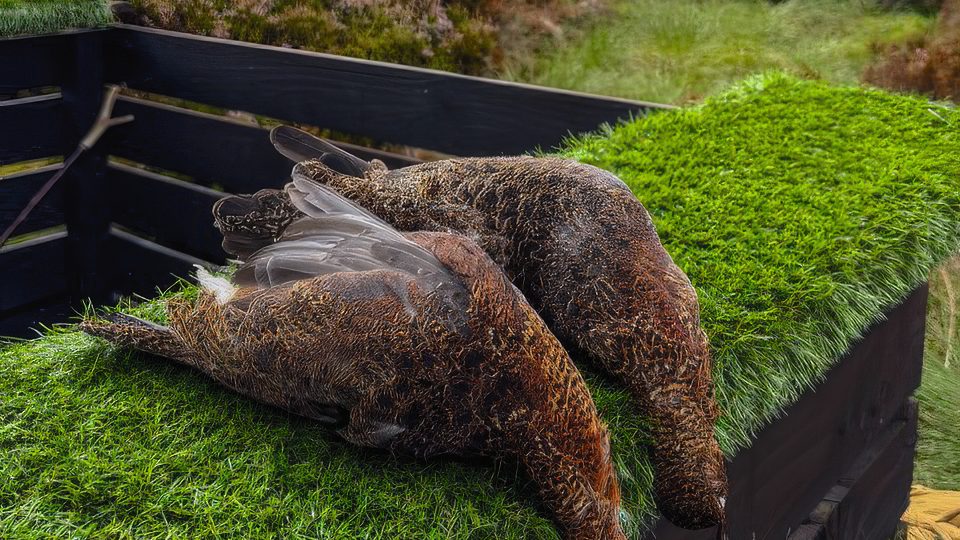
The grouse is the boss: why a moor is a working landscape
Jean-Paul Gaudin on tweed debated like military strategy, a bird gone in three-quarters of a second, and the months of management that happen long before the first cartridge is fired
By Jean-Paul Gaudin | 22 September 2026
Get the latest news delivered direct to your door
Subscribe to Shooting Times & Country
Discover the ultimate companion for fieldsports enthusiasts with Shooting Times & Country Magazine, the UK’s leading weekly publication that has been at the forefront of shooting culture since 1882. Subscribers gain access to expert tips, comprehensive gear reviews, seasonal advice and a vibrant community of like-minded shooters.
Save on shop price when you subscribe with weekly issues featuring in-depth articles on gundog training, exclusive member offers and access to the digital back issue library. A Shooting Times & Country subscription is more than a magazine, don’t just read about the countryside; immerse yourself in its most authoritative and engaging publication.
 New competitionWin a pair of tickets to the British Shooting Show 2027Worth £129.90Closes 15 JanuaryEnter now ›