★ Your magazine. Your say. Complete our reader survey with a chance to win Jack Pyke kit worth £500! ★

Police seize taxidermy goshawk over missing sale licence
A cased bird of prey advertised on a social media page has been taken by Essex Police, and the certificate rules reach beyond the obvious sale
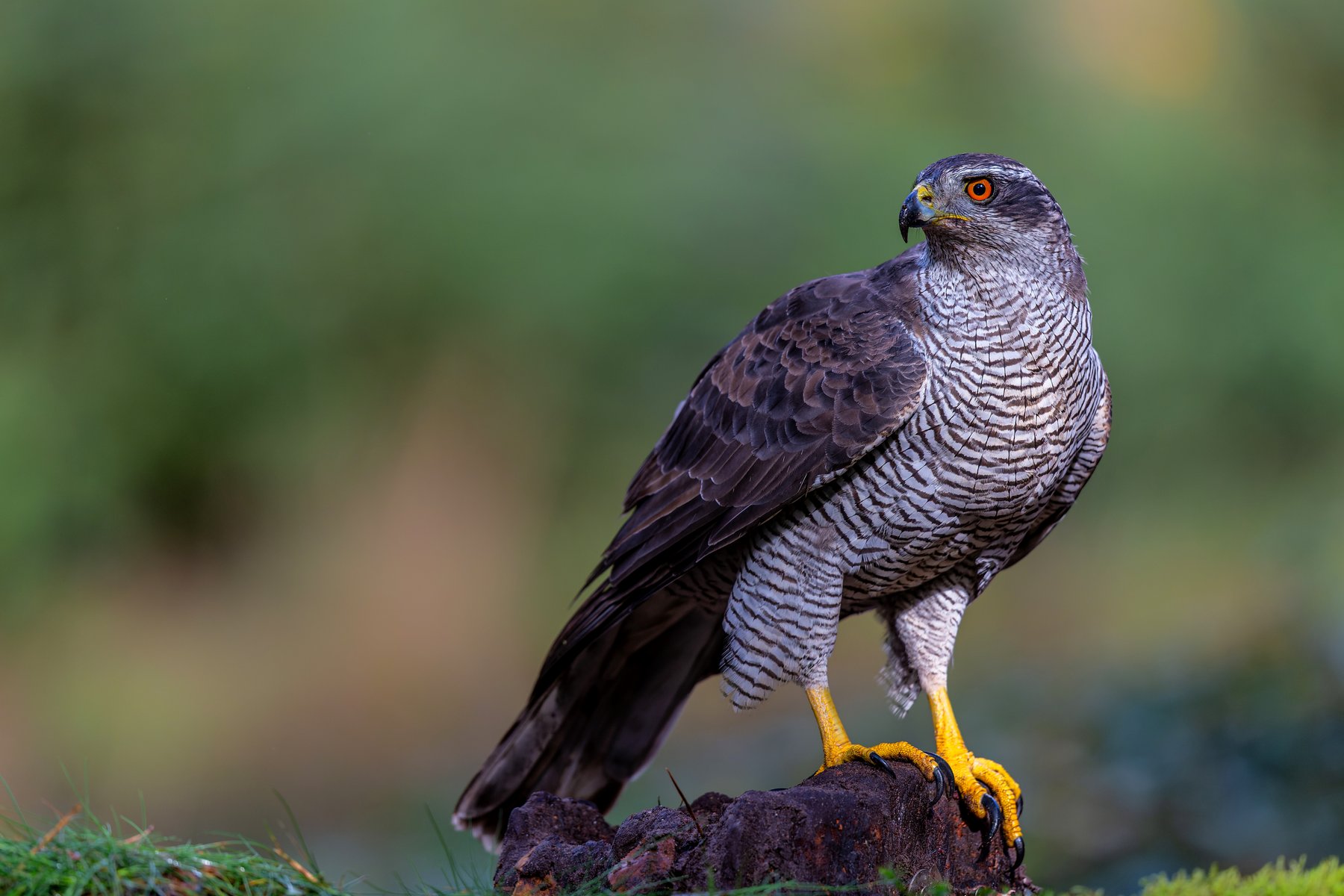 Northern goshawk (accipiter gentilis)searching for food in the forest of Noord Brabant in the Netherlands. Credit: Henk Bogaard via Getty Images

Essex Police have seized a taxidermied goshawk that was offered for sale online without the taxidermy licence the law requires, and the force is using the case to warn anyone who owns or trades mounted birds. The bird, a eurasian goshawk cased with a thrush, was spotted on a social media selling page by an officer from Norfolk Police’s rural crime team and traced to a 65-year-old man in south Essex.
How was the goshawk traced?
The Norfolk officer handed the advertisement on once it was established that the seller lived in south Essex, and the county force’s Rural Engagement Team took the investigation over. Essex Police say the man was running a legitimate business and had not realised that a bird of prey cannot be sold like any other piece of taxidermy.
He has been given a community resolution, an informal out-of-court disposal used where an offender admits responsibility and both sides agree, with a condition that he researches the rules on selling taxidermied wildlife under the Convention on International Trade in Endangered Species of Wild Fauna and Flora (CITES).
Investigating officer PC Dane Wyatt said: “Wild birds are an important part of our natural heritage and the licensing system plays a vital role in protecting them. It helps to prevent illegal wildlife crime, supports responsible trade and ensures there is a clear and lawful record of where specimens have come from.”
The certificate a seller needs
Commercial use of a goshawk in Great Britain needs a commercial use certificate from the Animal and Plant Health Agency (APHA), known as an Article 10 or Article 60 certificate. The agency’s guidance says the certificate is required for any specimen listed in Annex A that the holder plans to use for commercial gain in any way, keep for sale, offer for sale, transport for sale, or display to the public for commercial purposes. Commercial use of an Annex A specimen without one is a criminal offence carrying up to five years in prison or an unlimited fine.
There is an exemption for worked specimens, and it is narrower than most people assume. An item only qualifies if it is significantly altered from its natural state, was worked before 3 March 1947, has not been reworked since to change its purpose, and is clearly identifiable as jewellery, an adornment, art, a utility item or a musical instrument. APHA’s guidance is explicit that anything reworked after that date is not a worked specimen and needs a certificate for commercial use. A mount made after that date is outside the exemption whatever its condition.
What does the Wildlife and Countryside Act add?
Sale is also caught by section 6(2) of the Wildlife and Countryside Act 1981, which makes it an offence for anyone not registered under regulations made by the Secretary of State to sell, offer or expose for sale, or to possess or transport for the purpose of sale, any dead wild bird other than those in Parts II and III of Schedule 3, or any part of or anything derived from such a bird. The goshawk is not on that list. It sits in Part I of Schedule 1, the birds protected by special penalties at all times, and the same section catches advertising likely to be understood as an offer to buy or sell.
What happens next
The cased bird will not be destroyed. Essex Police say the Rural Engagement Team will keep it and use it at public engagement events to teach people about wildlife conservation and wildlife crime prevention.
“The man had never been in trouble with the law before and didn’t know what licences are needed for selling taxidermied items,” PC Wyatt said. “We want to make sure he is properly educated to understand it’s an offence to sell or trade taxidermied birds without the appropriate licences, so he doesn’t repeat his mistake.”
Anyone clearing a gunroom or an estate office who is unsure where an old case stands should check the species listing on the Species+ database and put the question to APHA’s CITES team before the item is advertised anywhere.
Frequently asked questions
Do I need a licence to sell a taxidermied bird of prey?
For an Annex A species such as a goshawk, yes. You need an Article 10 or Article 60 commercial use certificate from APHA before the bird is offered, kept, transported or displayed for sale, unless it qualifies as a worked specimen.
What counts as a worked specimen?
An item significantly altered from its natural state, worked before 3 March 1947, not reworked since to change its purpose, and clearly identifiable as jewellery, an adornment, art, a utility item or a musical instrument. A mount made after that date does not qualify.
What is a community resolution?
An informal, voluntary and non-statutory out-of-court disposal used by the police where the offender has admitted responsibility and both the victim and the offender agree to it. Here it came with a condition to research the CITES rules on selling taxidermied wildlife.
How do I check an inherited case before selling it?
Look the species up on the Species+ database to see which annex it falls in, measure the item against the worked specimen criteria, and contact APHA’s CITES team if there is any doubt.
Related Articles

Rural crime action week asks whether rural policing stays on the agenda
Rural crime action week returns from 6 to 11 September, with the shooting and farming community asked to put its own experience on the record. The National Rural Crime Network is asking one question t...
By Shooting Times | 28 August 2026

Royal Kennel Club recognises two French gundog breeds
The Braque du Bourbonnais and the Epagneul Français join the gundog group on 1 October, but neither can be shown or run in field trials yet
By News Desk | 28 August 2026
Get the latest news delivered direct to your door
Subscribe to Shooting Times & Country
Discover the ultimate companion for fieldsports enthusiasts with Shooting Times & Country Magazine, the UK’s leading weekly publication that has been at the forefront of shooting culture since 1882. Subscribers gain access to expert tips, comprehensive gear reviews, seasonal advice and a vibrant community of like-minded shooters.
Save on shop price when you subscribe with weekly issues featuring in-depth articles on gundog training, exclusive member offers and access to the digital back issue library. A Shooting Times & Country subscription is more than a magazine, don’t just read about the countryside; immerse yourself in its most authoritative and engaging publication.