★ Your magazine. Your say. Complete our reader survey with a chance to win Jack Pyke kit worth £500! ★

Natural England to appeal gamebird release licensing ruling
Natural England says it intends to appeal the High Court ruling that it acted unlawfully over gamebird release licensing, as BASC's chief executive insists public bodies are not above the law


Natural England has announced it intends to appeal the High Court judgment that found it acted unlawfully in its approach to gamebird release licensing on and around protected sites. The regulator set out its position in a statement on its official blog on Friday evening, the day after Mr Justice Ritchie handed down his ruling in the judicial review brought by BASC.
What has Natural England said?
In the statement, published on the Natural England blog at naturalengland.blog.gov.uk, the regulator said it “respectfully disagrees with the judgment and intends to appeal the decision on a number of points of law”.
“Protecting England’s internationally important wildlife sites and the species they support remains at the heart of our work,” it said, “and we will continue to use every appropriate legal mechanism available to fulfil that responsibility.”
Natural England maintains that the disputed licence conditions were imposed to protect birds on special protection areas (SPAs) from avian influenza. It says the licensing regime, introduced in 2021, affects fewer than 1% of shoots in England, applying only where pheasants or red-legged partridges are released on, or within 500 metres of, a designated European site.
What did the High Court decide?
Mr Justice Ritchie’s 47-page judgment, handed down on 16 July, found that Natural England acted beyond its powers by imposing conditions that prevented shoots from keeping pheasants and partridges in release pens within SPAs and their 500-metre buffer zones before the start of the shooting season.
The court rejected BASC’s separate challenge to Natural England’s guidance that a licence is required where a release pen straddles the boundary of a controlled zone. The case was heard on 1 and 2 July, following a judicial review claim BASC brought in September 2025. ShootingUK’s full report of the ruling is in the related articles below.
How has BASC responded?
BASC chief executive Ian Bell set out why the association went to court in an article published on Friday evening, headed “Public bodies are not above the law”, at basc.org.uk. “Nobody wants to take their regulator to court,” he wrote. “Judicial review is slow, expensive and adversarial, and it is always the last resort.”
Before issuing proceedings, he said, BASC met Natural England’s leadership and set out where it believed the regulator had gone beyond the law: “We asked it to put things right. We were ignored. The countryside needs a regulator that functions and that it can trust,” Mr Bell added. “Our door remains open, as it was before we issued proceedings.”
A BASC spokesperson added “The High Court found that Natural England acted beyond its powers – ‘irrational’ was the judge’s word, not ours.
“Natural England is entitled to seek permission to appeal, and BASC will meet it in court, just as we did the first time. But it cannot wish away the judgment. The court has been clear, and its finding – that a regulator must act within the powers Parliament gave it – is not in doubt.”
What happens next?
Natural England must be granted permission before any appeal can proceed, and no hearing date has been set. The judgment has not yet been published on the National Archives’ Find Case Law service, so it does not yet have a neutral citation.
Natural England’s full statement is on its blog at naturalengland.blog.gov.uk and Ian Bell’s article is at basc.org.uk. ShootingUK will report each development as the case progresses, including any decision on permission to appeal.
Frequently Asked Questions
What has Natural England said it will do?
Natural England says it respectfully disagrees with the High Court judgment and intends to appeal the decision on a number of points of law. It set out its position in a statement on its official blog on Friday evening, the day after the ruling.
Does the appeal change the ruling for now?
The High Court judgment stands unless and until it is overturned. Natural England must first be granted permission before any appeal can proceed, and no hearing date has been set.
How many shoots are affected by the licensing regime?
Natural England says the regime, introduced in 2021, affects fewer than 1% of shoots in England. It applies only where pheasants or red-legged partridges are released on, or within 500 metres of, a designated European site such as a special protection area.
Why were the licence conditions imposed?
Natural England maintains the disputed conditions were put in place to protect birds on special protection areas from avian influenza. The High Court found the regulator had gone beyond its powers in how it applied them before the start of the shooting season.
What has BASC said about the appeal?
Chief executive Ian Bell has argued that public bodies are not above the law, describing judicial review as a slow, expensive last resort. He said BASC had asked Natural England to put things right before going to court and was ignored, adding that the association’s door remains open.
Related Articles

Curlew recovery hinges on keepered ground, BTO modelling shows
Fencing and predator control are saving nests but not chicks, and the report warns that losing grouse-moor management would halve population growth
By News Desk | 10 September 2026
Moorland Association demands statutory wildfire board
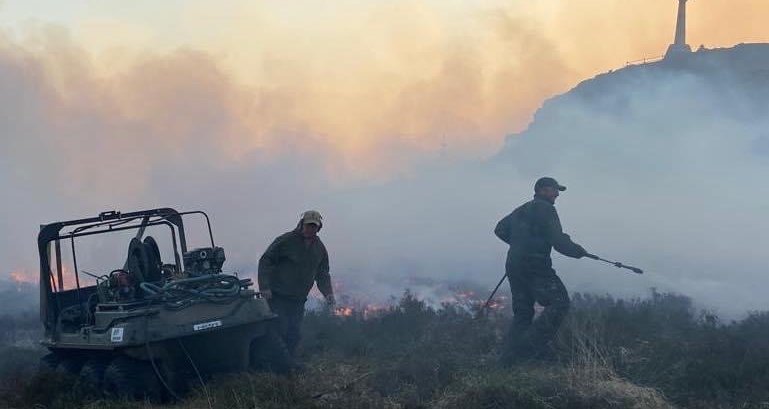
The association wants a legal duty to cut fuel loads and gamekeepers formally written into regional fire planning, after a 2025 season it says burned 46,000 hectares
By News Desk | 8 September 2026
Get the latest news delivered direct to your door
Subscribe to Shooting Times & Country
Discover the ultimate companion for fieldsports enthusiasts with Shooting Times & Country Magazine, the UK’s leading weekly publication that has been at the forefront of shooting culture since 1882. Subscribers gain access to expert tips, comprehensive gear reviews, seasonal advice and a vibrant community of like-minded shooters.
Save on shop price when you subscribe with weekly issues featuring in-depth articles on gundog training, exclusive member offers and access to the digital back issue library. A Shooting Times & Country subscription is more than a magazine, don’t just read about the countryside; immerse yourself in its most authoritative and engaging publication.