★ Your magazine. Your say. Complete our reader survey with a chance to win Jack Pyke kit worth £500! ★


Curlew recovery hinges on keepered ground, BTO modelling shows
Fencing and predator control are saving nests but not chicks, and the report warns that losing grouse-moor management would halve population growth


A review of 28 curlew recovery projects across the UK and western Europe has found that nest fencing and fox and crow control reliably lift hatching rates, yet chick survival barely moved in almost every project studied. British Trust for Ornithology (BTO) Research Report 797, funded through Natural England’s Species Recovery Programme and highlighted by the Moorland Association on 7 September, puts the national target at 1.06 chicks hatched per breeding pair, against an estimated 1.00 today.
What did the 28 projects achieve?
Nest fencing and lethal control of mammalian predators were each used by more than three-quarters of the projects that answered the BTO’s questionnaire, most of them fencing individual nests at 20m or 25m square. Projects reported large gains in nest success once fences went in or foxes and crows were controlled, but as many recorded more chick predation after intervention as recorded less.
The money involved is not small. Projects put equipment at £500 to £1,000 a nest, one reported staff time of around £2,500 a year, and only a few had any of that met through agri-environment schemes. Several relied on local farmers or shoots to carry out the fox and crow control rather than doing it themselves.
Grouse moors hold an estimated 36% of breeding curlew
The report states there is “a high spatial overlap between grouse moors and breeding curlew in the UK, where they are estimated to support 36% of the national population”, citing work by Calladine and colleagues in 2022. It goes on: “Reductions in the efficacy or scale of legal lethal predator control in wader breeding areas will likely result in local reductions in productivity of curlews and other waders”, adding that this is “particularly relevant to the uncertain future of grouse moor management in the UK”.
The modelling bears that out. High productivity ground, modelled on farmland bordering land managed for grouse shooting under intensive predator control, grew by 18.3% a year. Take that management away, through less predator control or tree planting, and growth fell to 8.0%. Medium productivity ground moved from a 1.3% annual decline to 4.2% growth under current intervention effort, or 13.2% at higher intensity, while the poorest ground still declined even when worked hard, from a 7.3% loss a year to a 2.3% loss.
How much effort would stabilise the national population?
Stabilising the UK population would take interventions at about one nest in six, or one in 20 where those interventions are intensive. In Wales, where the Breeding Bird Survey records a 40% fall in 10 years, it would take more than half of all nests, or just under one in four with intensive measures. If hatching rates stayed flat, survival from hatching to one year old would instead need to rise from roughly 30% to 34%, which the authors judge achievable.
The authors are candid about the limits of the exercise. The population model rests on 510 records from the BTO Nest Record Scheme between 1980 and 2018 and on 20 GPS-tagged birds in North Wales, most respondents were working grassland rather than heather moor, and national averages cannot be assumed to hold locally. Around 22% of chicks are estimated to die within two days of hatching.
Rob Beeson, writing for the Moorland Association, said: “The best-performing land in the model is not empty countryside. It is farmland next to shooting estates, where someone else is already paying for the predator control.” He added: “What the report will not tell Defra is who pays.” The report itself lists tree-planting targets in Protected Landscapes, the switch to Environmental Land Management and the move from hay to silage among the threats to that ground, and names “how best to compensate landowners and land managers for the costs of implementing interventions” as a key remaining barrier.
What happens next
The report is Work Package One of the three-year Curlew Solutions Trial, run by the BTO with the Curlew Recovery Partnership; a multi-year field trial of nest fencing and predator identity follows. Natural England’s proposed Wader Recovery Areas are put forward as the means of targeting effort where it will do most good. Defra’s call for evidence on gamebird rearing, release and shooting, which covers associated land management, remains open until 1 November. The full report, Review of curlew-focused conservation interventions in the UK and Western Europe, can be read on the BTO website.
Frequently asked questions
Why are curlew projects saving nests but not chicks?
Fencing and predator control stop eggs being taken, but chicks leave the nest within hours and range up to 1km before fledging, beyond the reach of nest-level measures. As many projects recorded more chick predation after intervention as recorded less.
How many chicks does a curlew pair need to hatch for the population to be stable?
BTO modelling puts the figure at 1.06 chicks hatched per breeding pair, against a current UK estimate of 1.00, assuming average survival from hatching onwards.
What does the report say about grouse moors?
Grouse moors are estimated to support 36% of Britain’s breeding curlew, and the report warns that reducing legal predator control in wader breeding areas is likely to cut curlew productivity locally.
Related Articles
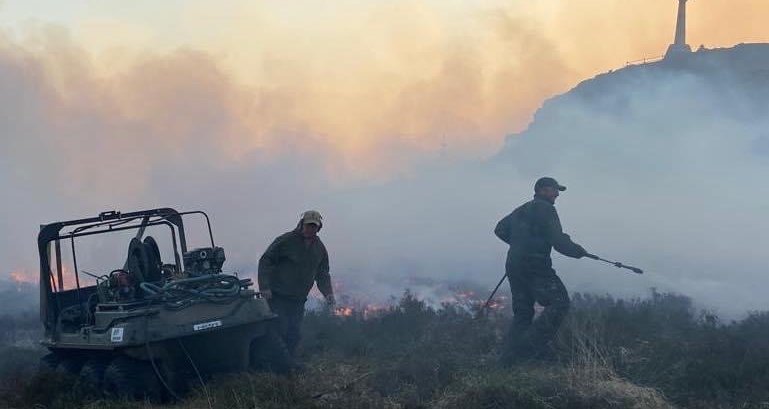
Moorland Association demands statutory wildfire board
The association wants a legal duty to cut fuel loads and gamekeepers formally written into regional fire planning, after a 2025 season it says burned 46,000 hectares
By News Desk | 8 September 2026

Police appeal after red kite poisoned in Aberdeenshire
The protected raptor was found on Morven Hill, near Dinnet, on 30 June, and tests have confirmed poisoning; anyone with information is urged to come forward
By News Desk | 7 September 2026
Get the latest news delivered direct to your door
Subscribe to Shooting Times & Country
Discover the ultimate companion for fieldsports enthusiasts with Shooting Times & Country Magazine, the UK’s leading weekly publication that has been at the forefront of shooting culture since 1882. Subscribers gain access to expert tips, comprehensive gear reviews, seasonal advice and a vibrant community of like-minded shooters.
Save on shop price when you subscribe with weekly issues featuring in-depth articles on gundog training, exclusive member offers and access to the digital back issue library. A Shooting Times & Country subscription is more than a magazine, don’t just read about the countryside; immerse yourself in its most authoritative and engaging publication.